Finasteride and dutasteride can help preserve hair, but choosing between them takes more than comparing regrowth photographs. I explain what the evidence shows, what the risks mean in everyday terms, and how to make a decision you feel comfortable with.
![[headshot]](https://cdn.prod.website-files.com/68207da82e5b8c350c67932f/68c6a7436a552c0fe87a4da7_Screenshot%202024-11-27%20at%2011.38.11.png)
If you are considering treatment for male pattern hair loss, finasteride and dutasteride are difficult to avoid. They have some of the strongest evidence available, but they also attract unusually polarised discussion. I want you to understand both the benefit and the uncertainty without feeling pushed towards a decision.
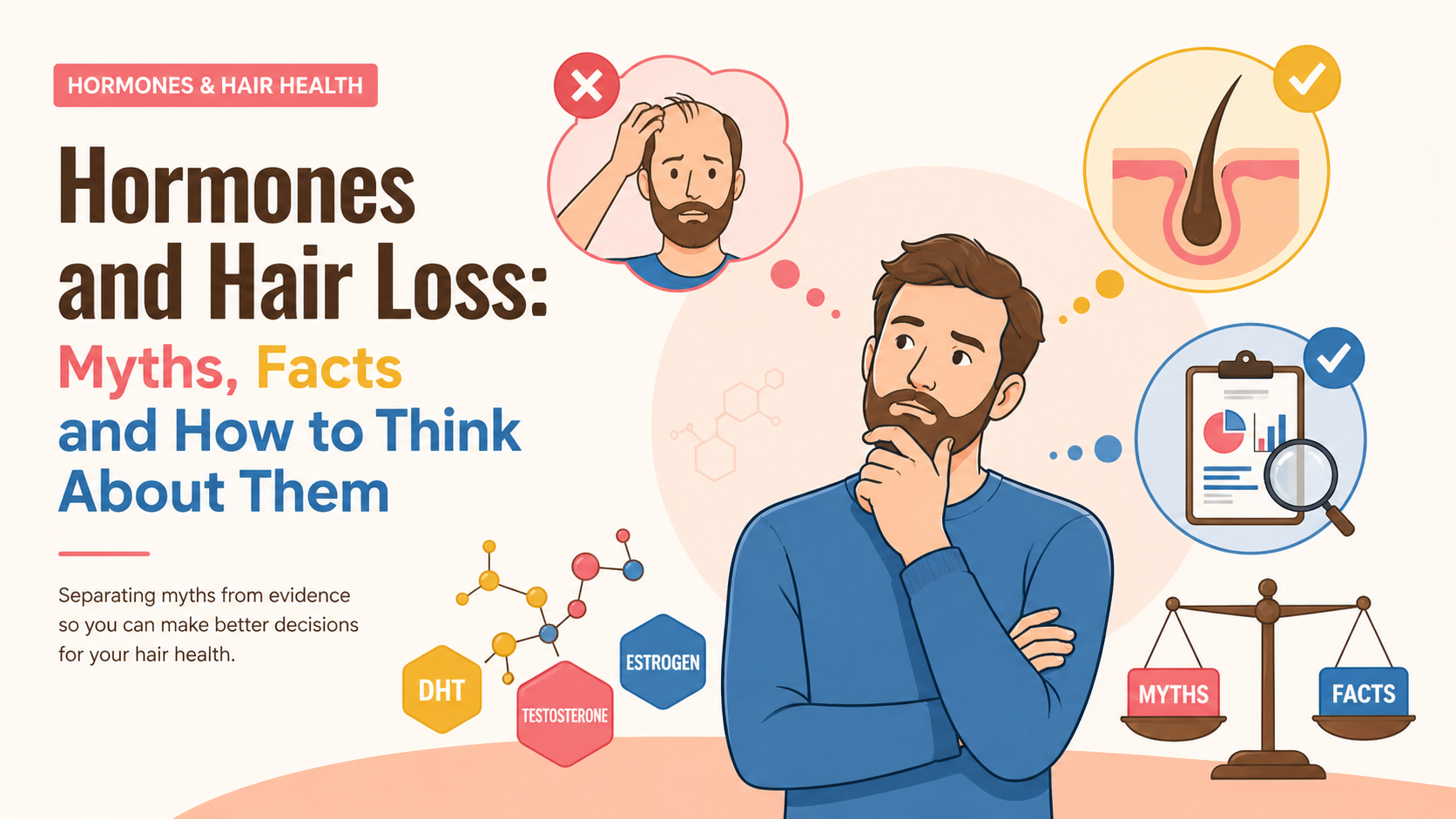
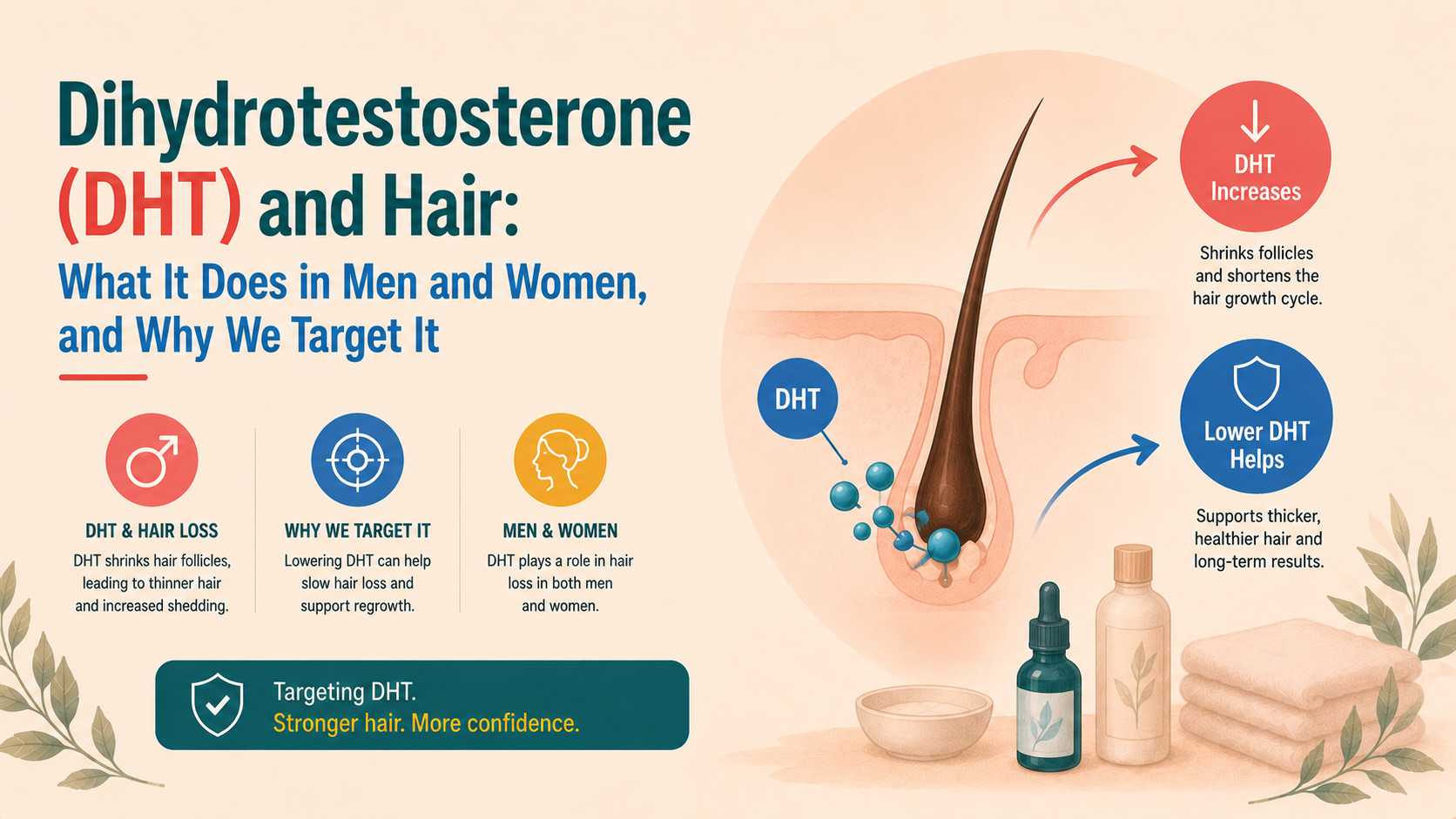
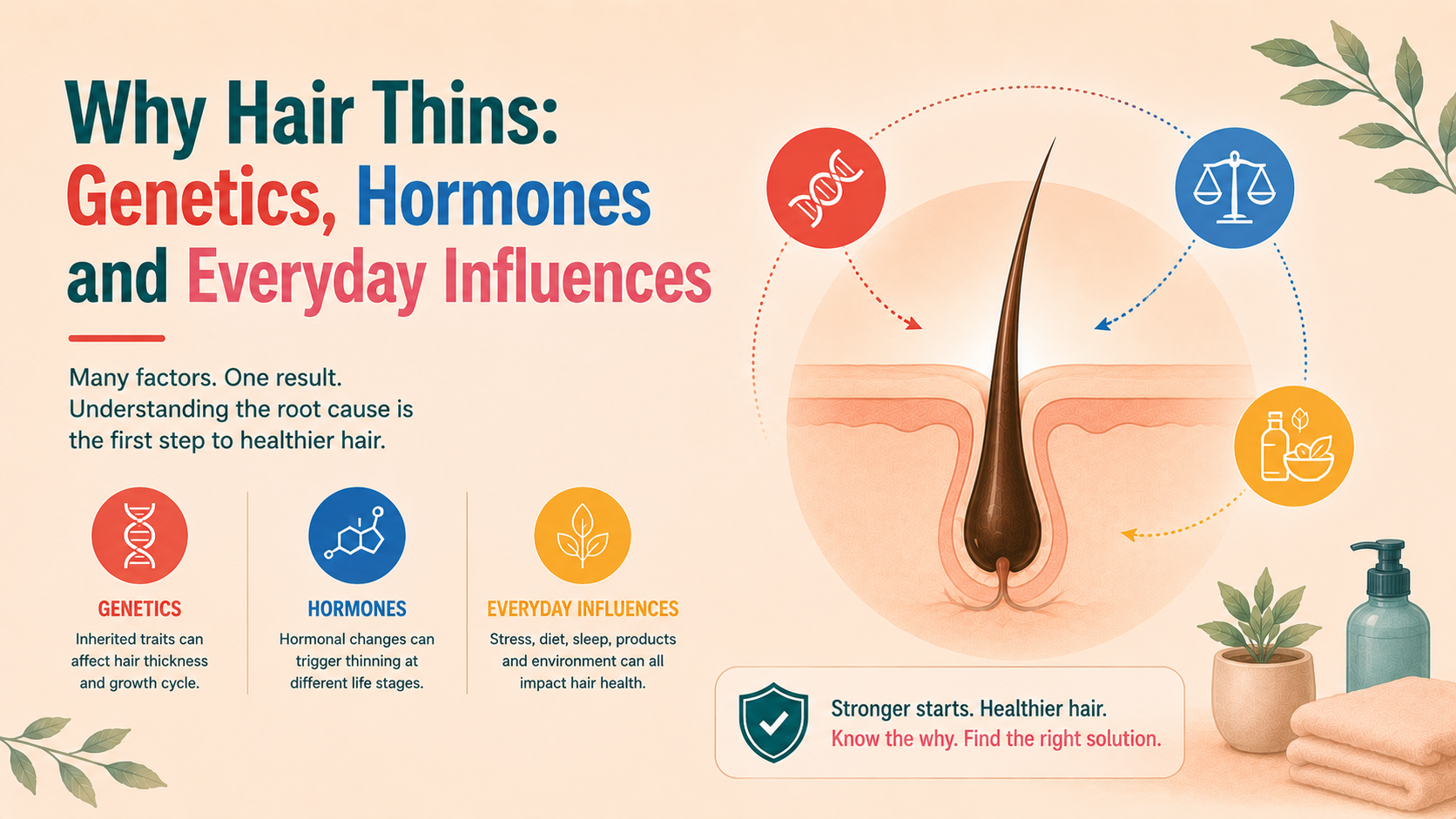
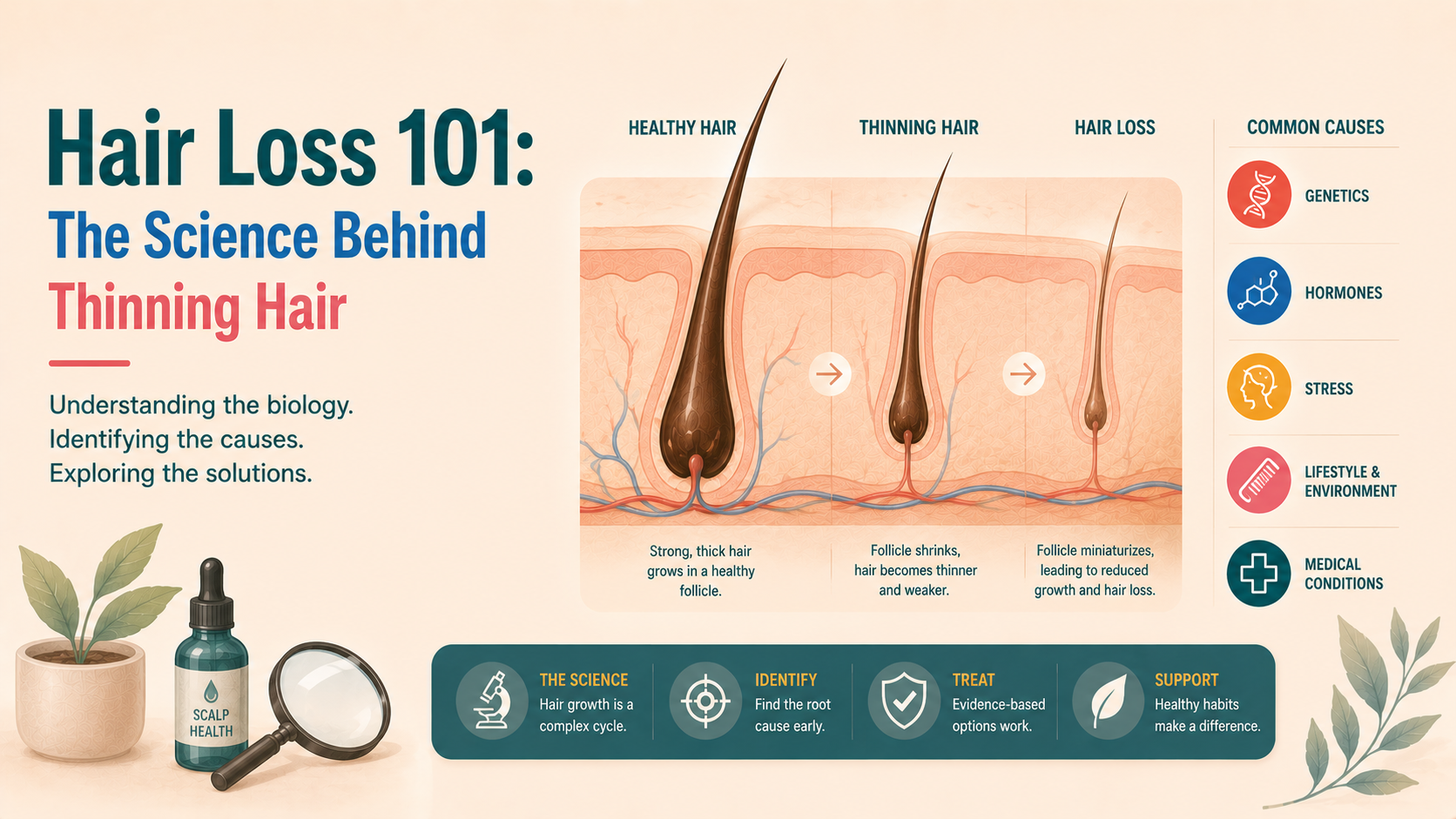
These medicines inhibit an enzyme called 5-alpha reductase, which converts testosterone into dihydrotestosterone, or DHT. In genetically susceptible scalp follicles, DHT contributes to progressively shorter growth cycles and finer hairs. Lowering it can slow that process and allow some hairs to thicken again. It does not remove the underlying susceptibility, and it does not treat every cause of hair loss.
DHT also has normal functions elsewhere in the body. Calling it a useless hormone is as misleading as assuming that reducing it must harm everybody. The clinical evidence is more useful than either argument.
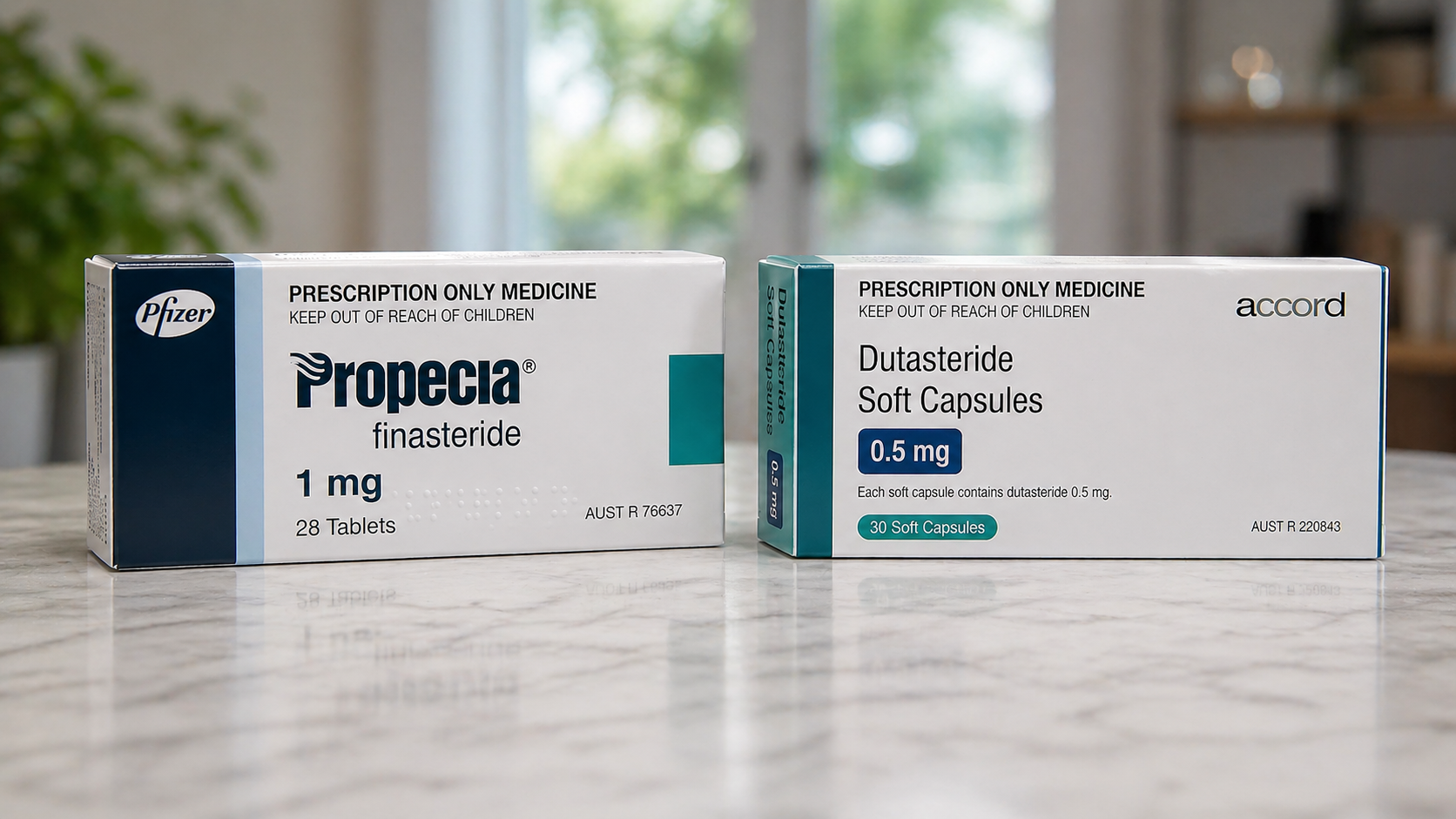
Finasteride mainly inhibits the type II enzyme; dutasteride inhibits types I and II. At commonly studied doses, finasteride 1 mg daily reduces circulating DHT by roughly two-thirds, while dutasteride 0.5 mg daily produces a reduction of around 90% or more. Blood DHT is not a direct measurement of what every follicle experiences.
Both drugs were developed in the context of prostate disease. Finasteride 1 mg is licensed for male pattern hair loss in the UK; dutasteride use for hair loss is off-label there. Licensing differs between countries. Off-label prescribing can be reasonable, but the prescriber should explain why it is appropriate and what monitoring is needed.
Dutasteride also leaves the body much more slowly. Its half-life at usual therapeutic concentrations is measured in weeks, compared with hours for finasteride. That affects how quickly exposure changes after stopping and is part of the decision, rather than a minor technical detail.
I would not judge these medicines only by whether they rebuild a teenage hairline. Pattern hair loss tends to progress, so preserving your existing coverage can be a meaningful success.
The original finasteride trials included 1,553 men. The difference from placebo in the measured crown area was about 107 hairs after one year and 138 after two years. Those are differences between treatment groups, not the number of new hairs every person can expect. Photographs and patient assessments also favoured finasteride.
In a separate 24-week trial involving 917 men, dutasteride 0.5 mg produced greater average improvements in hair count and width than finasteride 1 mg. That supports greater efficacy at those doses. It does not establish that dutasteride is the best first choice for every man, or that the two drugs have identical long-term risks.
Take consistent baseline photographs and agree a review point with your clinician, often around six to twelve months for the overall hair response. A few weeks of mirror checking cannot reliably distinguish treatment failure from normal variation.
Reduced libido, erectile difficulties and changes in ejaculation are recognised side effects. In the first-year finasteride 1 mg trials described in the Propecia label, 3.8% of treated men reported one or more of these effects, compared with 2.1% taking placebo. That is an absolute difference of 1.7 percentage points, or roughly two additional men per hundred in that trial setting.
That figure is useful context, but it is not a personalised forecast or an estimate of persistent symptoms. Trials involve selected participants and particular follow-up periods. They cannot answer every question about decades of use.
Expectations and anxiety can influence symptoms, including sexual function. This is sometimes called a nocebo effect. It is a reason to explain risk carefully, never a reason to dismiss a person who reports a problem. Discuss symptoms with the prescriber rather than feeling you must tolerate them to keep your hair.
In 2025, the European Medicines Agency confirmed suicidal thoughts as a side effect of finasteride tablets, with an unknown frequency. It did not establish a direct link for dutasteride, but recommended precautionary information because the medicines work similarly. The UK MHRA strengthened its advice again in 2026.
If you develop depression or suicidal thoughts while taking finasteride 1 mg, stop taking it and contact a healthcare professional promptly. For finasteride 5 mg or dutasteride, the MHRA advises contacting your healthcare professional as soon as possible. If you feel at immediate risk of harming yourself, seek emergency help.
Sexual symptoms have also been reported to continue after finasteride is stopped. The broader term post-finasteride syndrome describes reported persistent sexual, psychological and other symptoms, but questions remain about its frequency, mechanisms and how to identify who is susceptible. Spontaneous reports cannot provide a reliable percentage risk because there is no complete count of exposed people or unreported events.
Uncertainty should lead to careful assessment and support. It should not be used either to promise that persistent problems cannot happen or to suggest that they are inevitable.
A 24-week phase III trial of a specific finasteride spray found an average increase of about 20 hairs in the target area, compared with about 7 with placebo. The oral comparison group had a numerically similar improvement. Blood finasteride concentrations were substantially lower with the spray, although circulating DHT still fell.
That makes topical treatment a useful option to discuss. It does not make it purely local or free of systemic side effects. The concentration, amount applied and formulation all matter, so results from one studied spray cannot simply be transferred to every compounded product.
The FDA warned in 2025 about adverse-event reports involving compounded topical finasteride and the possibility of transfer to other people. There is no FDA-approved topical finasteride product in the US. Follow the specific product's handling advice, especially around anyone who is or may become pregnant.
Tell your prescriber if you are trying to conceive or already have concerns about fertility. A small study of men attending an infertility clinic found improved sperm counts after finasteride was stopped. That selected group cannot tell us the risk for all users, but it is a good reason to include reproductive plans in the consultation. Dutasteride can also affect semen parameters.
These medicines must not be taken during pregnancy because of risks to development of a male fetus. Anyone who is pregnant or could become pregnant should avoid crushed or broken finasteride tablets and leaking dutasteride capsules. Topical exposure needs its own precautions.
Finasteride and dutasteride can lower PSA, a blood marker used in prostate assessment. Always tell the clinician interpreting a PSA result that you take one of these medicines; a single correction rule does not fit every dose and situation. New breast lumps or nipple discharge also need medical assessment.
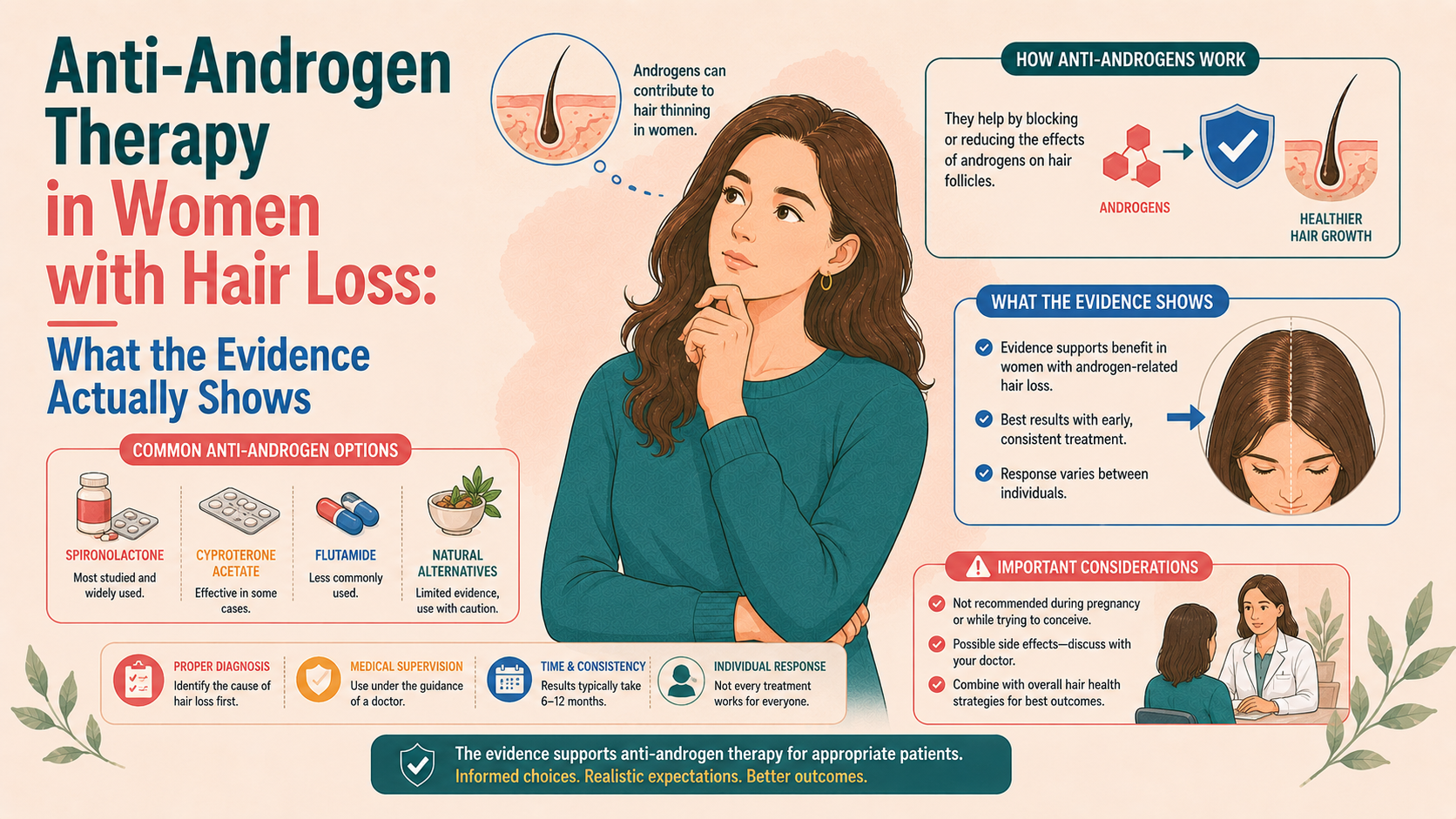
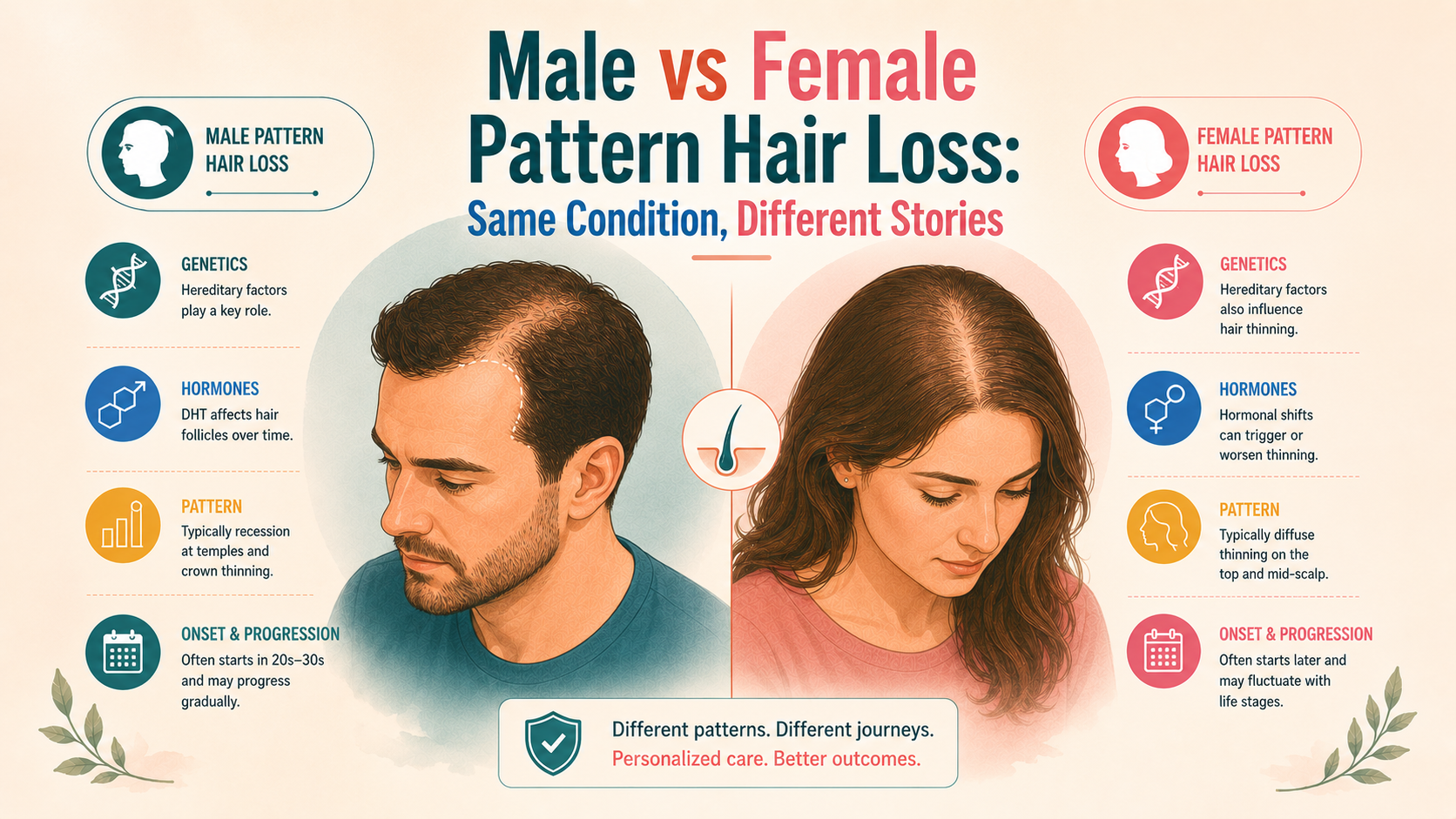
Female pattern hair loss shares follicular miniaturisation with the male condition, but it cannot be reduced to the same DHT story in every woman. Many affected women have normal circulating androgen levels.
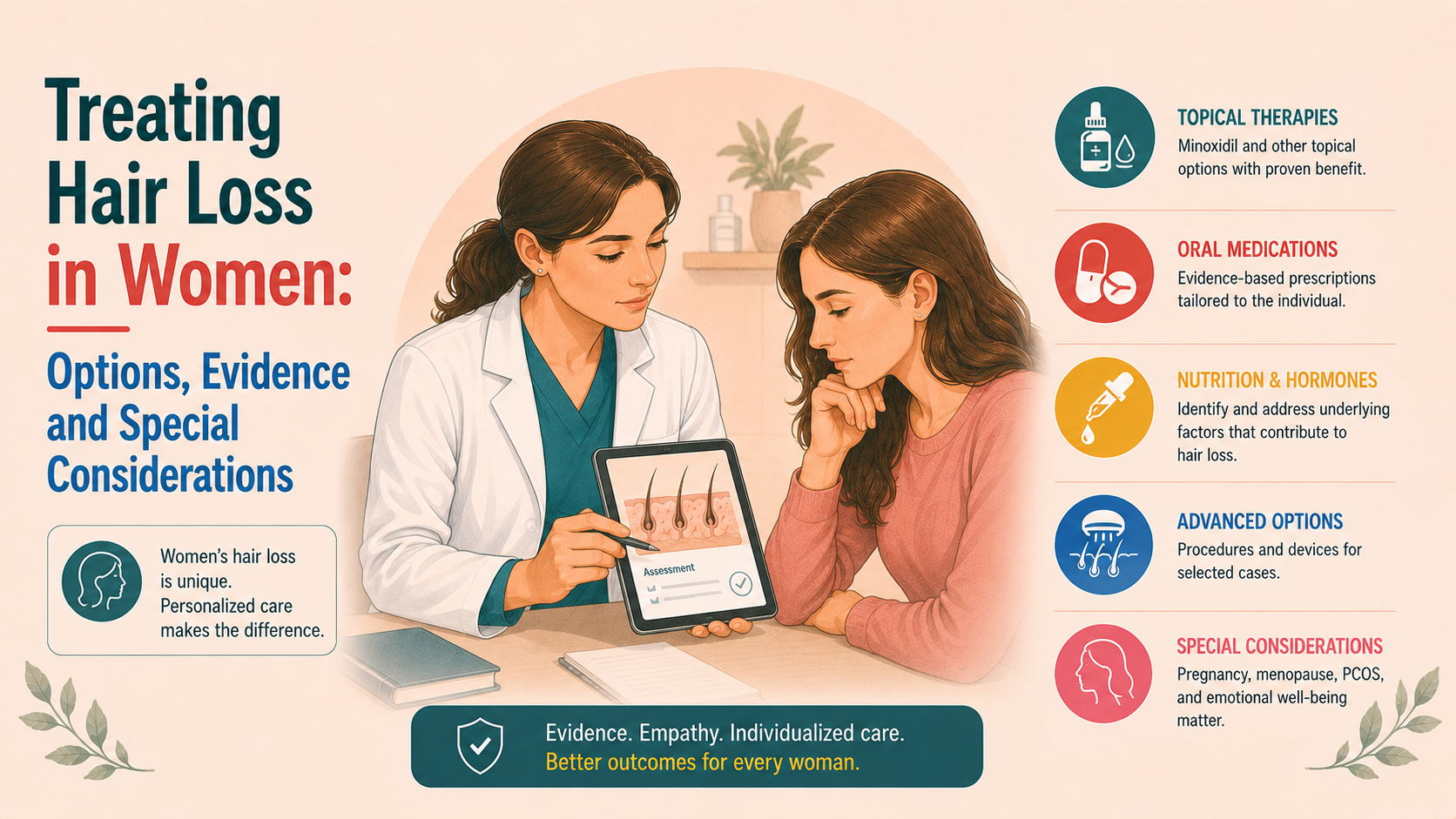
A controlled trial of finasteride 1 mg in postmenopausal women did not show benefit over placebo. Smaller studies using other doses or dutasteride have reported improvement, but the evidence is less secure than it is in men. These are specialist, off-label options for selected patients, with particular attention to pregnancy prevention where relevant.
The existence of successful male trials is therefore not enough to recommend the same treatment to a woman. A clear diagnosis and an individual discussion remain essential.
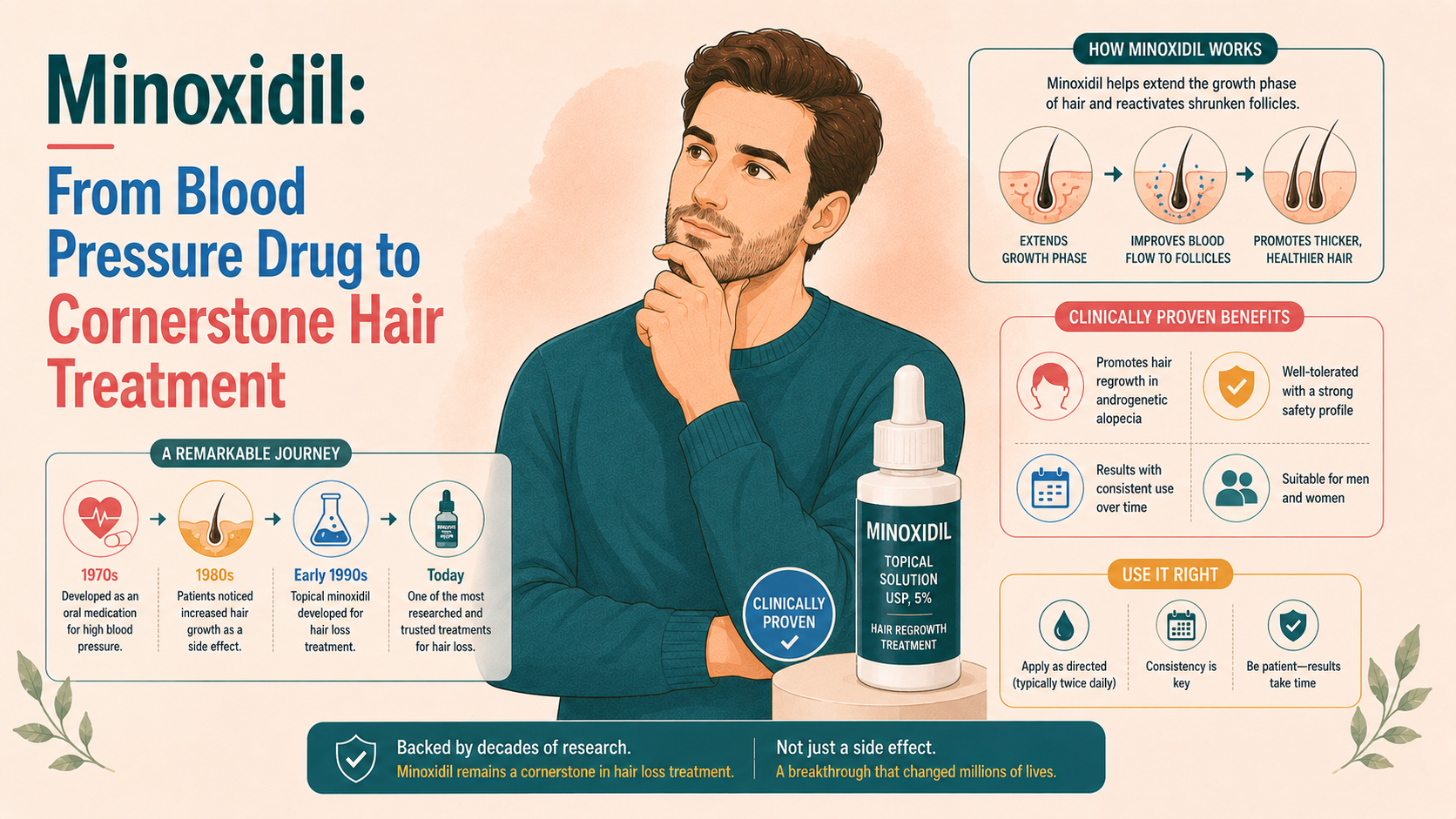
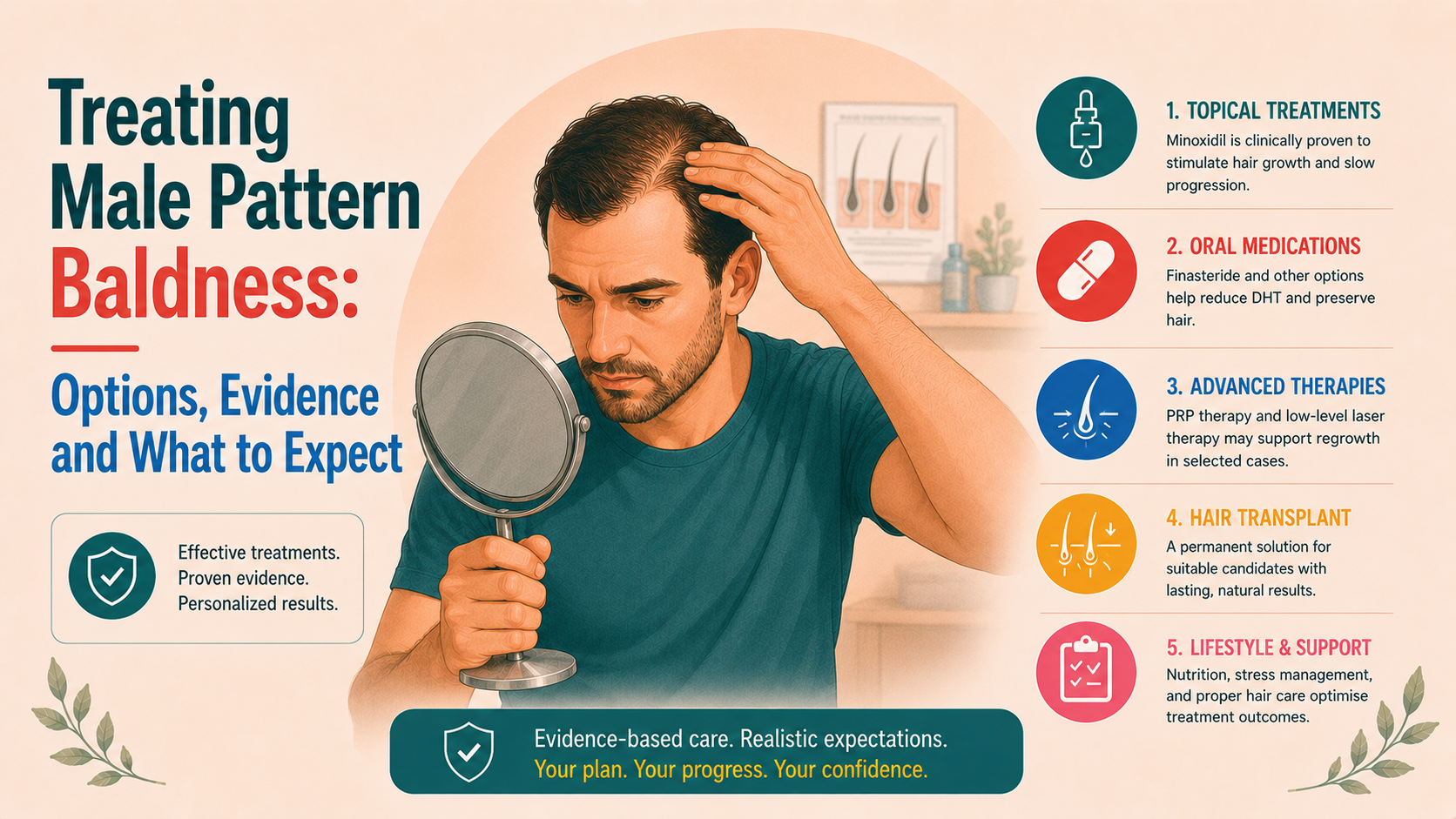
Minoxidil and a 5-alpha reductase inhibitor act differently, so combining them can make sense. Minoxidil supports hair growth while finasteride or dutasteride reduces the androgenic signal contributing to miniaturisation. Whether the extra benefit is worth another treatment depends on your response, tolerance and routine.
Lower or intermittent doses are sometimes prescribed, but they should not be presented as proven ways to keep every benefit while eliminating risk. Similarly, increasing a dose is not automatically the answer to a disappointing photograph. Review adherence, timing and the diagnosis before building a more complicated regimen.
Benefits generally depend on continued treatment. Stopping can allow the underlying hair-loss process to resume. That is a practical commitment to consider at the start, not a reason to continue through concerning side effects.
A useful consultation should establish what you are treating, what a realistic improvement would look like and what would make you reconsider. Discuss your medical history, other medicines, sexual function and mental health before starting, so there is a baseline and a plan for review.
I think it is reasonable to value your hair and want an effective treatment. It is equally reasonable to decide that a particular medicine does not fit your priorities. The aim is to make a considered choice with appropriate support, then leave enough space to get on with your life.
My longer video above works through the evidence and the common arguments in more detail. Use it to prepare questions for your prescriber, rather than as an individual prescription.