How inadequate intake and genuine deficiencies can contribute to shedding, why ferritin needs context, and why more vitamins do not automatically mean more hair.
![[headshot]](https://cdn.prod.website-files.com/68207da82e5b8c350c67932f/68c6a7436a552c0fe87a4da7_Screenshot%202024-11-27%20at%2011.38.11.png)
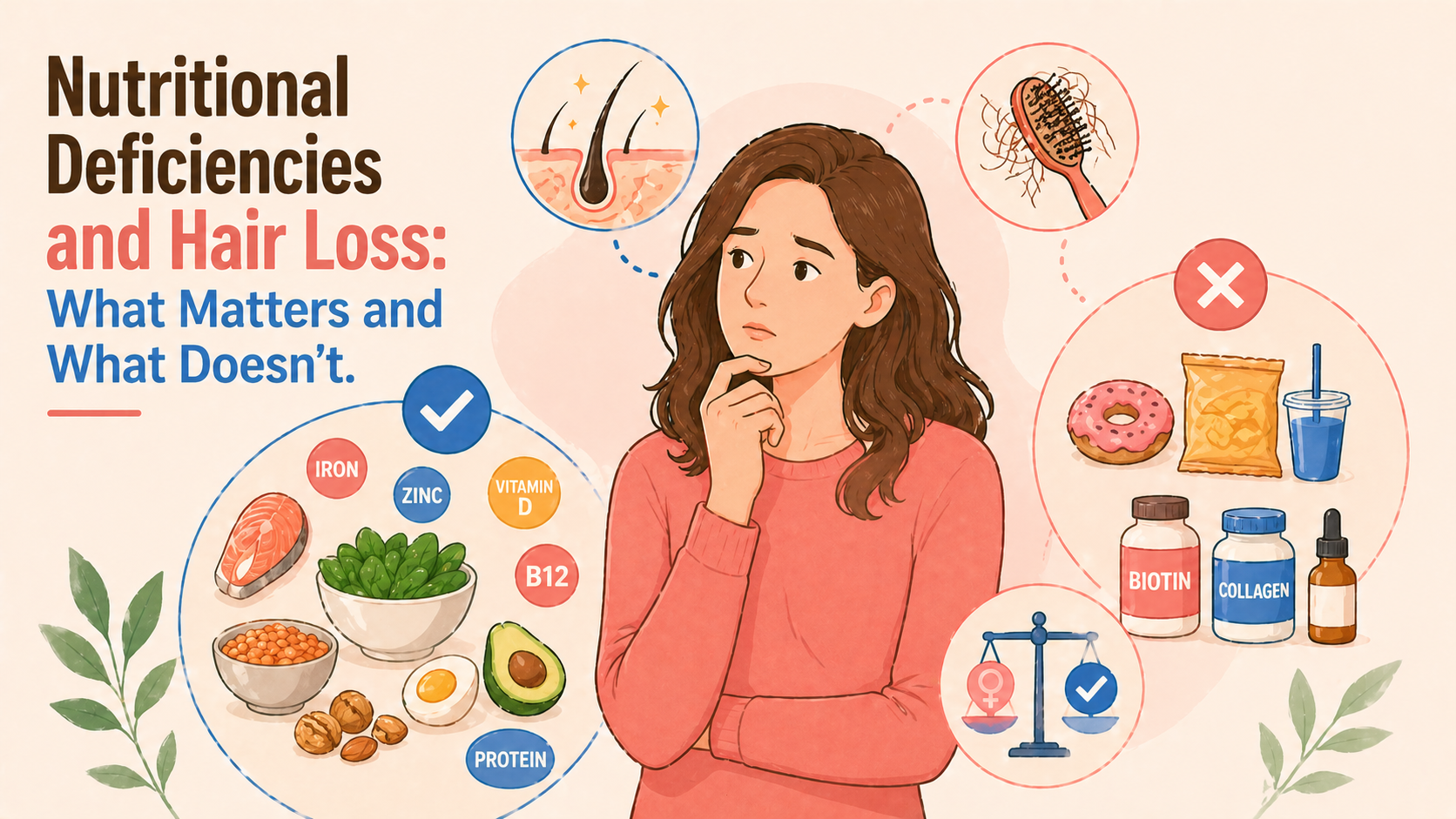
Hair follicles need energy and nutrients to grow. That makes nutrition relevant, but it does not mean that extra nutrients produce extra hair once those needs are met.
There are two separate questions: is someone missing something their body needs, and does taking more of it improve a particular hair disorder? Marketing often treats the answer to the first as proof of the second.
A person can eat well and still develop pattern hair loss. They can also have pattern loss and a nutritional problem at the same time. A useful assessment leaves room for both.
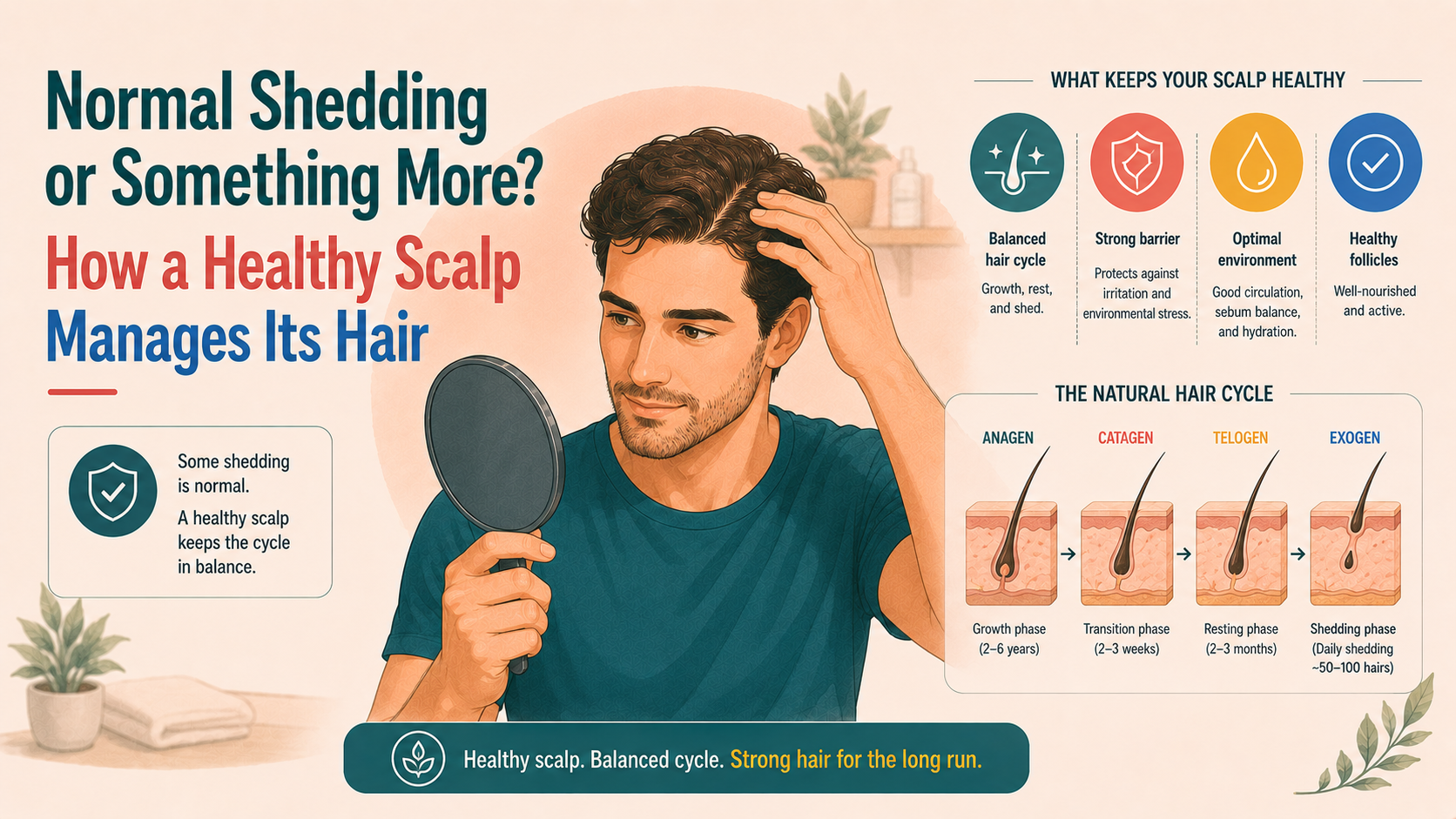
Rapid weight loss, substantial calorie restriction and inadequate protein intake can trigger telogen effluvium. The shedding often appears months after the nutritional stress, so the connection may not be obvious by the time hair begins falling out.
Restoring adequate intake helps address the trigger, but hair recovery still takes time. Adding a supplement while continuing an inadequate diet may leave the main problem unresolved.
Restrictive eating, gastrointestinal symptoms or weight-loss surgery can justify support from a clinician or dietitian. Deficiencies can arise from impaired absorption or blood loss as well as from the food someone chooses. This is not a matter of blaming someone for eating imperfectly.
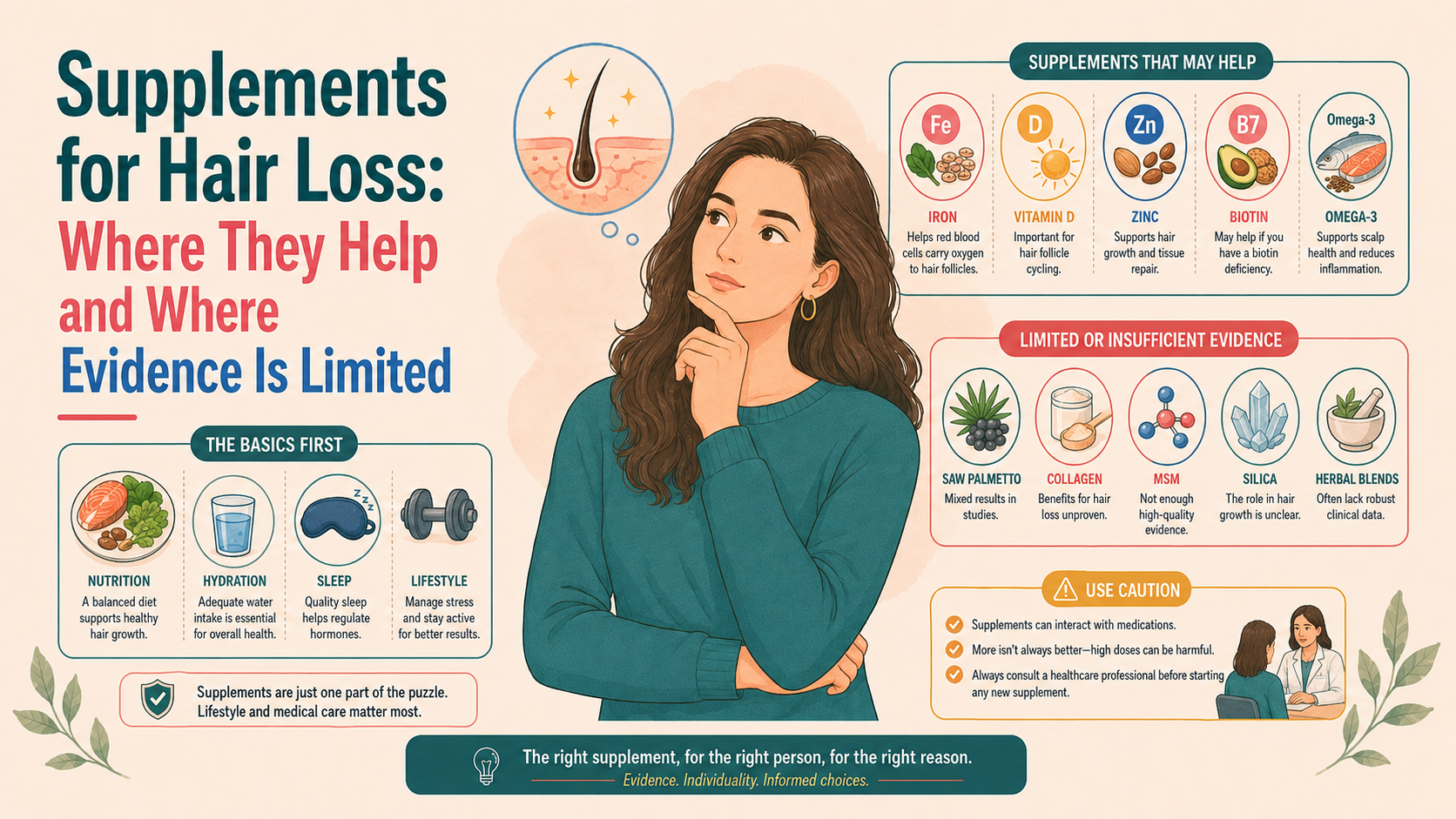
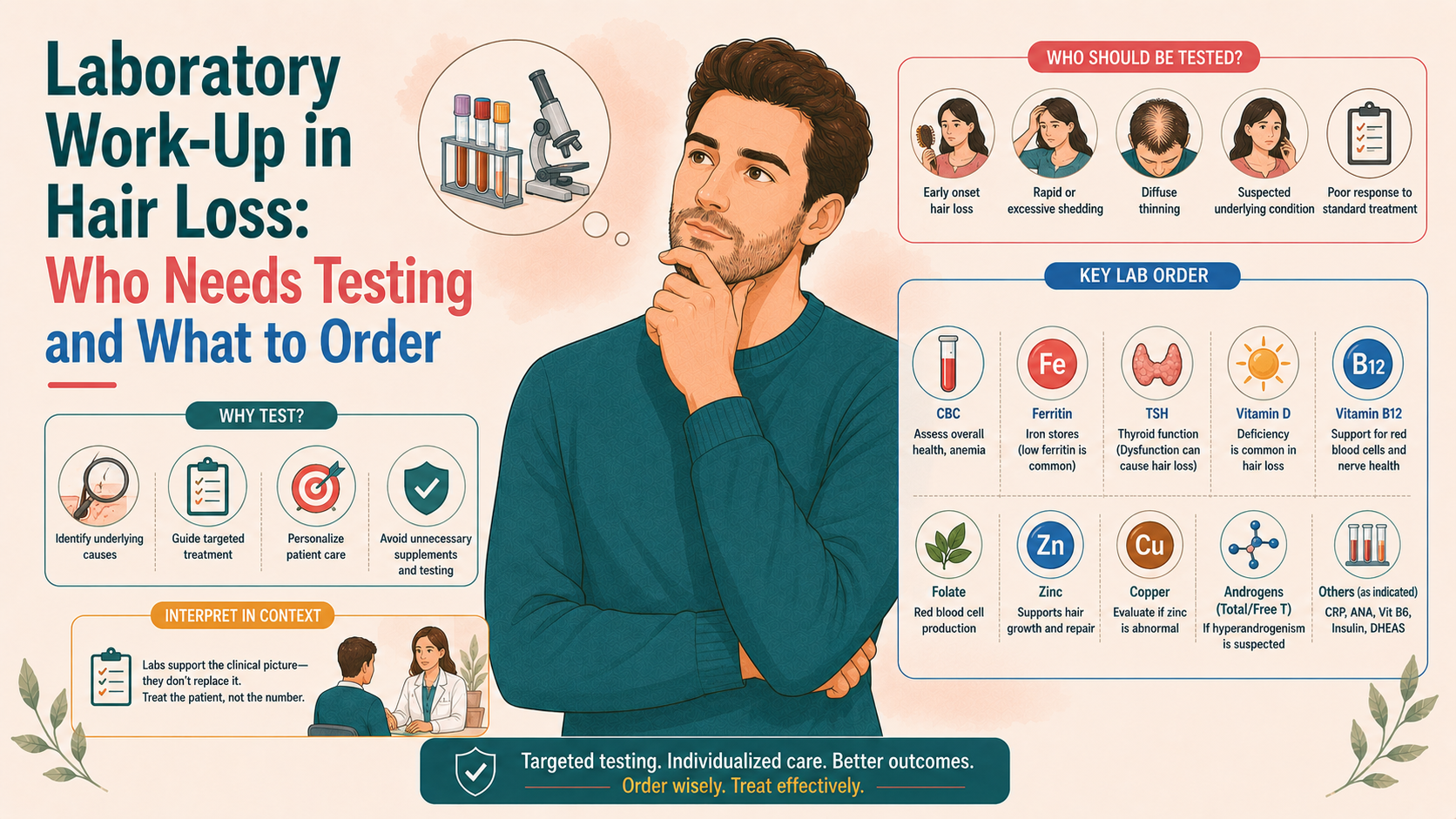
Iron deficiency is worth considering, particularly with heavy periods, pregnancy, blood loss, restricted intake or symptoms such as fatigue. It can occur before anaemia develops, so a normal haemoglobin does not necessarily mean iron stores are adequate.
Ferritin is a useful marker of iron stores, but inflammation can raise it and make interpretation less straightforward. A clinician may consider other iron measurements and the wider history when the result does not fit the situation.
There is no universally established ferritin target that guarantees hair regrowth. Treating confirmed deficiency is different from taking iron indefinitely to chase an “optimal for hair” number. The cause of deficiency also needs attention, rather than repeatedly replacing iron without asking why it is low.
Studies have found lower vitamin D levels in some groups with hair loss. That association does not prove that low vitamin D caused the loss or that replacement will reverse it. Deficiency should be addressed for appropriate health reasons, with realistic expectations about hair.
Severe zinc deficiency can cause hair changes, but routine high-dose zinc is not a general treatment for thinning. Too much zinc can interfere with copper absorption and create another deficiency.
B12 and folate are important for health, especially when intake or absorption is limited. Replacing a deficiency is appropriate, but evidence that extra B vitamins improve hair in someone with adequate levels is limited. Testing should be selected for the individual rather than ordered as an indiscriminate list.
Biotin is prominent in hair supplements, despite true deficiency being uncommon. Evidence does not support routinely taking large doses simply because hair is thinning.
High-dose biotin can interfere with some blood tests, including thyroid tests and certain cardiac markers. That can produce misleading results with real clinical consequences. Tell the clinician and laboratory if you take it, including as part of a multivitamin or hair gummy. Follow their advice about whether and when to withhold it; a single rule does not fit every dose and test.
Supplements are not automatically harmless because their ingredients occur in food. Excess selenium can cause hair and nail changes, and excessive vitamin A can also contribute to hair loss. Iron can be toxic when taken unnecessarily.
It is easy to duplicate ingredients by combining a general multivitamin with a hair supplement and separate zinc or iron tablets. Check the total intake and tell your clinician what you are using.
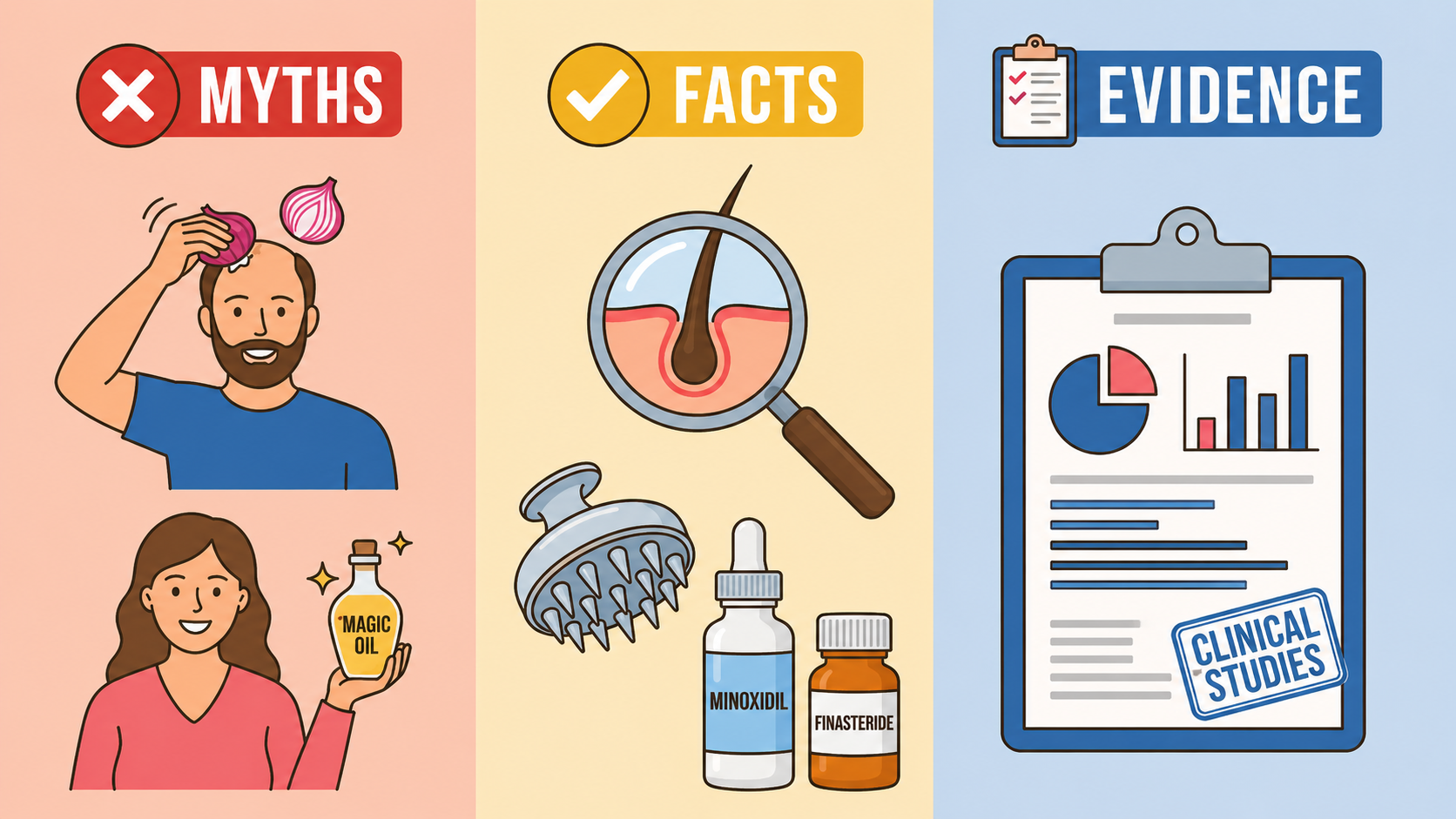
Some multi-ingredient products have positive hair-growth studies. Those findings need judging product by product, with attention to study design and whether the result applies to the person considering them. They do not justify the assumption that any mixture of vitamins will work.
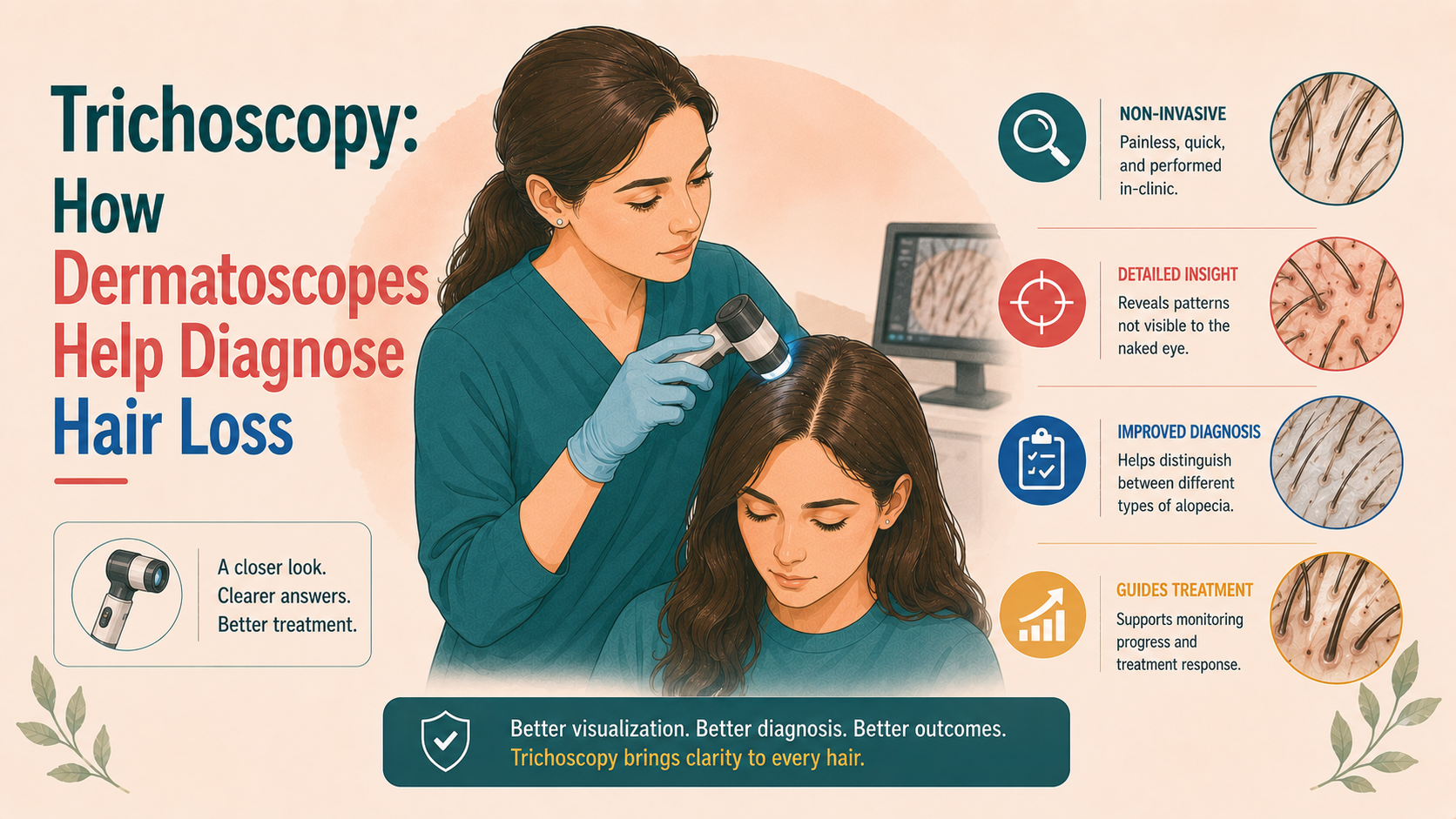
Start with the timeline of the hair change and a review of food intake, weight change, blood loss, medicines and digestive symptoms where relevant. Investigations should answer a plausible clinical question.
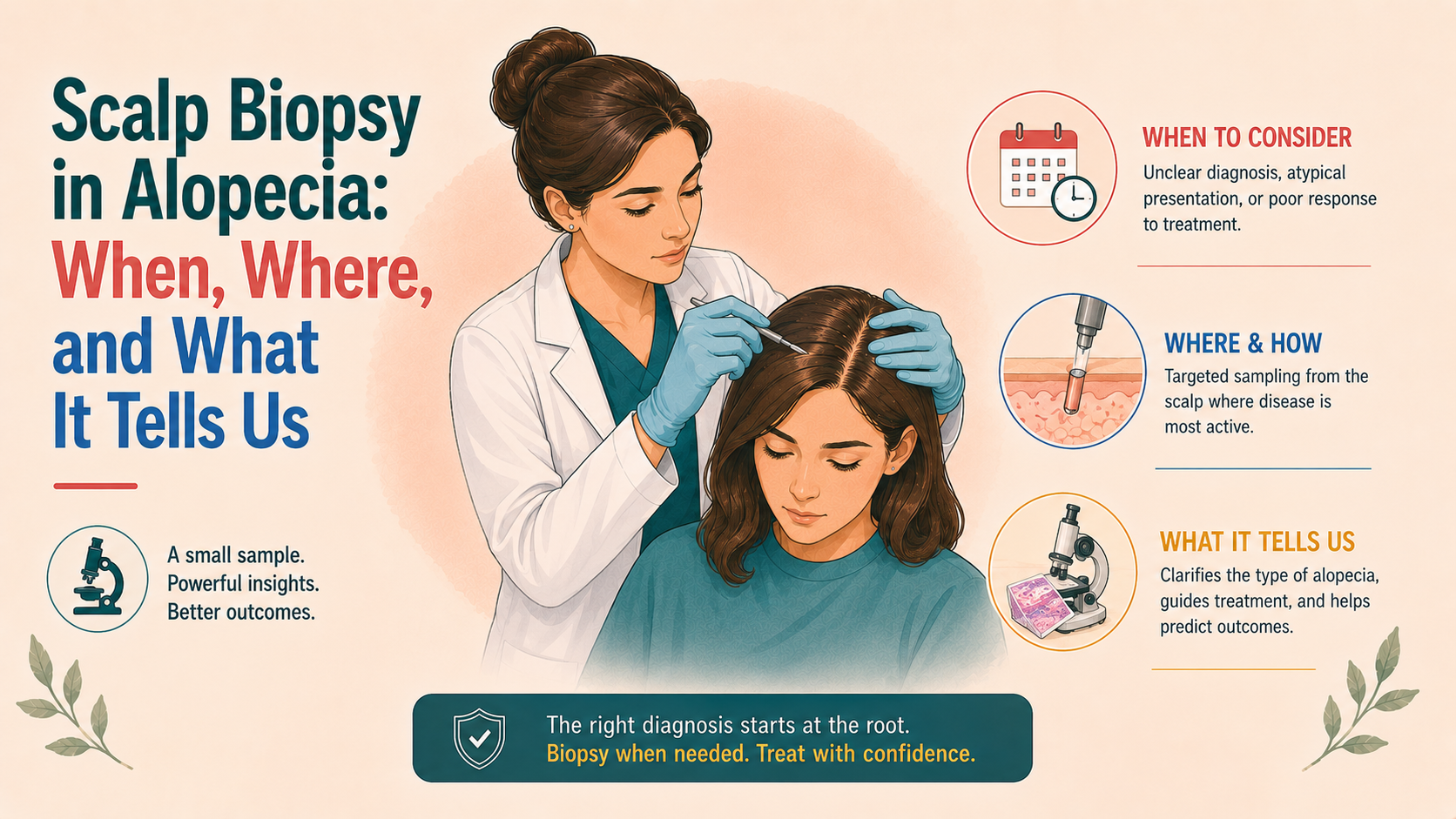
If a deficiency is identified, agree how it will be treated and reassessed. If no nutritional explanation fits, the hair still deserves a diagnosis. Normal blood results do not rule out pattern hair loss or an inflammatory scalp condition.
For most people, the aim is adequate, sustainable nutrition alongside care directed at the actual hair disorder. It does not need to become a perfect diet or a cupboard full of supplements.