A treatment can be helping even when the mirror is not showing dramatic regrowth. Here is how I would think about realistic goals, review points and the place hair treatment should have in your life.
![[headshot]](https://cdn.prod.website-files.com/68207da82e5b8c350c67932f/68c6a7436a552c0fe87a4da7_Screenshot%202024-11-27%20at%2011.38.11.png)
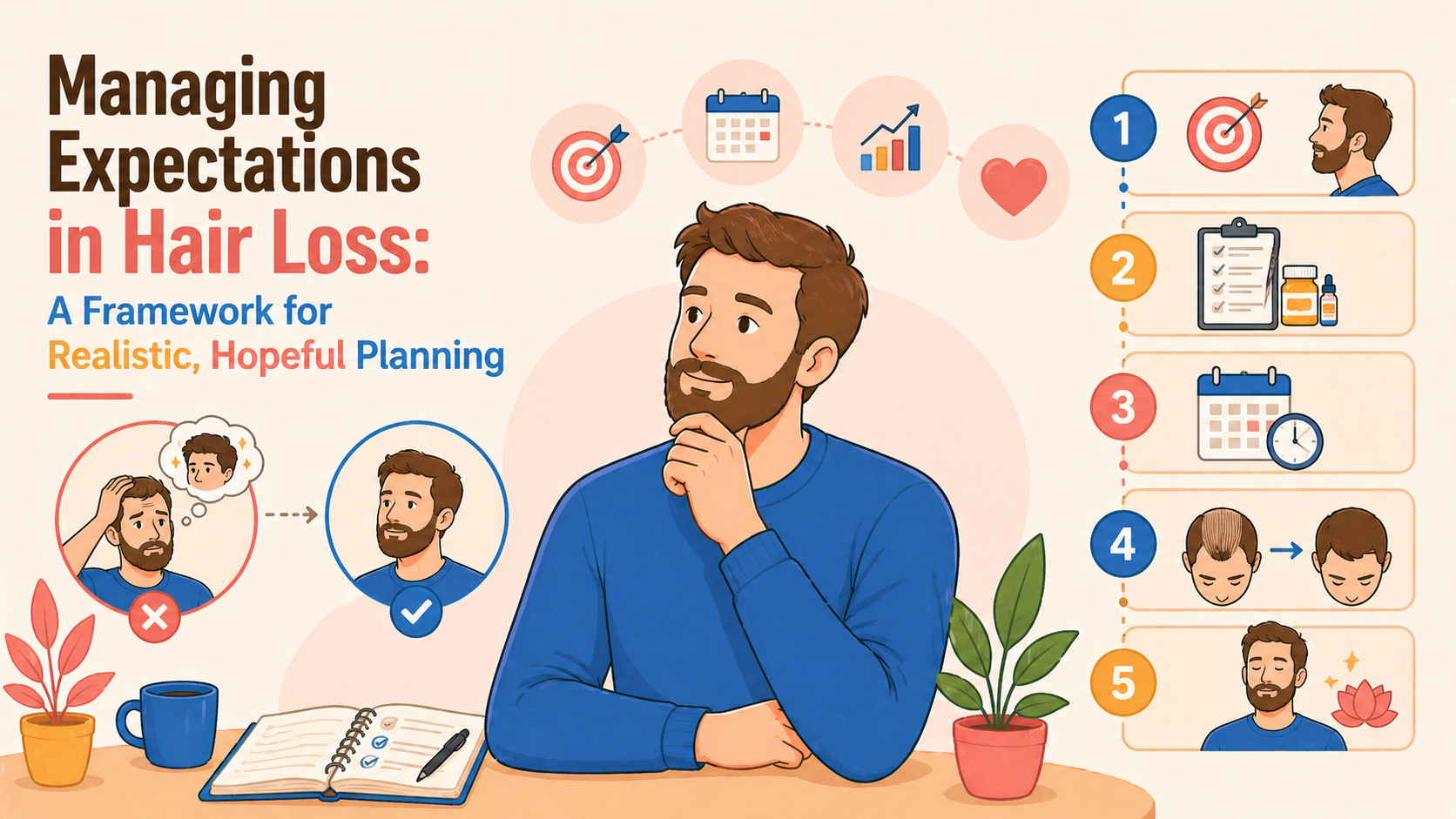
There is no single timetable for “hair loss”. Pattern hair loss usually develops gradually and often needs continuing treatment to maintain its benefits. Telogen effluvium is a change in shedding that may recover once a trigger has passed. Alopecia areata can behave unpredictably. In a scarring condition, protecting follicles that remain may be the main purpose of treatment.
These differences matter more than an impressive before-and-after photograph. Someone recovering from a temporary shed is not a fair comparison for someone with longstanding pattern thinning. Before asking how much hair a product can restore, ask what is actually happening to your hair.
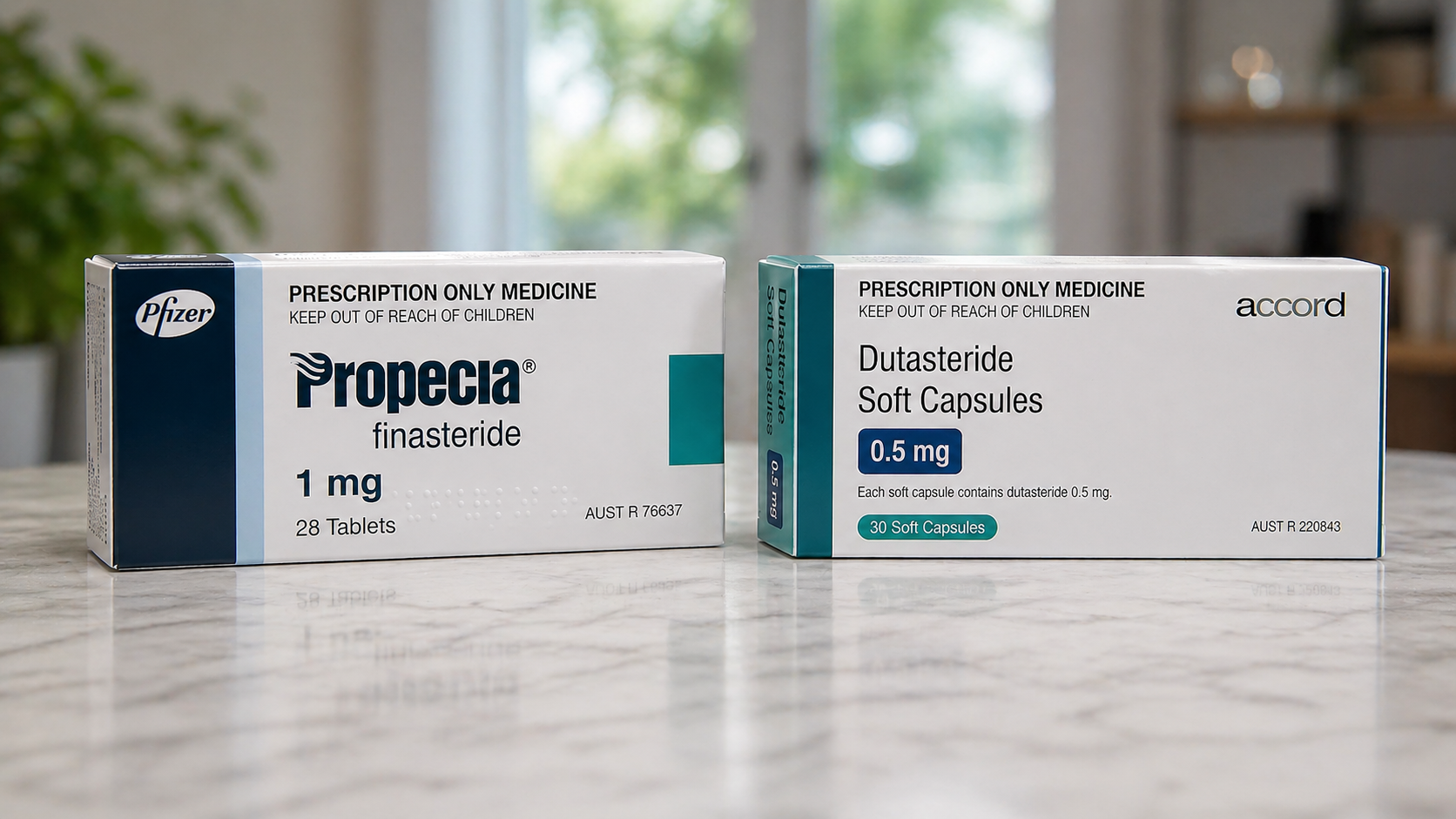
Many of us start treatment expecting visible regrowth. That is understandable, but it leaves out the value of slowing further loss. Trials of treatments such as finasteride compare people receiving treatment with people receiving a placebo. The difference between those groups can grow even when the treated group does not undergo a dramatic transformation.
You cannot know exactly what your own hair would have done without treatment. That makes stability harder to appreciate than an obvious change in density. It does not make stability meaningless.
I would discuss separate goals with your clinician: preserving what you have, improving coverage where possible, and making the routine manageable. A treatment that fits your life is usually easier to evaluate fairly than an elaborate routine you can barely sustain.
Hair grows slowly enough that days and weeks are poor units for assessing cosmetic progress. Many pattern hair loss treatments need several months before a useful assessment is possible. The appropriate review point depends on the product, the diagnosis and what your clinician is monitoring; it is not a universal instruction to continue everything for a year.
Some products specify when to seek advice or stop if there is no improvement. Side effects also deserve attention as they occur. A planned review date is not a reason to ignore a new symptom.
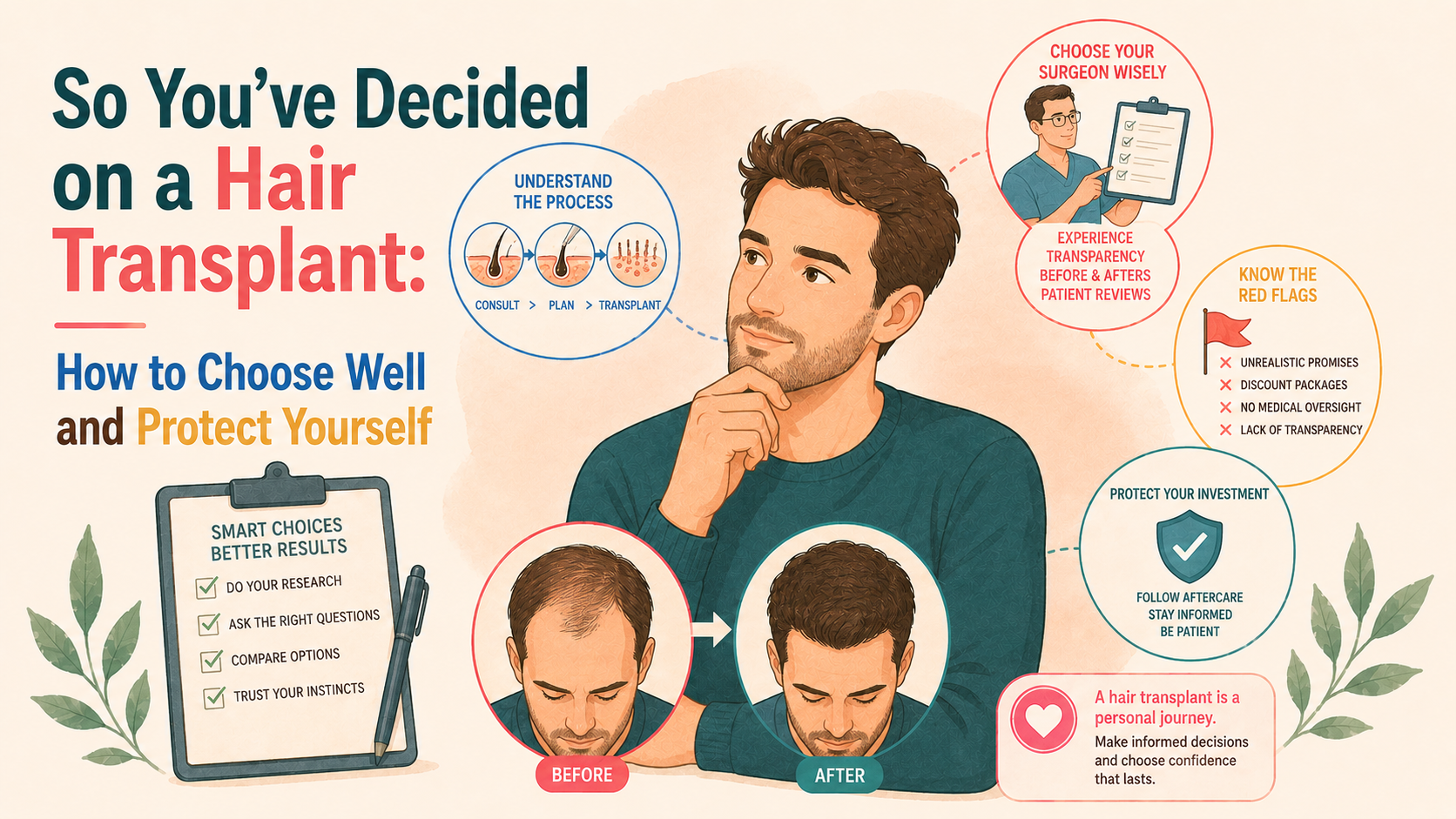
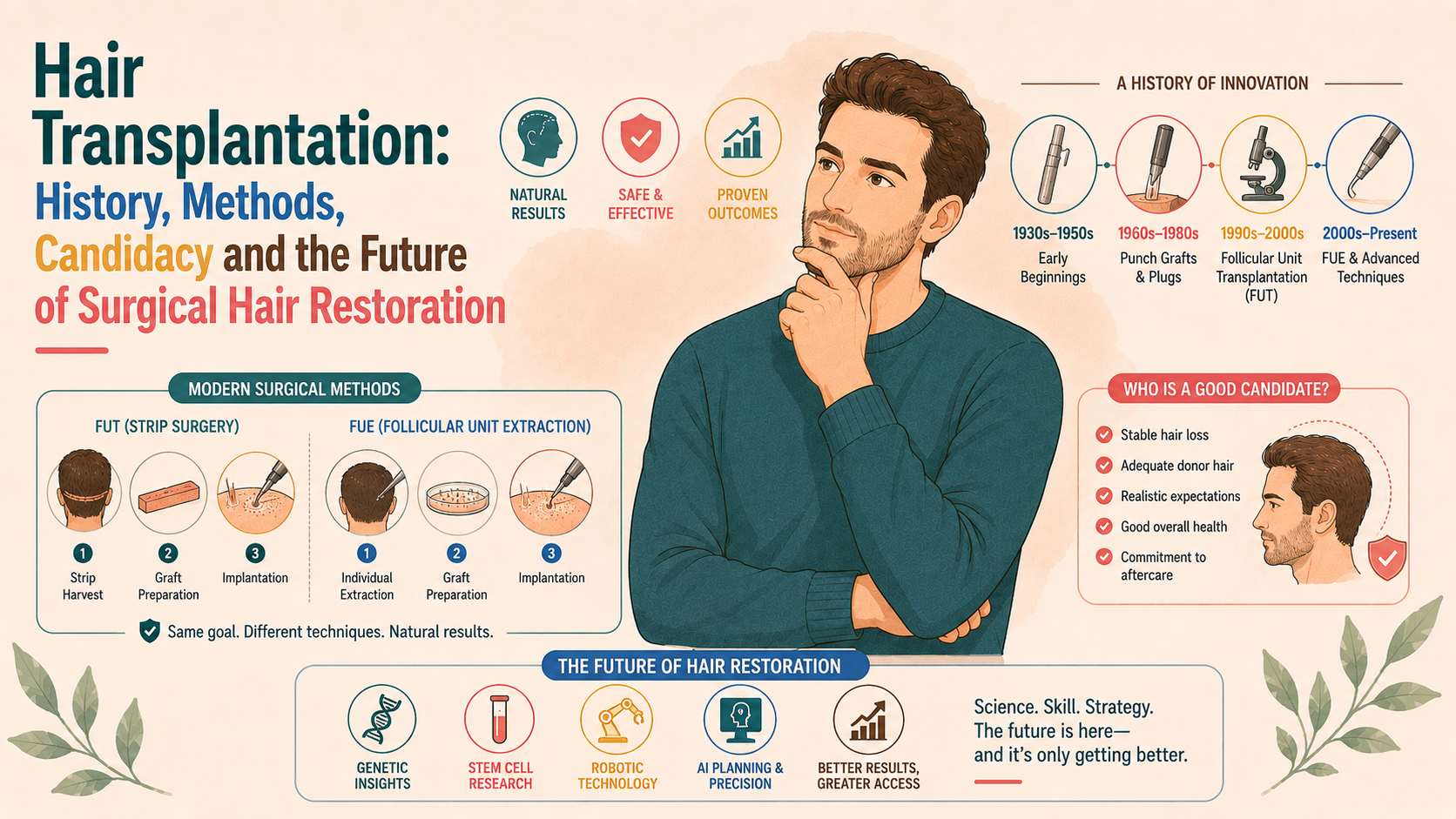
Transplant results take months to develop too. The appearance shortly after surgery is not the final result, and the surrounding untreated hair may continue to thin. Ask the surgeon to explain both the expected recovery and the longer-term plan.
A wet scalp under a bright bathroom light can look very different from dry hair in soft daylight. Hair length, styling and the angle of a photograph can create apparent changes that have little to do with treatment.
If photographs help, take them at agreed intervals under similar conditions. You do not need to build a daily surveillance system around your scalp. If checking becomes harder to resist or leaves you feeling worse, reduce the frequency and discuss that pattern with someone who can help.
It is also worth recording what matters outside the photograph. Perhaps you spend less time concealing your hair, or feel able to swim again. Those changes do not prove a medicine has worked, but they may tell you that your overall approach is helping.
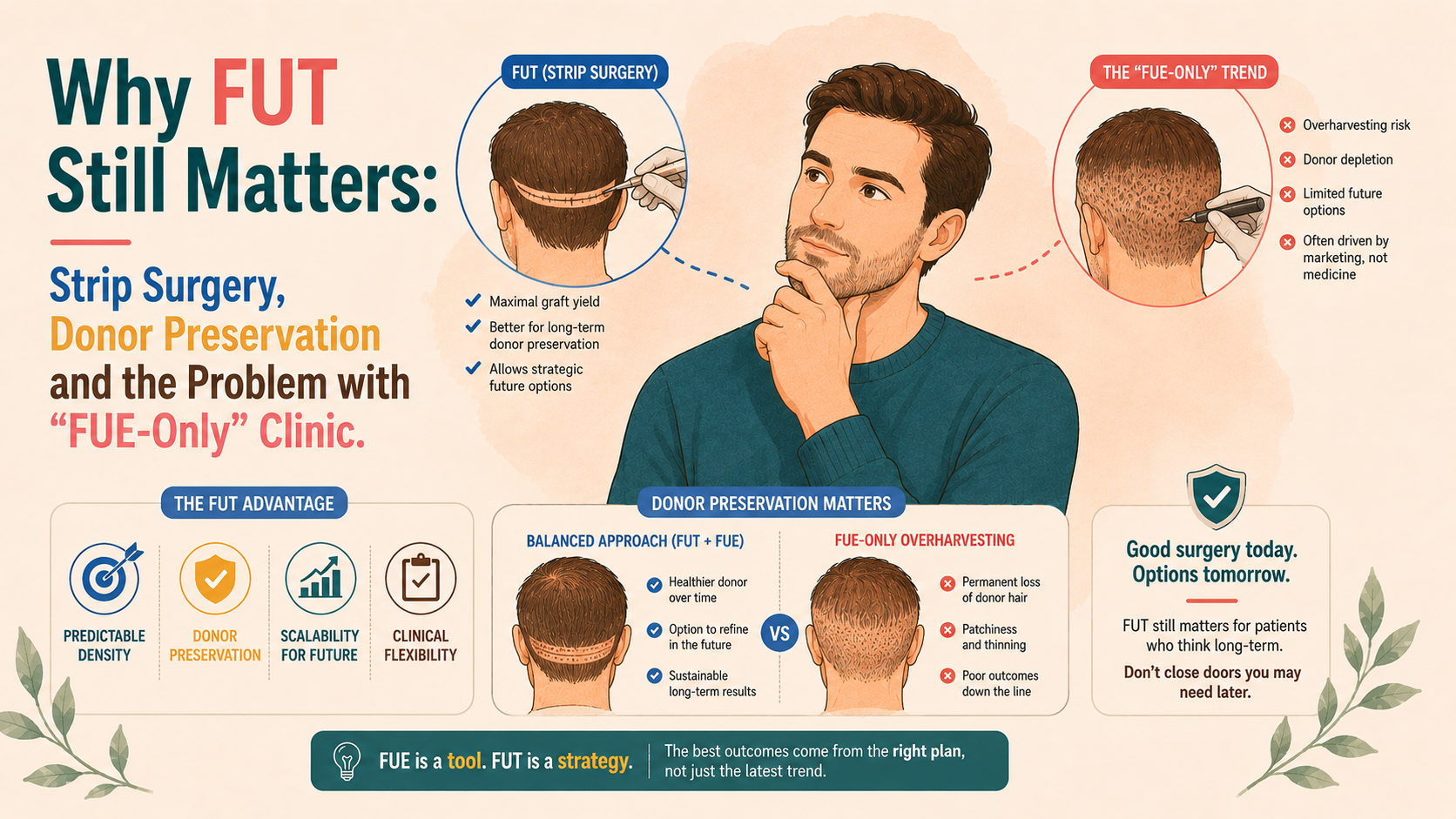
Medication cannot guarantee the density or hairline you had as a teenager. A transplant redistributes a limited supply of donor hair; it does not manufacture an unlimited supply of new follicles. Cosmetic options can improve the appearance of coverage without changing the underlying condition.
Ask what a reasonable result would look like in someone with your diagnosis and starting point. Ask what happens if the response is modest, the treatment is poorly tolerated, or further hair loss occurs. A useful consultation should leave room for those possibilities.
You should also be able to understand the ongoing cost and maintenance. A package of repeated procedures can be a substantial commitment even when each individual appointment sounds straightforward.
In my own experience, the more difficult expectation was that better hair would make every part of life feel easier. Treatment can help your appearance. It cannot guarantee confidence in every situation or remove the ordinary uncertainty of relationships.
My aim would be to make sensible decisions about hair while continuing to do the things that matter now. That might mean treatment, a cosmetic option, support with anxiety, or some combination of them. You do not have to become indifferent to your hair.
A worthwhile outcome is being able to move through your day without hair repeatedly interrupting it. That gives you something useful to work towards even when the biological response is slower or smaller than you hoped.