Washing, hats, exercise and stress attract plenty of blame for hair loss. Here is how to separate ordinary hair care from problems that can actually damage hair.
![[headshot]](https://cdn.prod.website-files.com/68207da82e5b8c350c67932f/68c6a7436a552c0fe87a4da7_Screenshot%202024-11-27%20at%2011.38.11.png)
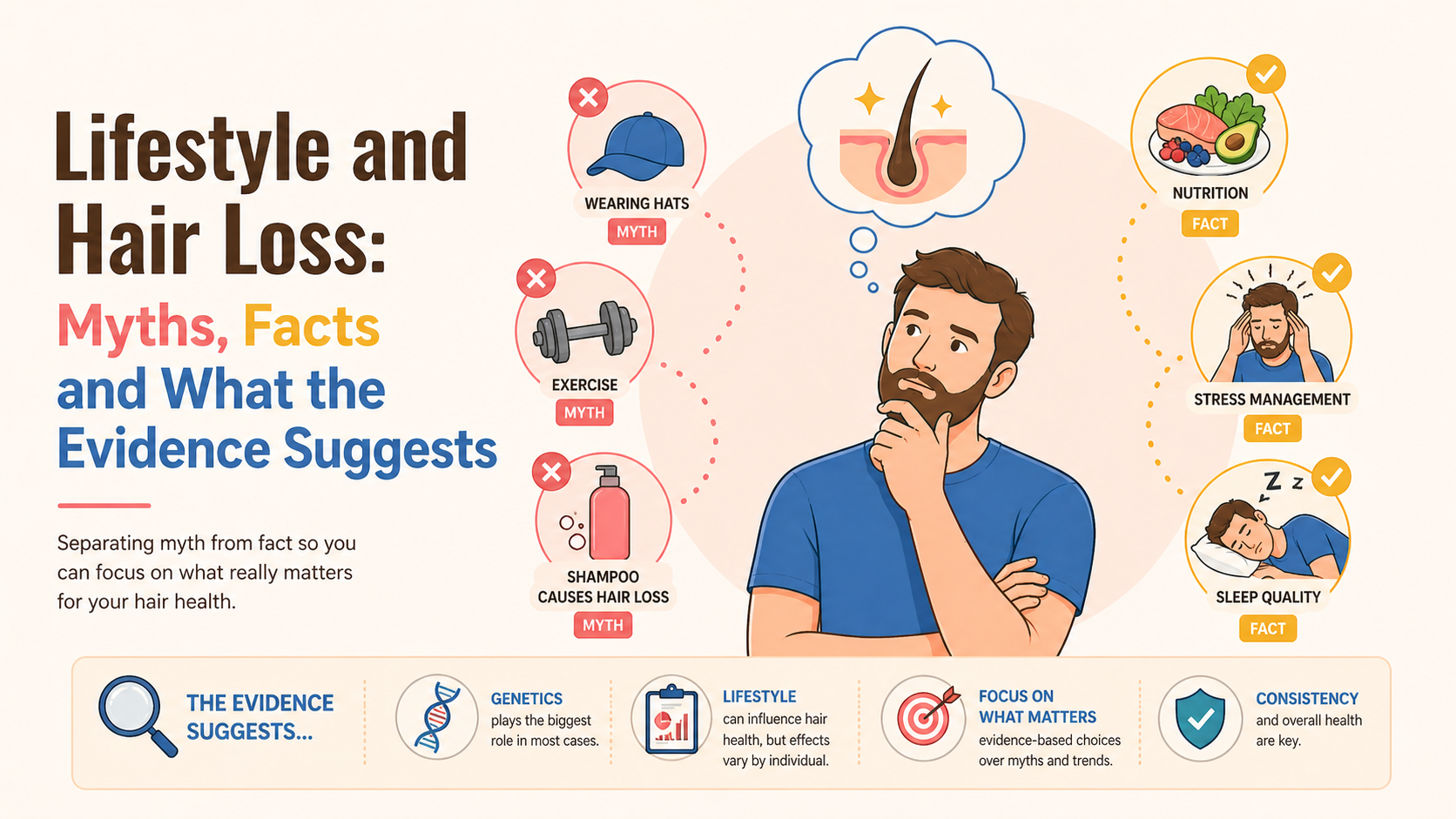
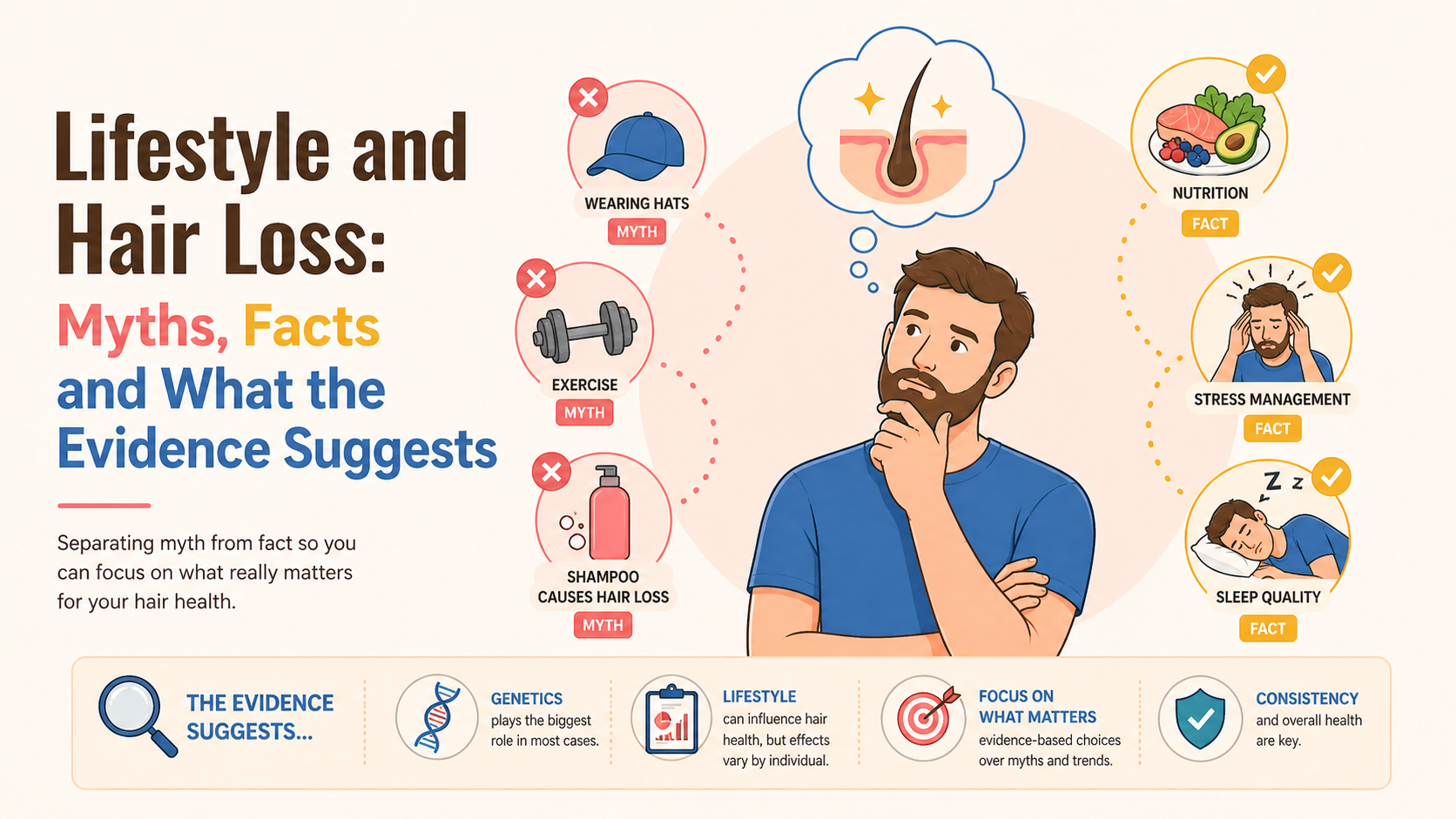
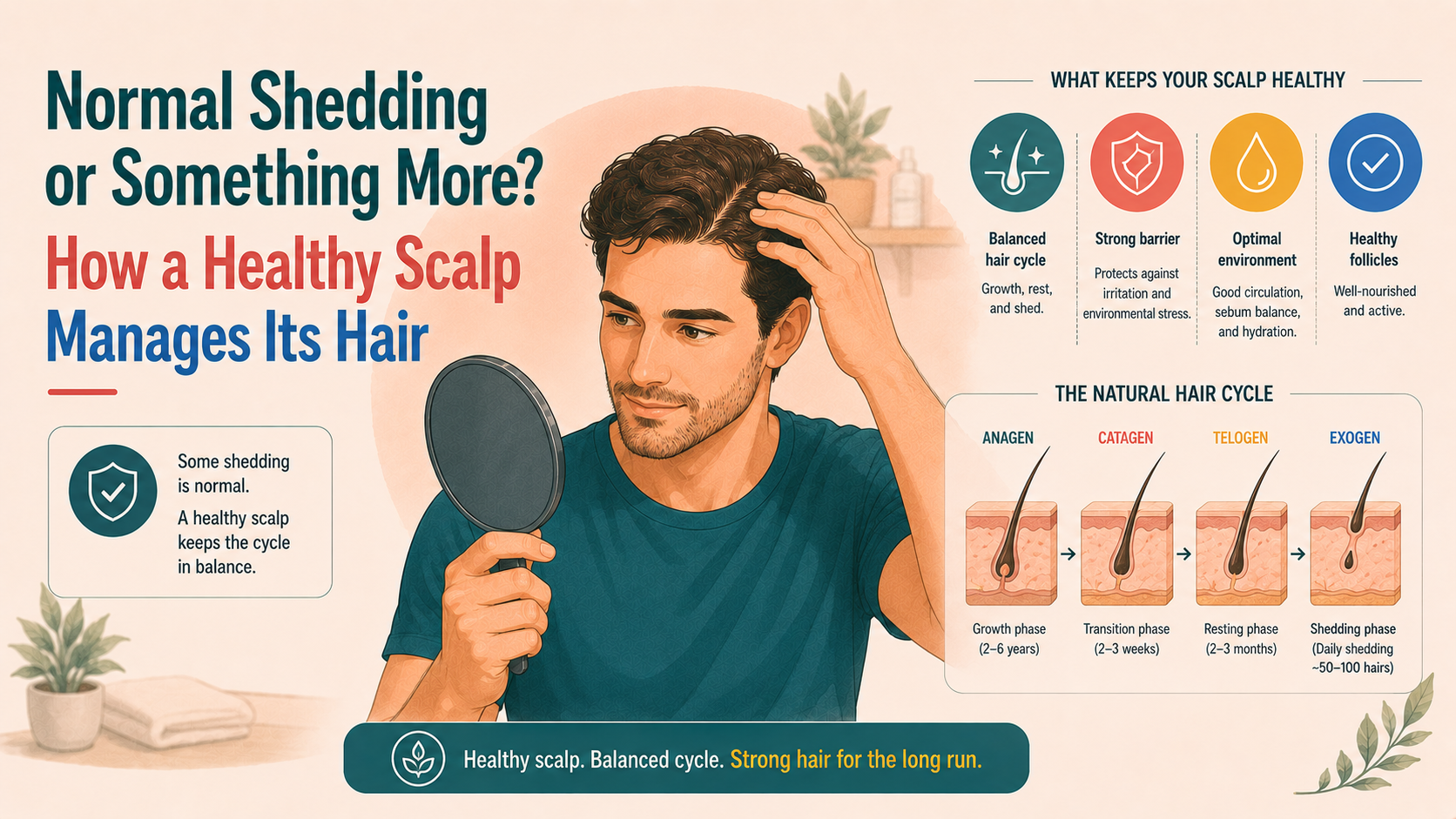
Washing often releases hairs that were already ready to shed. If you leave longer between washes, more can accumulate and appear together the next time. That can make the shower look alarming without showing that the shampoo has damaged the follicles.
Choose a washing routine that suits your hair and scalp. There is no universal schedule that prevents genetic thinning. Gentle handling matters, and a product that causes a rash or persistent burning deserves changing.
If the amount of shedding has clearly increased, investigate that change rather than simply avoiding washing. The scalp still needs care while you work out the cause.
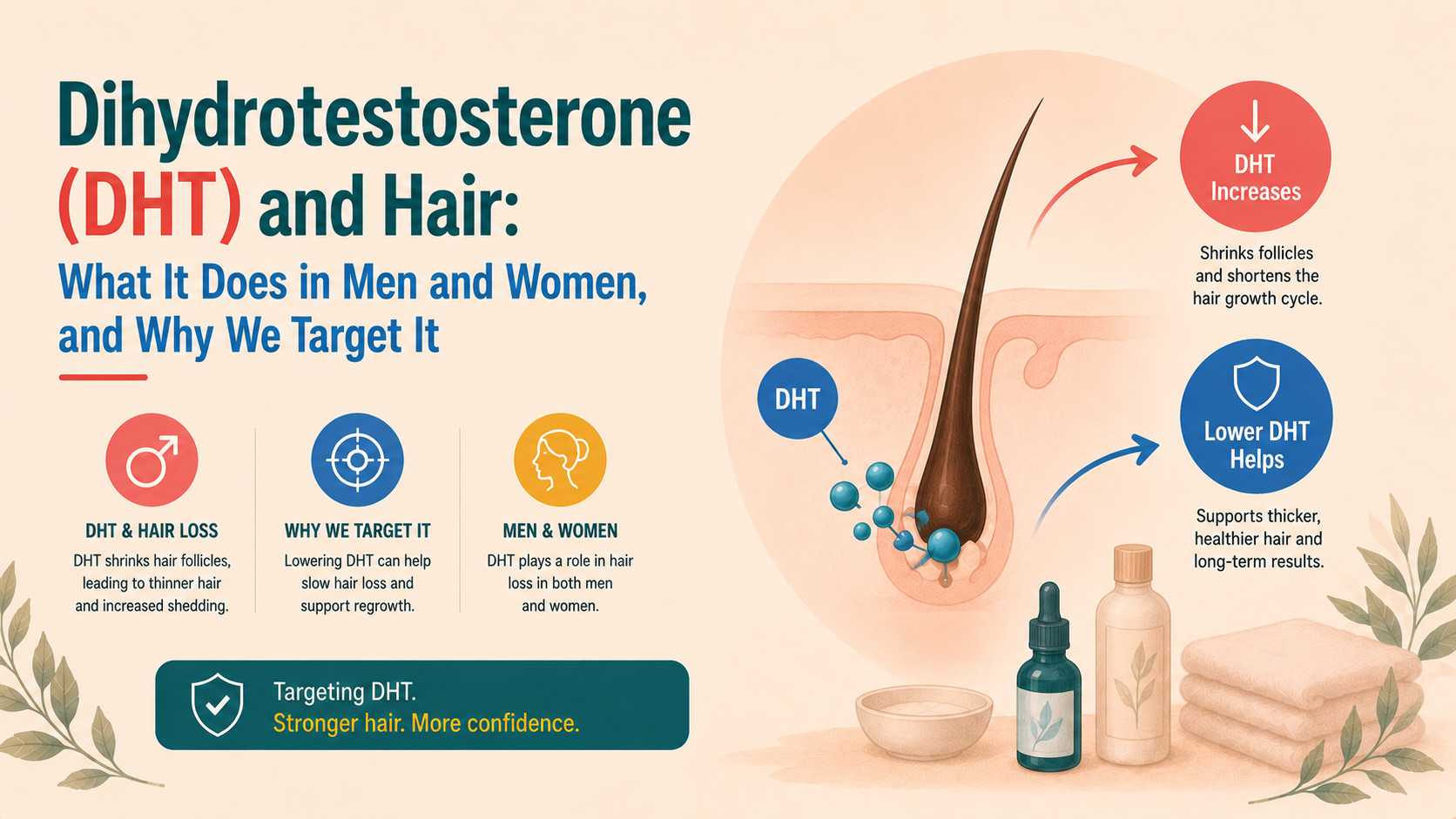
Hair follicles receive oxygen through their blood supply, not by breathing air through the scalp. Wearing a comfortable hat does not cause the DHT-related miniaturisation of pattern hair loss.
Headwear can cause a different problem if it repeatedly pulls on the hair or rubs the same area. The hairstyle underneath may also create tension. Pain, broken hairs or thinning where the hair is pulled should prompt a change in fit or styling.
Protective helmets should still be worn when needed. A well-fitting hat can also protect exposed scalp from sun damage. You do not need to trade those benefits for an unsupported fear of baldness.
Repeated bleaching, harsh chemical processing and heat can damage the hair shaft. Hair may break before it reaches its usual length, making it look thinner. This does not mean the follicles are necessarily miniaturising.
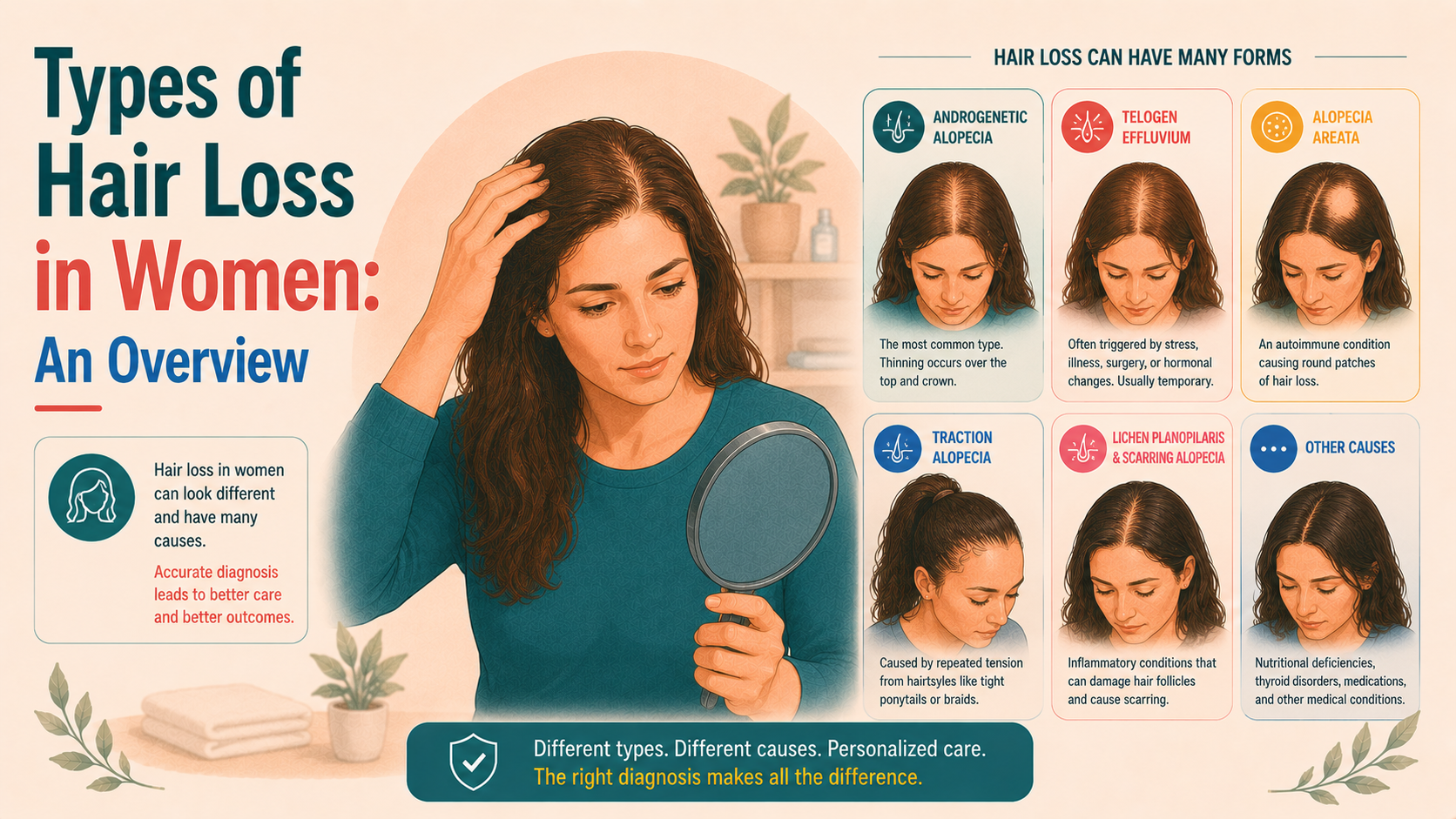
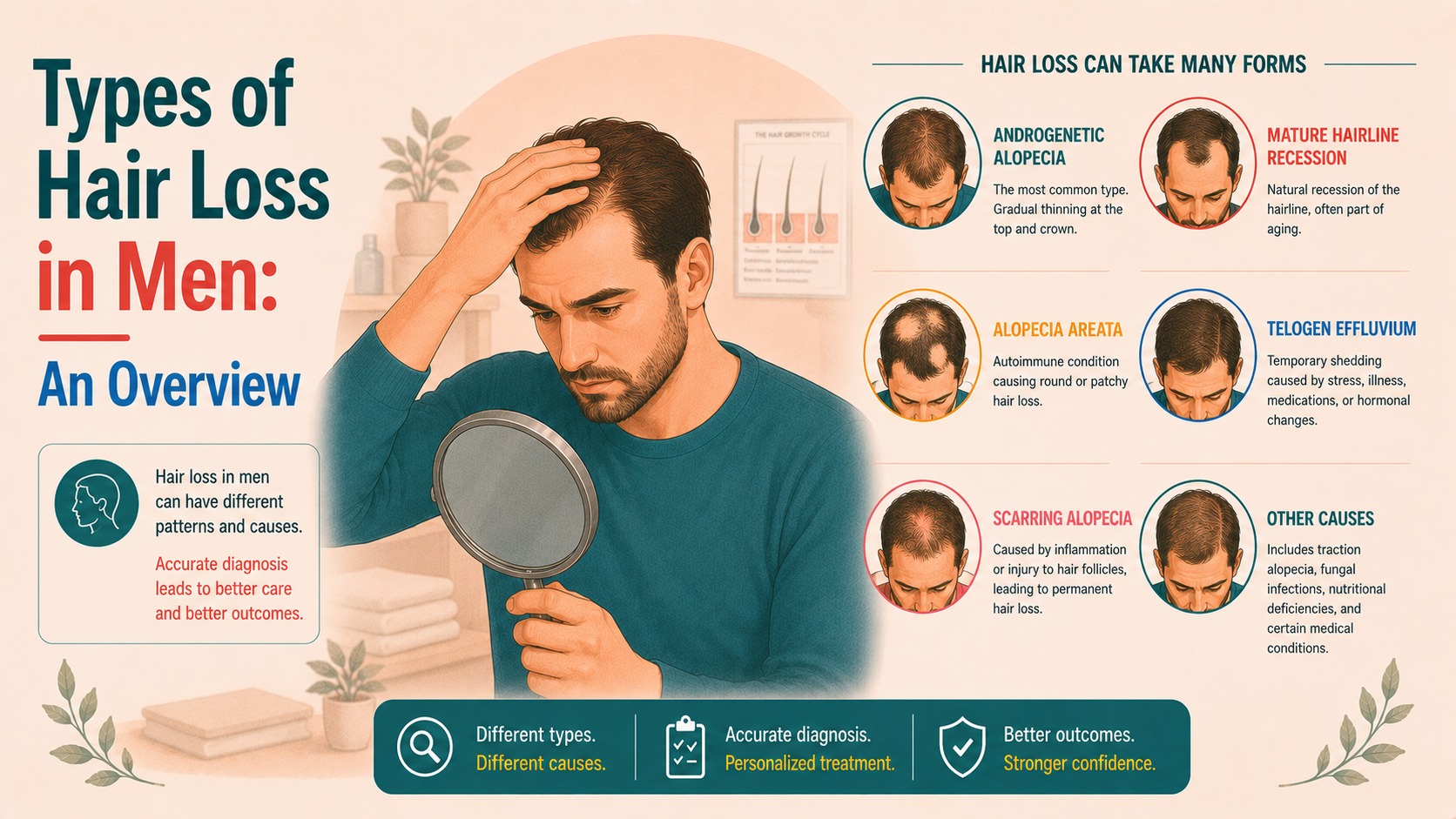
Traction is different again. Persistent pulling from a tight style can damage follicles themselves. Early traction alopecia may recover when tension is removed, but longstanding damage can become permanent.
The problem is the force and repeated exposure, not a moral judgement about a particular hairstyle or culture. A style that causes pain or bumps should be adjusted rather than endured.
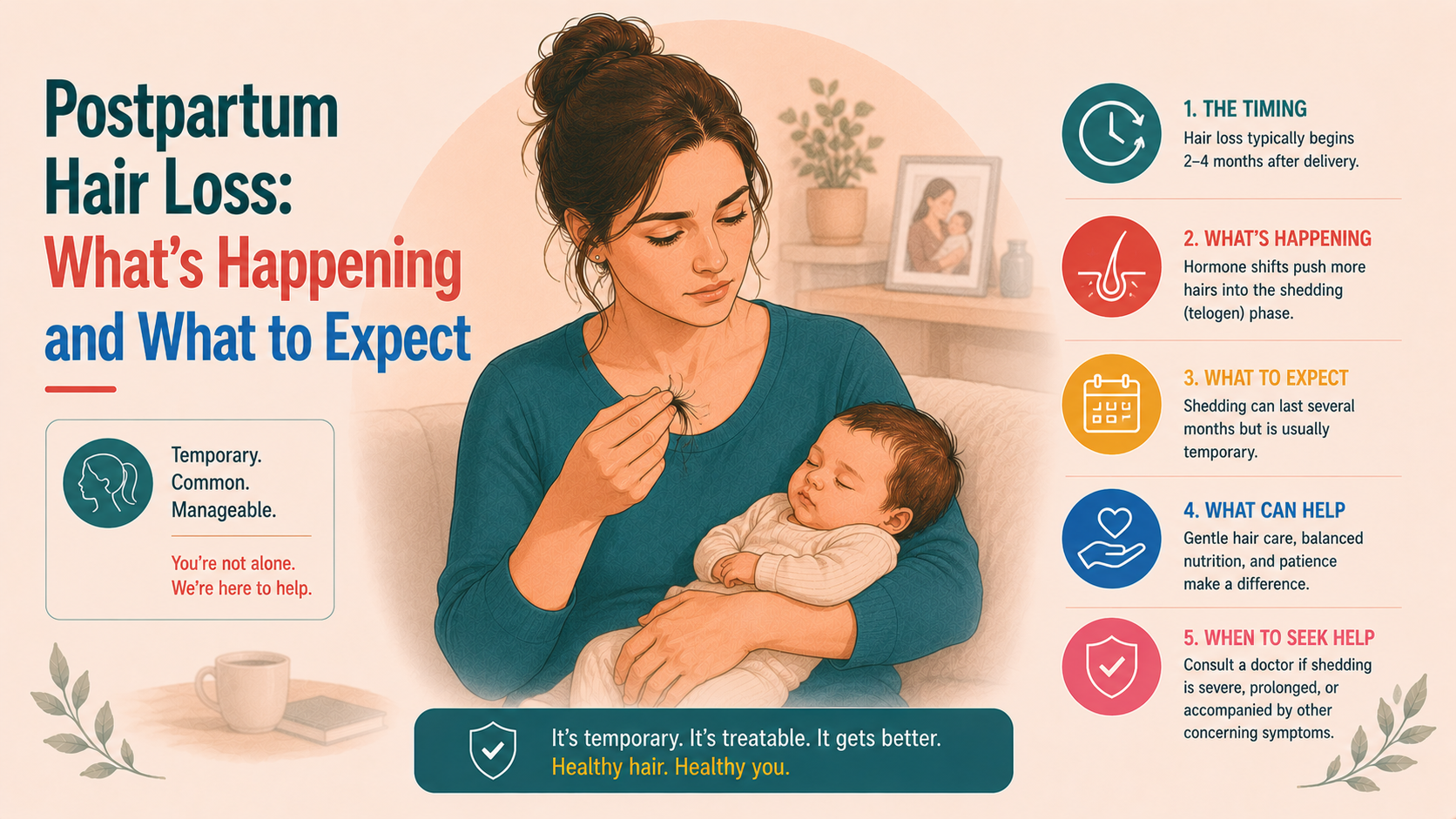
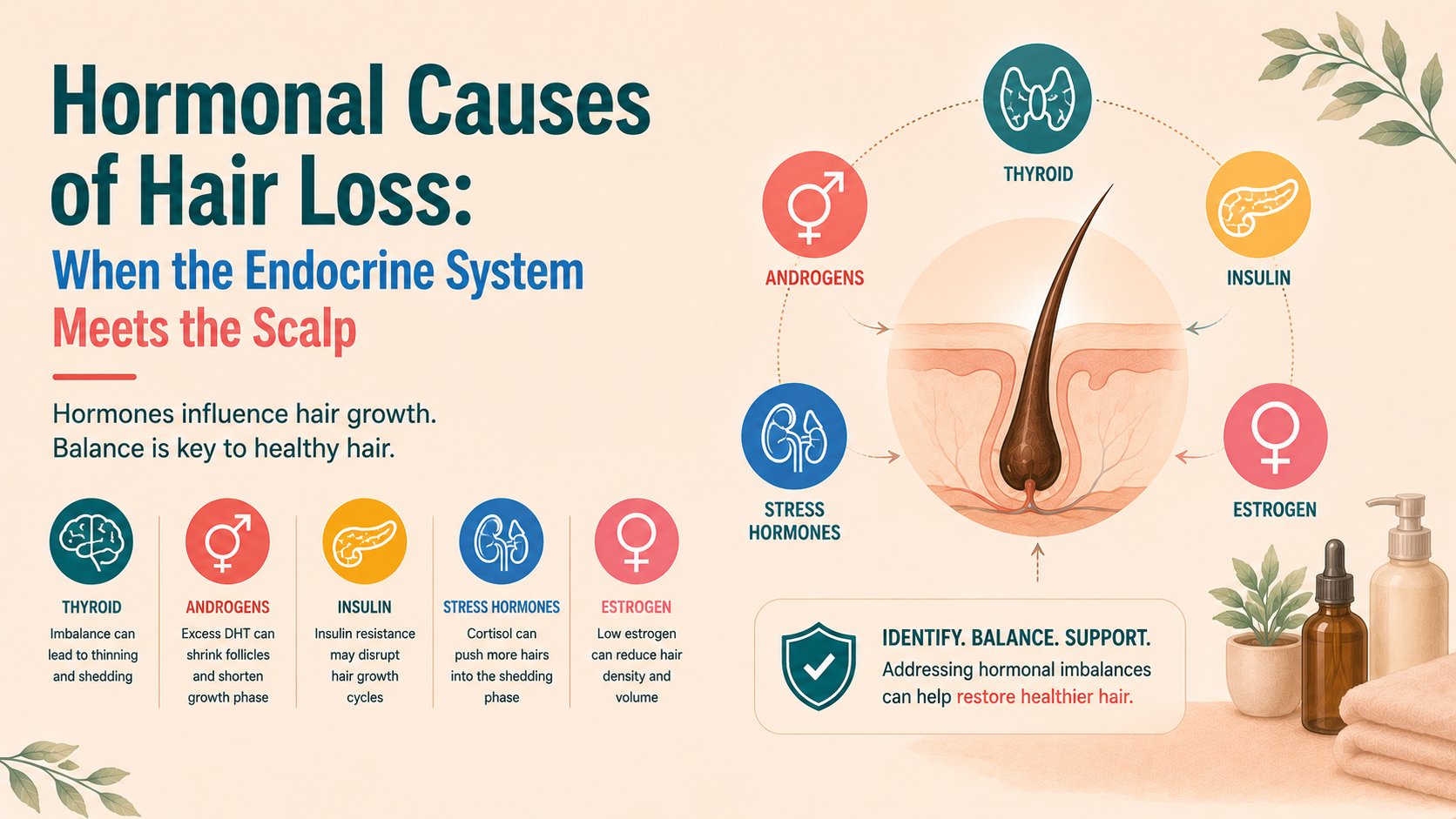
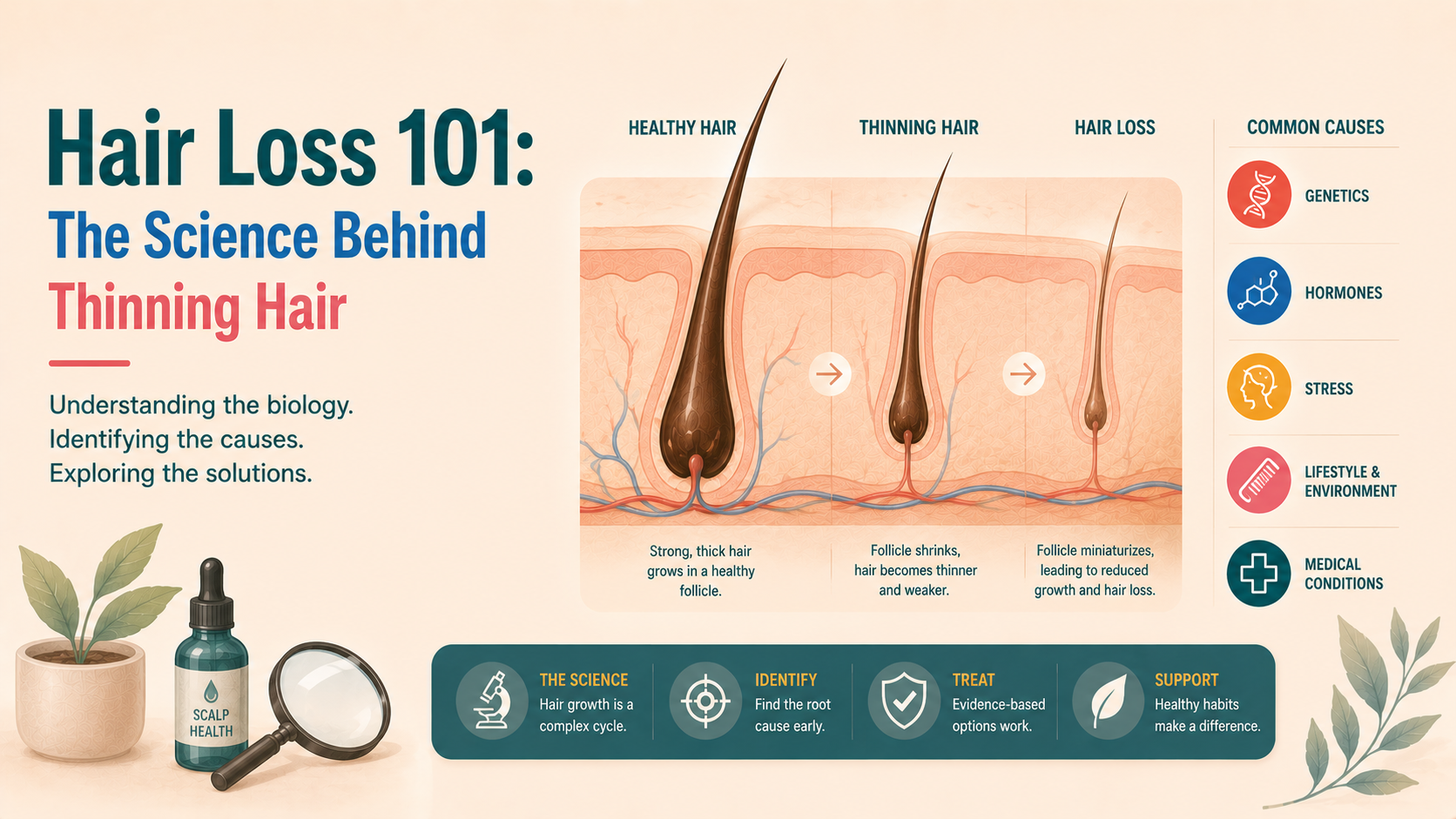
Significant stress, illness or surgery can trigger telogen effluvium, with shedding appearing months later. That is a recognised process. It does not mean that every person with thinning simply needs to relax.
Pattern loss may continue even when life becomes calmer. Scarring and autoimmune conditions also require their own assessment. Stress should not become a convenient explanation that ends the investigation before the scalp has been examined.
Support for anxiety or poor sleep can still be valuable. Its success does not have to be measured by hair counts; feeling less consumed by the problem matters in its own right.
Ordinary resistance or aerobic exercise has not been established as a cause of pattern baldness. Short-lived hormonal changes during exercise should not be treated as equivalent to sustained exposure to non-prescribed anabolic steroids.
Training alongside inadequate food intake can contribute to nutritional stress and shedding. The useful response is to assess the overall situation, rather than assume lifting weights is damaging your hair.
Creatine is frequently blamed too. A 2025 controlled trial found no significant adverse hair effect over 12 weeks. That provides reassurance within the study’s limits, not a guarantee about every dose or every lifetime exposure.
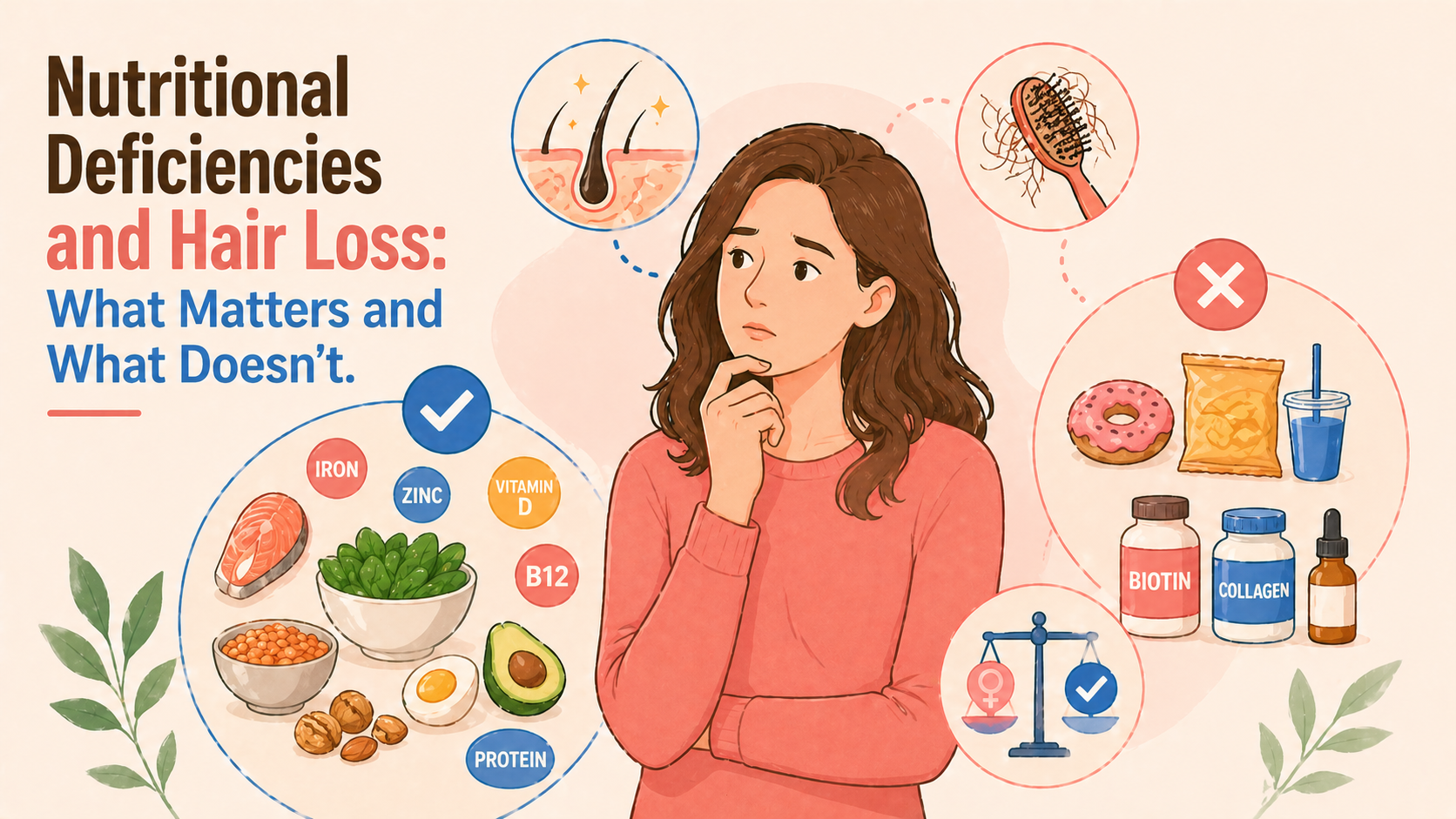
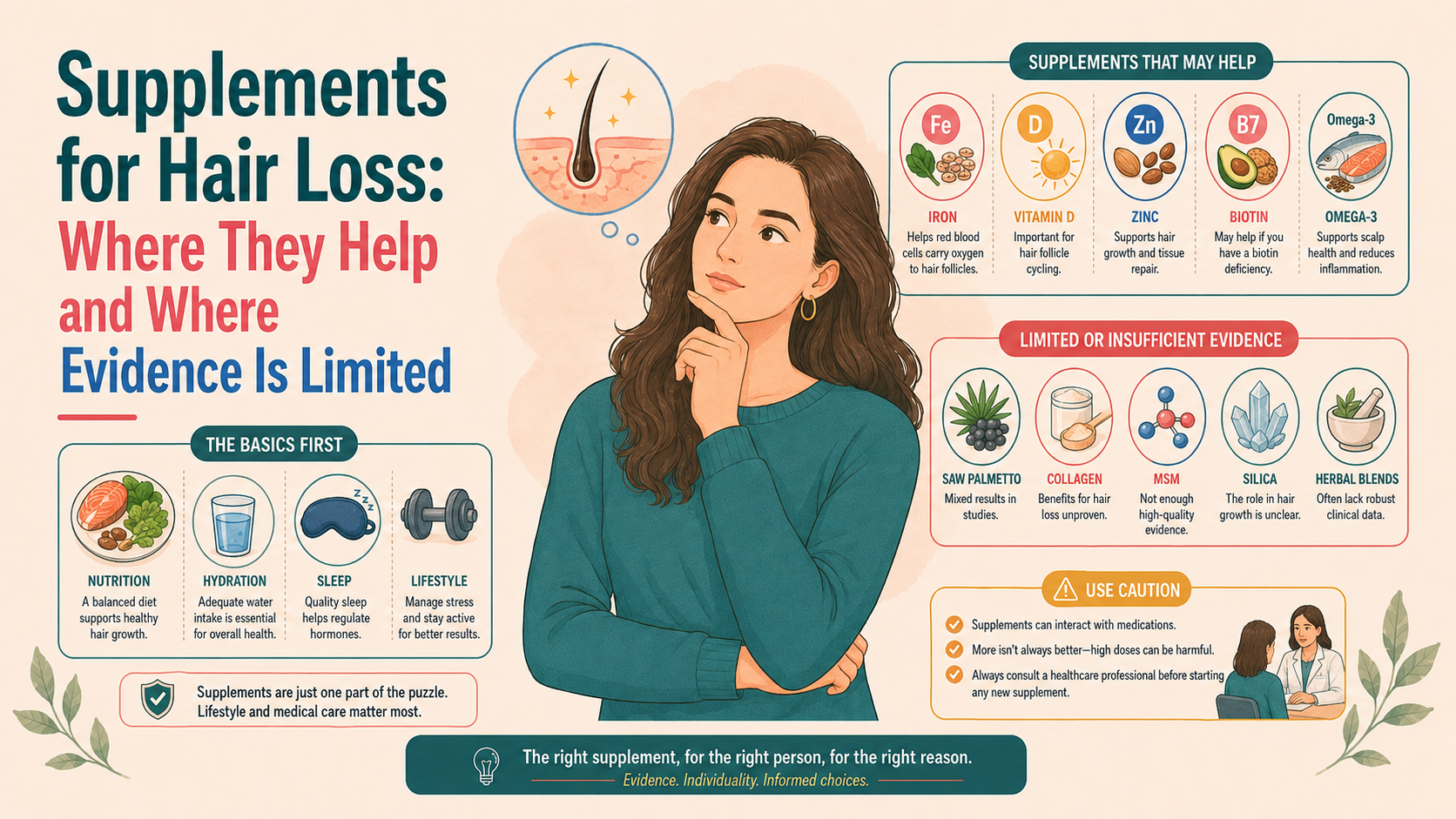
Severe restriction, rapid weight loss and genuine deficiencies can affect hair. Addressing them matters. But someone can eat a varied diet and still develop androgenetic alopecia.
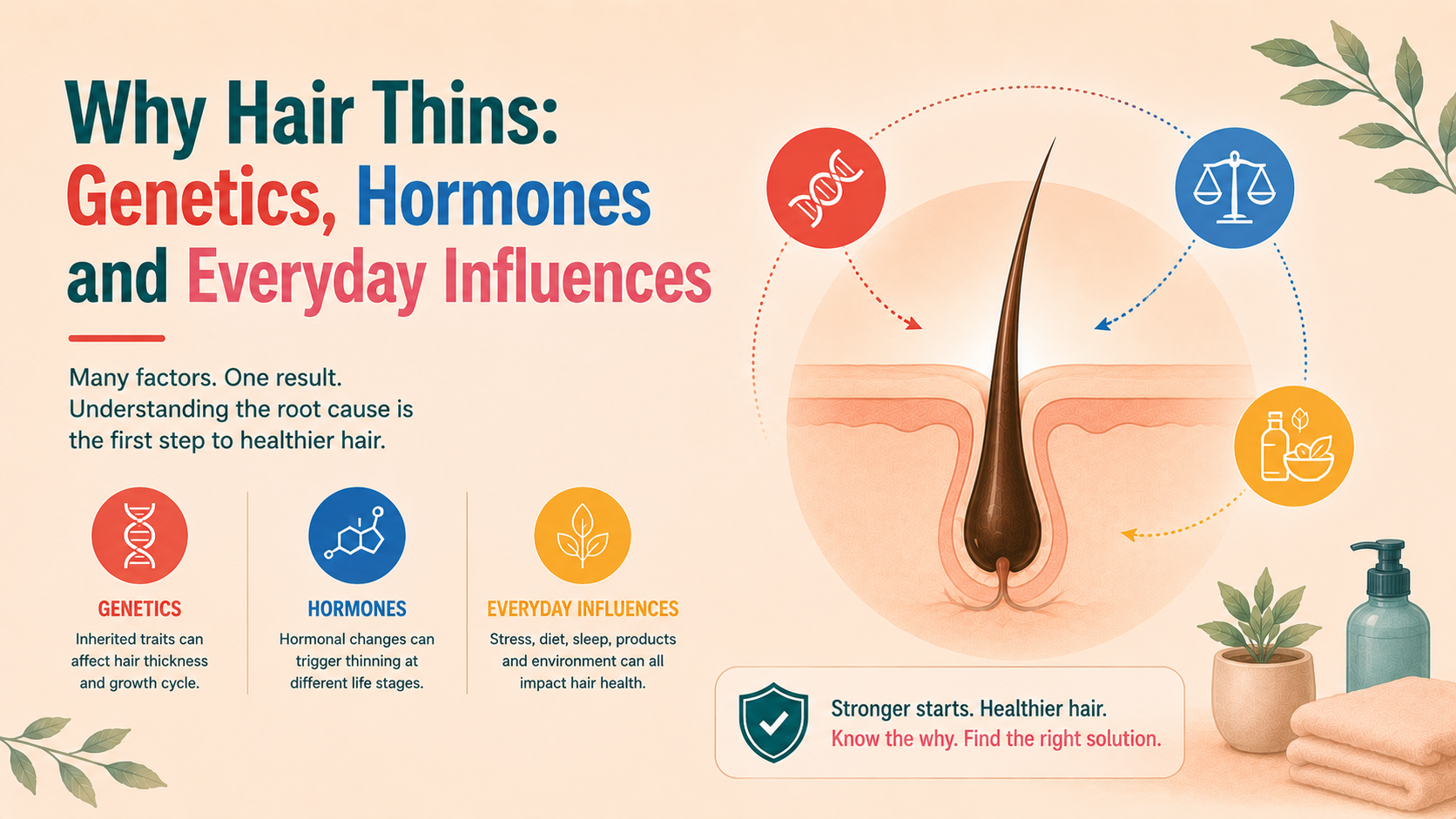
Research associating smoking, sleep or dietary patterns with hair loss can be informative, but it does not show that changing one habit will necessarily restore hair. Claims about a single food causing or curing baldness often go further than the studies allow.
The practical aim is adequate nutrition and manageable habits that support your health. It should not become a system in which every meal, late night or stressful day feels like a threat to the hairline.
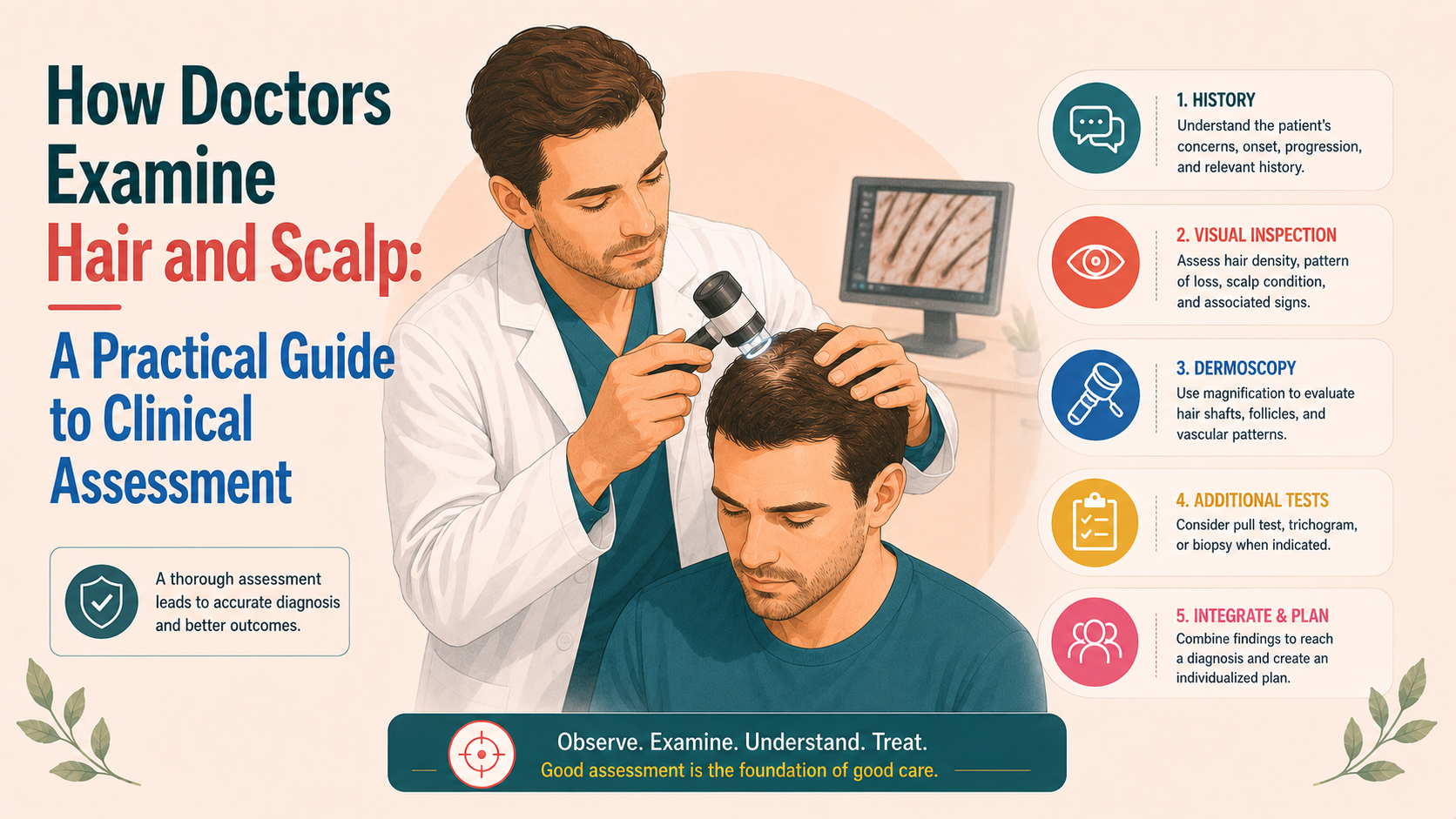
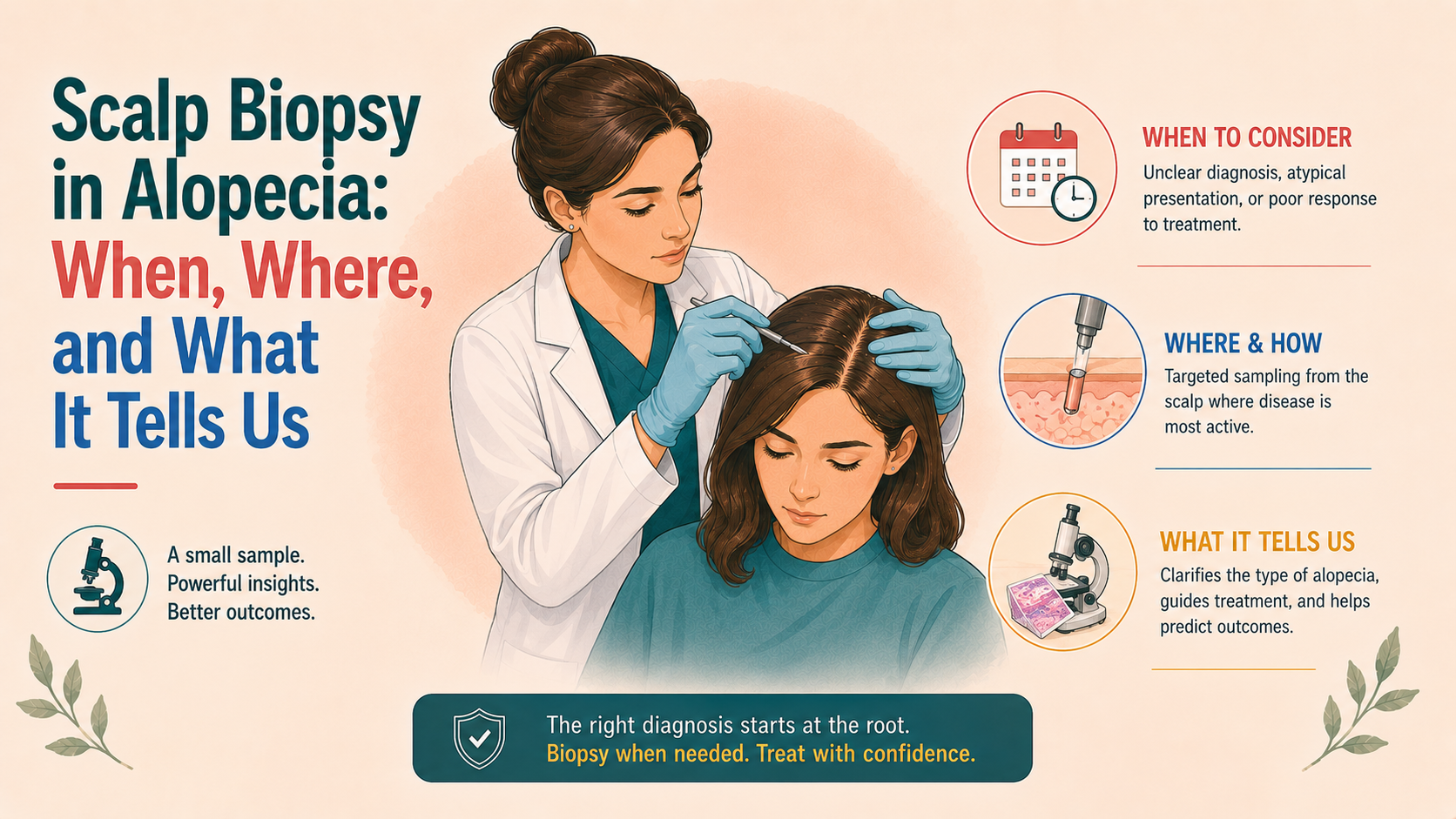
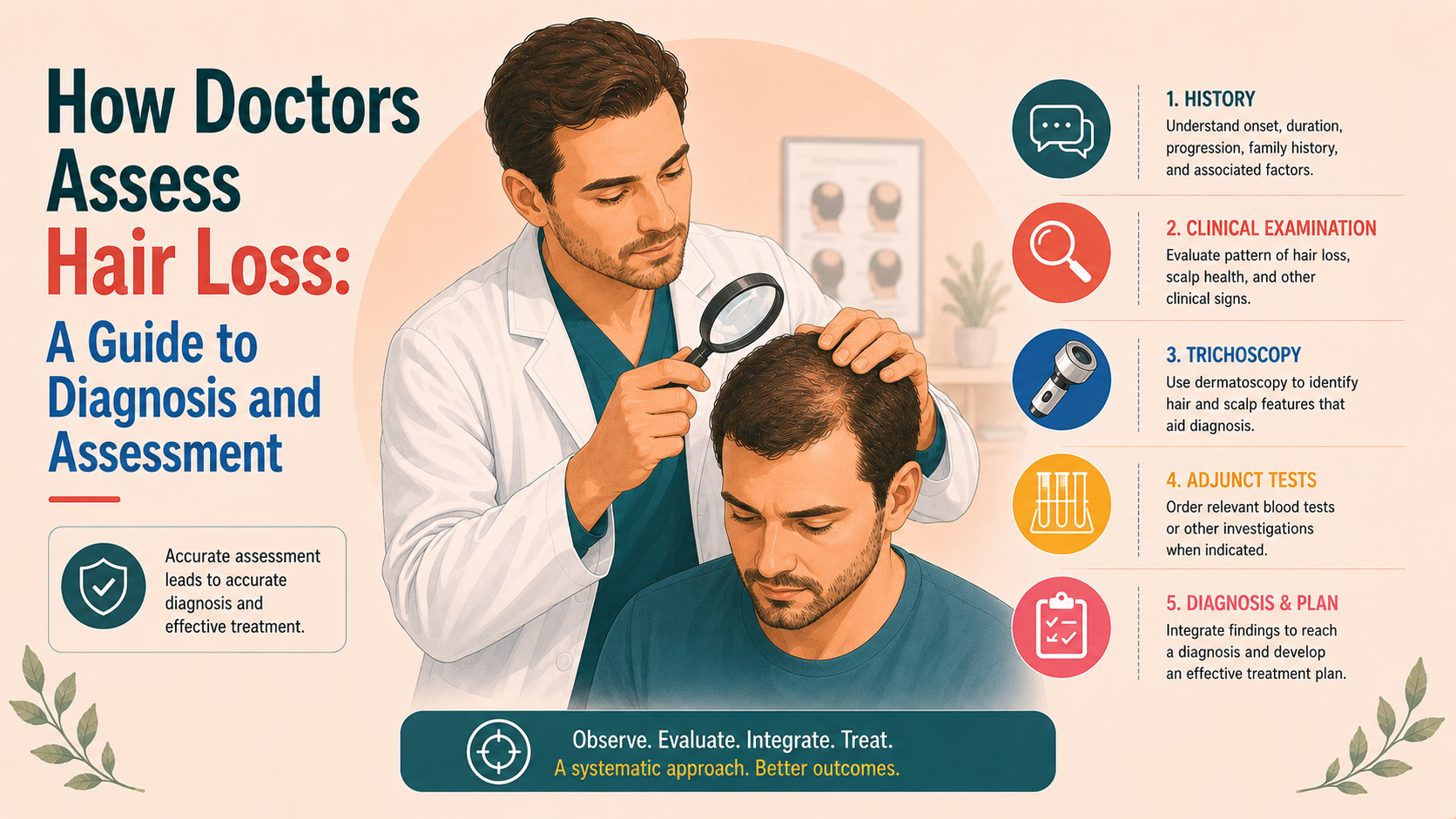
If loss is persistent, clearly progressing or accompanied by scalp symptoms, arrange an assessment. A new bald patch, ongoing inflammation or a rapidly changing pattern is more useful information than a long list of shampoos you have tried.
I would rather someone had an explanation that fits their scalp than spent months removing harmless parts of everyday life. The right diagnosis gives you a much better basis for deciding what, if anything, to change.