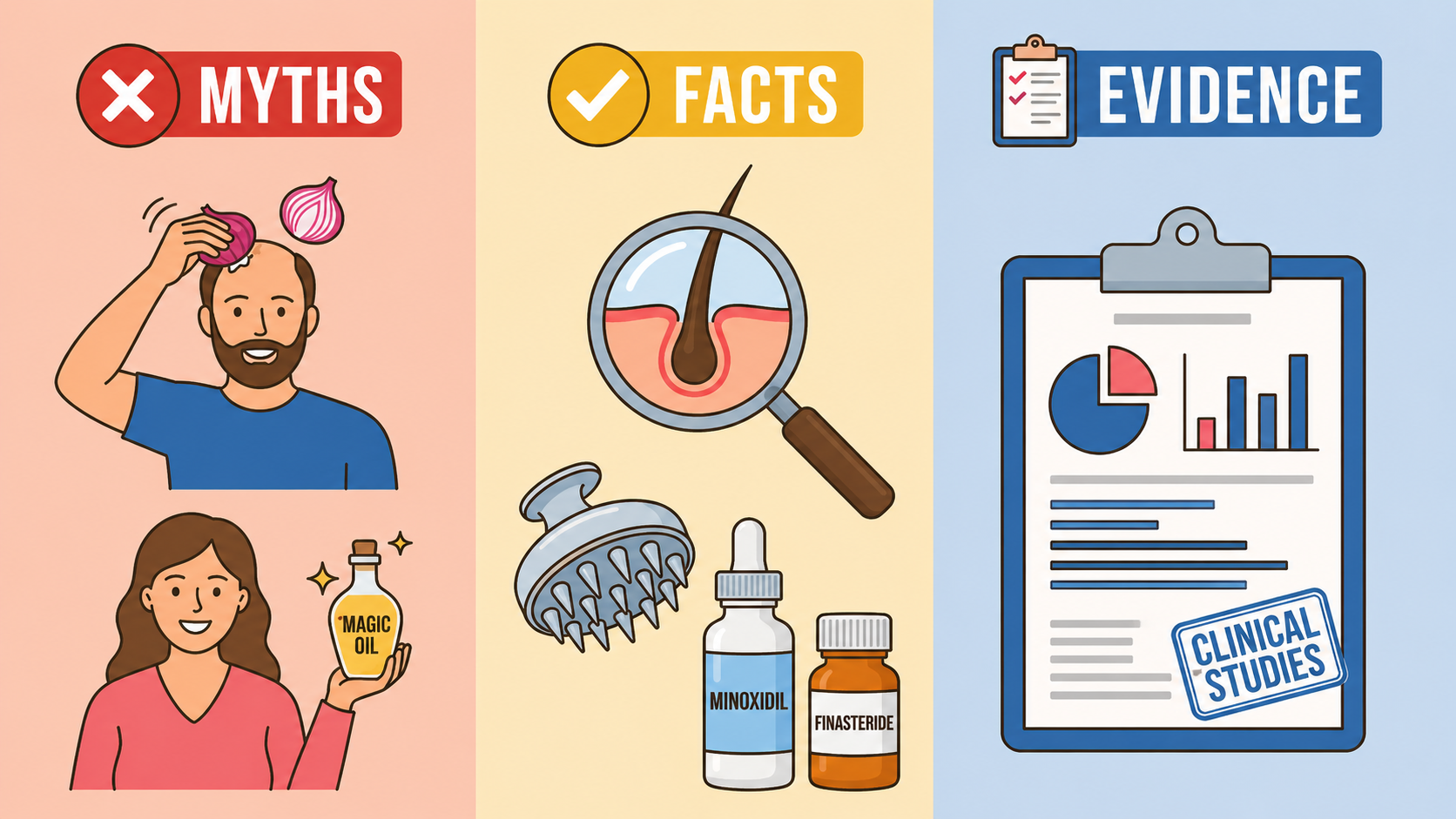
Misinformation around hair loss is rife. Discover some of the most common myths versus their reality.
![[headshot]](https://cdn.prod.website-files.com/68207da82e5b8c350c67932f/68c6a7436a552c0fe87a4da7_Screenshot%202024-11-27%20at%2011.38.11.png)
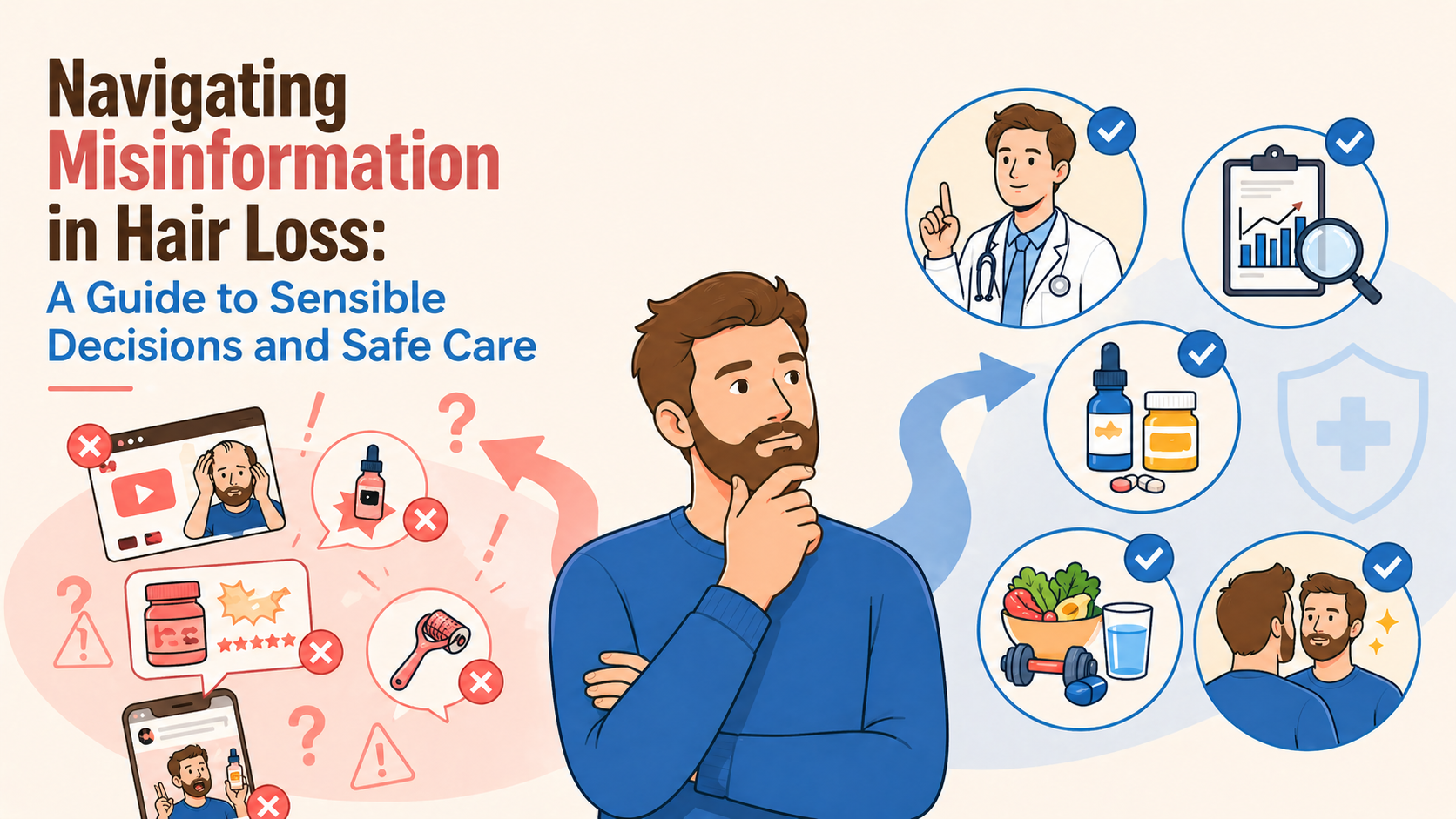
Hair loss sits at the intersection of emotion, identity, and commerce, making it particularly vulnerable to misinformation and aggressive marketing. This article offers a framework for evaluating what you read and hear, recognising unhelpful fear-based narratives, and spotting clinics and practices that may not have your long-term interests at heart.
Read More ->Hair loss treatments attract strong opinions. Some people are convinced “nothing works”; others believe a single product or procedure can fully restore their hair. This article reviews common myths about treatments – from minoxidil and 5α-reductase inhibitors to low-dose oral minoxidil, PRP, laser devices and surgery – and summarises what reasonably good evidence actually shows.
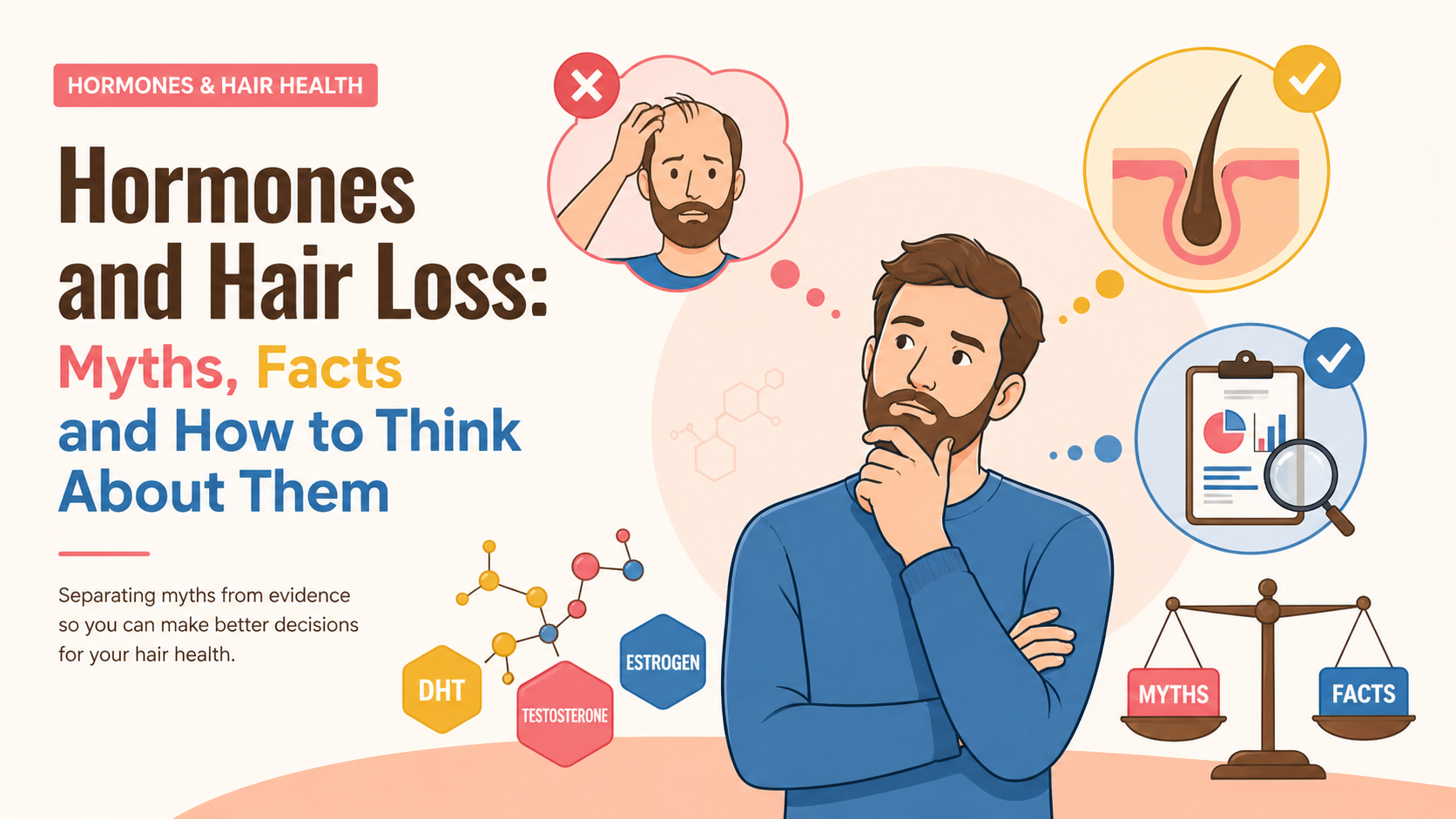
Read More ->Hormones are central to certain forms of hair loss, particularly androgenetic alopecia and thyroid-related shedding. That does not mean every hair problem is hormonal, nor that a normal blood test rules out hormone involvement. This article reviews common hormone-related myths about hair loss and summarises what current evidence actually supports.
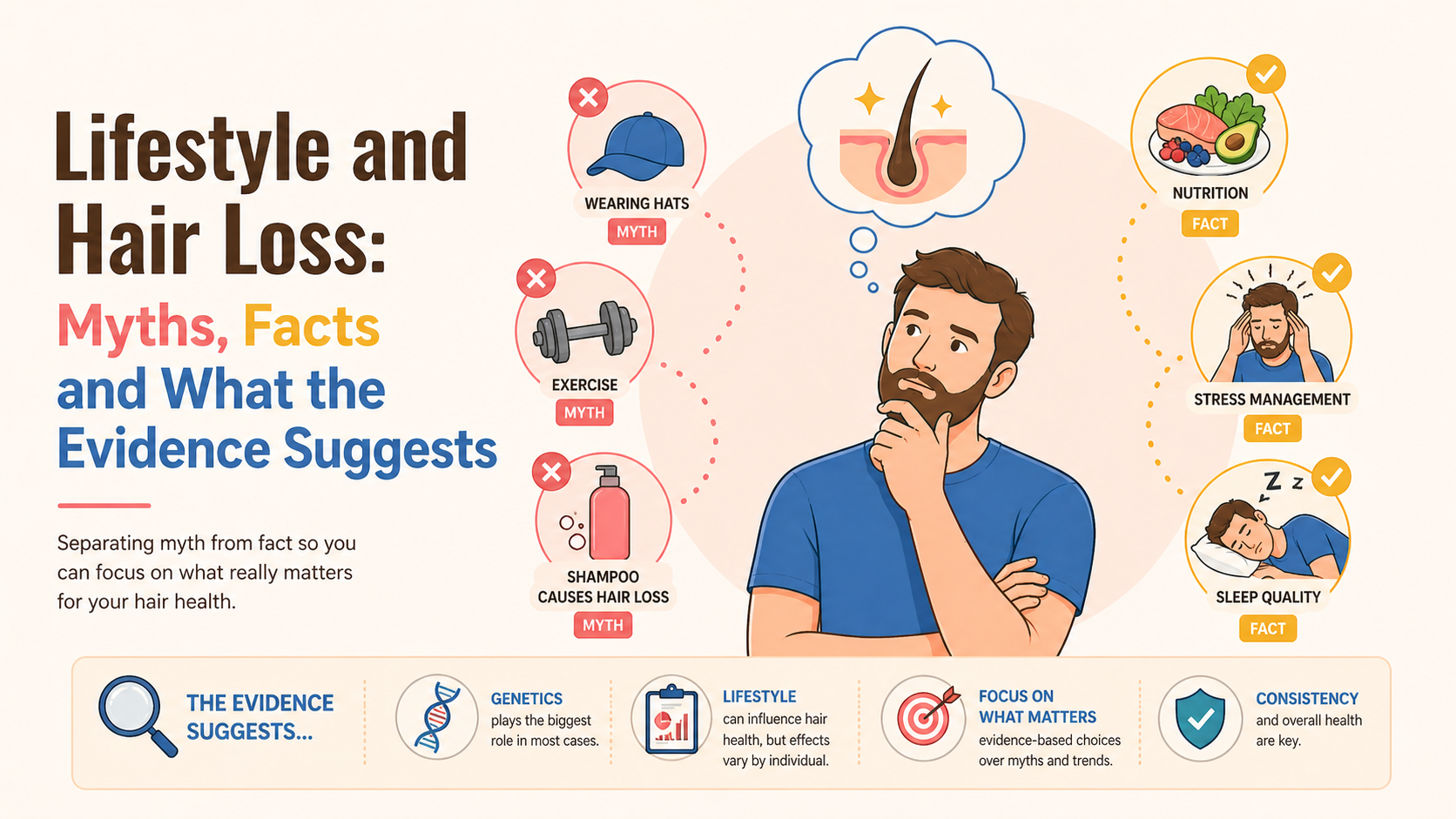
Read More ->Lifestyle choices can influence hair health, but not always with the severity people assume. This article reviews common lifestyle-related myths about hair loss – smoking, alcohol, stress, washing, hats, diet and tight hairstyles – and summarises what current evidence actually supports.
Read More ->