Treatment

Hair Transplantation: History, Methods, Candidacy and the Future of Surgical Hair Restoration

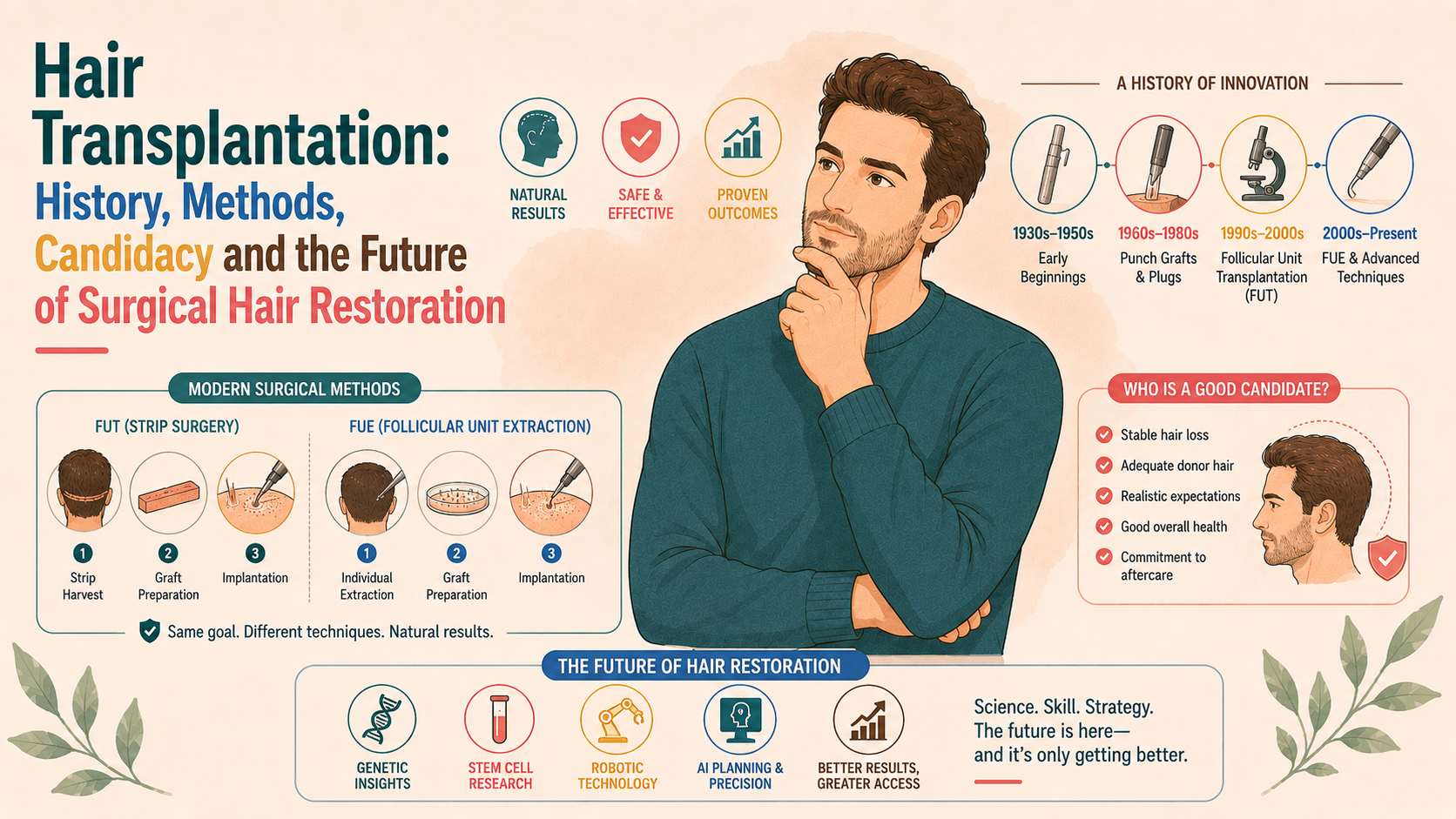
Hair transplantation has evolved from crude “plugs” to refined microsurgery. Performed well, it can permanently redistribute hair in men and women with pattern loss. Performed poorly, it can exhaust the limited donor area and leave scars that are difficult to correct. This article walks through the history of hair transplantation, the core science behind it, how modern procedures work, who should and should not consider them, how to avoid botched surgery, and where the field is heading.
[headshot]
Dr. Harry M Griffiths
Article Summary

1. What hair transplantation can and cannot do

Hair transplantation is often misunderstood as “hair regrowth surgery”. In reality, it is the surgical redistribution of existing, relatively permanent follicles from the back and sides of the scalp to areas where susceptible follicles have miniaturised or been lost.

Key points at the outset:

  • Transplanted hair is usually permanent because it retains the characteristics of its donor area.
  • Surgery does not create new follicles; it moves a finite resource.
  • The donor area is limited. Over-harvesting leaves visible scars and “moth-eaten” patches that are difficult to hide.
  • Surgery does nothing to change the underlying tendency to androgenetic alopecia in non-transplanted follicles. Medical treatment remains important.

When properly planned and executed, transplant surgery can provide natural, durable improvement. When performed poorly, it can result in pluggy hairlines, visible scars, and a depleted donor area, leaving no room for future correction.

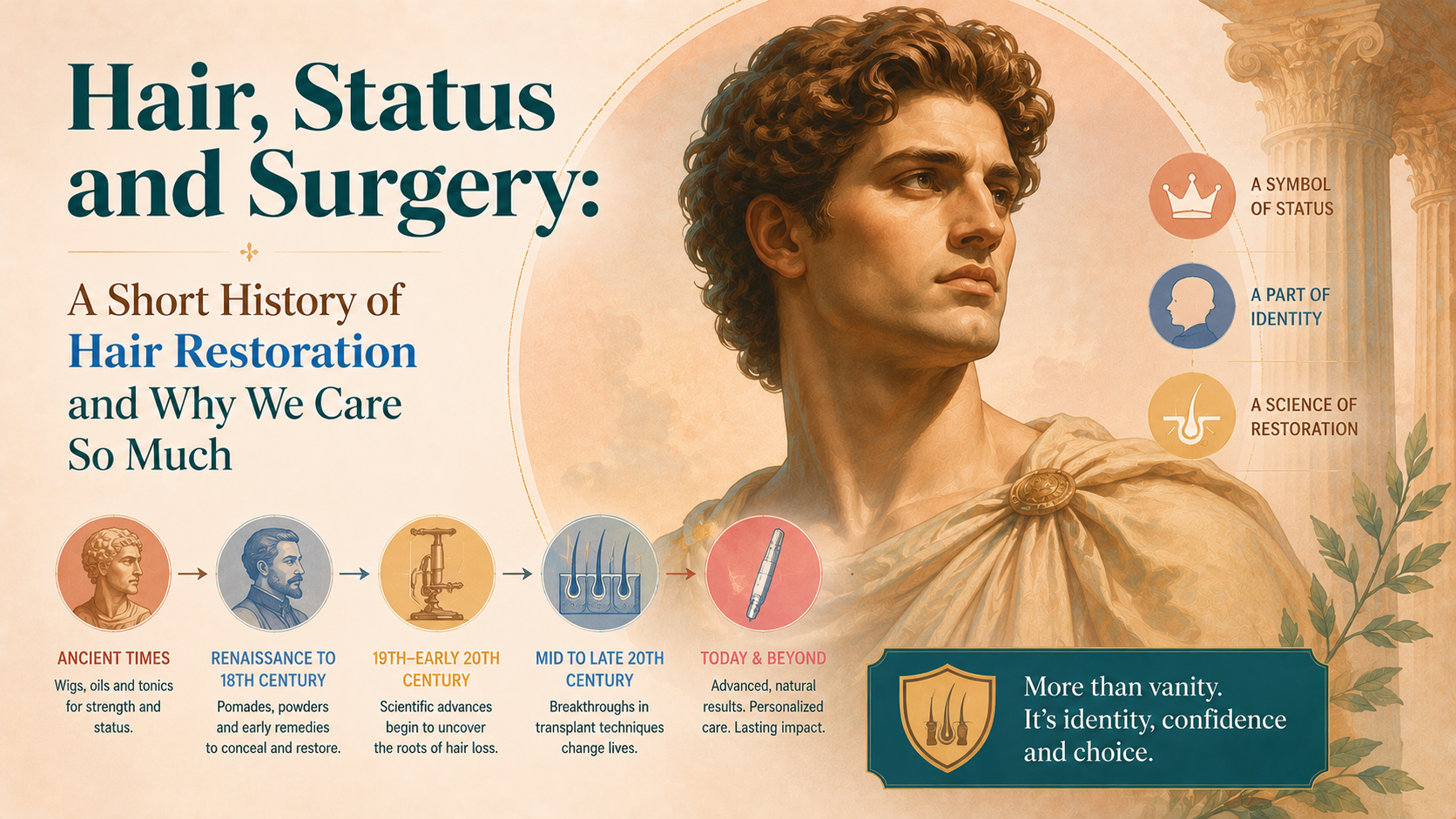
2. A brief history: from plugs to follicular units

2.1 Early ideas and Japanese pioneers

Surgical hair restoration ideas date back over a century. In the 1930s, Japanese dermatologists such as Okuda and Tamura described using punch and slit grafts to restore hair in scars, eyebrows and moustaches.

Their work was technically sophisticated for its time:

  • small cylindrical grafts punched from hair-bearing scalp
  • transplanted into areas of cicatricial alopecia and burns
  • with survival and natural-looking growth

Because of the Second World War and language barriers, these early contributions had little impact in the West for several decades.

2.2 Orentreich and “donor dominance”

The modern era of hair transplantation for male pattern baldness began in the 1950s with New York dermatologist Dr Norman Orentreich.

He observed that hair from the permanent fringe at the back and sides of the scalp, when transplanted into bald frontal or vertex areas, continued to behave as it did in the donor area; it did not miniaturise or fall out in the new location.

He coined the term “donor dominance” to describe this phenomenon. It established the scientific basis for hair transplantation as a treatment for androgenetic alopecia: the long-term fate of a hair follicle is determined more by its origin than by its destination.

Orentreich used relatively large circular punches, often 3–4 mm in diameter, resulting in the classic “pluggy” look when used at the frontal hairline. The concept was sound; the aesthetic execution needed refinement.

2.3 Minigrafts, micrografts and aesthetic evolution

In the 1970s and 1980s, surgeons began to move away from large plugs toward:

  • minigrafts – grafts containing 3–6 hairs
  • micrografts – grafts containing 1–2 hairs

These smaller grafts allowed denser packing without a cobblestone appearance, created softer and more natural hairlines, and reduced the noticeable “doll’s hair” effect.

This phase was a bridge between the crude plug era and the modern follicular unit era.

2.4 Follicular unit transplantation (FUT)

The next major shift came when dermatologists recognised that hair grows in naturally occurring follicular units: groupings of 1–4 terminal hairs emerging from a single follicular opening, along with associated sebaceous glands, arrector pili muscles, and perifollicular tissue.

Follicular unit transplantation (FUT), also known as “strip surgery”, involves:

  1. Removing a strip of hair-bearing scalp from the donor area (usually occipital).
  2. Closing the wound, leaving a linear scar that can be hidden by surrounding hair.
  3. Dissecting the strip into individual follicular units under a microscope.
  4. Creating tiny recipient sites in the thinning areas at an appropriate angle, direction and density.
  5. Placing individual follicular units into these sites.

This approach matched the graft size to the scalp’s natural hair architecture, used single hair grafts at the hairline to create soft, irregular edges, placed multiple hair grafts behind the hairline to increase density, and achieved natural-looking results.

2.5 Follicular unit excision (FUE)

Later, follicular unit excision (FUE) emerged as an alternative harvesting method: instead of removing a strip, individual follicular units are extracted directly from the donor area using small circular punches (usually 0.7–1.0 mm). This technique leaves a pattern of tiny dot scars scattered across the donor zone rather than a single linear scar.

Its advantages over FUT include no linear donor scar, the potential to return to short haircuts more quickly, and the ability to harvest grafts flexibly from a wider area of the donor zone.

However, there is a greater risk of overharvesting if the procedure is not carefully planned, higher transection rates when performed by less experienced practitioners, and a more demanding technique that is difficult to perform consistently well.

Robotic systems and motorised punches have been developed to assist with FUE, but operator skill remains the primary determinant of quality.

3. The basic science of hair transplant surgery

3.1 Donor dominance and recipient influence

Two principles describe transplanted hair behaviour:

  • Donor dominance: transplanted follicles largely retain the androgen sensitivity profile of their donor region. Hair taken from the permanent zone at the back of the head tends to remain permanent wherever it is moved.
  • Recipient influence: to a lesser extent, local factors (blood supply, scarring, skin characteristics) in the recipient area also affect survival and appearance, but they do not override genetic resistance to miniaturisation.

This is why taking hair from areas that are already thinning (an unsafe donor zone) is risky, as those follicles may continue to miniaturise even after being transplanted. In contrast, harvesting hair from robust occipital zones is generally safer, because those follicles are much less likely to miniaturise, even when placed in balding frontal or crown areas.

3.2 Graft survival and growth

Once follicles are removed from the donor area, they are briefly in a vulnerable state since they have lost their native blood supply and are prone to dehydration, mechanical trauma, and temperature extremes.

Factors that support graft survival:

  • gentle handling with fine forceps
  • minimising time out of the body
  • proper storage in chilled, isotonic solutions
  • careful, atraumatic insertion into recipient sites

Even with meticulous technique, some transplanted follicles will not survive. Modern methods aim to minimise this loss as much as possible.

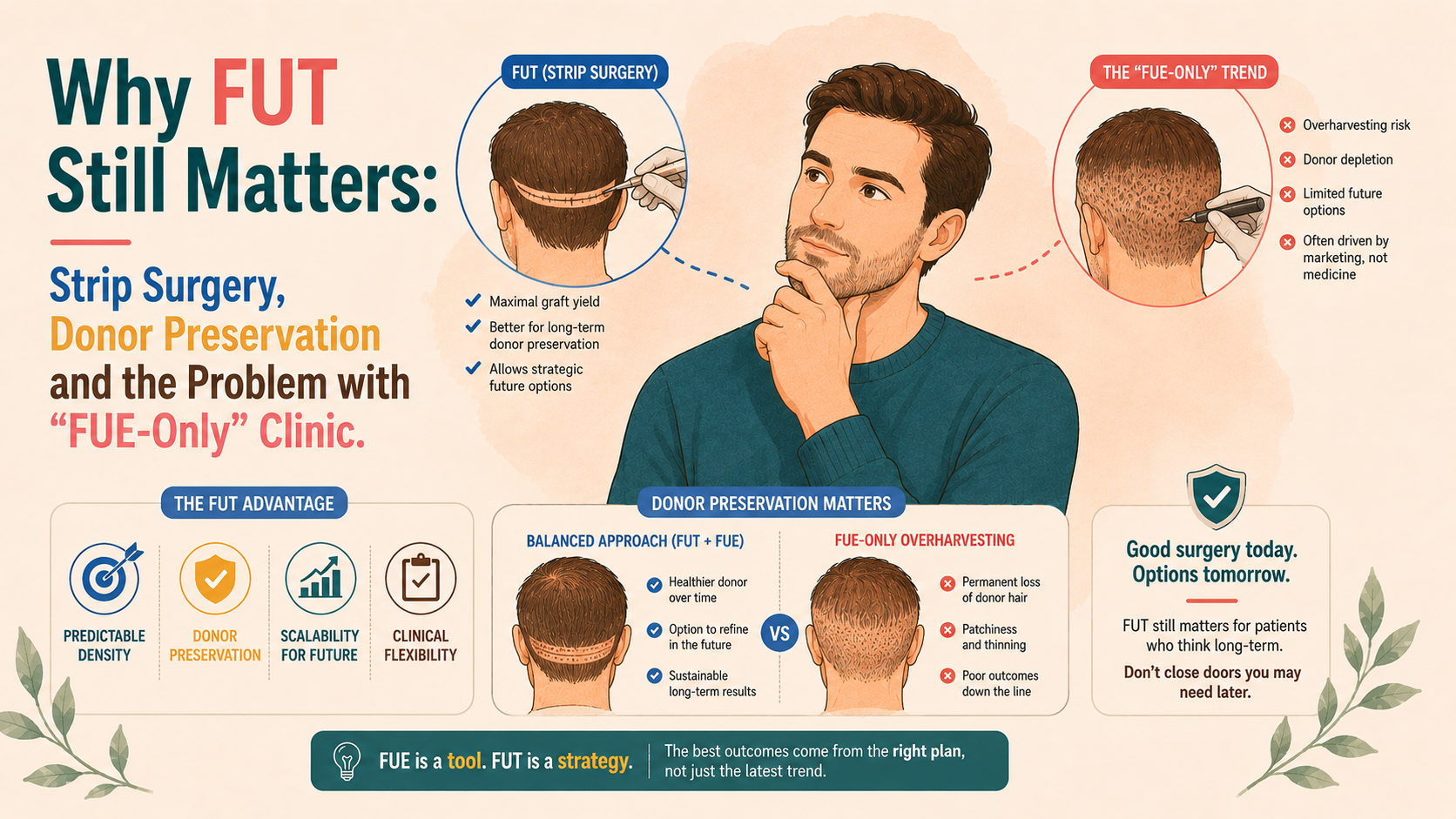
4. FUT vs FUE: techniques, pros and cons

Both FUT and FUE are valid; however, each has strengths and weaknesses.

4.1 FUT (strip)

Advantages:

  • efficient harvest of large numbers of grafts in one session
  • high-quality grafts when dissected under magnification
  • predictable preservation of donor density above and below the scar (most important)

Disadvantages:

  • linear donor scar – may be visible with very short haircuts
  • requires good scalp laxity; less ideal in very tight scalps
  • can be psychologically off-putting to some patients

4.2 FUE

Advantages:

  • no linear scar; multiple small dot scars that may be less visible in short hair
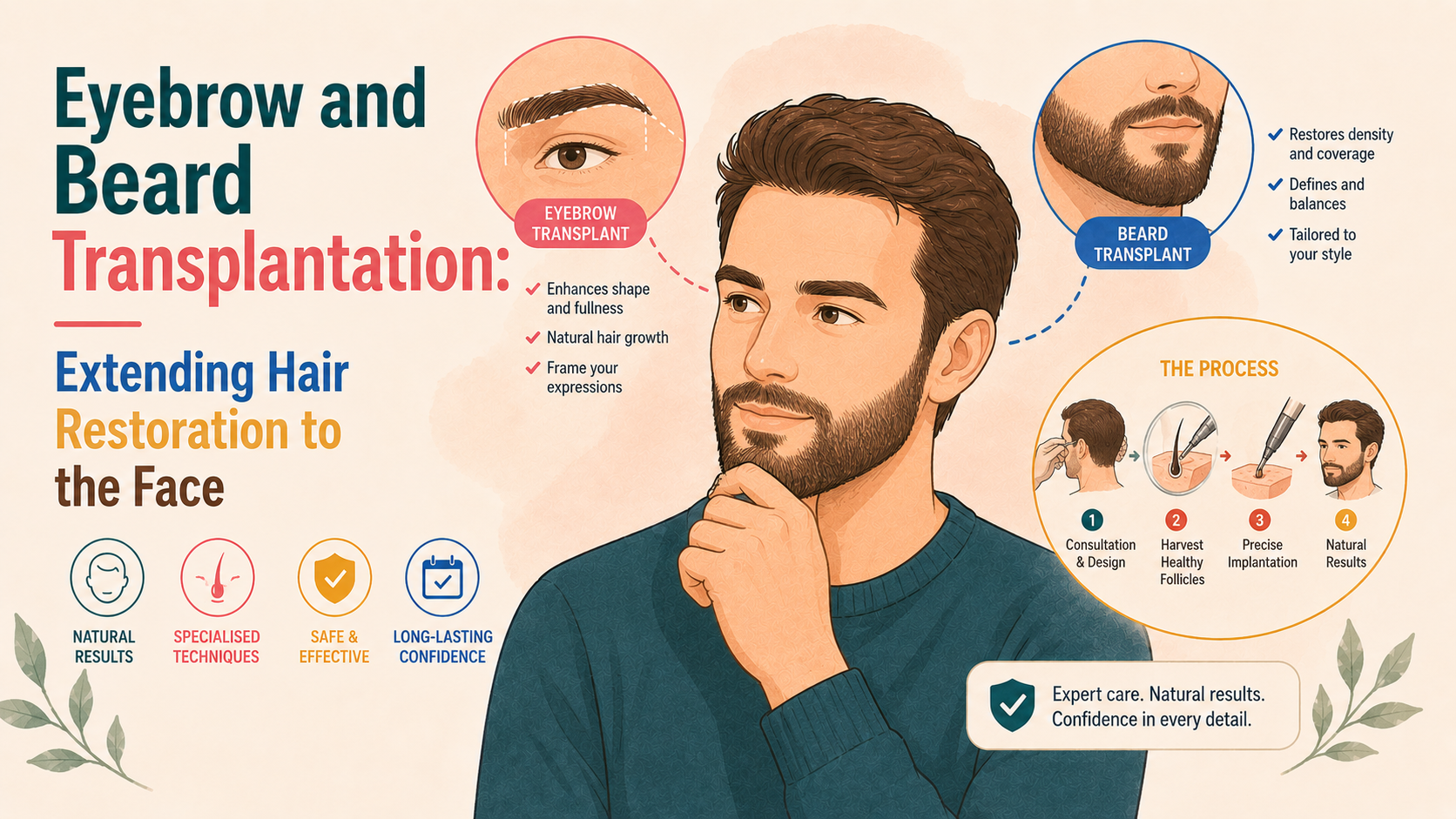
  • can selectively harvest from different donor regions, including beard and body hair, in advanced cases
  • often perceived as “less invasive”, though this is debatable in tissue terms

Disadvantages:

  • extraction can easily become too dense, producing visible thinning or patchiness in the donor zone
  • grafts may be more fragile due to transection or reduced perifollicular tissue
  • total lifelong graft yield may be lower if the donor is not carefully mapped

4.3 Choosing between the two

Choice depends on:

  • existing and anticipated hair loss pattern
  • donor area quality (density, calibre, laxity)
  • hairstyle preferences (buzz cut vs longer hair)
  • previous surgeries and scars
  • surgeon’s expertise in each method

In many patients, a combination over a lifetime (e.g. one or more FUTs, followed by selective FUE) can maximise donor utilisation while preserving aesthetics. An ethical surgeon will match technique to the patient, not push one method to flex their surgical prestige.

5. Candidacy: Who should consider hair transplant surgery?

Transplantation is not suitable for everyone with hair loss. It is most beneficial when:

  • hair loss is due primarily to androgenetic alopecia
  • there is a good-quality donor area: adequate density, good calibre, clear permanent zone
  • the pattern is stable or stabilised medically
  • the patient has realistic expectations and understands that further loss in non-transplanted hair is likely

5.1 Men

Good candidates typically:

  • have clear male pattern hair loss (Hamilton–Norwood pattern),
  • have adequate donor hair,
  • are ideally using medical therapy (finasteride/dutasteride and/or minoxidil) to stabilise non-transplanted hair,
  • accept that surgery does not “fix” the underlying condition and that further treatment may be needed.

Very young men (late teens, early twenties) with rapidly evolving loss are more challenging. Aggressive early surgery in this group, especially without medical stabilisation, risks creating unnatural “islands” of transplanted hair as surrounding native hair continues to disappear.
5.2 Women

Transplantation in women is more nuanced:

  • Female pattern hair loss is often diffuse, with less clear demarcation between donor and recipient, making donor assessment critical.
  • Some women have a well-preserved frontal hairline but thinning behind it; others have localised frontal recession, which can be an excellent target for transplantation.
  • Women with stable frontal fibrosing alopecia or scarring alopecias may, cautiously, be considered for surgery only after prolonged disease quiescence and with full understanding that any reactivation can damage transplanted grafts.

Good candidates are women with localised, stable thinning, a robust donor area and realistic expectations, and women whose underlying condition (FPHL, FFA, etc.) is clearly diagnosed and medically optimised.

5.3 Who is not a good candidate?

Transplantation is usually not recommended in:

  • active scarring alopecias (LPP, FFA, CCCA, discoid lupus) – unless the disease is convincingly inactive and even then with caution
  • diffuse unpatterned alopecia where donor and recipient zones are uniformly affected
  • untreated or unstable alopecia areata – high risk of further autoimmune loss, including transplanted hairs
  • individuals with unrealistic expectations (for example, wanting adolescent density with limited donor hair)
  • patients with significant unmanaged psychological distress, body dysmorphic traits or external pressures driving the decision

An honest “no” is part of good surgical practice.

6. Hair transplantation in women: particular issues

While men are still the majority of hair transplant patients, women represent a growing proportion. Important differences include:

  • Pattern: Women typically have diffuse mid-scalp thinning; the permanent donor zone may be narrower or reduced. Careful trichoscopy and donor density mapping are essential.
  • Hairline: In many women, the frontal hairline is preserved, making mid-scalp density transplants more appropriate than aggressive hairline lowering.
  • Scarring alopecias: FFA and LPP are far more common in women; failing to distinguish these from simple FPHL can lead to disastrous surgical outcomes.
  • Styling: Women often wear longer hairstyles, so camouflage options differ; partial improvements can be very rewarding.

Appropriately selected women can achieve excellent results, but the threshold for saying “not ideal for surgery” should probably be higher than in men.

7. Avoiding botched jobs: the importance of donor conservation

The donor area is a finite resource. This cannot be stressed enough.

7.1 Safe donor limits

Every scalp has a limited number o truly permanent follicles and a finite density that can be reduced before it appears visibly thin or scarred.

Good surgeons:

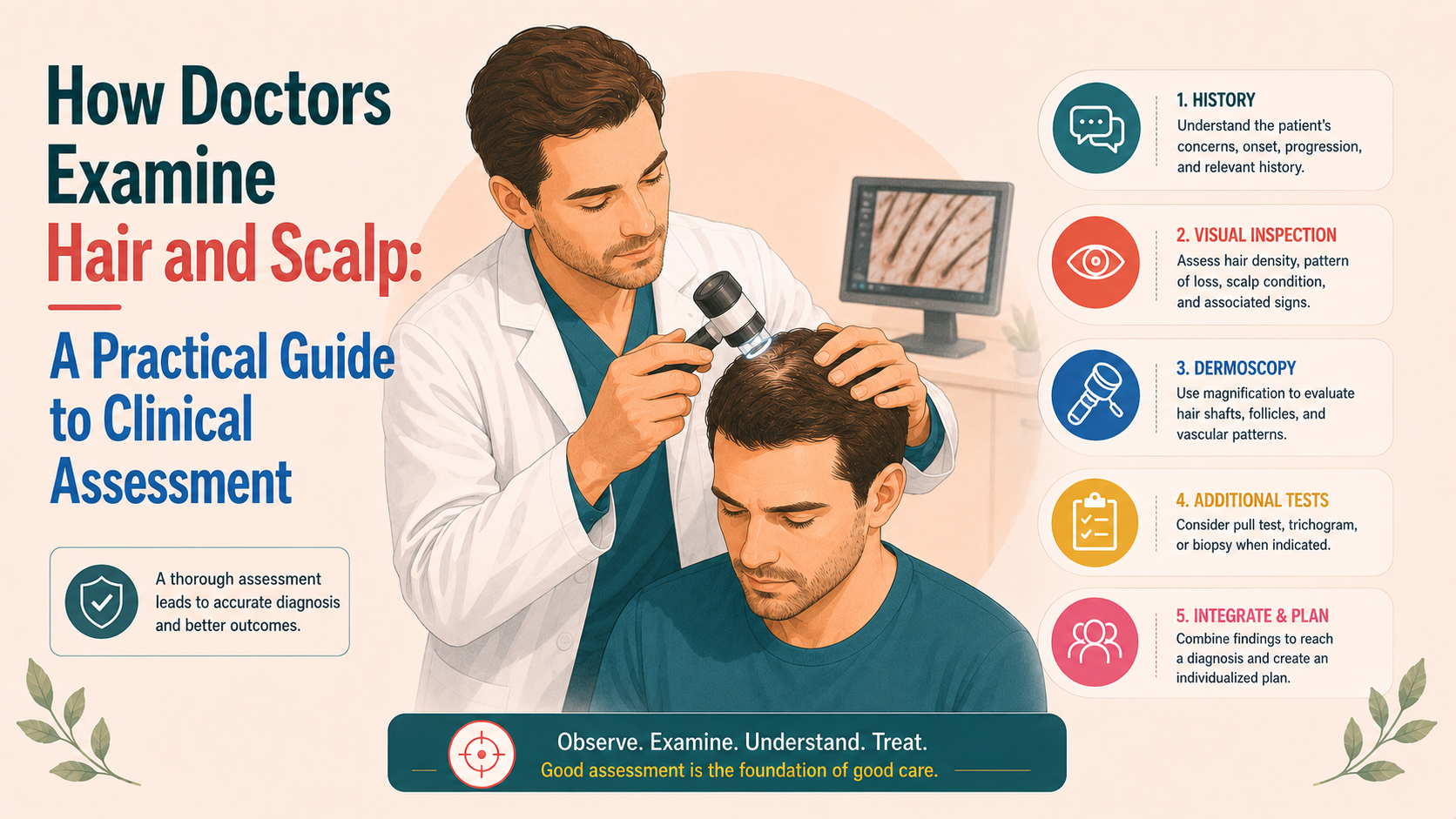
  • map the donor zone carefully using dermoscopy and density counts
  • estimate a safe lifetime yield – the maximum number of grafts that can be taken over all procedures without creating obvious donor depletion
  • stage operations with future loss and potential repair work in mind

Bad practice – whether from inexperience or commercial pressure – may:

  • over-harvest an area in a single session, leaving a patchy “moth-eaten” donor
  • harvest from non-permanent zones that later miniaturise
  • chase higher graft numbers for marketing purposes rather than long-term aesthetics

Once a donor has been exhausted or scarred, options for repair are severely limited.

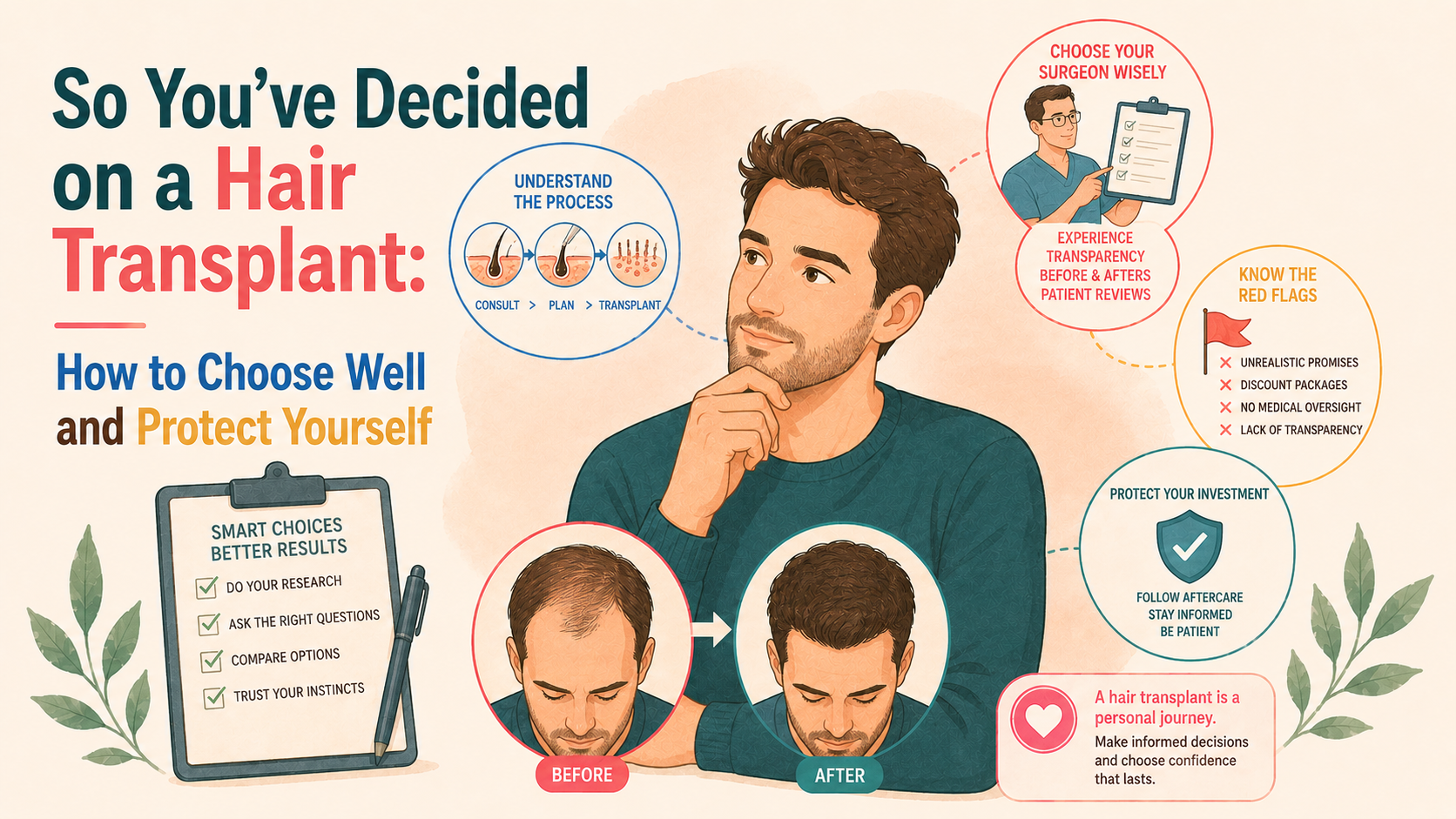
7.2 Recognising red flags when choosing a clinic

Red flags include:

  • emphasis on “graft counts” and “mega sessions” without meaningful discussion of donor conservation
  • lack of personalised planning; one-size-fits-all hairlines
  • unclear who is actually performing the surgery – in some low-cost, high-volume settings, much of the extraction and placement is delegated to unlicensed technicians
  • guarantees of “scarless” FUE, which is misleading (all surgical harvesting leaves some scarring)
  • dismissive responses when you ask about long-term planning, safe donor limits and what happens if you lose more native hair

Look for:

  • surgeons who take a detailed history and examine you personally
  • evidence they understand and treat hair loss medically as well as surgically
  • before-and-after photos in cases similar to yours, with honest representation of lighting and angles
  • transparent discussion of risks, limitations and the possibility that surgery may not be appropriate

8. What to expect before, during and after surgery

8.1 Before

You should expect:

  • full medical and hair loss assessment, including diagnosis and staging
  • discussion of medical therapy (finasteride/dutasteride/minoxidil) to stabilise ongoing loss
  • careful planning of:
    • hairline design
    • target areas (frontal priority is common)
    • estimated graft numbers
    • sequence of possible future surgeries

Photographs and, sometimes, scalp mapping and measurements form the pre-operative baseline.

8.2 During

On the day:

  • Local anaesthesia is used; you are typically awake.
  • FUT or FUE harvesting is performed first.
  • Grafts are trimmed and sorted.
  • Recipient sites are created at angles and densities designed to mimic natural growth.
  • Grafts are placed, often over several hours.

The procedure is time-consuming and meticulous work. A properly executed large session is more akin to microsurgery than to a quick cosmetic procedure.

8.3 After

Early post-op:

  • mild swelling and redness are common
  • small crusts form around grafts and fall away over 7–14 days
  • transplanted hairs often shed in the first weeks as follicles enter a rest phase; the follicle remains in the scalp

Regarding growth:

  • new growth typically begins around 3–4 months
  • most visible improvement occurs between 6 and 12 months
  • maturation of texture and density can continue into the second year

Non-transplanted native hair can undergo shock loss (temporary shedding) in the treated area; this may regrow over several months. Medical therapy reduces the impact of this.

9. Future directions and emerging techniques

9.1 Refinements in FUE

  • Smaller, sharper punches and better understanding of follicular angles have reduced transection rates.
  • Long-hair FUE allows harvesting without shaving the donor area in selected cases, helpful in women and some men.
  • Robotic and motorised systems aim to improve speed and consistency, though they do not replace surgical judgement.

9.2 Combining surgery and regenerative medicine

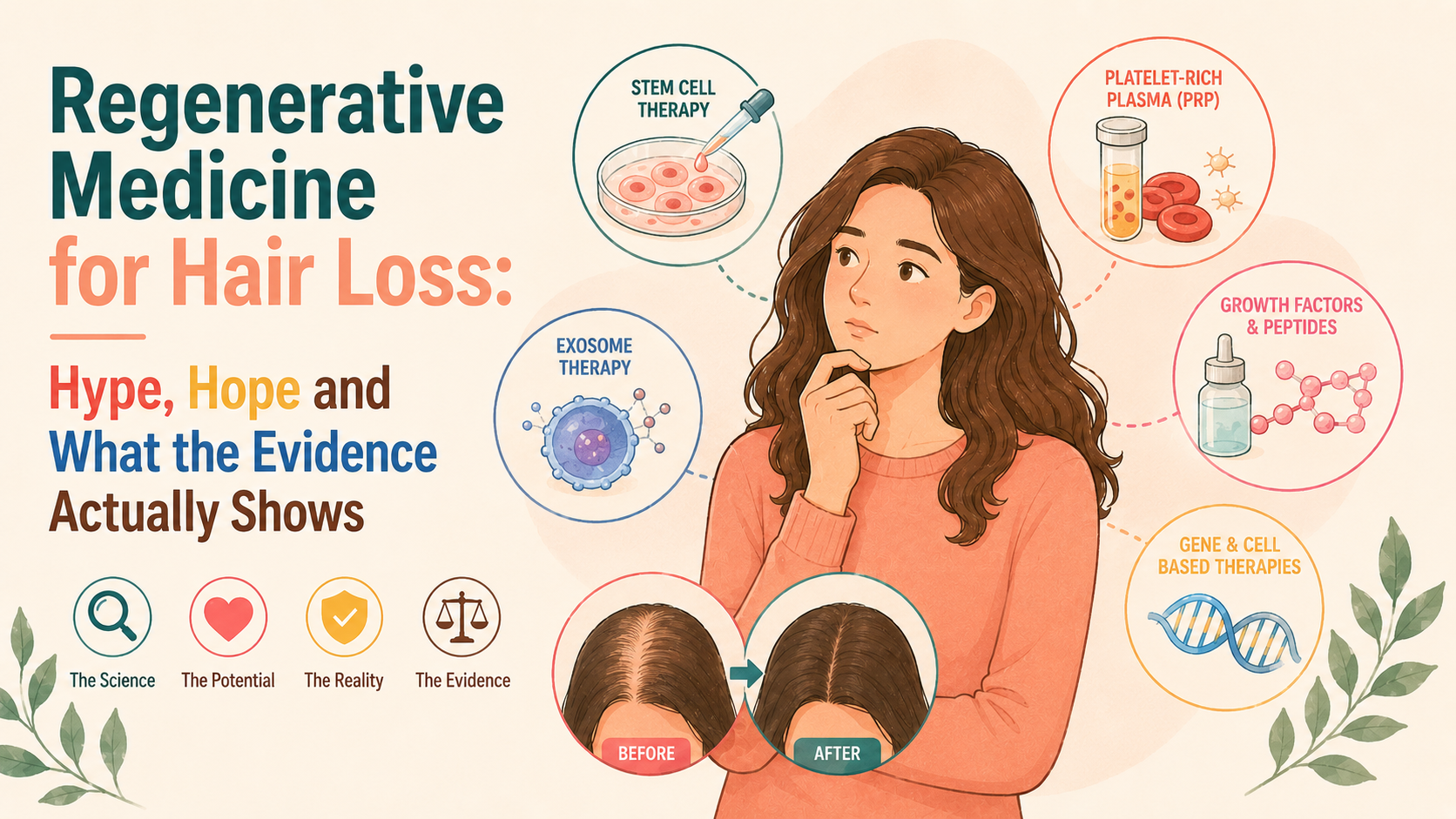
The adjunctive use of platelet‑rich plasma (PRP), microneedling, low‑level laser therapy (LLLT), exosomes and other cell‑based products is being studied to support graft survival, improve the growth of both transplanted and non‑transplanted hair, and potentially reduce the number of grafts needed in some cases.

Evidence is still evolving, and hype often runs ahead of data. Nonetheless, integration of regenerative techniques with transplantation is likely to grow.

9.3 Hair cloning and follicle neogenesis

Research efforts are ongoing to expand hair follicle cells in culture for reimplantation and to generate new follicles from stem cells or reprogrammed cells.

True, reliable “hair cloning” – producing unlimited new follicles ready to be transplanted – remains experimental. Issues include:

  • maintaining correct follicular structure and cycling
  • ensuring safety and avoiding tumourigenesis
  • reliable control of angle, direction and density

If these barriers are overcome, they would transform donor limitations. For now, they are still firmly in the research realm.

9.4 Surgical trends and ethics

The future of hair transplantation is not only technological. It also depends on:

  • professional standards and accreditation
  • global regulation of high-volume “hair mills”
  • education of patients about long-term planning and donor preservation

The “future” that matters most for an individual patient is often not futuristic technology, but conventional surgery done to a high standard, allied with sensible medical therapy and honest counselling.

10. Summary

  • Hair transplantation redistributes, rather than creates, hair. Donor area follicles are finite and must be conserved.
  • Modern techniques (FUT and FUE) use naturally occurring follicular units to achieve natural results in skilled hands.
  • Candidacy hinges on correct diagnosis, adequate donor quality, stability of loss, and realistic expectations.
  • Women can benefit from transplantation, but patterns and donor considerations demand even more careful selection.
  • Botched surgery usually stems from poor planning, over-harvesting, unsafe donor use and lack of long-term thinking – not from the concept of surgery itself.
  • Adjunctive therapies and future regenerative approaches are exciting, but they complement, not replace, the need for sound surgical judgement.
  • The best transplant is one you barely notice – because it looks like you aged more slowly than your peers.

Read More from the Knowledge Hub:

Treatment

5α-Reductase Inhibitors for Hair Loss: Finasteride and Dutasteride Explained

Finasteride and dutasteride are the main drugs used to tackle the hormonal component of androgenetic alopecia. This article explains how they were discovered, how they work, what the evidence shows for men and women, topical versus oral options, and side effects (including the controversies).
Myths & Facts

Treatments for Hair Loss: Myths, Facts and What the Evidence Supports

Hair loss treatments attract strong opinions. Some people are convinced “nothing works”; others believe a single product or procedure can fully restore their hair. This article reviews common myths about treatments – from minoxidil and 5α-reductase inhibitors to low-dose oral minoxidil, PRP, laser devices and surgery – and summarises what reasonably good evidence actually shows.
Myths & Facts

Hormones and Hair Loss: Myths, Facts and How to Think About Them

Hormones are central to certain forms of hair loss, particularly androgenetic alopecia and thyroid-related shedding. That does not mean every hair problem is hormonal, nor that a normal blood test rules out hormone involvement. This article reviews common hormone-related myths about hair loss and summarises what current evidence actually supports.
Myths & Facts

Lifestyle and Hair Loss: Myths, Facts and What the Evidence Suggests

Lifestyle choices can influence hair health, but not always with the severity people assume. This article reviews common lifestyle-related myths about hair loss – smoking, alcohol, stress, washing, hats, diet and tight hairstyles – and summarises what current evidence actually supports.