Living with Hair Loss

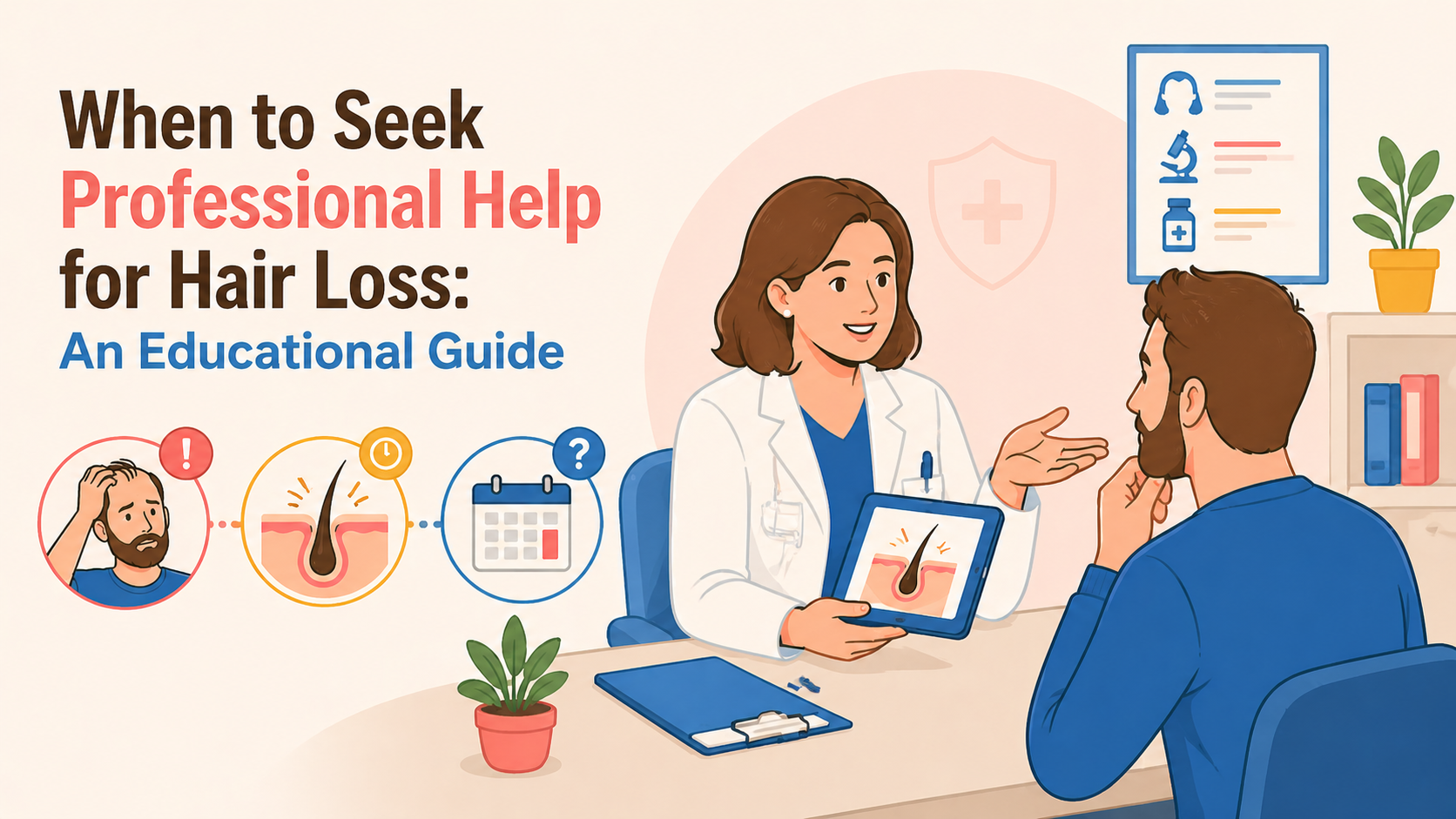
When to Seek Professional Help for Hair Loss: An Educational Guide

Many people are unsure when hair loss is “normal” and when it warrants medical attention. This article outlines when it is reasonable to watch and wait, when early assessment is helpful, which red flags need prompt review, and who to see – from general practitioners to dermatologists and, in some cases, mental health professionals.

[headshot]
Dr. Harry M Griffiths
Article Summary

1. Why it’s worth asking the question

Most adults shed some hair every day. Occasional seasonal shifts or transient increases in shedding often settle on their own. At the same time:

  • early treatment is more effective at stabilising pattern hair loss than trying to reverse advanced miniaturisation;
  • certain forms of hair loss, particularly scarring alopecias, can lead to permanent follicle destruction if not recognised early;
  • sudden or extensive hair loss can be a marker of systemic disease or significant psychological burden.

Deciding when to seek help is therefore not trivial. It is less about counting hairs in the shower and more about recognising patterns, timing and associated features.

2. Understanding what is broadly “within normal limits”

A healthy scalp:

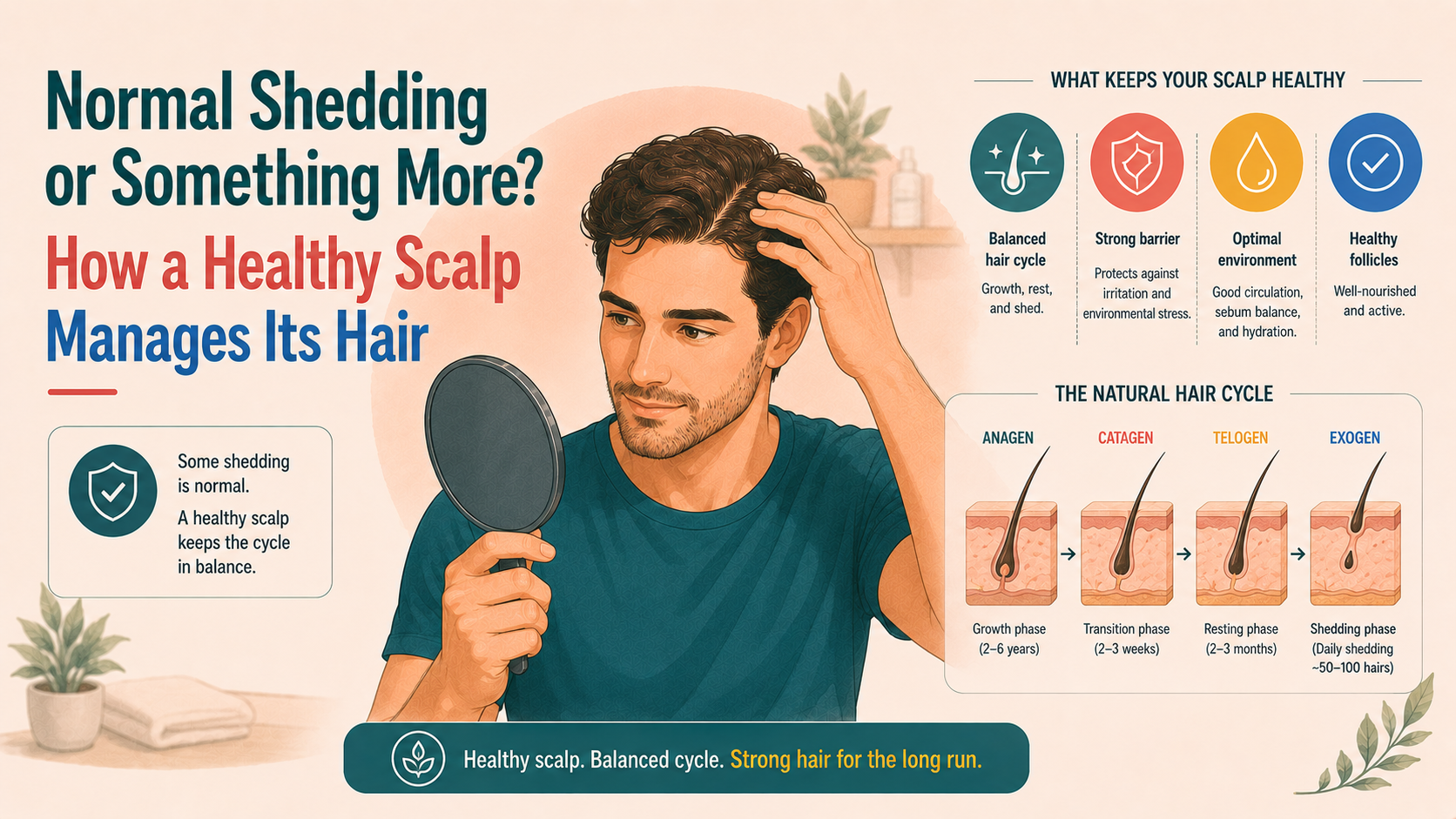
  • sheds roughly 50–100 hairs per day on average, often more on washing days;
  • has a relatively stable distribution of density over months and years;
  • may show mild, short-lived variations in shedding (e.g. after illness, in certain seasons), without clear thinning.

If you notice a few hairs on your pillow or in your brush, that alone is not a reason to panic. However, normal shedding does not cause:

  • visible widening of the part that continues to progress;
  • obvious patches of bare scalp;
  • or a sustained sense over months that your hair is “shrinking” in volume.

It is that sense of change, that intrinsic gut feeling, which often justifies a closer look.

Conversely, in many cases, such as my own, the hair loss is pointed out by somebody else before you've even noticed. Still, it is a sign of something worth evaluating.

3. Situations where early assessment is helpful

There are several scenarios where seeing a professional sooner rather than later tends to improve outcomes.

3.1 Gradual thinning in a pattern

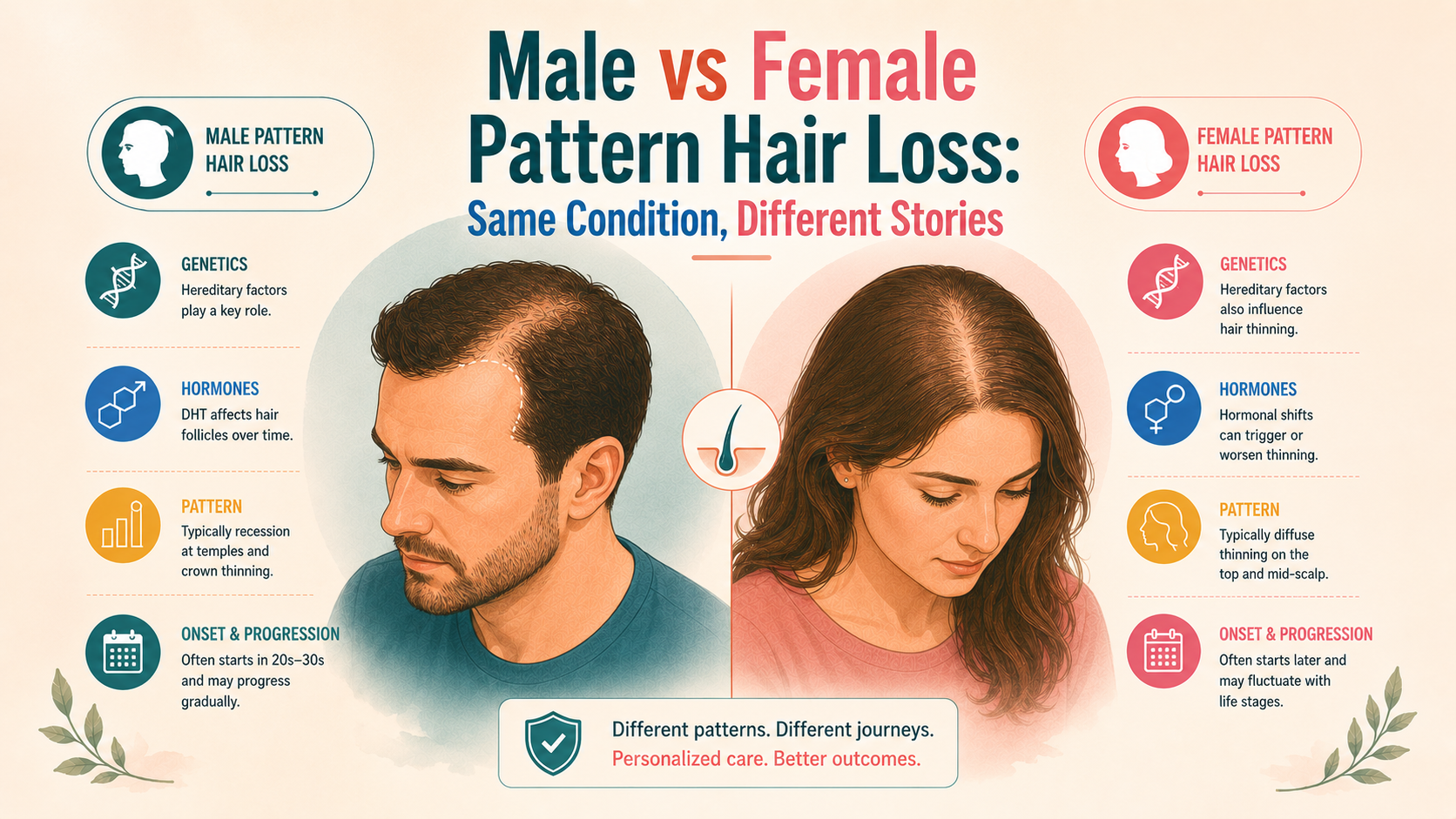
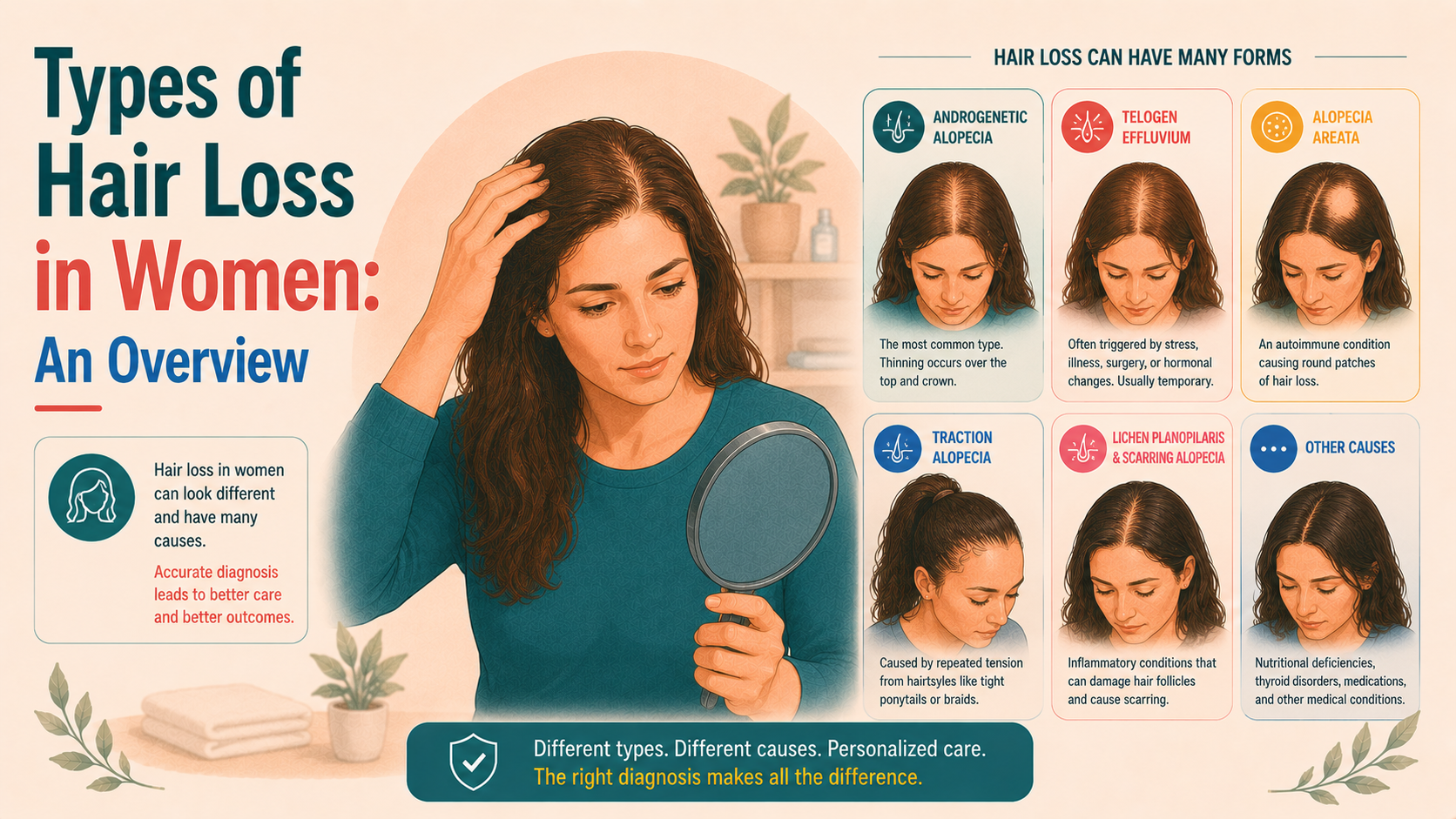
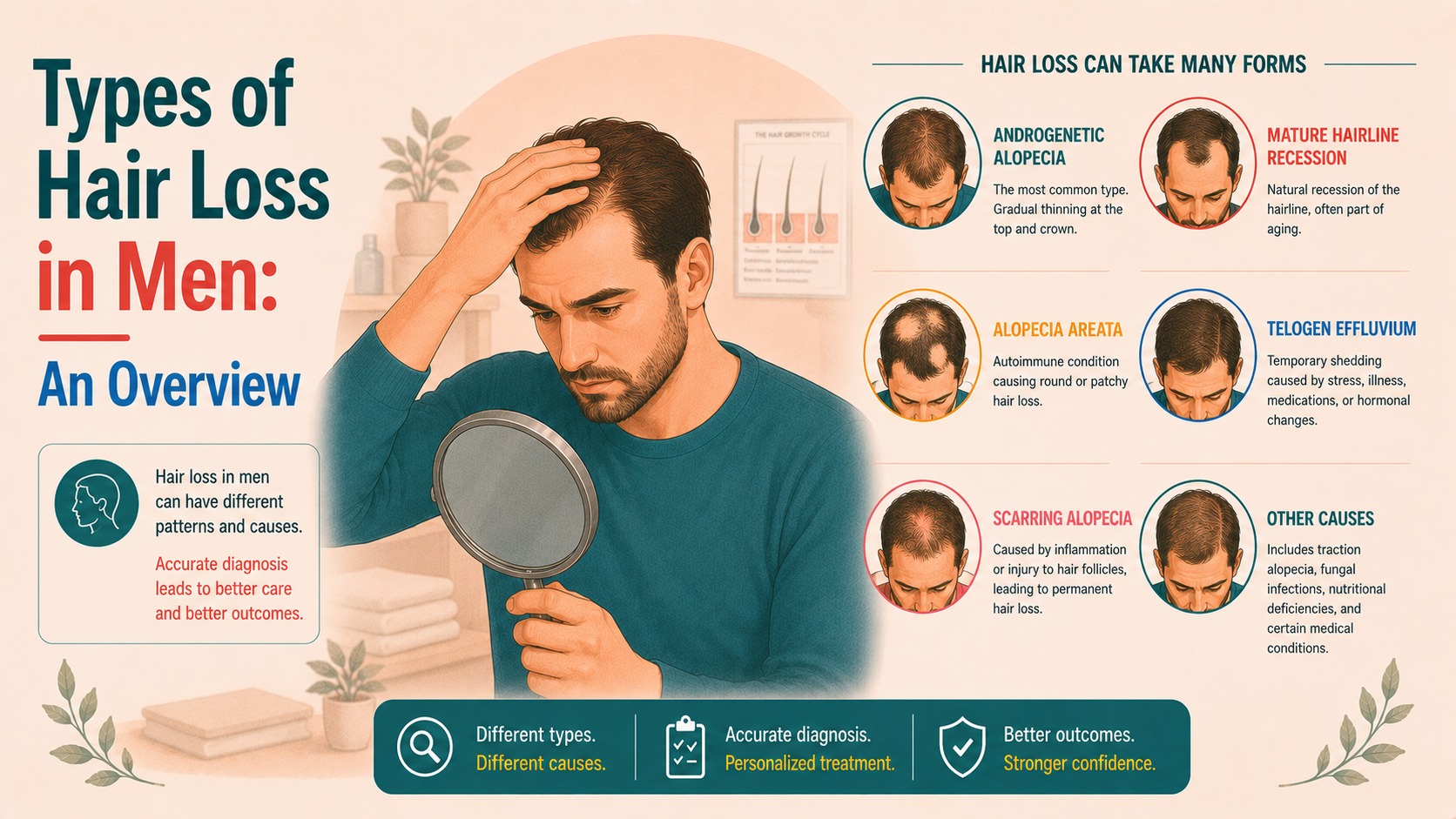
If you notice a widening central part in the crown with preserved frontal hairline (typical of female pattern hair loss), or receding temples and/or vertex thinning in a patterned way (typical of male androgenetic alopecia), then it is reasonable to seek assessment from a GP or dermatologist.

Especially if:

  • the change is clearly perceptible over a few months;
  • there is a strong family history of pattern hair loss;
  • you feel it is affecting self-confidence or day-to-day life.

Guidelines repeatedly note that treatments for pattern hair loss are more effective at arresting progression than at regenerating hair in areas that have already been bald for years. Starting a conversation early, therefore, gives more room to act.

Additionally, the scalp areas that lost hair most easily are often the hardest to regrow, and vice versa: areas with less thinning will likely bounce back the most. This paradox can be frustrating and is more evident when treatment is started late.

3.2 Persistent heavy shedding without an obvious cause

If shedding is significantly heavier than your usual baseline, has continued for more than 2–3 months, and is beginning to reduce overall volume, an evaluation can help determine whether this is a simple telogen effluvium (for example, after illness or stress), early pattern hair loss, or a mixture.

In these cases, a GP can:

  • take a careful history;
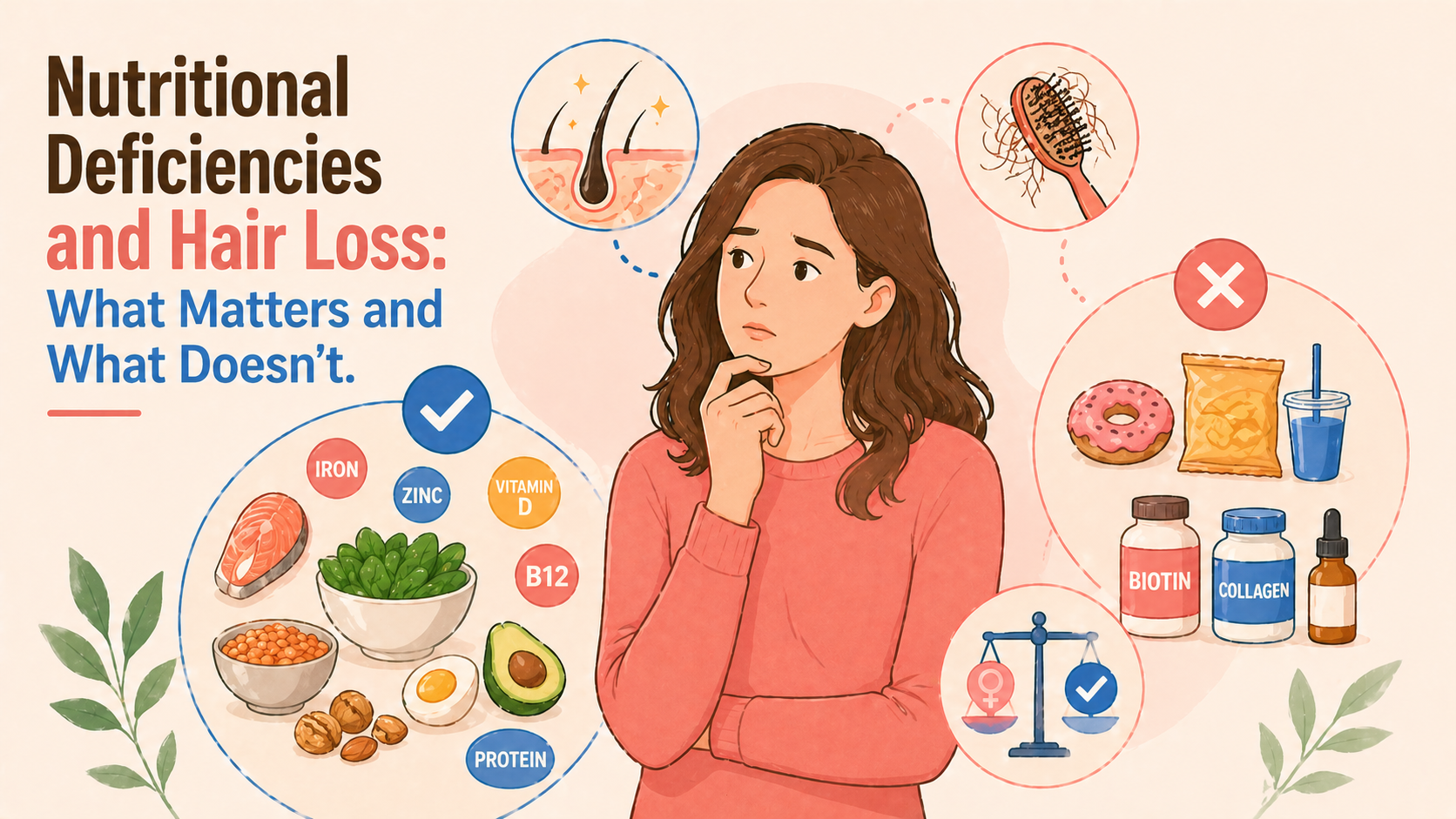
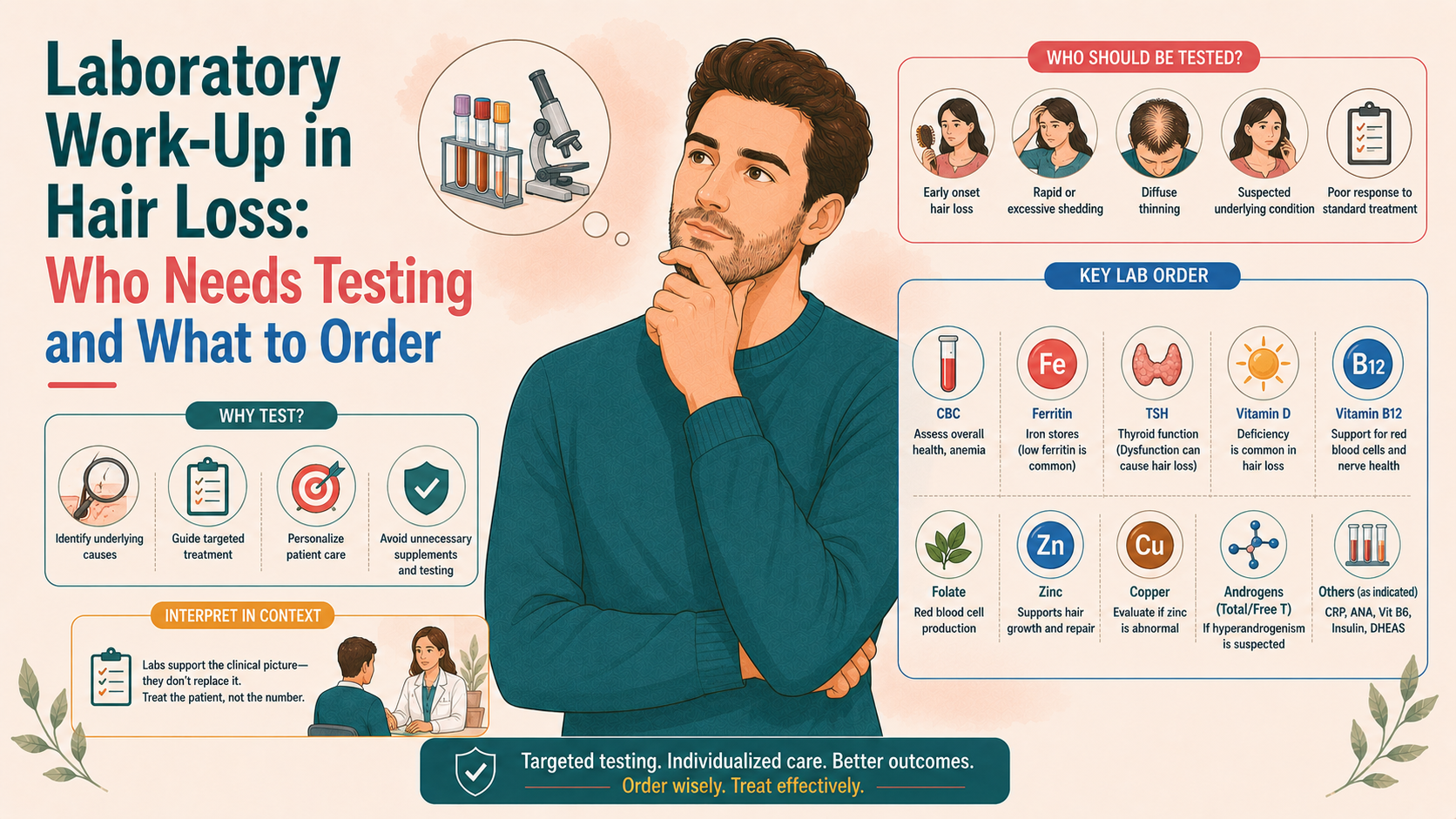
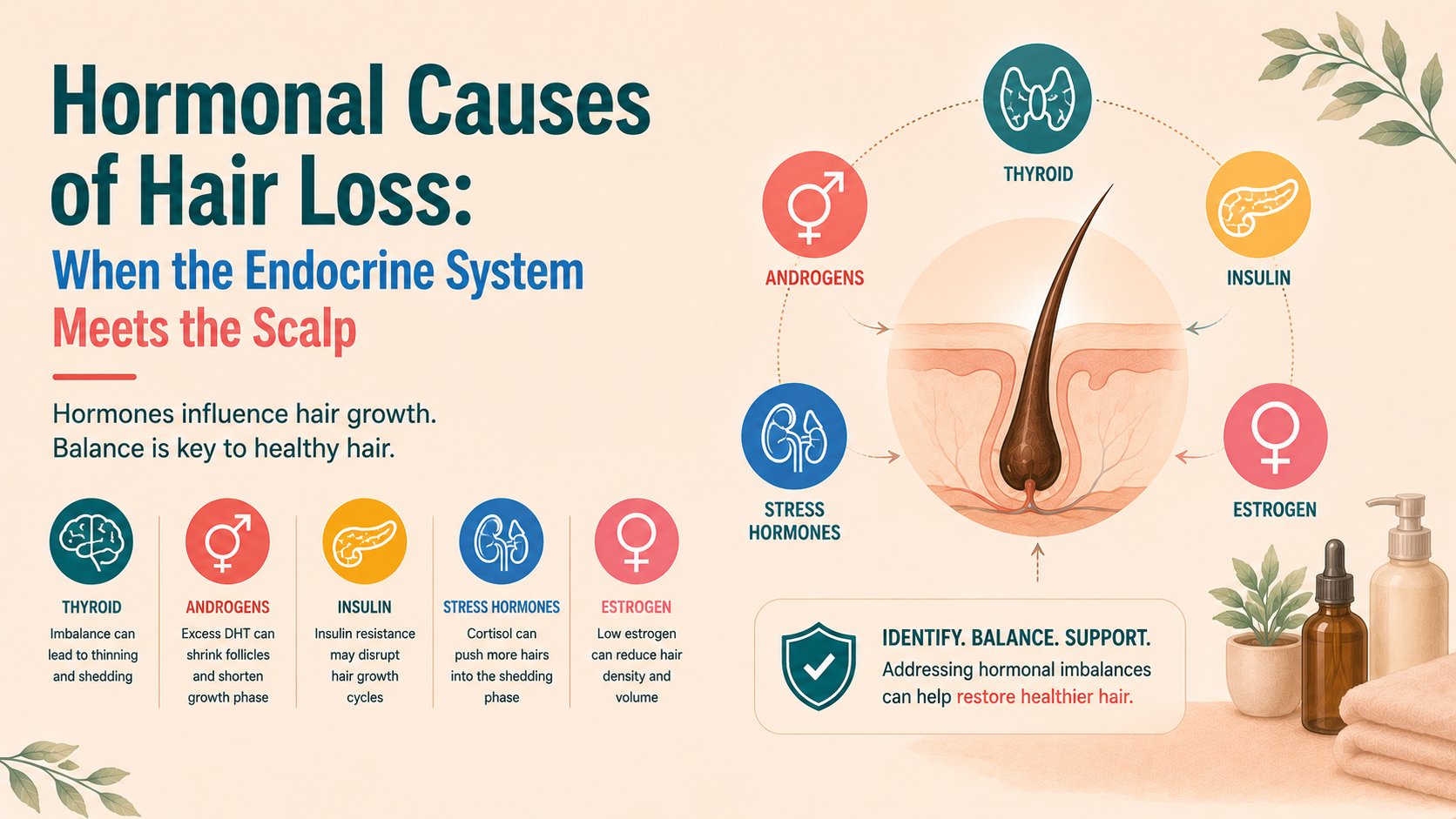
  • screen for nutritional and endocrine contributors (iron, thyroid, etc.);
  • and decide whether referral to dermatology is appropriate.

Even where the conclusion is simply “telogen effluvium that will self-resolve”, having that explained can markedly reduce anxiety.

3.3 Strong family history or known endocrine/metabolic risks

Women with a strong family history of female pattern hair loss, polycystic ovary syndrome or other hyperandrogenic conditions, or early menopausal changes, and men with early-onset hair loss in male relatives or significant metabolic syndrome, may benefit from early counselling about likely trajectories and management options. This is about planning and risk-stratifying, not necessarily hopping on treatment straight away.

4. Red flags that warrant a prompt review

Certain patterns and symptoms should prompt you to seek a sooner, sometimes urgent, professional assessment.

4.1 Signs of scarring alopecia

Forms of hair loss where the hair follicle is destroyed and replaced by scar tissue require early recognition. Concerning features include:

  • smooth, shiny areas of scalp where follicular openings seem absent;
  • redness, tightness, burning or pain in areas of loss;
  • scale or perifollicular “collarettes” around remaining hairs;
  • recession of the frontal hairline with associated eyebrow loss (seen in frontal fibrosing alopecia);
  • patchy loss associated with pustules or crusting.

Because scarring alopecias, if active, can lead to irreversible loss, many guidelines advise urgent or early referral to dermatology if scarring is suspected. Early intervention focuses on dampening inflammation and preserving the remaining follicles.

4.2 Sudden patchy loss

The abrupt appearance over days to weeks of:

  • round or oval patches of complete hair loss on the scalp;
  • discrete bald patches in the beard;
  • loss of eyebrows or lashes,

is characteristic of alopecia areata, though other causes are possible.

While AA is medically benign, it often carries a significant psychological burden and can be associated with other autoimmune conditions. Assessment by a GP and referral to dermatology when patches are numerous, extensive or rapidly expanding is appropriate, particularly now that new treatments have changed the prognosis for many patients.

4.3 Hair loss in children

Hair loss in children should almost always be assessed by a professional. In this group, common differential diagnoses include:

  • tinea capitis (fungal infection);
  • alopecia areata;
  • traction alopecia;
  • trichotillomania;
  • rare scarring conditions.

Because tinea capitis can be contagious and scarring can be permanently destructive, primary care and paediatric dermatology pathways often treat childhood hair loss as a reason to request prompt review.

4.4 Systemic symptoms

Hair loss accompanied by:

  • unexplained weight change;
  • night sweats or fevers;
  • generalised fatigue;
  • joint pain or rashes;
  • nail changes,

should be discussed with a doctor, as it may reflect systemic disease (thyroid, autoimmune, haematological or other) that requires investigation beyond the hair itself.

5. Who to see: GP, dermatologist, surgeon, psychologist?

5.1 General practitioner (GP) or primary care doctor

A GP is often a good starting point. They can:

  • take a general and hair-specific history;
  • examine pattern, scalp condition and other systems;
  • arrange initial blood tests;
  • treat straightforward telogen effluvium or simple cases of pattern hair loss;
  • refer to dermatology when needed.

If you feel you have been dismissed by your GP or not taken seriously, and you want to be referred to a Dermatologist, it is reasonable to seek another opinion.

5.2 Dermatologist (ideally with an interest in hair)

Dermatologists are trained to:

  • distinguish between scarring and non-scarring alopecias;
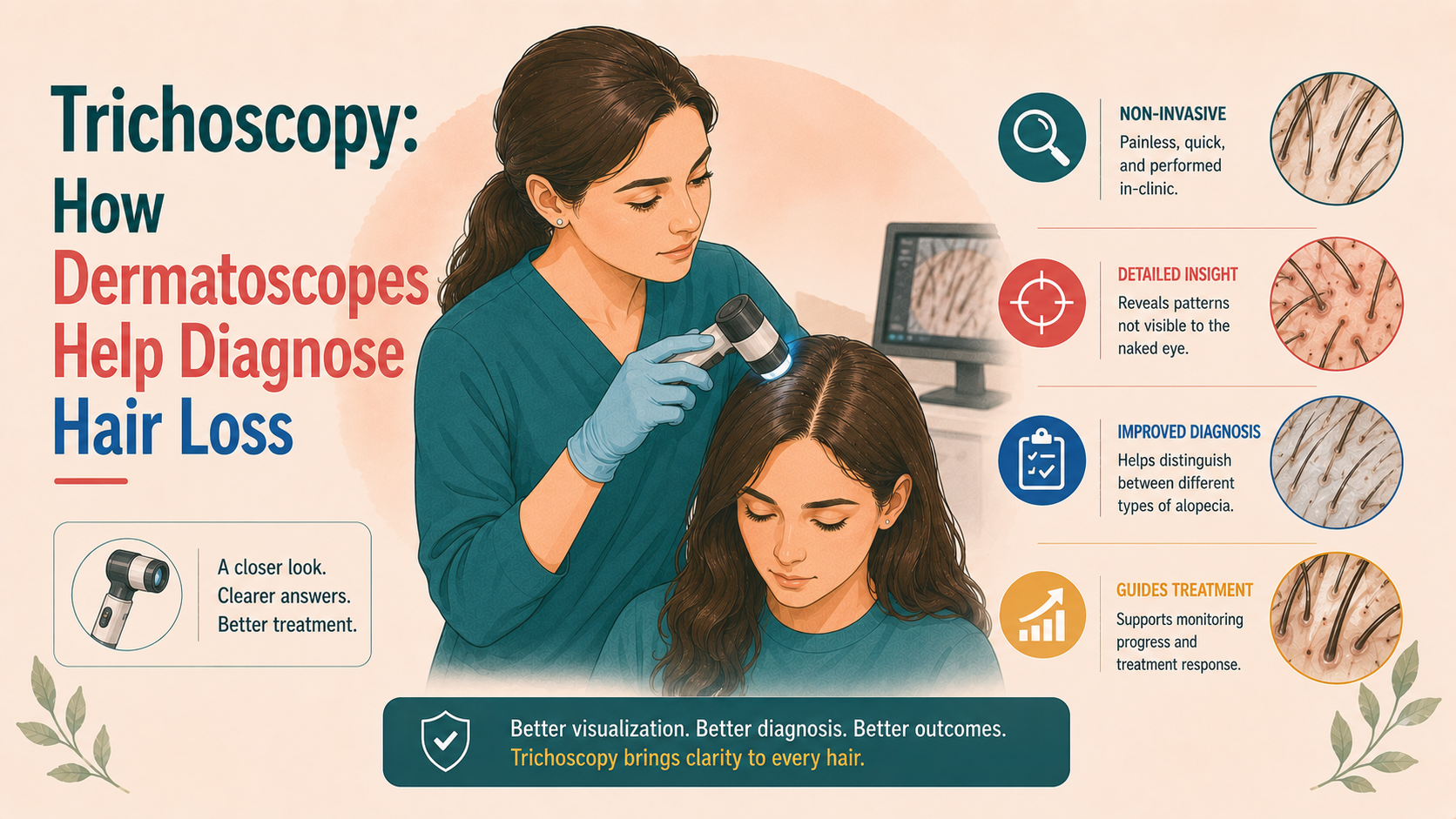
  • interpret trichoscopic and, when needed, histopathological findings;
  • manage complex or resistant cases and inflammatory scalp disease;
  • advise on the full spectrum of medical, surgical and cosmetic options.

It is reasonable to seek dermatology input when:

  • diagnosis is uncertain;
  • initial treatment has not helped;
  • red flags (scarring, sudden extensive loss, children) are present;
  • you are considering systemic treatments for hair loss.

5.3 Hair transplant surgeon

Hair transplant surgeons are best consulted when:

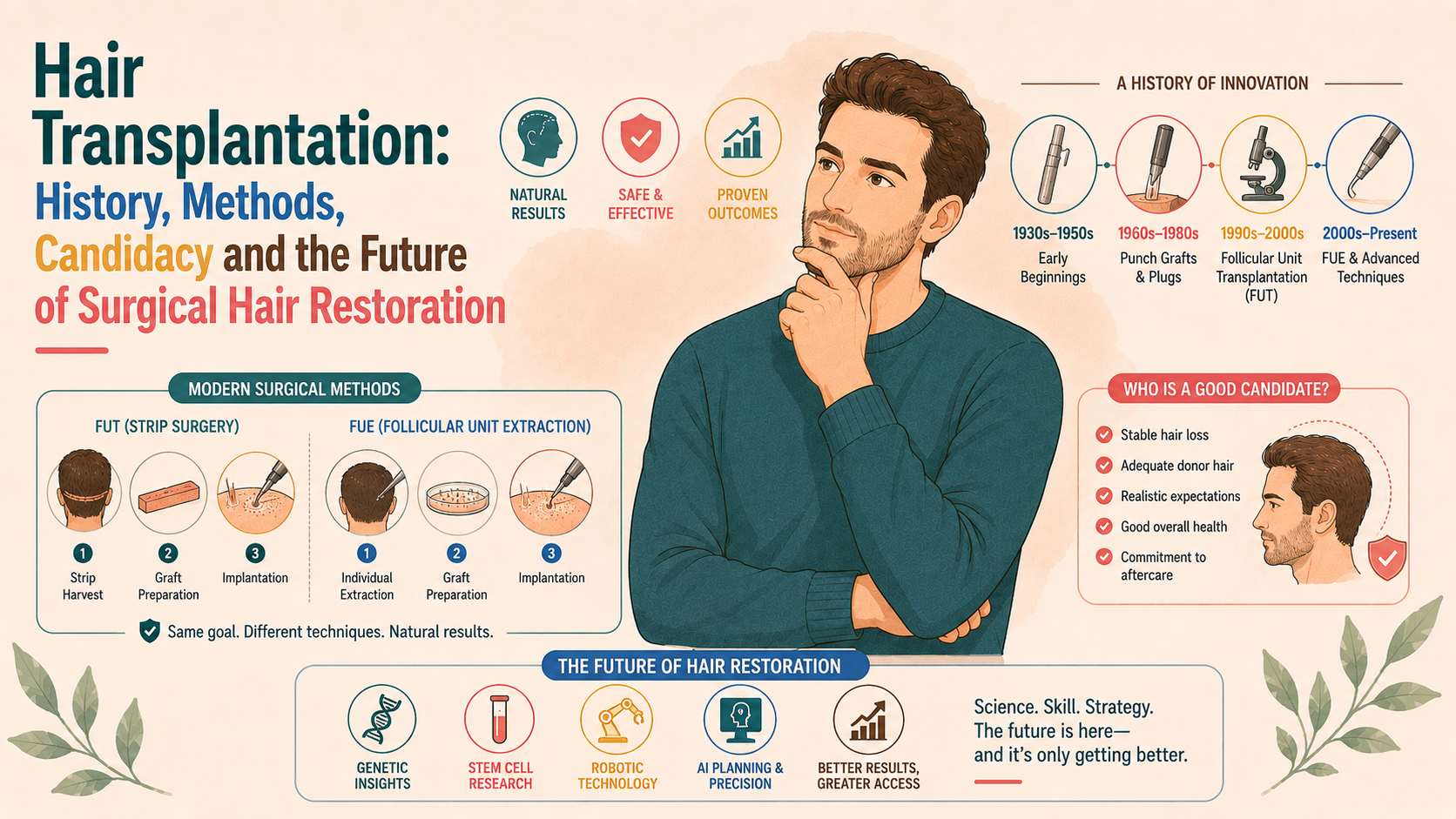
  • a clear diagnosis of androgenetic alopecia has been made;
  • the pattern is reasonably established;
  • medical therapy has been optimised;
  • donor hair is adequate.

A consultation with a surgeon before diagnosis is clarified or before disease activity in scarring conditions is controlled is premature. A reputable surgeon will insist on those foundations.

5.4 Psychological support

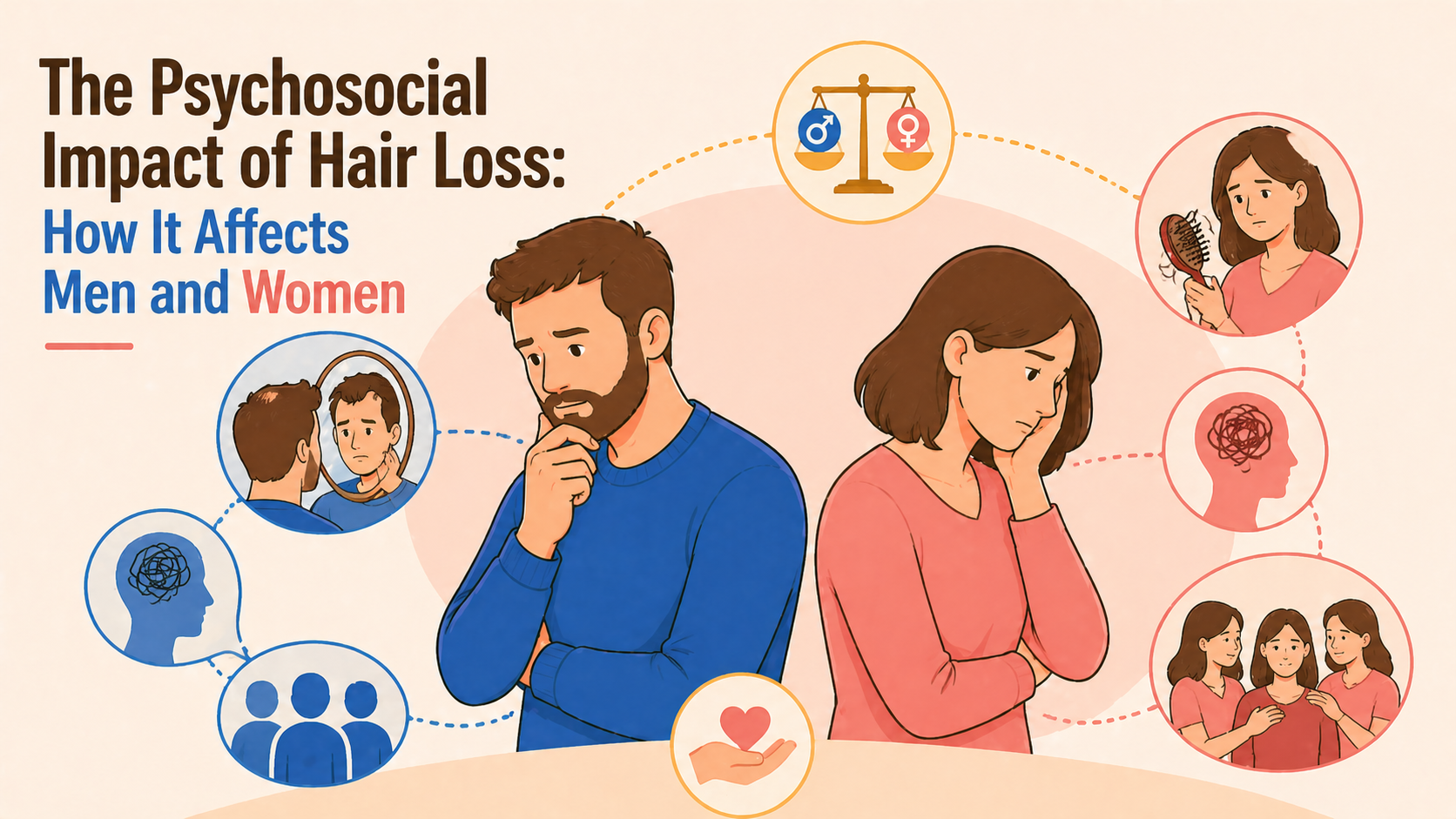
Given the documented links between hair loss and anxiety, low mood, body image distress and social avoidance, it is also appropriate to seek psychological support if:

  • hair loss dominates your thoughts;
  • you are withdrawing from social situations;
  • you feel persistently low, anxious or ashamed about your appearance;
  • you find it hard to make rational decisions about treatment because of distress.

Psychologists and counsellors with experience in appearance-related concerns can offer cognitive and behavioural tools that often make medical treatment easier to tolerate and evaluate.

6. What to expect at a first medical consultation

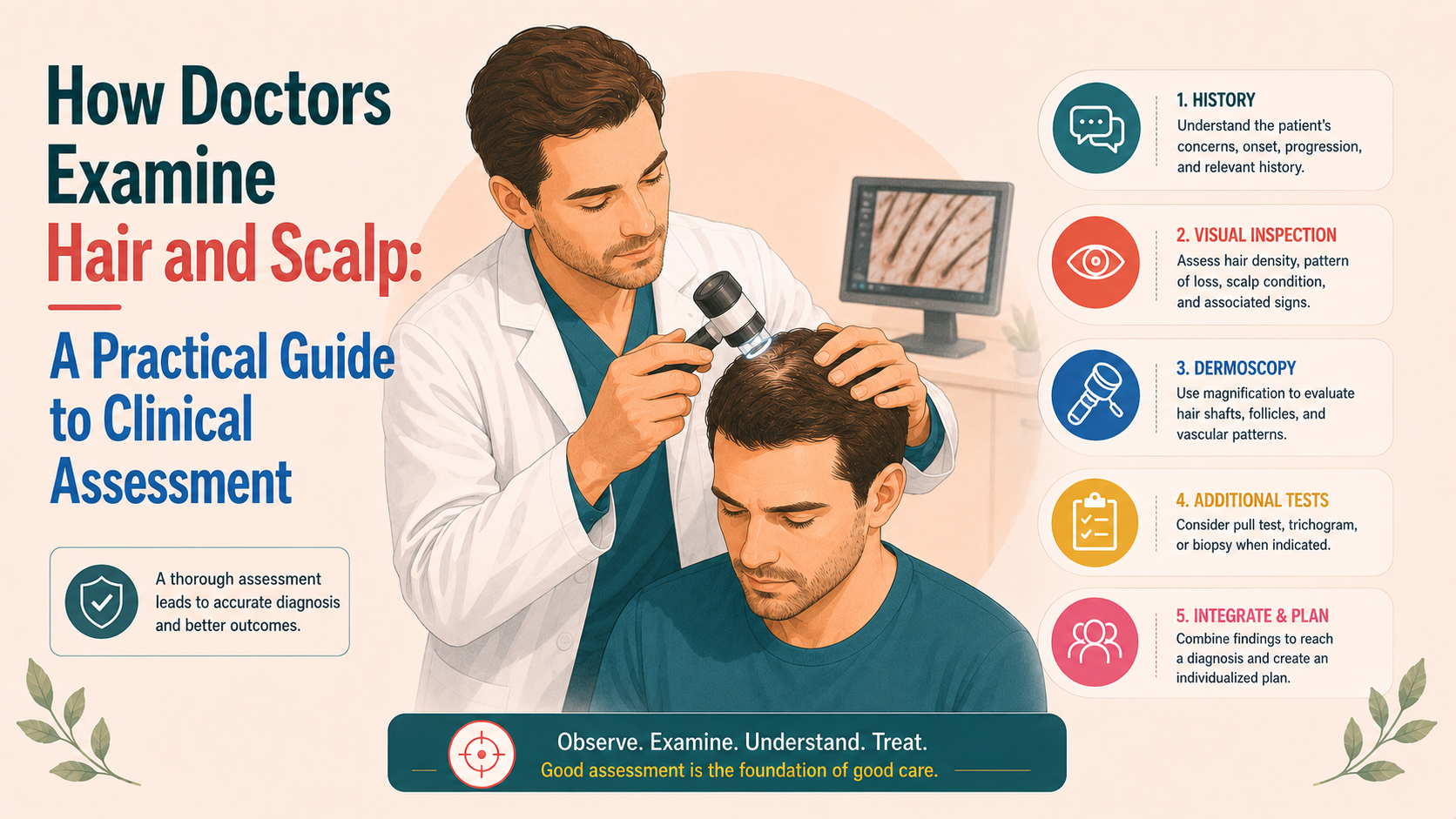
A thorough assessment will usually include:

  • questions about when and how hair loss started;
  • family history;
  • recent events (illness, childbirth, stress, weight change);
  • drug history and medical conditions;
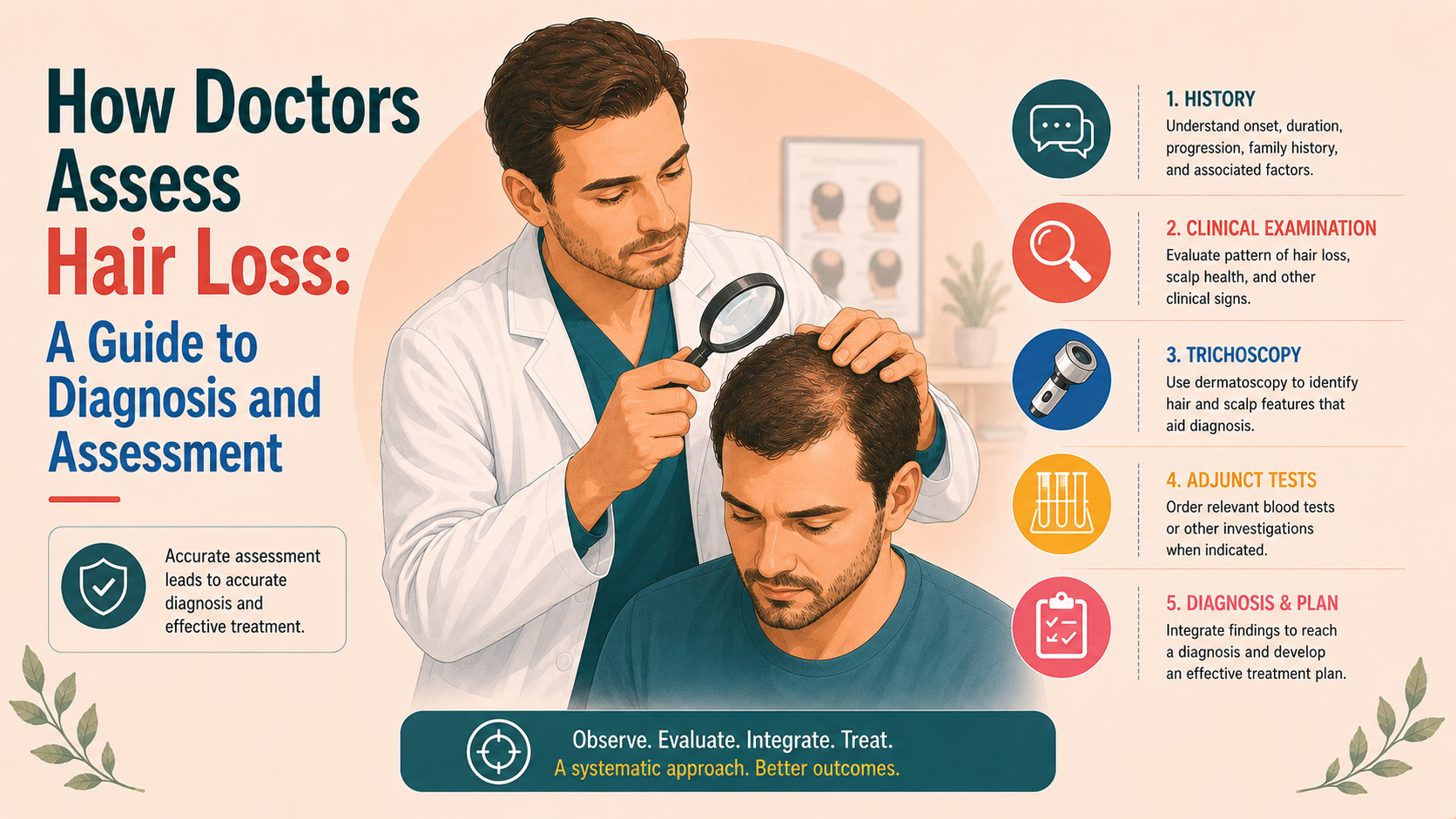
  • scalp and hair shaft examination;
  • sometimes a “pull test” or dermoscopic evaluation.

Blood tests may be ordered to rule out common contributory factors (iron deficiency, thyroid disease, vitamin D deficiency) where history suggests risk, but not in most cases, such as clear AGA.

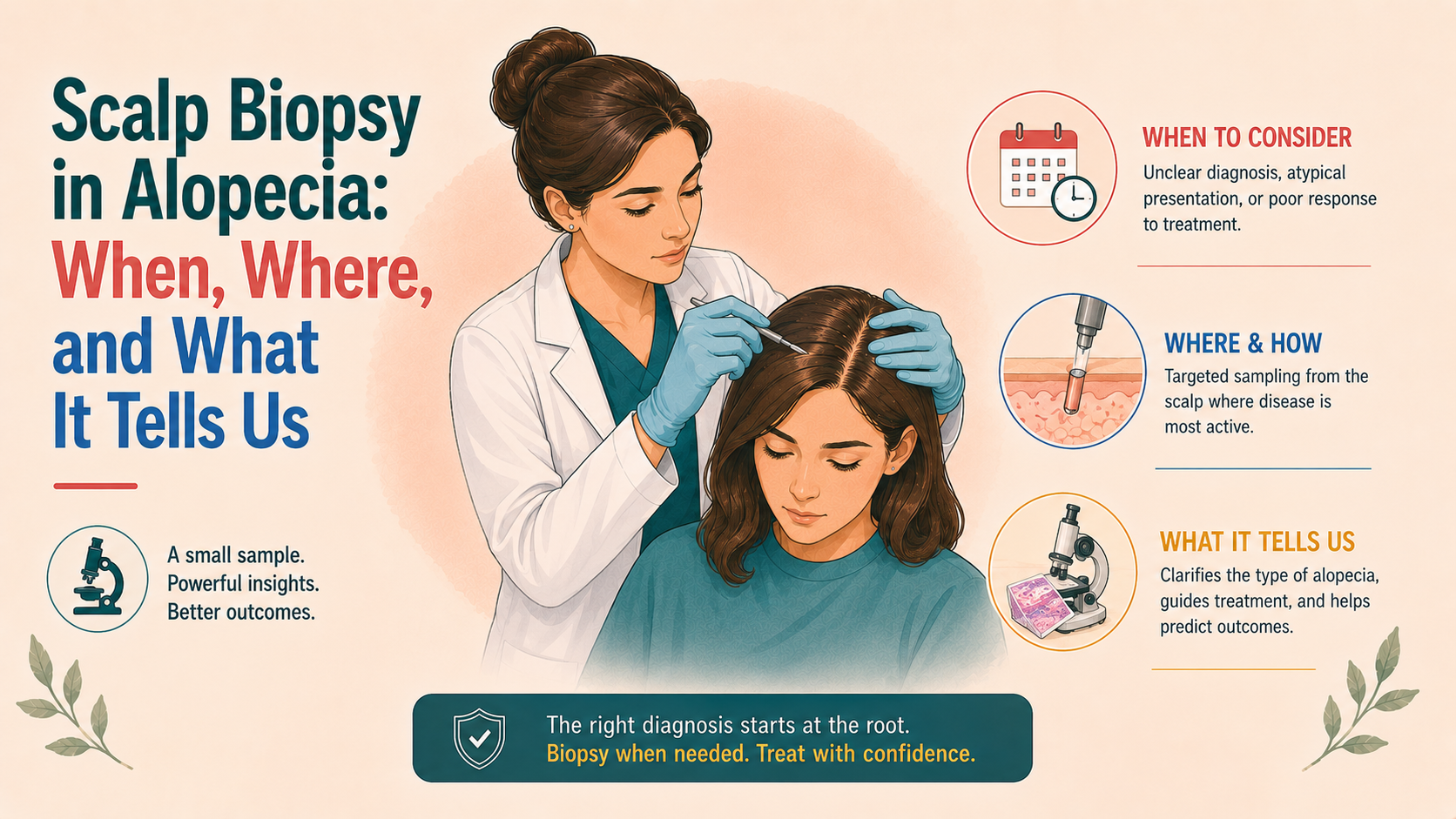
In more complex cases, a dermatologist may suggest trichoscopy to look at follicular patterns or a scalp biopsy to distinguish between overlapping diagnoses.

The aim is to move from a generic hair loss observation to a specific diagnosis to guide treatment.

7. When “watchful waiting” is a reasonable choice

Not every episode of increased shedding requires immediate investigation. There are times when a watch-and-wait approach is appropriate, for example:

  • a clear, single TE trigger (e.g. flu, surgery, a bereavement) with mild shedding that is already improving;
  • very early, subtle pattern thinning in an older adult where distress is minor and there is no interest in active treatment;
  • minor seasonal variations in shedding without visible thinning.

Even in these contexts, it is sensible to have a low threshold to seek help if loss accelerates, visible density changes become apparent, or new symptoms arise.

Watchful waiting should be active and with a plan, rather than simply hoping the problem will go away while worrying silently.

8. Bringing it together

In deciding when to seek professional help for hair loss, you might ask yourself:

  • Has there been a clear change in my hair over the last few months?
  • Is the pattern stable and mild, or is it progressing or patchy?
  • Are there symptoms like pain, itching, redness or burning?
  • Are there signs of scarring or smooth shiny patches?
  • Is this having a significant impact on my day-to-day life or mental health?

If any of the following are present:

  • rapid or extensive hair loss,
  • patchy or scarring patterns,
  • childhood hair loss,
  • systemic symptoms,
  • or substantial psychological distress,

then seeking professional help is not only reasonable, but advisable.
Even if changes are gradual and mild, there is still value in early assessment to clarify the diagnosis, discuss whether treatment is indicated now or later, and set expectations and plan ahead.

Read More from the Knowledge Hub:

Treatment

5α-Reductase Inhibitors for Hair Loss: Finasteride and Dutasteride Explained

Finasteride and dutasteride are the main drugs used to tackle the hormonal component of androgenetic alopecia. This article explains how they were discovered, how they work, what the evidence shows for men and women, topical versus oral options, and side effects (including the controversies).
Myths & Facts

Treatments for Hair Loss: Myths, Facts and What the Evidence Supports

Hair loss treatments attract strong opinions. Some people are convinced “nothing works”; others believe a single product or procedure can fully restore their hair. This article reviews common myths about treatments – from minoxidil and 5α-reductase inhibitors to low-dose oral minoxidil, PRP, laser devices and surgery – and summarises what reasonably good evidence actually shows.
Myths & Facts

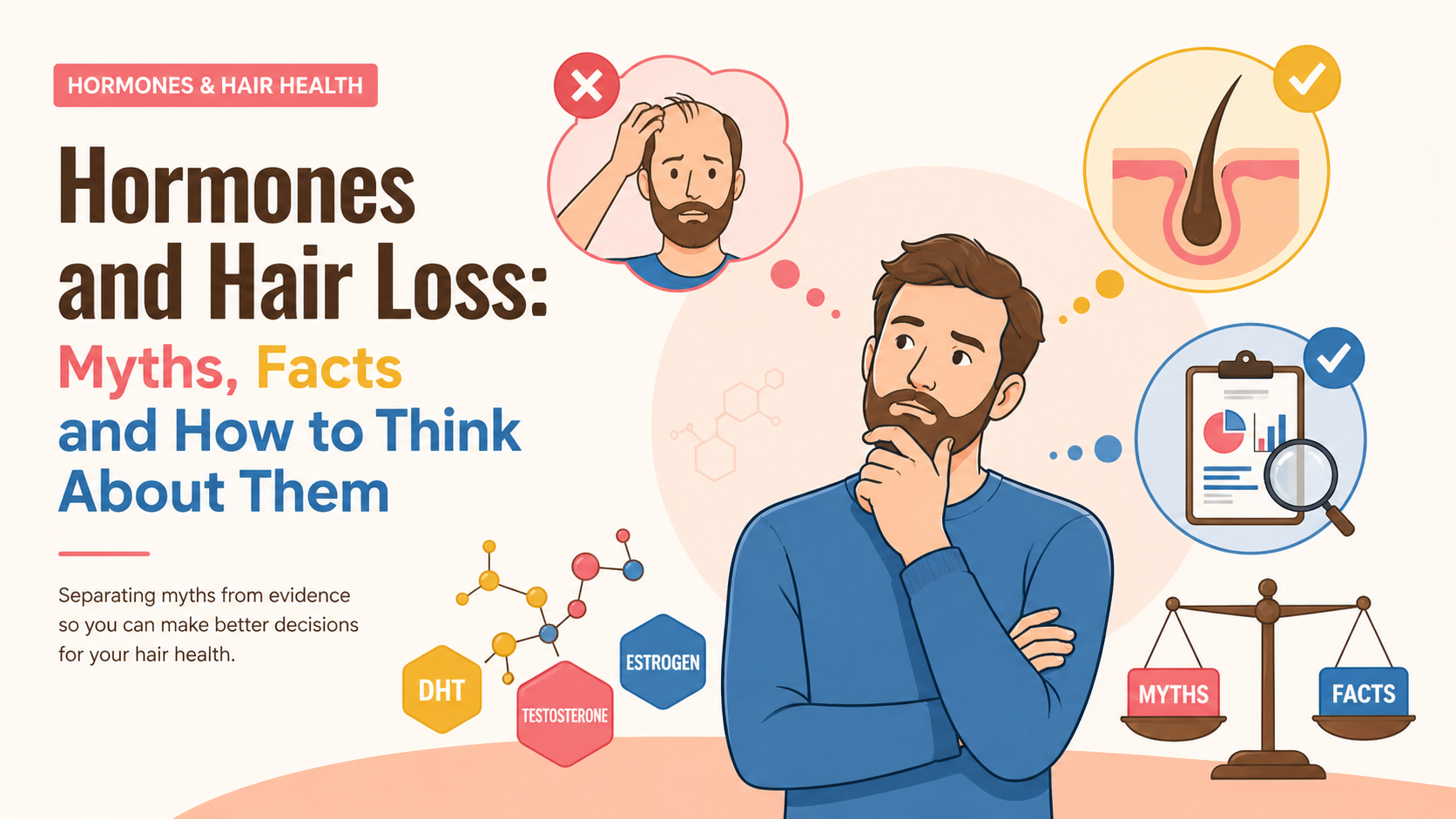
Hormones and Hair Loss: Myths, Facts and How to Think About Them

Hormones are central to certain forms of hair loss, particularly androgenetic alopecia and thyroid-related shedding. That does not mean every hair problem is hormonal, nor that a normal blood test rules out hormone involvement. This article reviews common hormone-related myths about hair loss and summarises what current evidence actually supports.
Myths & Facts

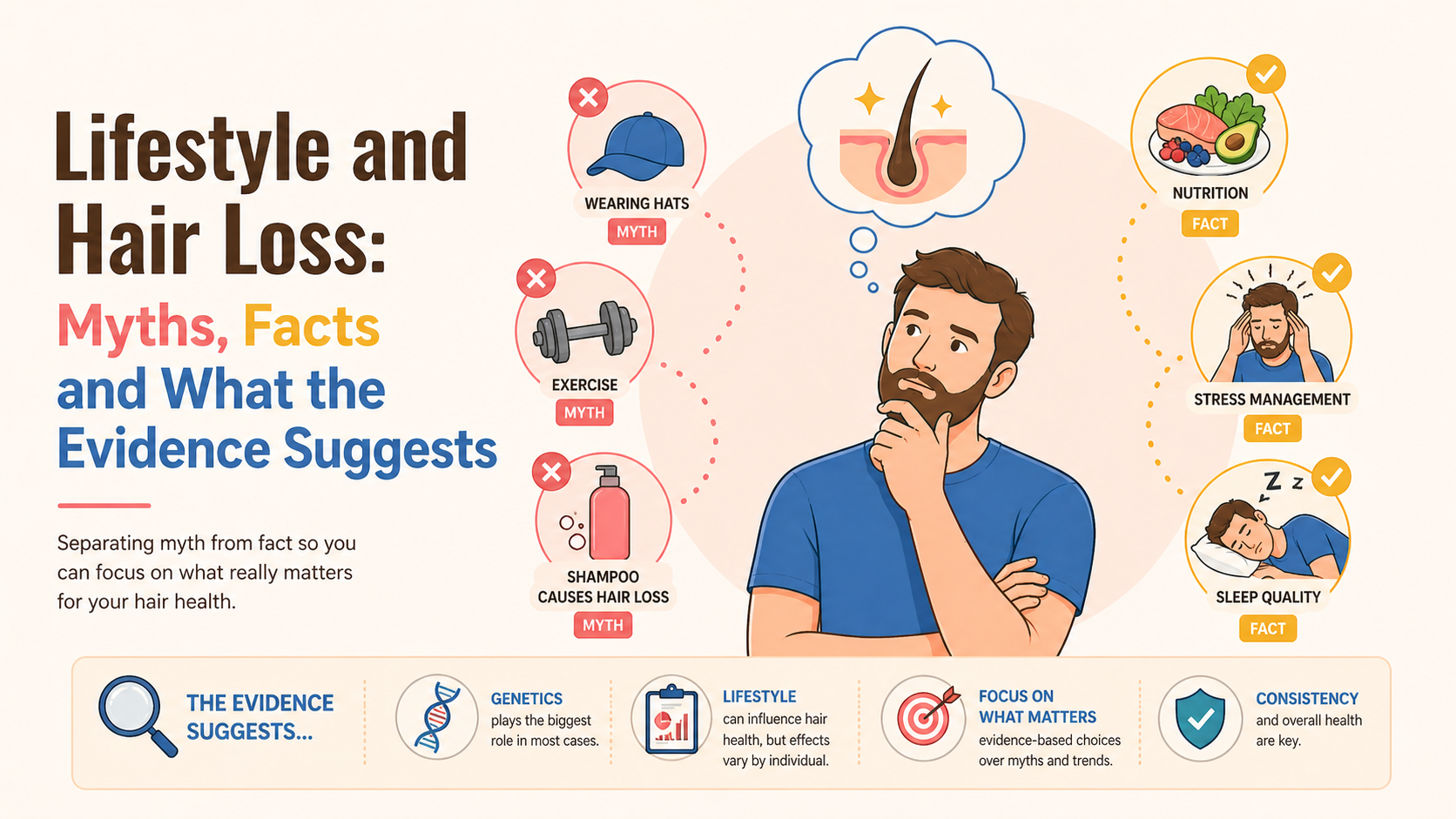
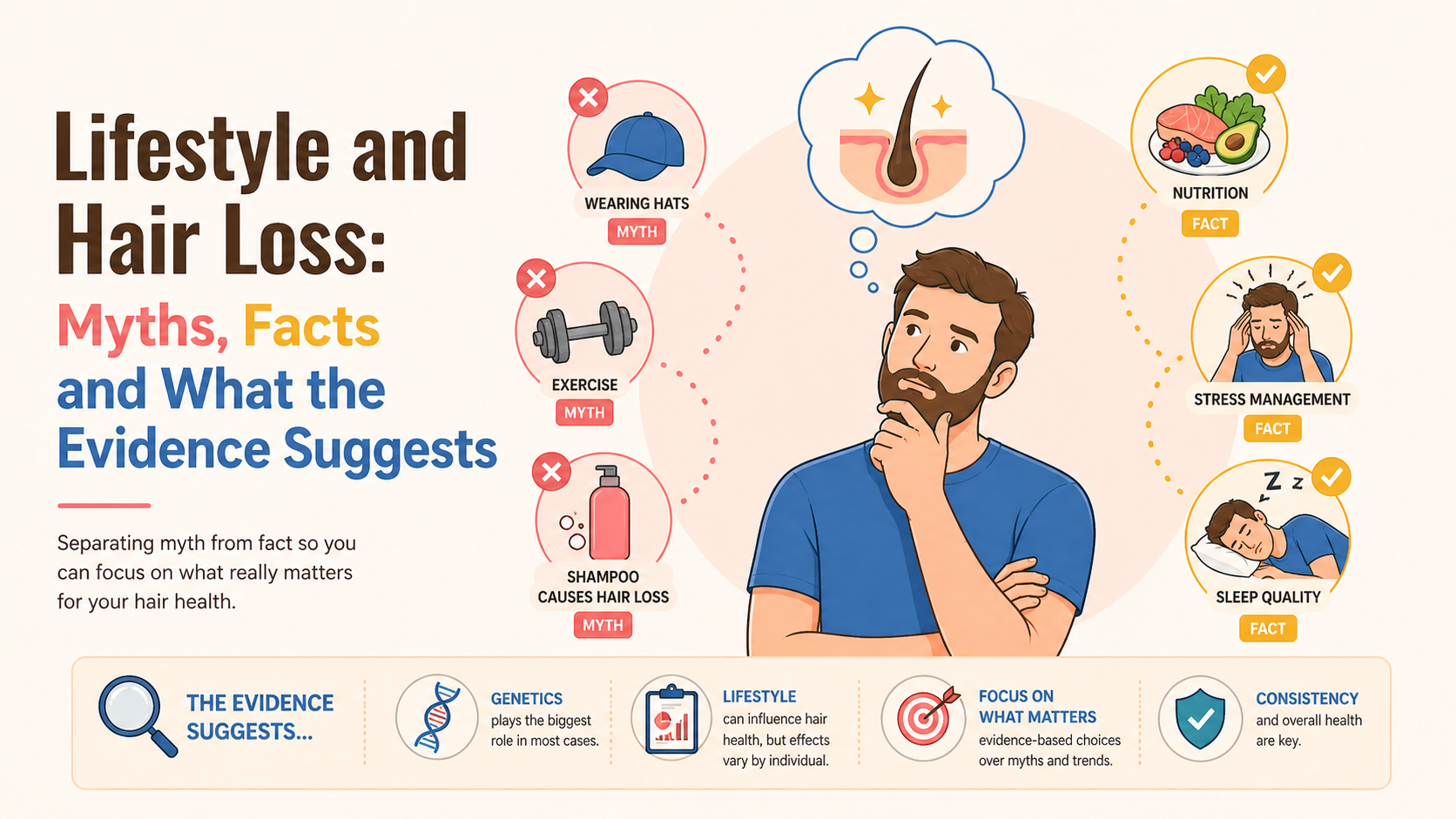
Lifestyle and Hair Loss: Myths, Facts and What the Evidence Suggests

Lifestyle choices can influence hair health, but not always with the severity people assume. This article reviews common lifestyle-related myths about hair loss – smoking, alcohol, stress, washing, hats, diet and tight hairstyles – and summarises what current evidence actually supports.