Hair in the shower tells you that hairs are leaving. It does not tell you what is replacing them. Here is how I would separate ordinary shedding from a change worth assessing.
![[headshot]](https://cdn.prod.website-files.com/68207da82e5b8c350c67932f/68c6a7436a552c0fe87a4da7_Screenshot%202024-11-27%20at%2011.38.11.png)

One of the mistakes I made with my own hair was treating a frightening shed as a verdict on my treatment. I changed course before getting a clear assessment of what had happened.
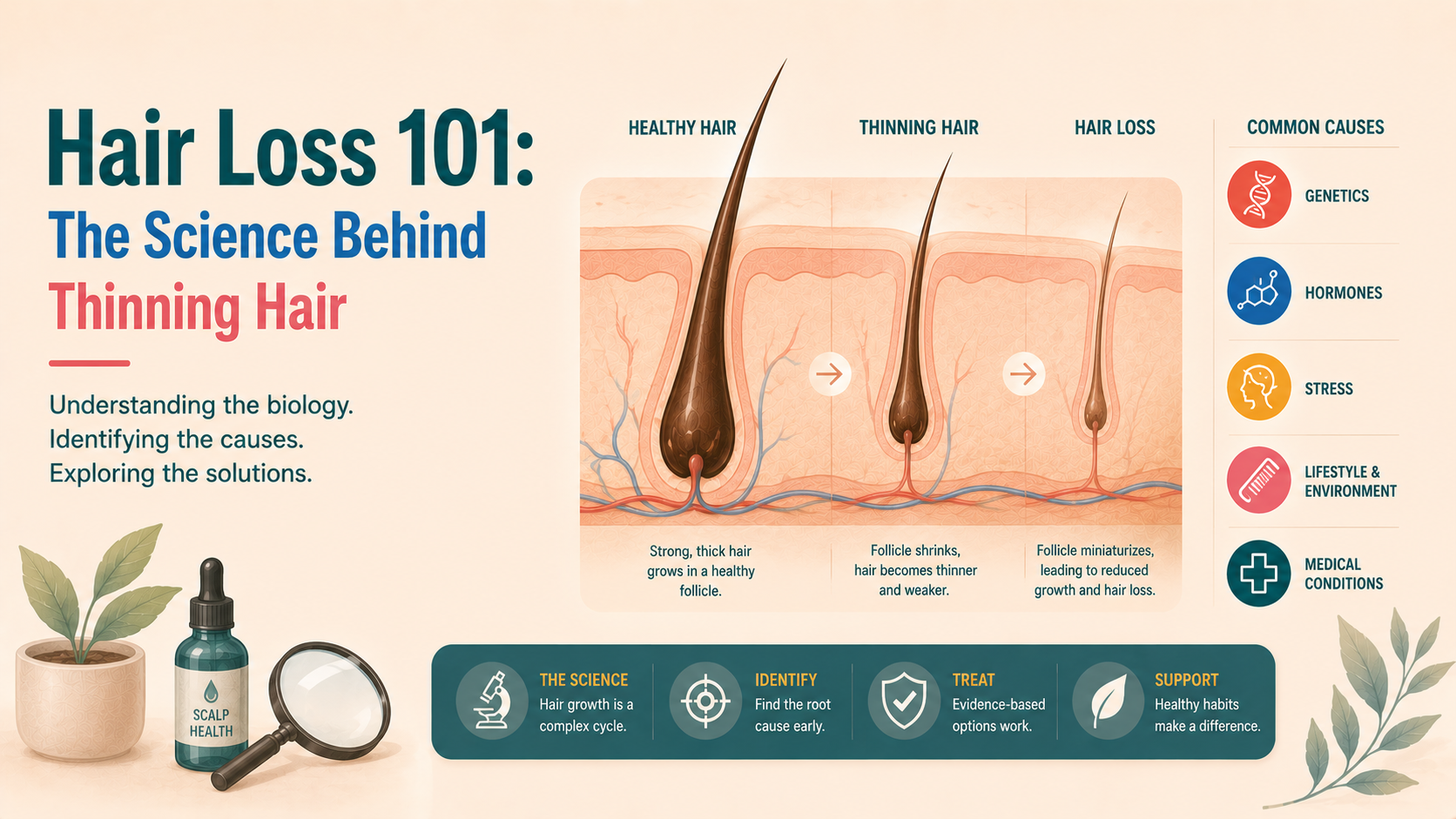
A shed tells you that hairs are being released. Pattern hair loss involves a different question: are affected follicles gradually producing finer hairs? You can have one without an obvious example of the other, and you can have both together.
Your shower can show you that hair is leaving. It cannot reliably tell you the size and quality of the hair that will replace it.
Follicles move through periods of growth, transition and rest. Eventually, the old strand is released and another cycle can produce a new one. The follicles across your scalp are at different stages, which helps preserve overall coverage.
Daily shedding therefore has a normal place in the system. Commonly quoted ranges are only rough guides. They are not a threshold at which the hundred-and-first hair establishes a diagnosis.
Long hair is more conspicuous in a brush than short hair. Less frequent washing can mean more loose hairs appear together on wash day. Neither observation, on its own, tells you that the follicle has been damaged.
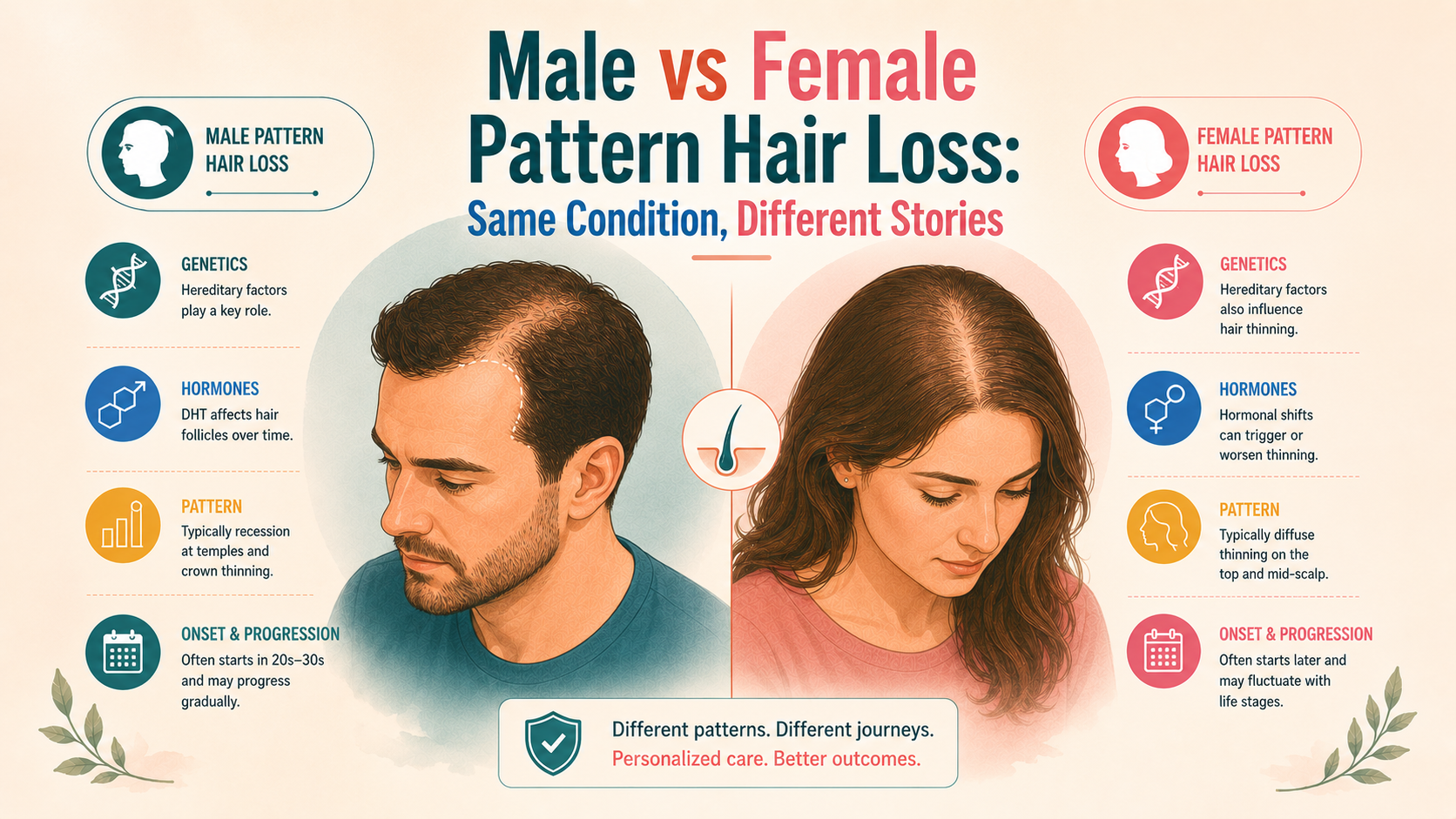
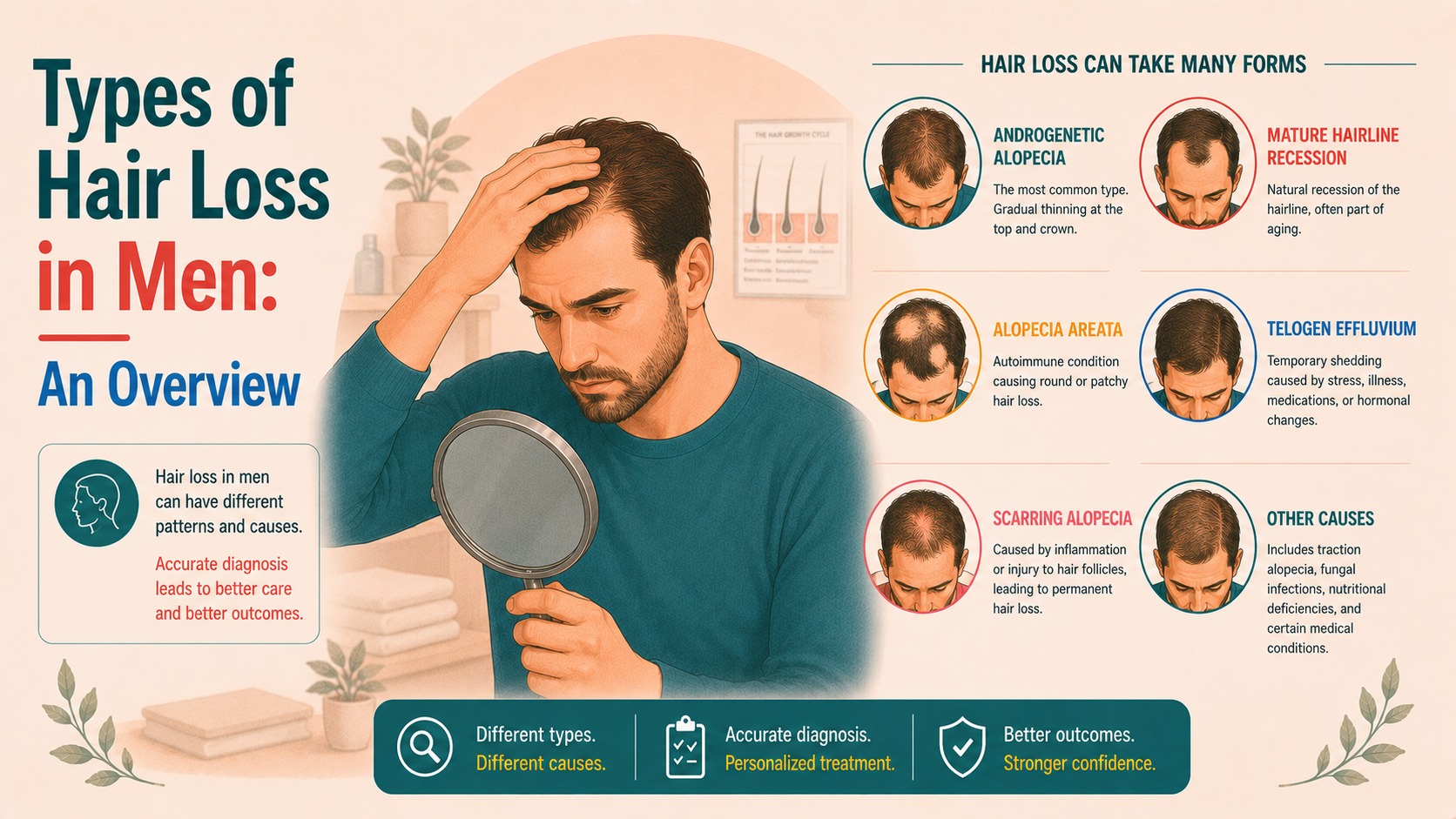
What matters is whether the experience is different from your usual pattern and whether your hair is changing. A widening parting, progressive temple recession or a sustained reduction in overall volume is worth discussing even if you never notice a large shed.
One unflattering photograph is not enough to diagnose hair loss. Equally, one reassuring photograph cannot cancel a consistent change across several months. Lighting and styling can account for a surprising amount of apparent variation.
If monitoring is useful, take occasional photographs in similar lighting with a comparable hairstyle and hair dryness. Repeatedly counting loose hairs or pulling at the scalp can add anxiety without clarifying the diagnosis.
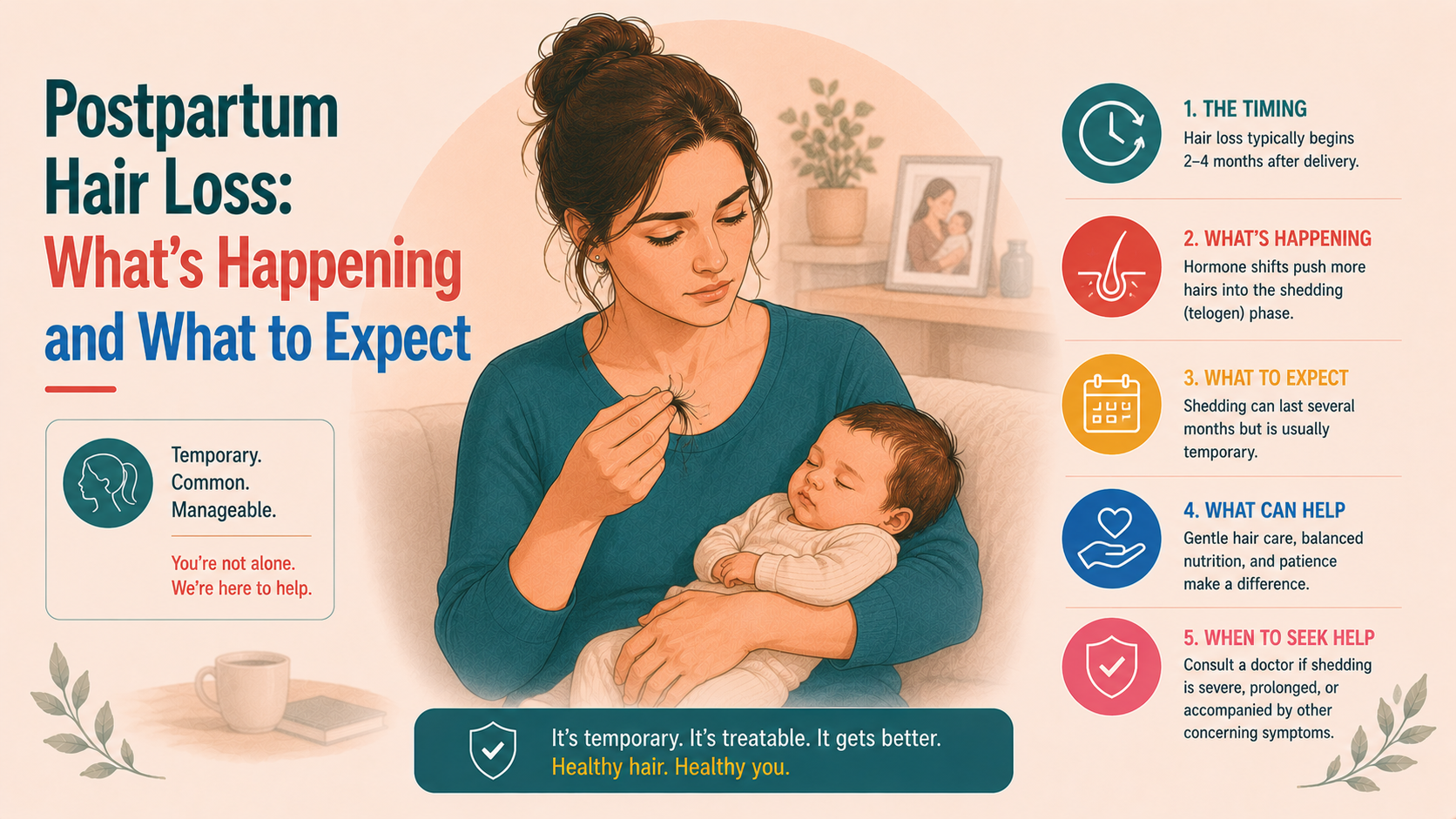
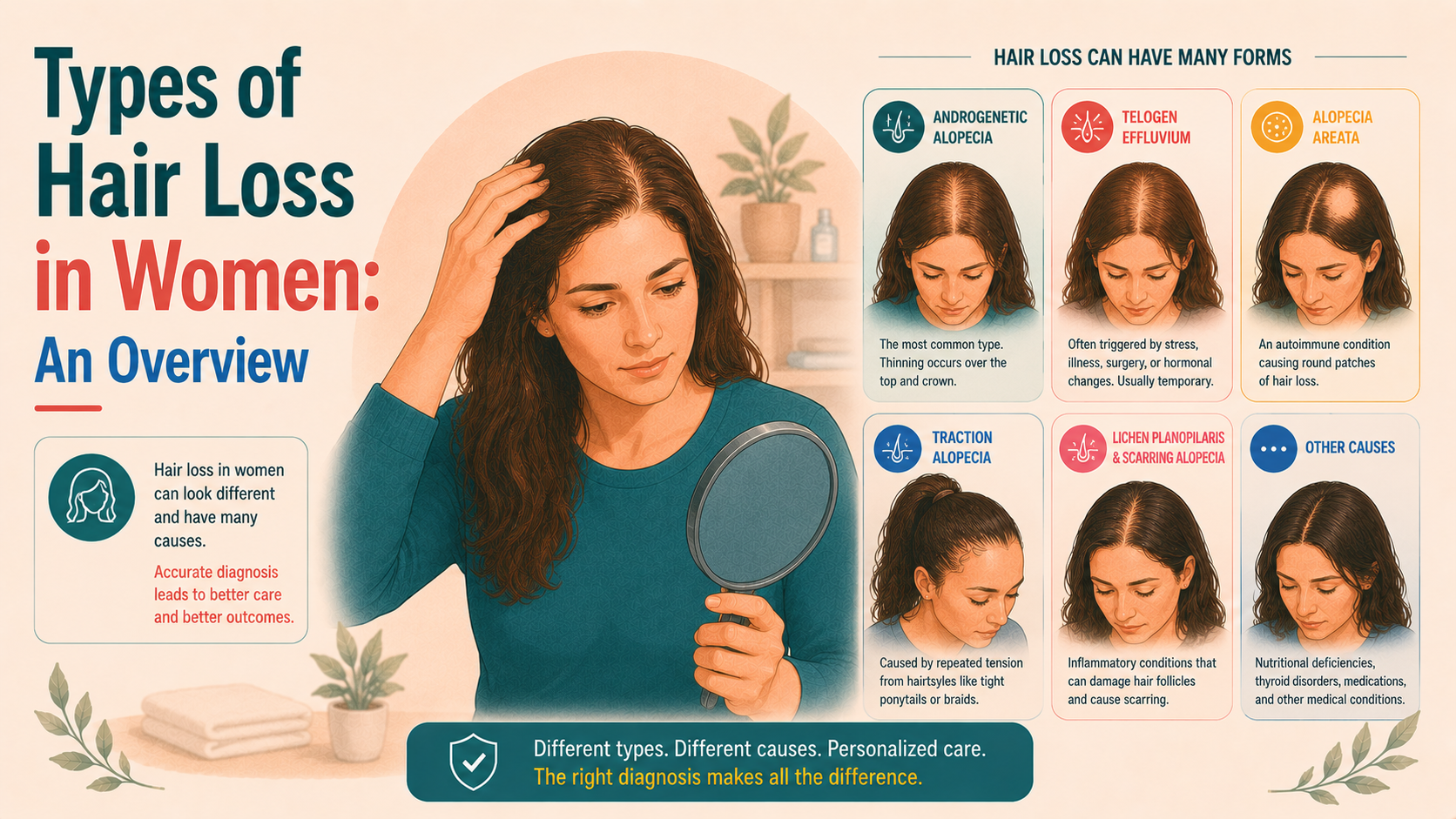
Telogen effluvium can occur when more follicles than usual leave active growth, with shedding appearing a few months later. A significant illness, surgery, childbirth or substantial nutritional strain may be relevant.
The delay is why a clinician asks about the preceding months rather than only the week the shedding began. Recovery can take time even once the trigger has passed, because the cycle and visible hair length need time to catch up.
A plausible trigger does not prove that all of the thinning is temporary. Telogen effluvium can coexist with pattern hair loss, and persistent or unexplained shedding may need further investigation.
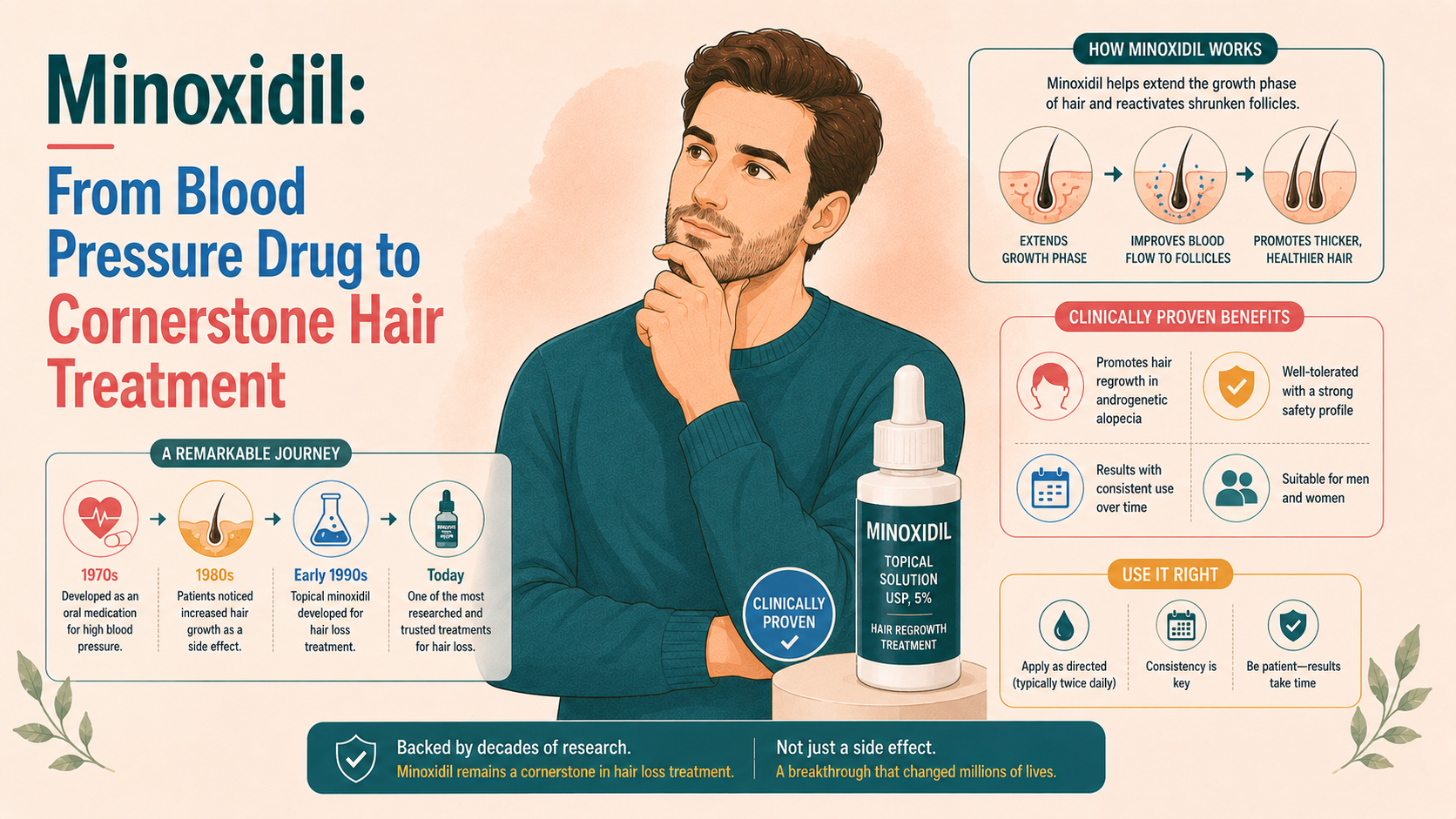
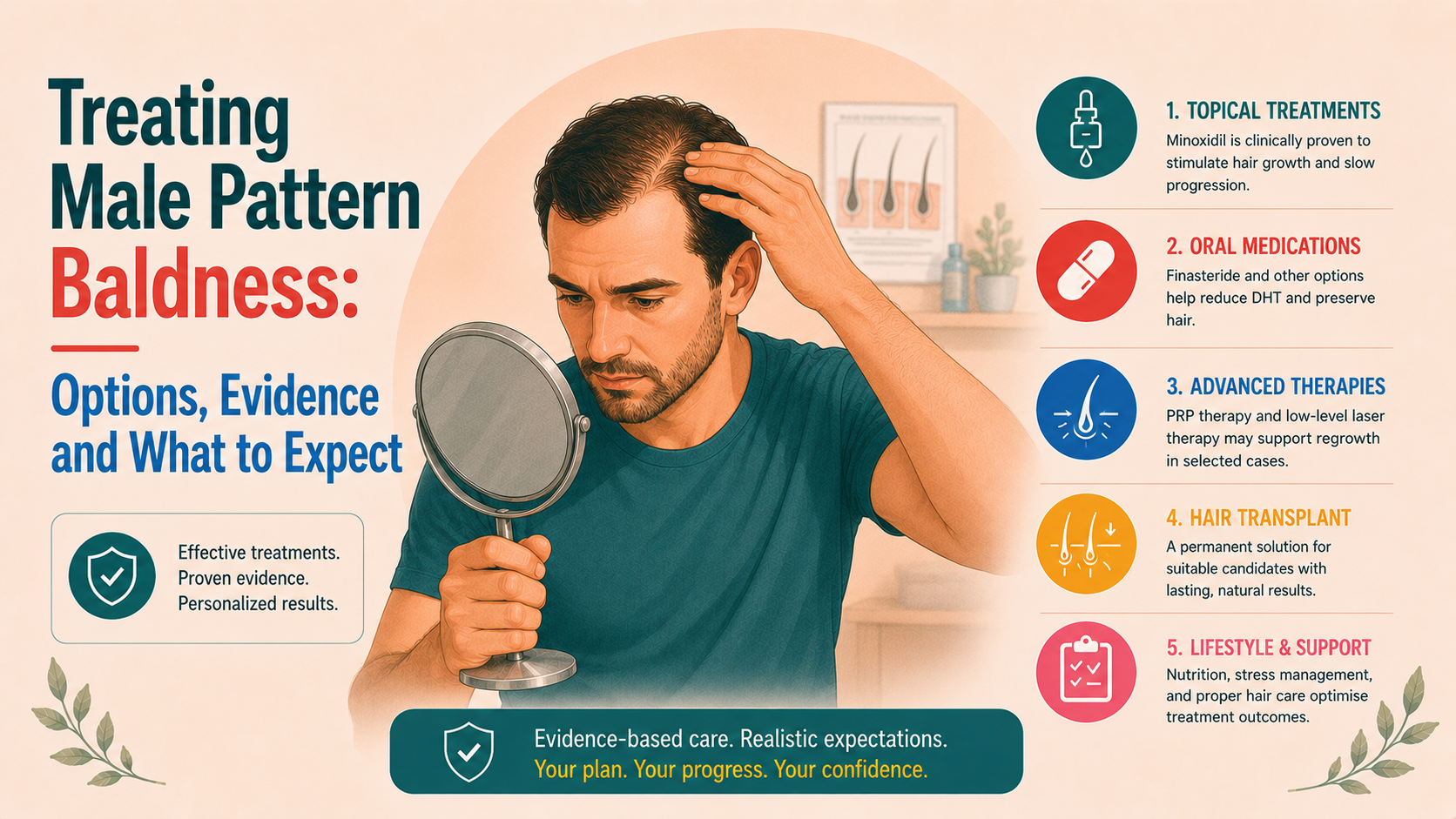
Some people notice increased shedding early in minoxidil treatment. This can reflect a change in the hair cycle, with resting hairs released as follicles move towards renewed growth.
It is not a reliable test of success. Having a shed does not guarantee regrowth, and not having one does not mean the medicine will fail. Evidence for a predictable “finasteride shed” is less established than the early shedding described with minoxidil.
Follow the instructions for your particular product and the plan agreed with your clinician. Seek advice for severe or continuing shedding, or if there are other symptoms. It is better to assess an unexpected change than automatically label every loss as a reassuring sign that treatment is working.
A routine appointment is reasonable for persistent increased shedding, gradual visible thinning or uncertainty that is becoming difficult to manage. You do not need to wait until a problem is extensive.
Seek prompt medical assessment for rapid patchy loss, marked inflammation, burning or pain, or a changing area that might be scarring. Infection and inflammatory disorders need a different approach from ordinary pattern thinning.
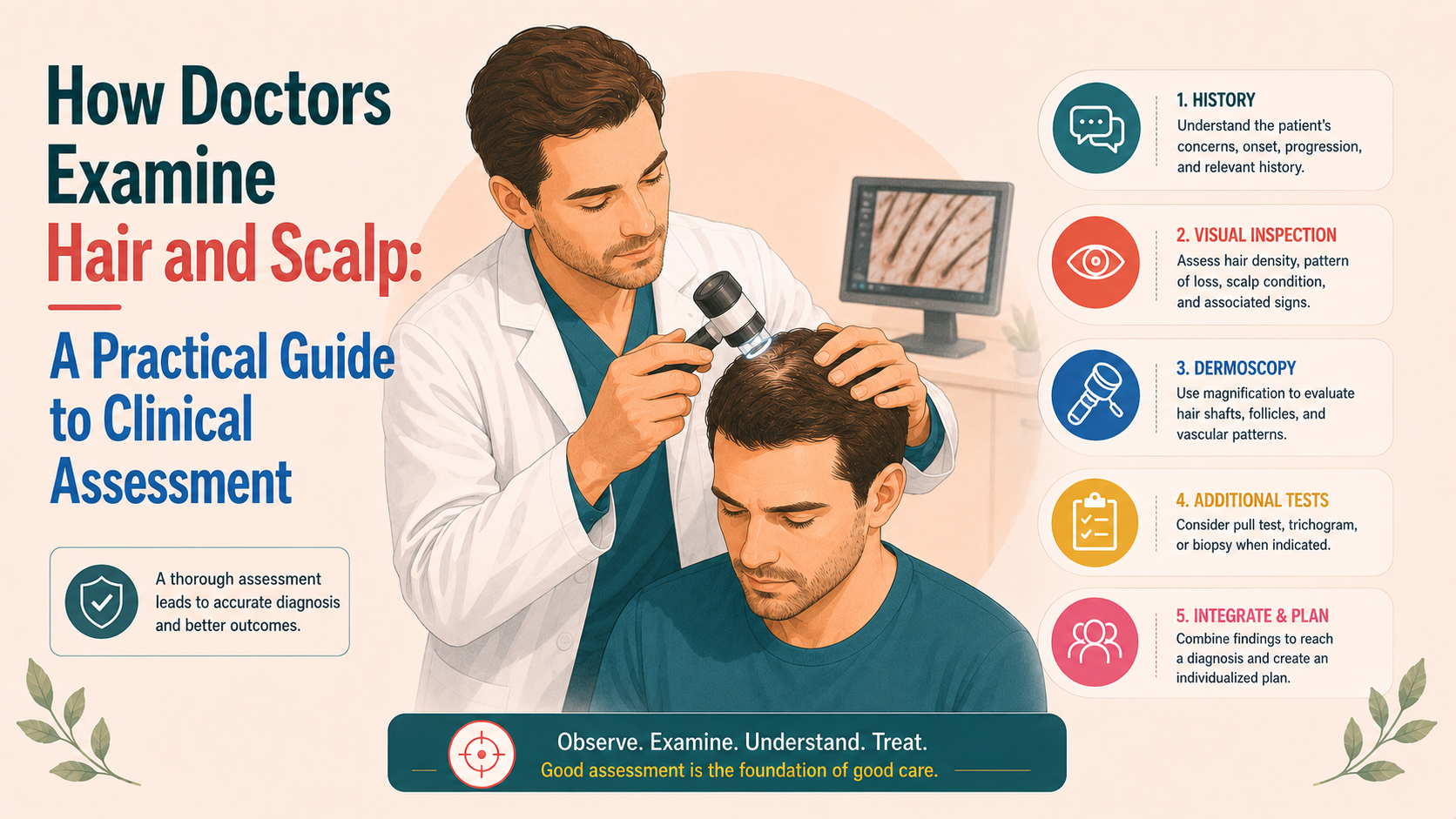
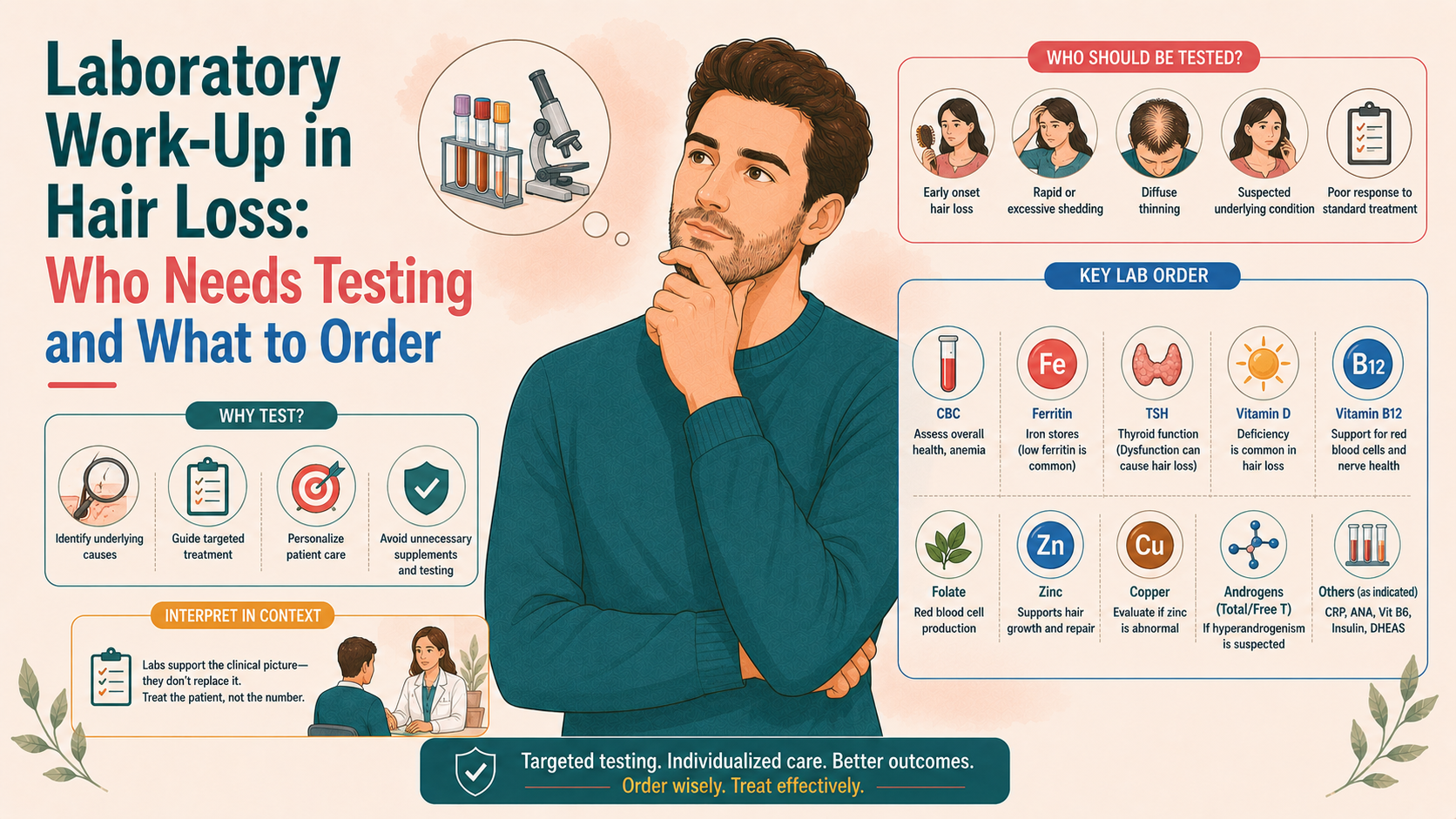
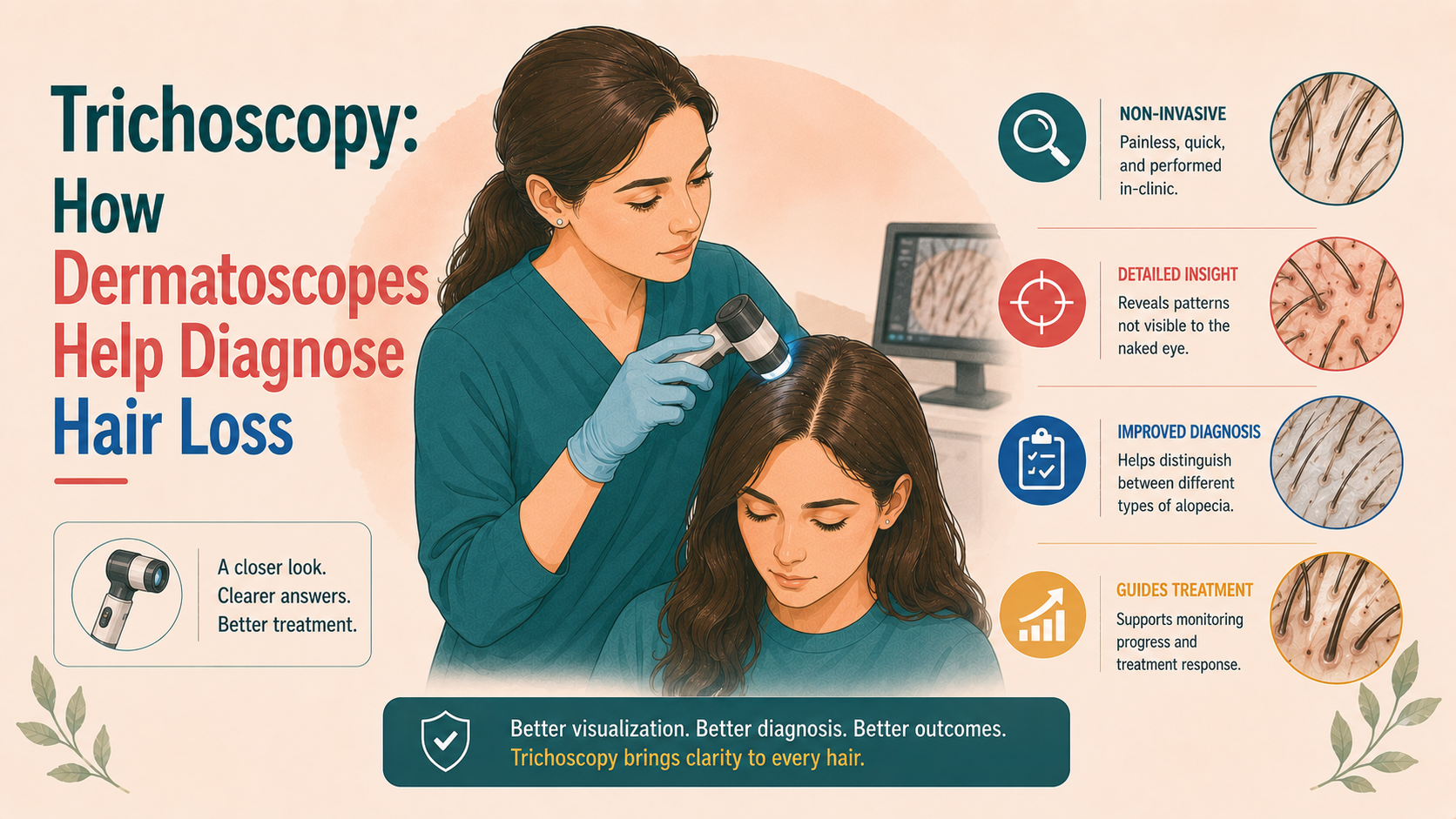
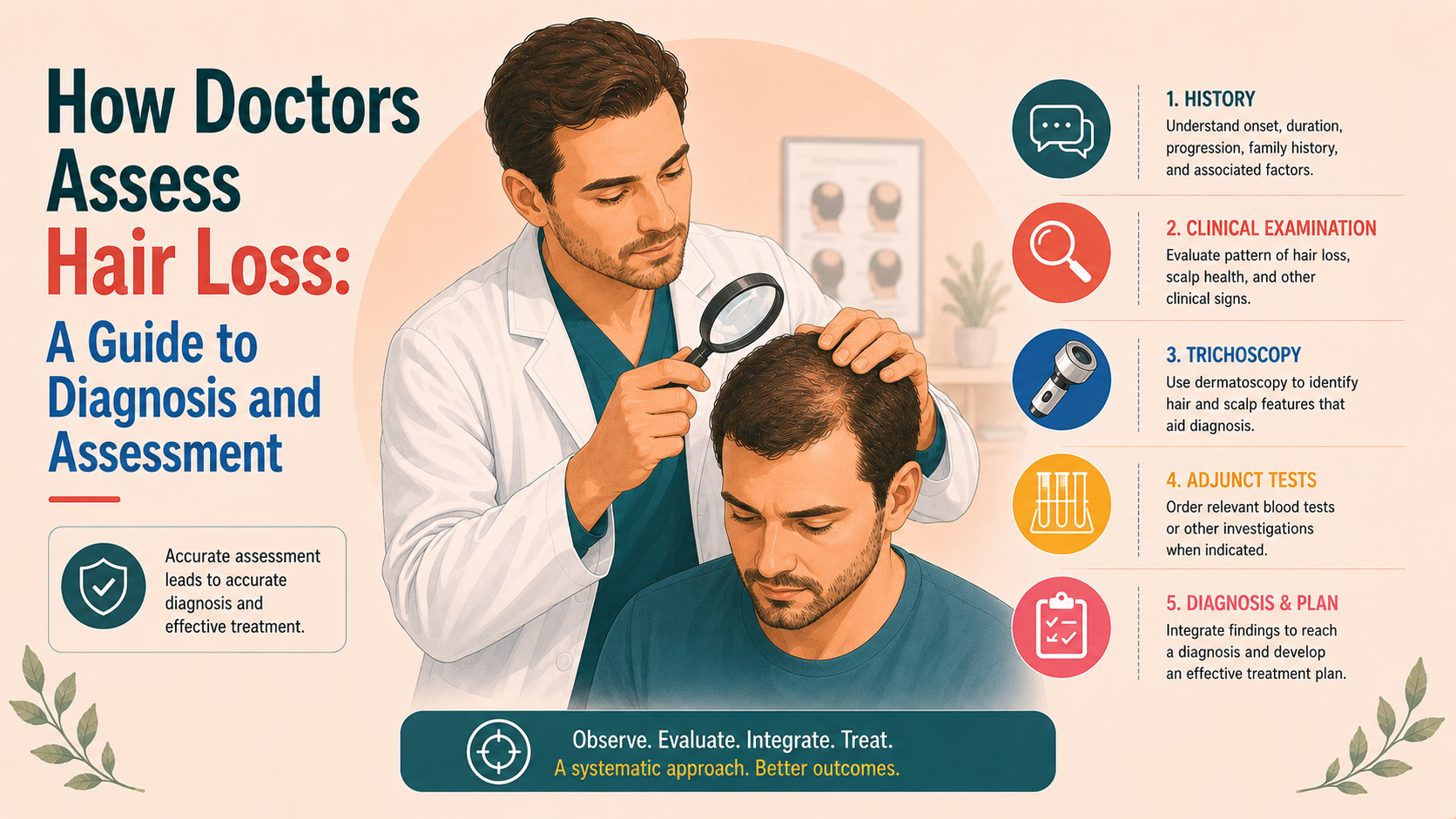
The assessment should consider your history and examine the scalp. Magnification can help identify miniaturisation, broken hairs or signs of inflammation. Blood tests are useful when there is a reason to suspect a relevant medical or nutritional problem; they do not replace looking at the hair.
When I look back, I wish I had documented the change sensibly and had a proper assessment sooner. I would not tell my younger self to copy the regimen I eventually used. I would tell him to stop guessing.
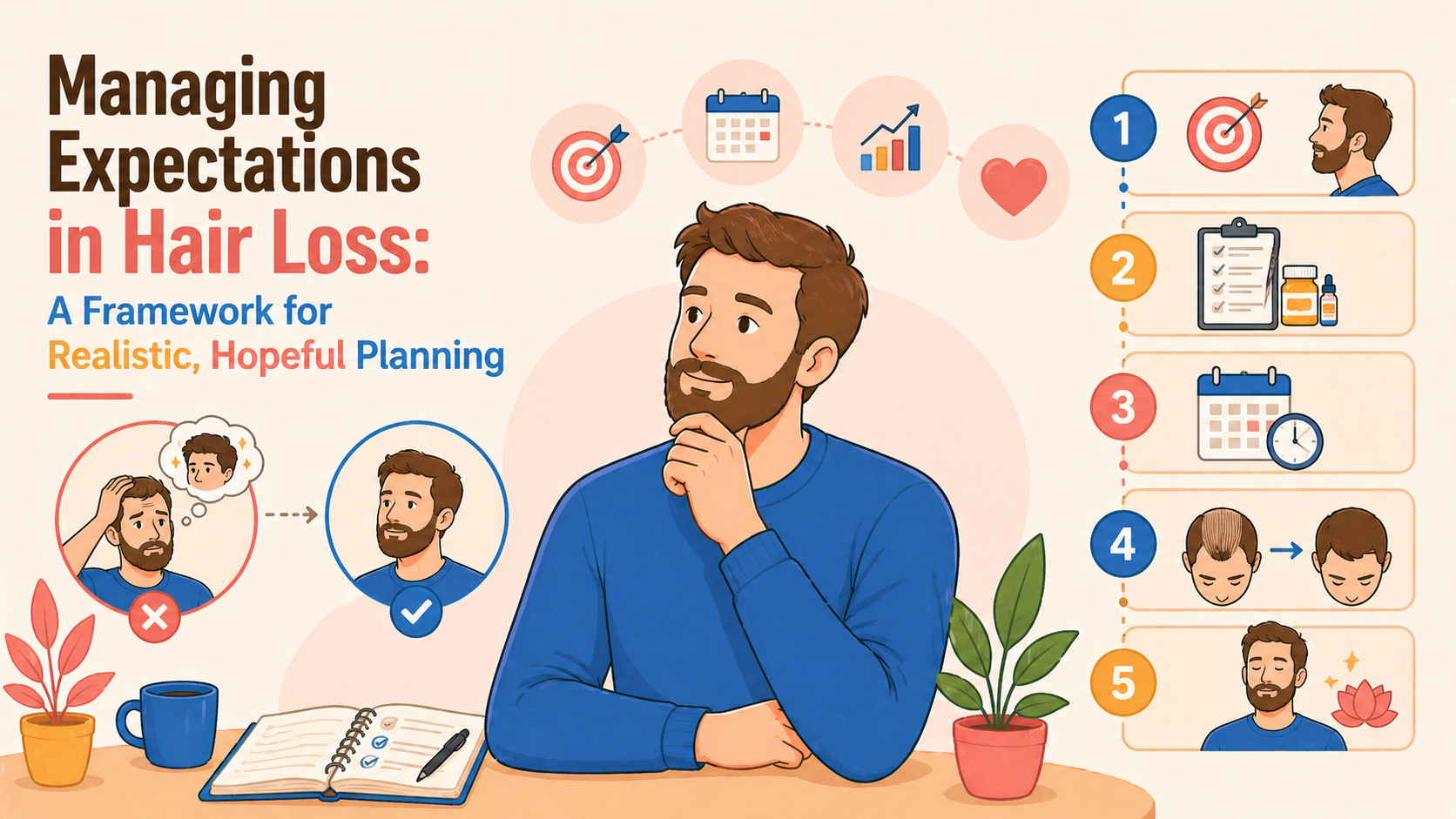
A clear explanation, an agreed review point and a plan for unexpected symptoms can make the process less reactive. Then you can give your hair an appropriate amount of attention without making every wash day a fresh decision about your future.