What finasteride, dutasteride, minoxidil and procedures can realistically offer, and how to build a manageable plan for male pattern hair loss.
![[headshot]](https://cdn.prod.website-files.com/68207da82e5b8c350c67932f/68c6a7436a552c0fe87a4da7_Screenshot%202024-11-27%20at%2011.38.11.png)
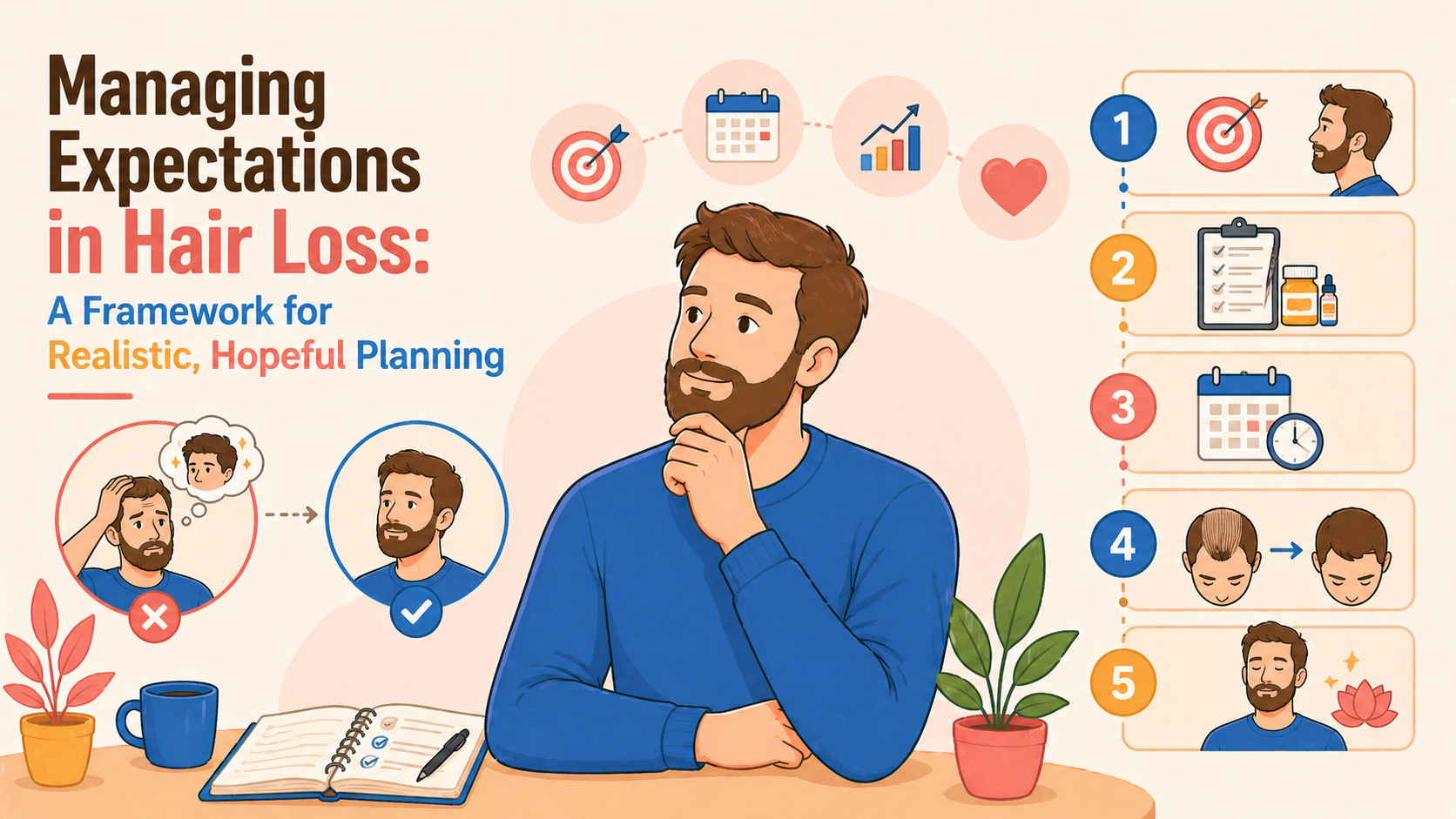
When I first started treatment, I wanted obvious regrowth. Keeping the hair I already had felt like a disappointing result. I understand that reaction, but a treatment that slows a progressive condition can be doing something useful even when the mirror does not show a transformation.
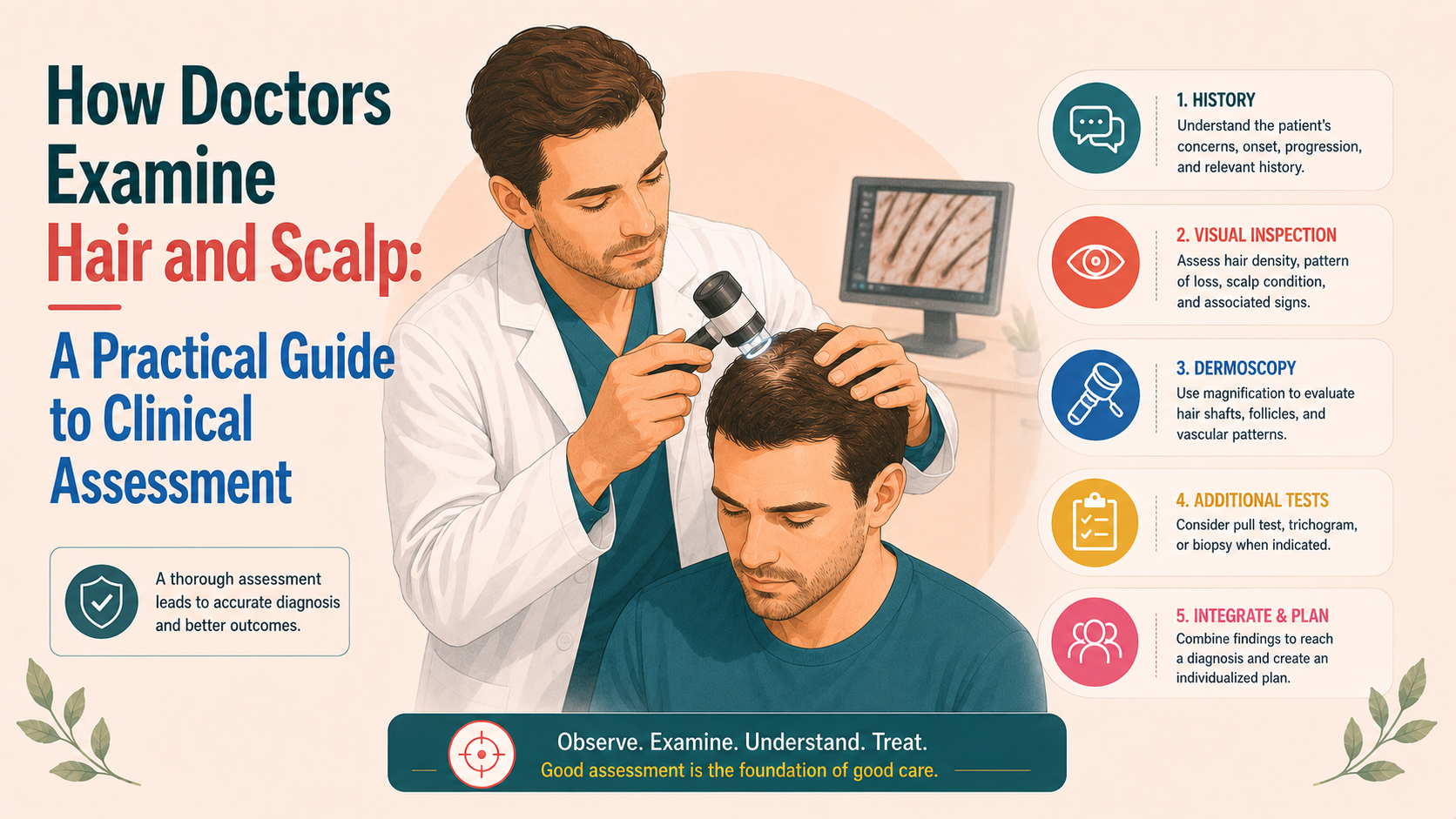
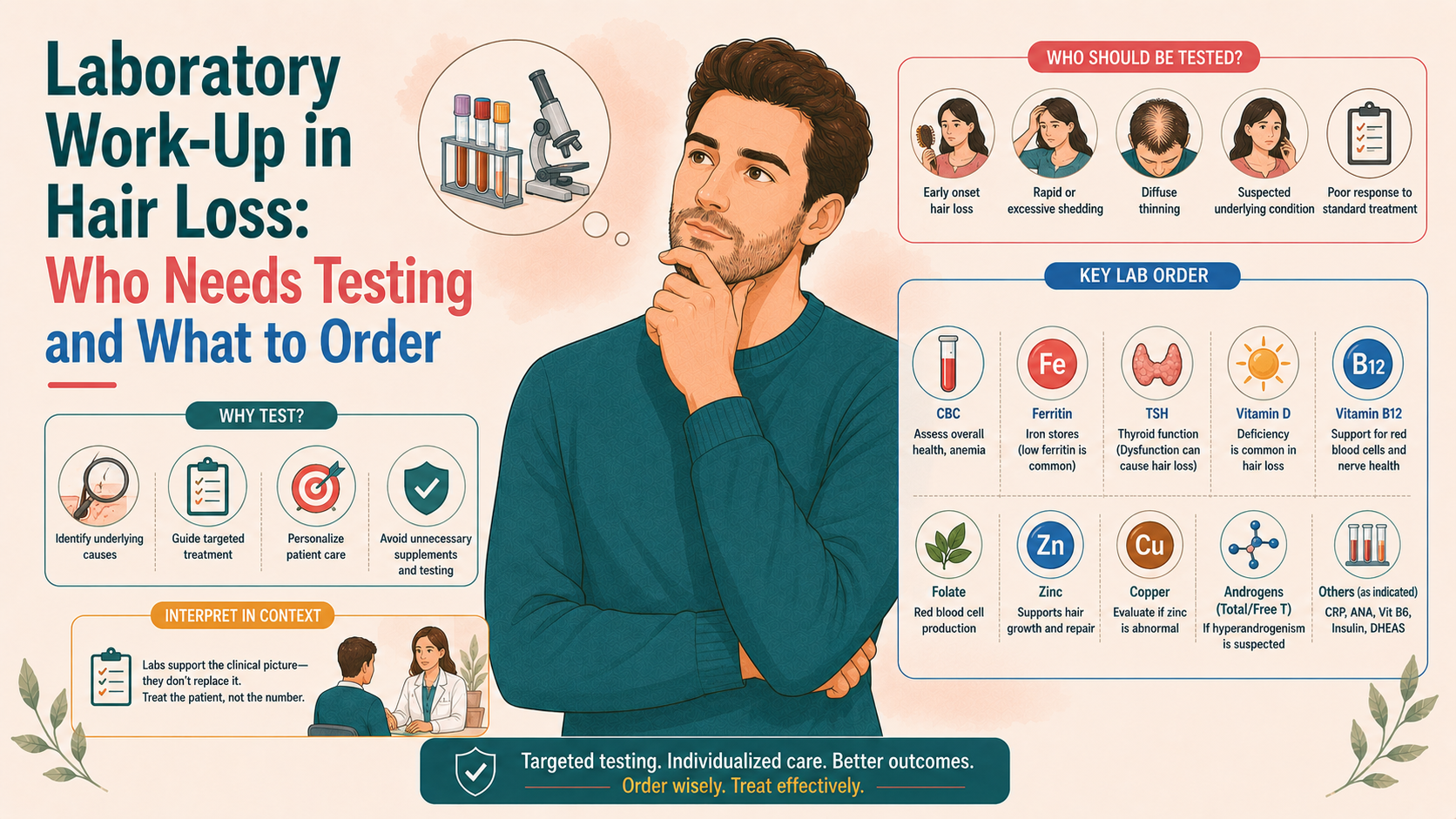
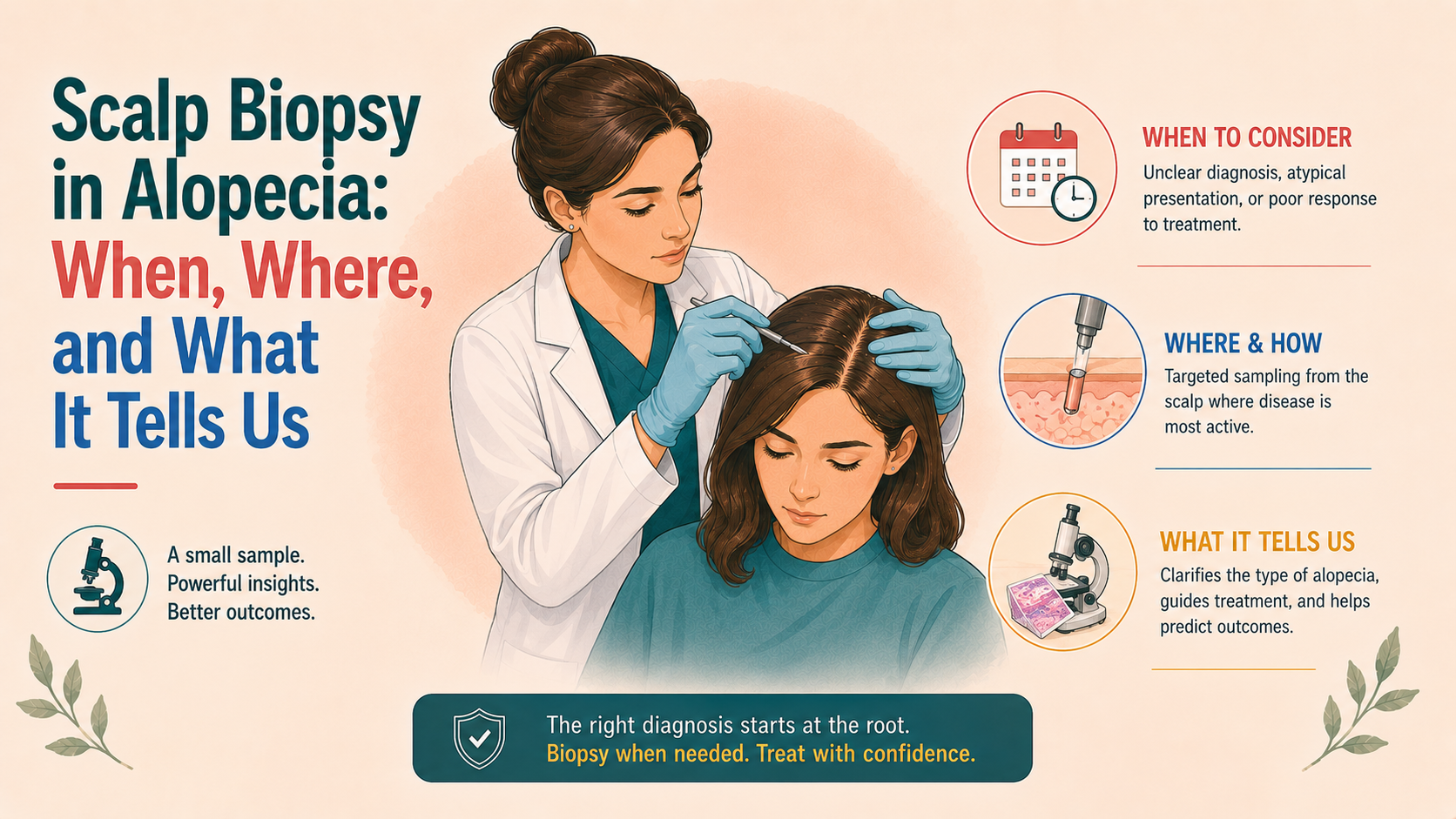
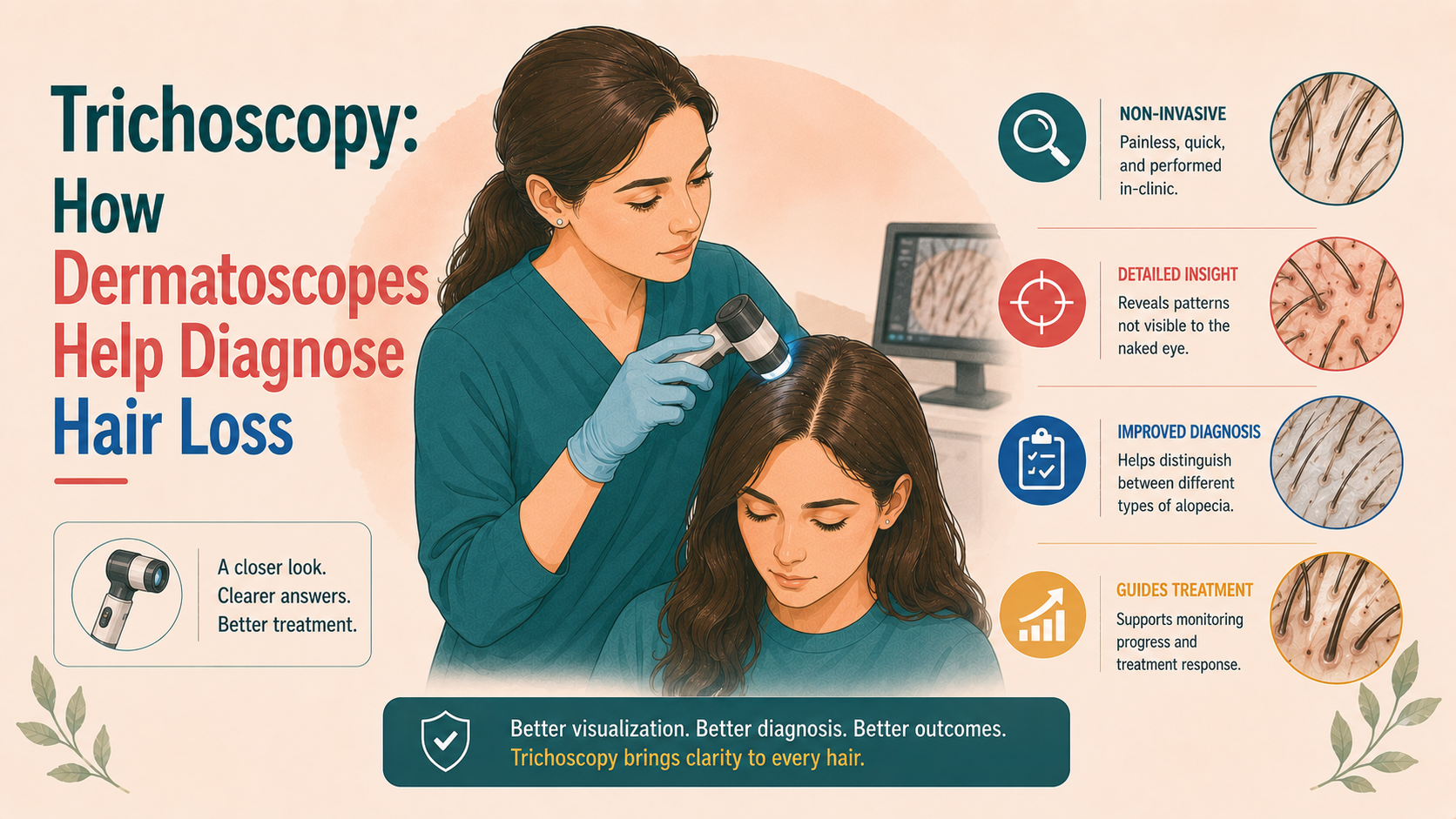
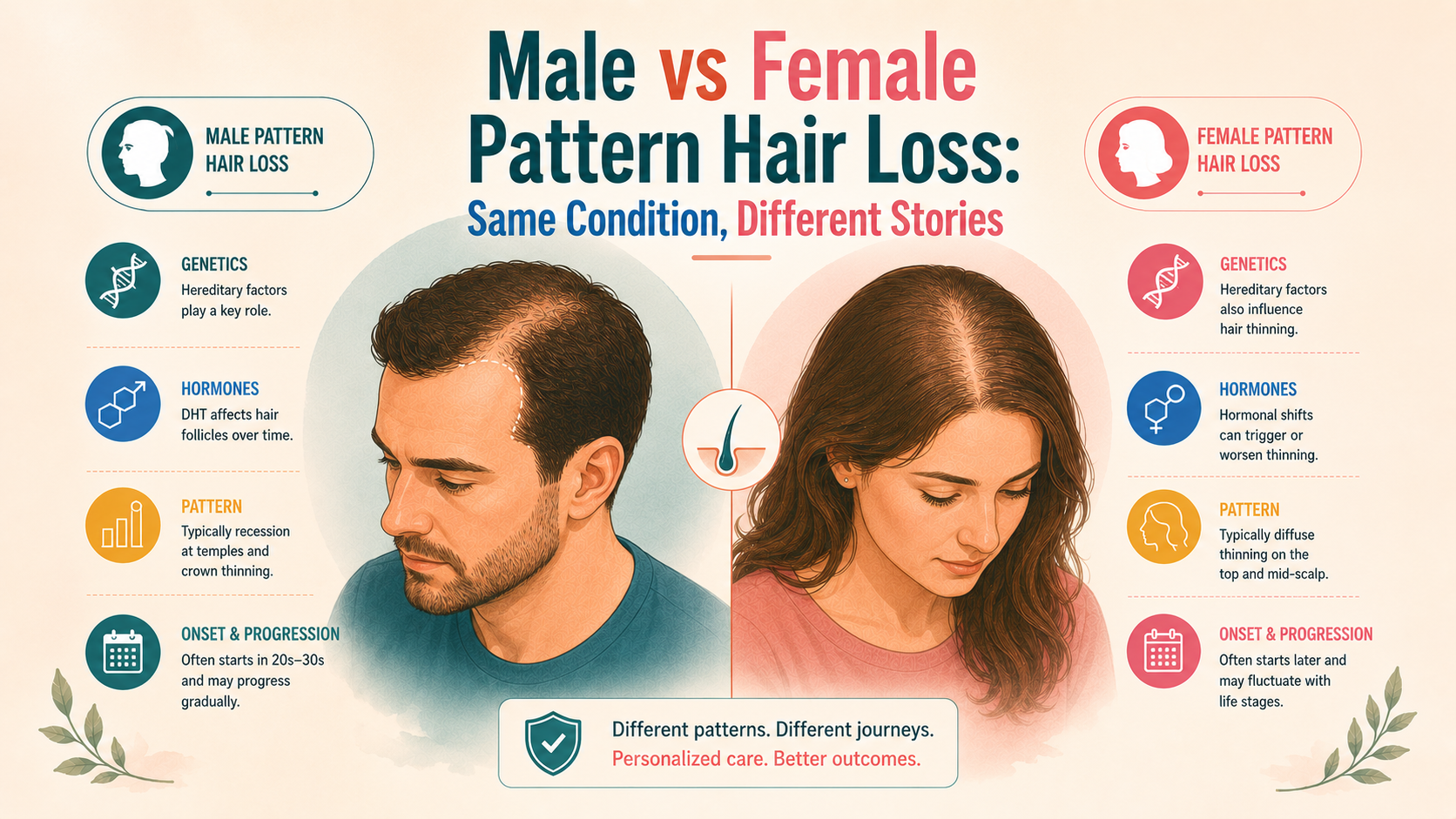
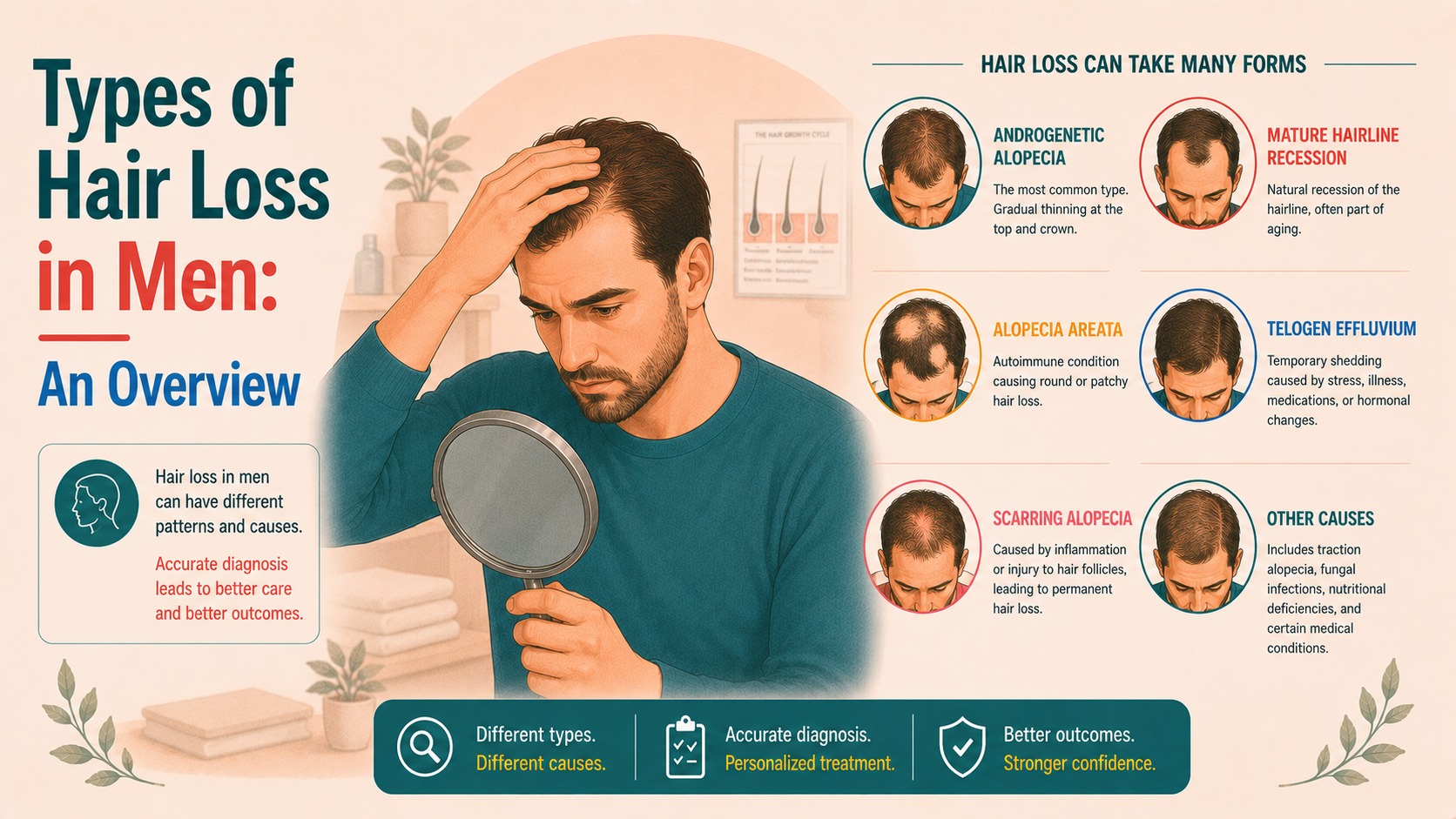
Confirm the diagnosis before building a regimen. Pattern hair loss, temporary shedding and inflammatory scalp disease need different approaches. Then decide what matters most to you: slowing the change, improving a particular area, or making the daily worry more manageable.
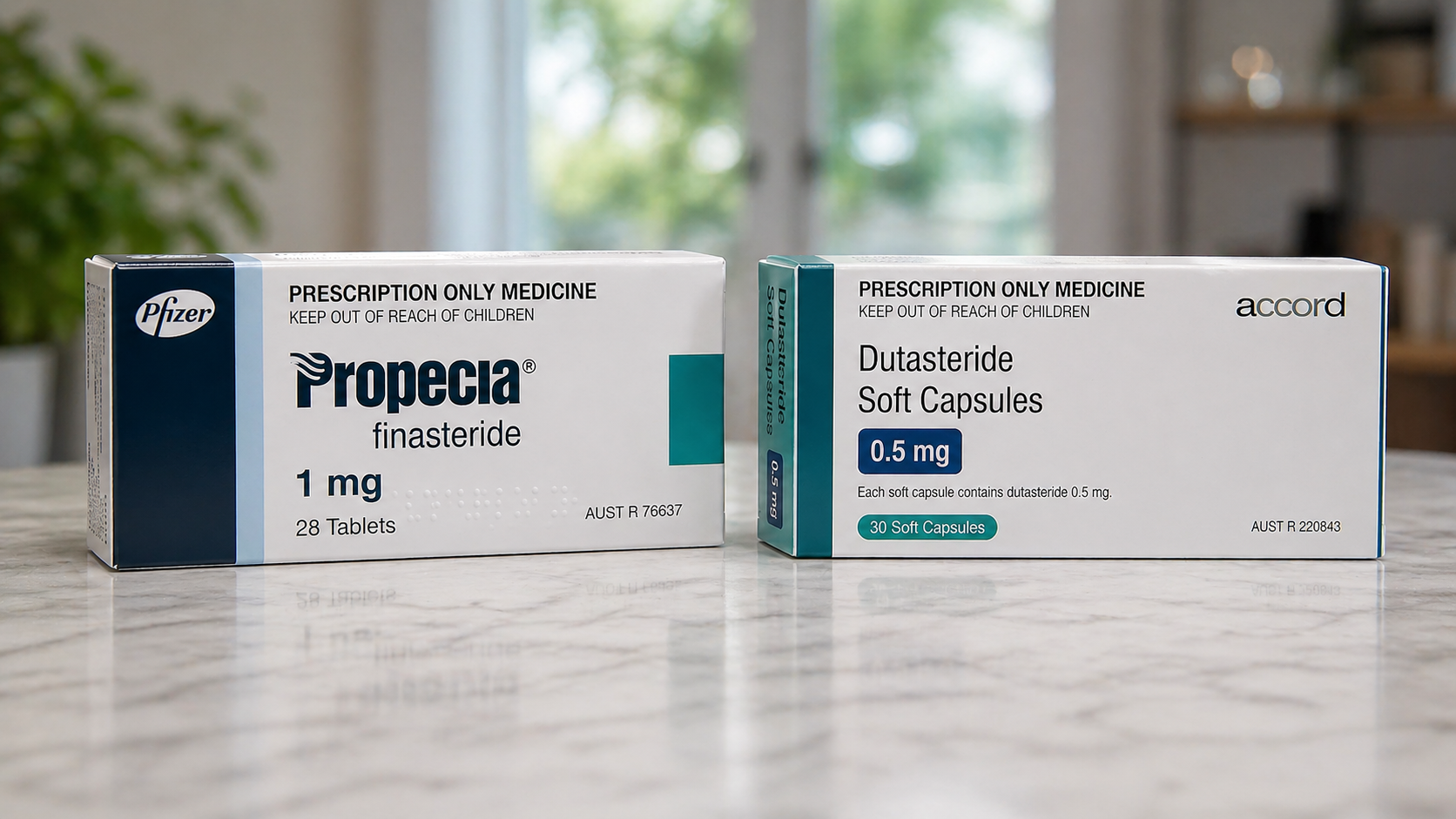
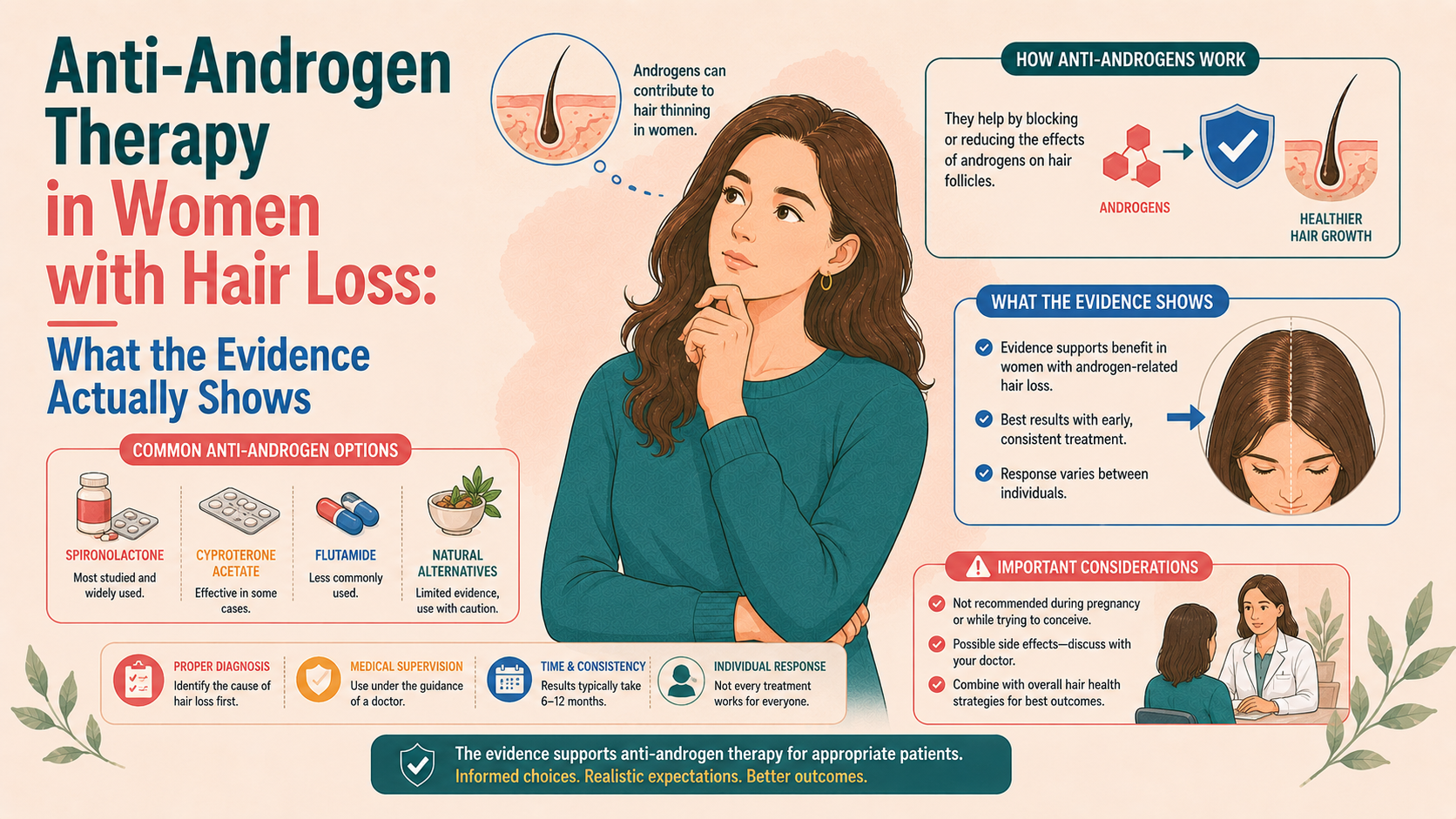
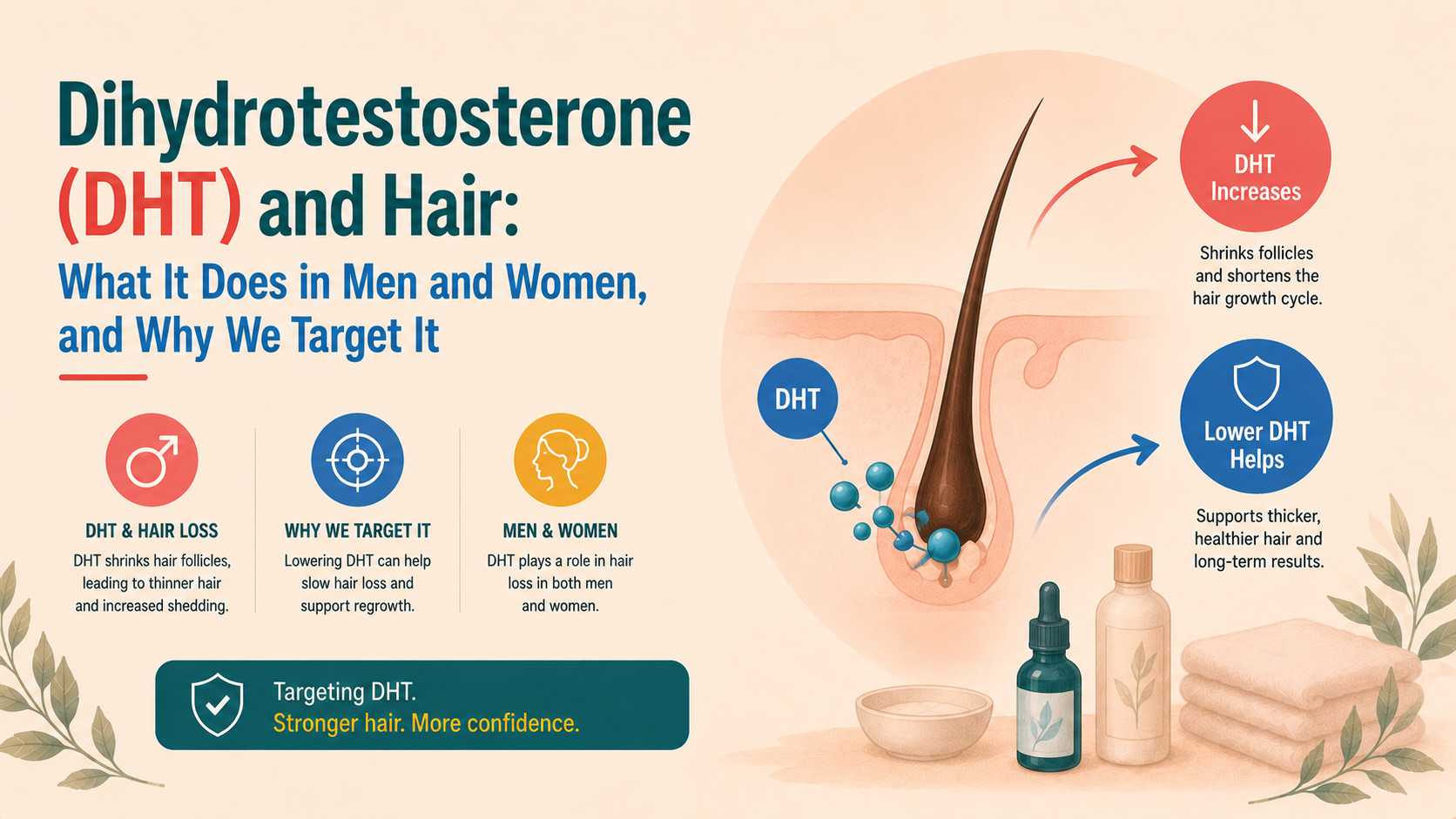
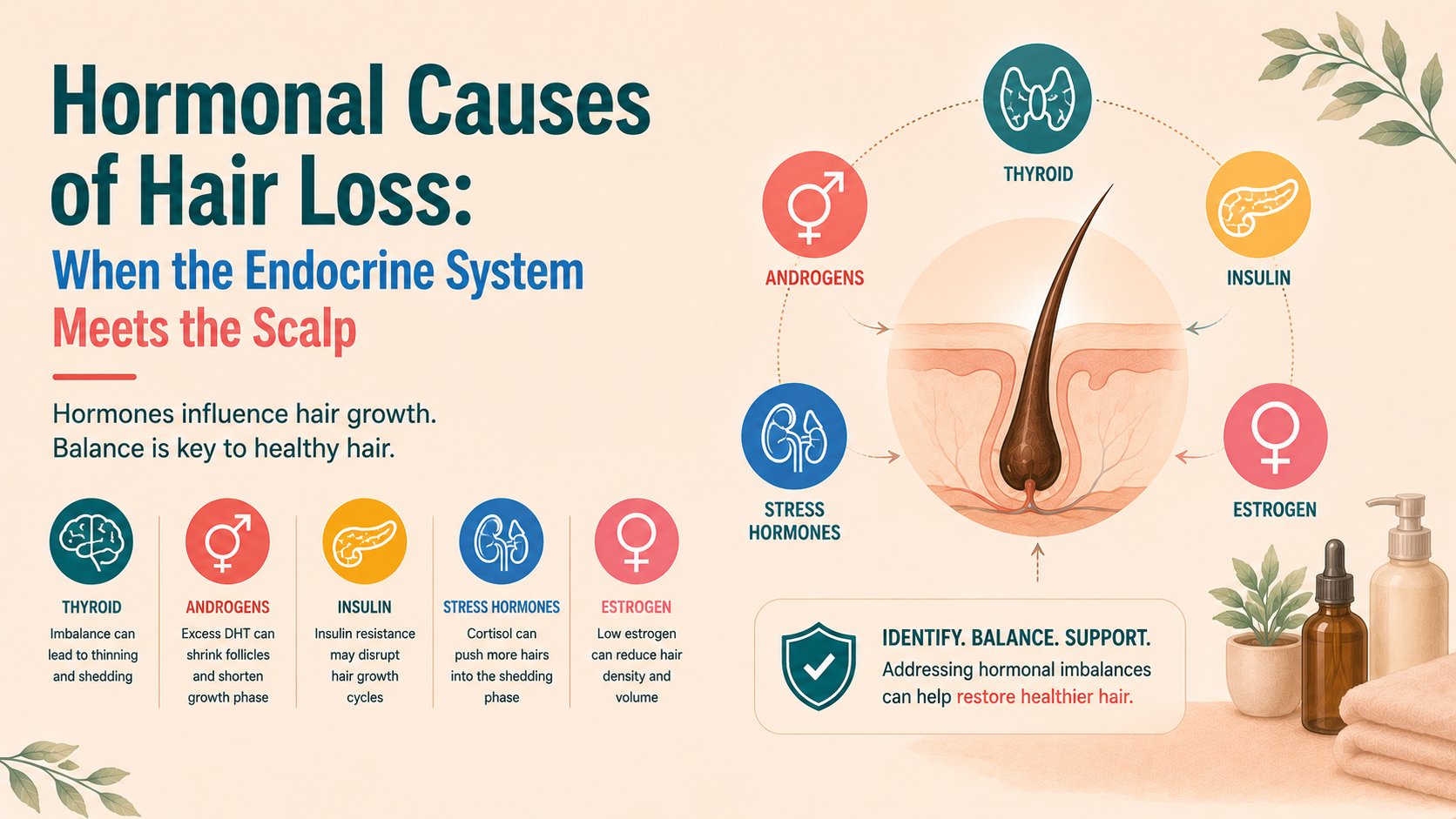
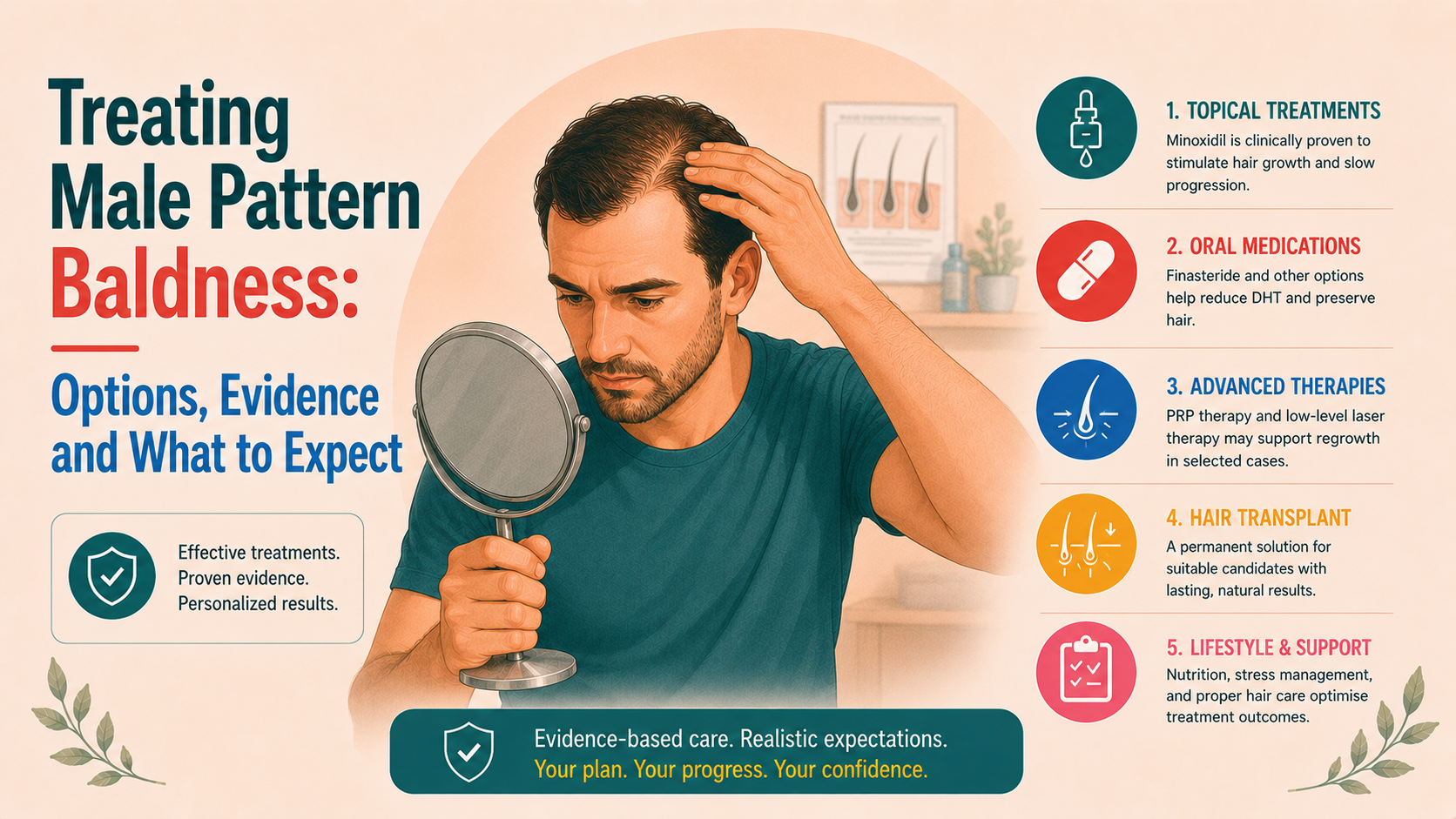
These medicines reduce DHT by blocking the enzyme that converts testosterone into it. Finasteride has extensive evidence in male pattern hair loss and is licensed for that purpose in many countries. It can slow further miniaturisation and improve density in some men.
Dutasteride blocks both major enzyme types and suppresses DHT more strongly. Trials have found greater average hair growth with the studied dutasteride regimen than with finasteride, but that does not make it the right choice for everyone. Hair-loss licensing varies by country, and it stays in the body much longer.
Possible sexual and mood-related adverse effects need a proper discussion. Persistent sexual symptoms after stopping have been reported, and their frequency is uncertain. Finasteride tablets carry warnings about suicidal thoughts. If depression or suicidal thoughts develop while taking finasteride 1 mg, current UK advice is to stop and contact a doctor promptly. Seek immediate help if you might harm yourself. With dutasteride or finasteride 5 mg, contact the prescriber as soon as possible about mood changes.
A fear-based forum post and a reassurance that side effects are impossible are both poor substitutes for an informed prescribing discussion.
Some studied topical formulations produce lower blood exposure than oral finasteride while improving hair counts. However, finasteride can still enter the bloodstream and lower circulating DHT. The concentration, volume and formulation matter.
It is not reasonable to assume that any compounded spray will reproduce a trial product’s effects or avoid sexual and mood-related adverse effects. Transfer to another person, especially someone who is pregnant, also needs preventing. Local approval status should be checked.
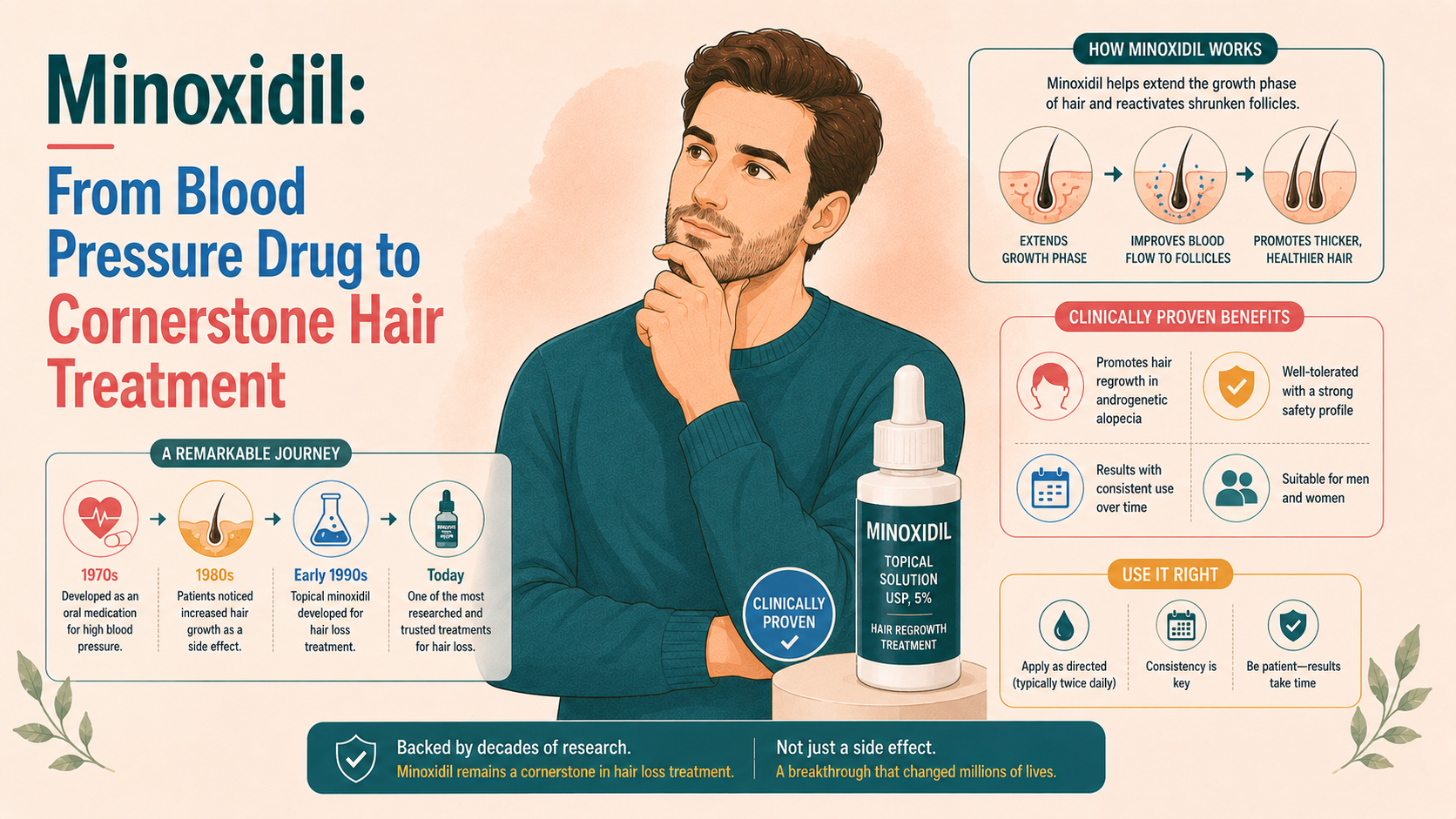
Minoxidil supports hair growth through several proposed actions, including changes in the hair cycle. It does not block DHT. Topical minoxidil has established evidence and may improve coverage, although daily application and scalp irritation can be limiting.
An early increase in shedding can happen. It is not proof of success, and significant or persistent problems deserve review. Benefit takes months to judge and generally depends on continued use. Keep the product away from children and pets; minoxidil exposure can be dangerous, particularly to cats.
Low-dose oral minoxidil is an off-label alternative in many countries. It can be more convenient, but it also exposes the whole body. Unwanted hair growth, swelling, dizziness and palpitations can occur, and rare serious cardiovascular effects are possible. A 2024 trial did not establish overall superiority of oral minoxidil over topical treatment on its main hair-density outcomes. Convenience and suitability matter more than assuming a tablet must be stronger.
Some trials support microneedling alongside minoxidil, but protocols vary and long-term evidence is limited. More depth, pressure or bleeding is not automatically more effective. Infection, irritation and scarring are possible, particularly with poor technique.
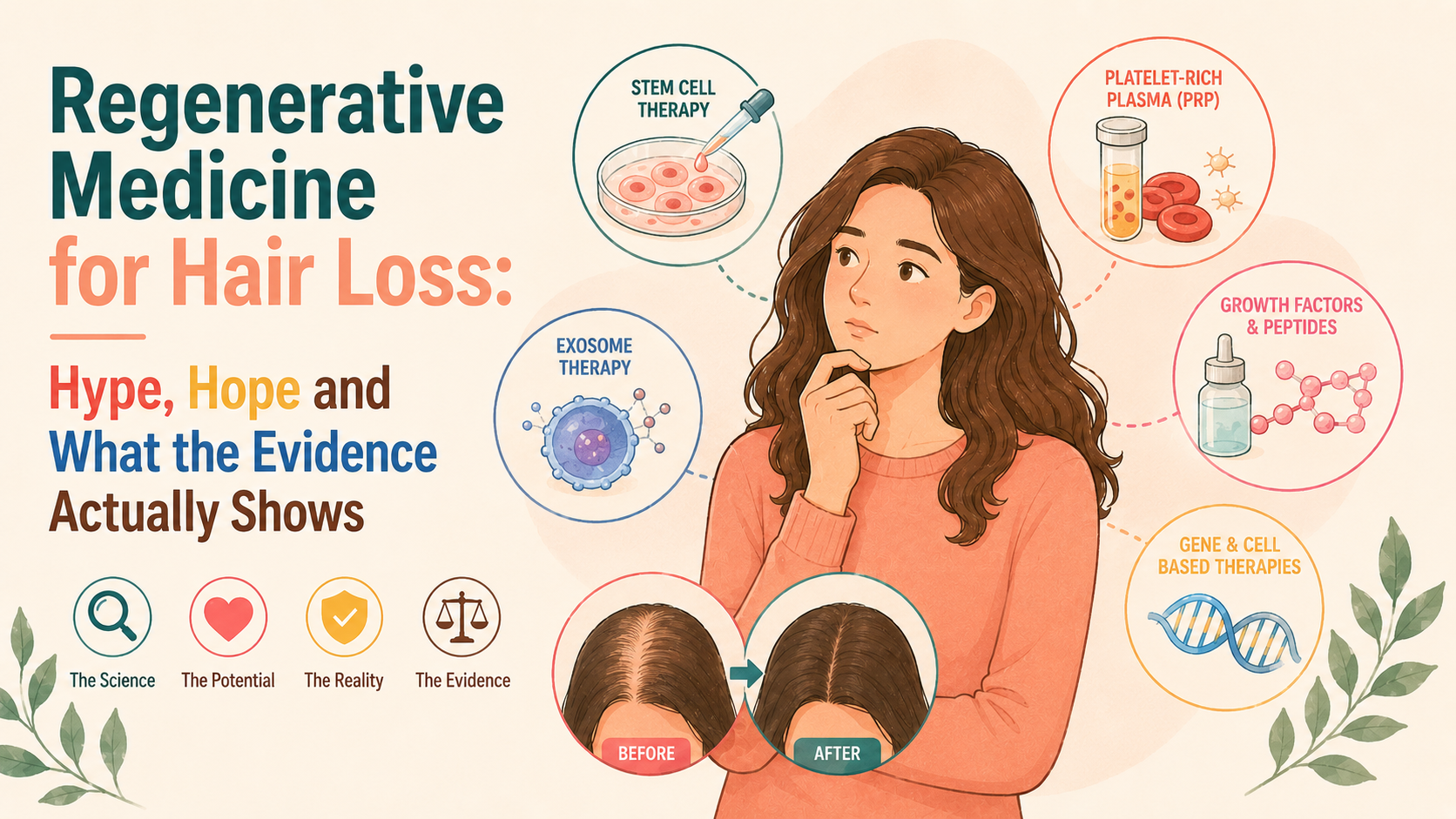
Platelet-rich plasma and certain low-level light devices also have supportive research, with uncertainty about the size and durability of benefit. Cost and the time needed to keep using them are part of the decision.
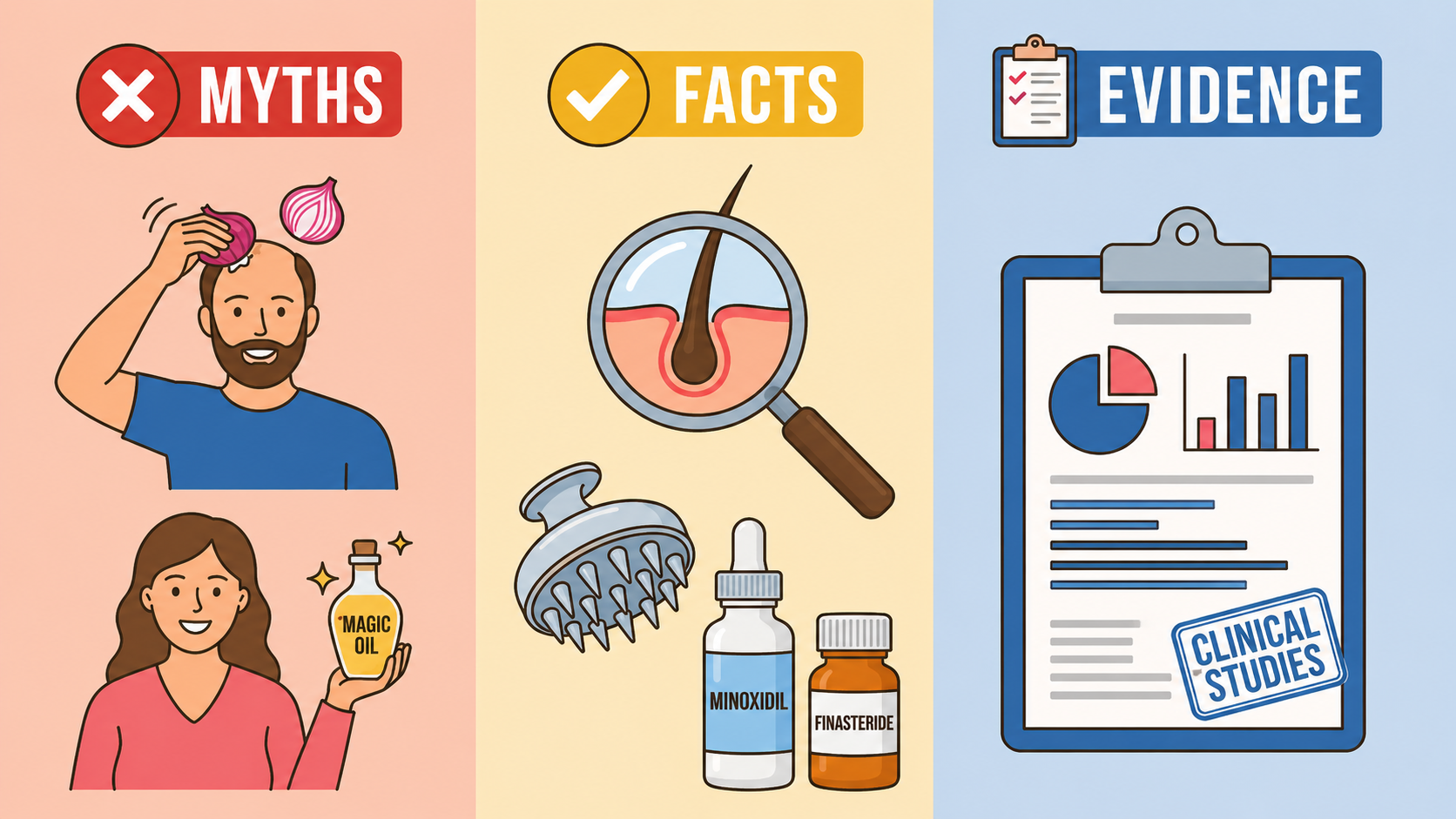
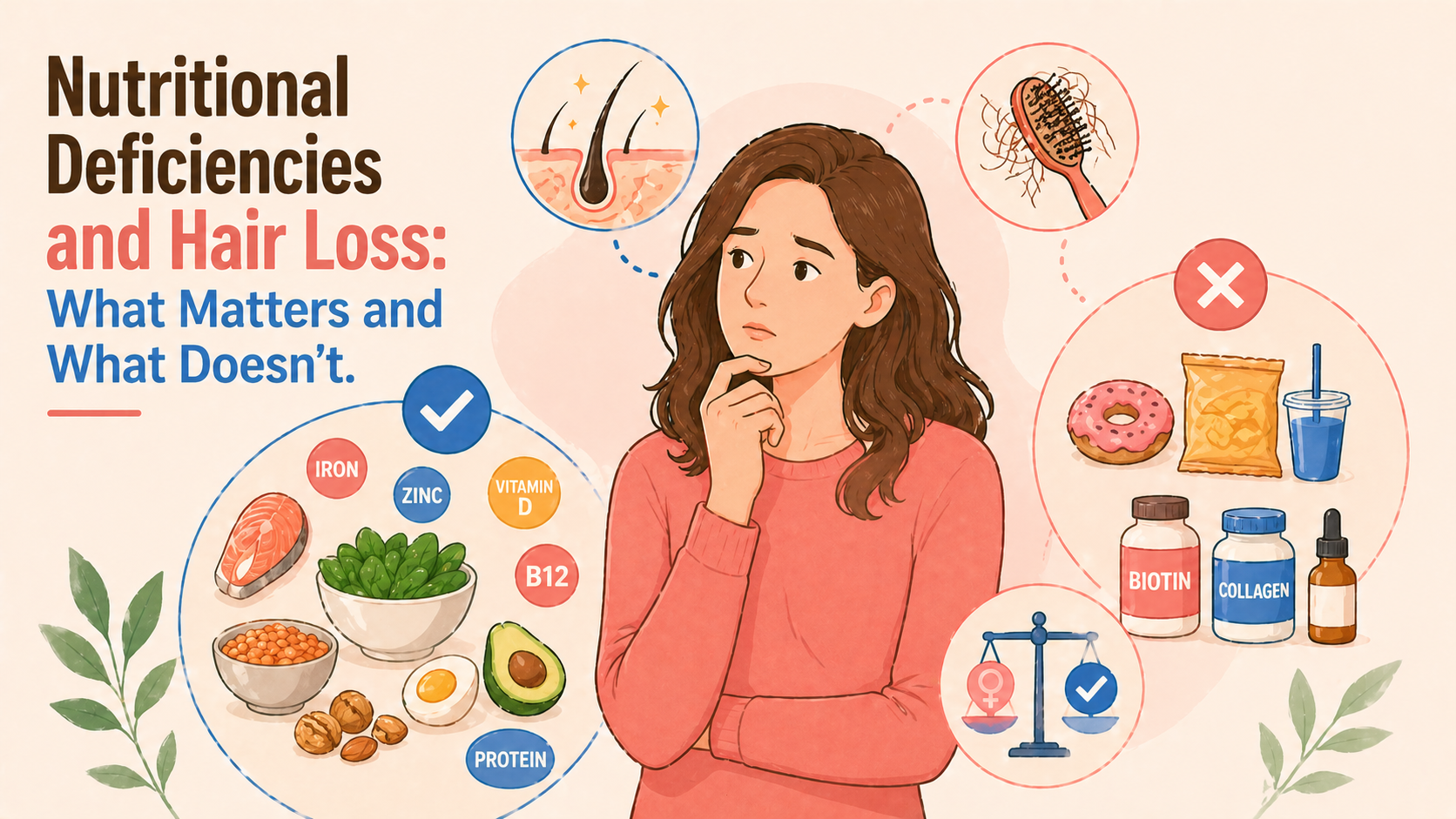
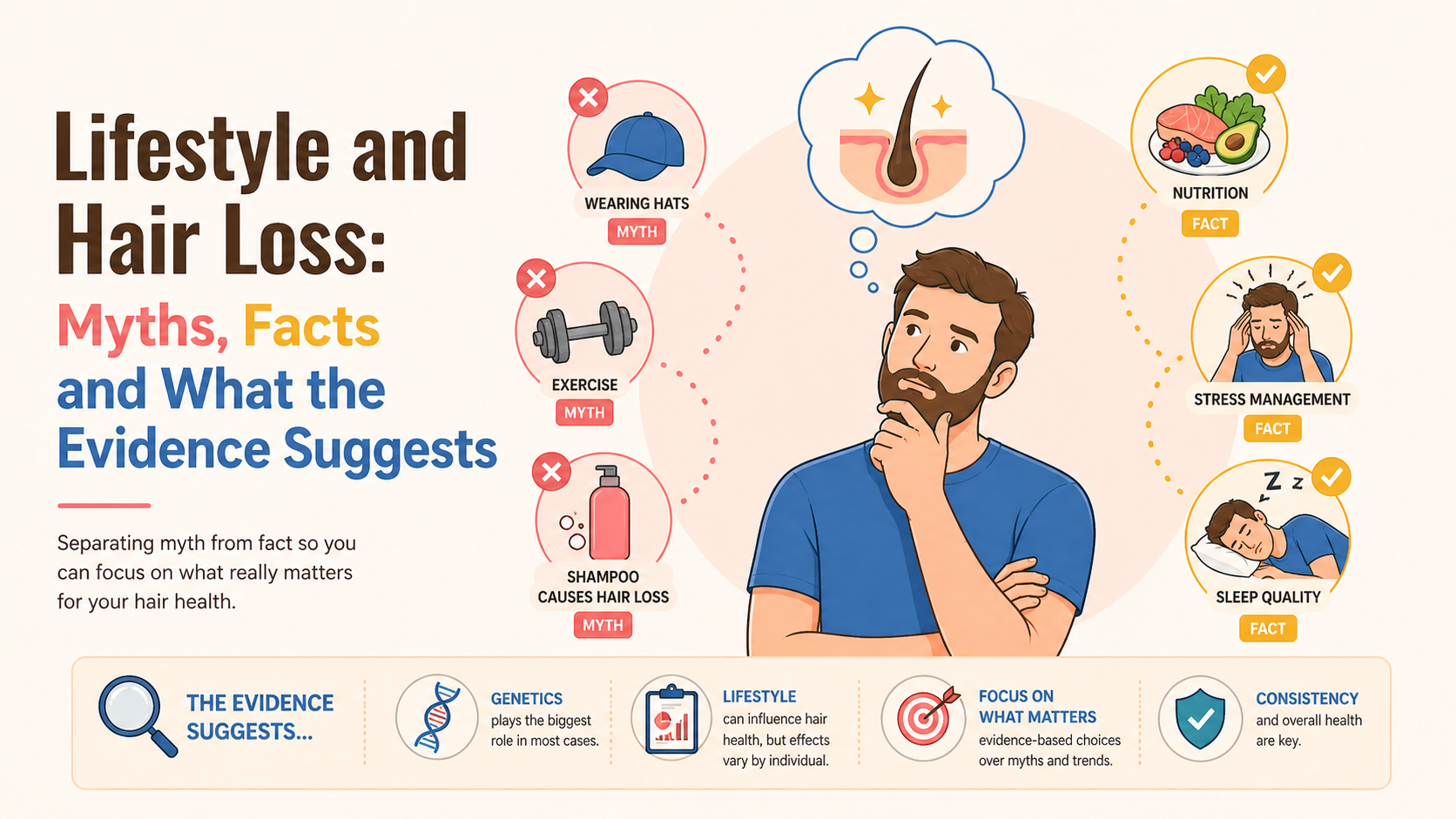
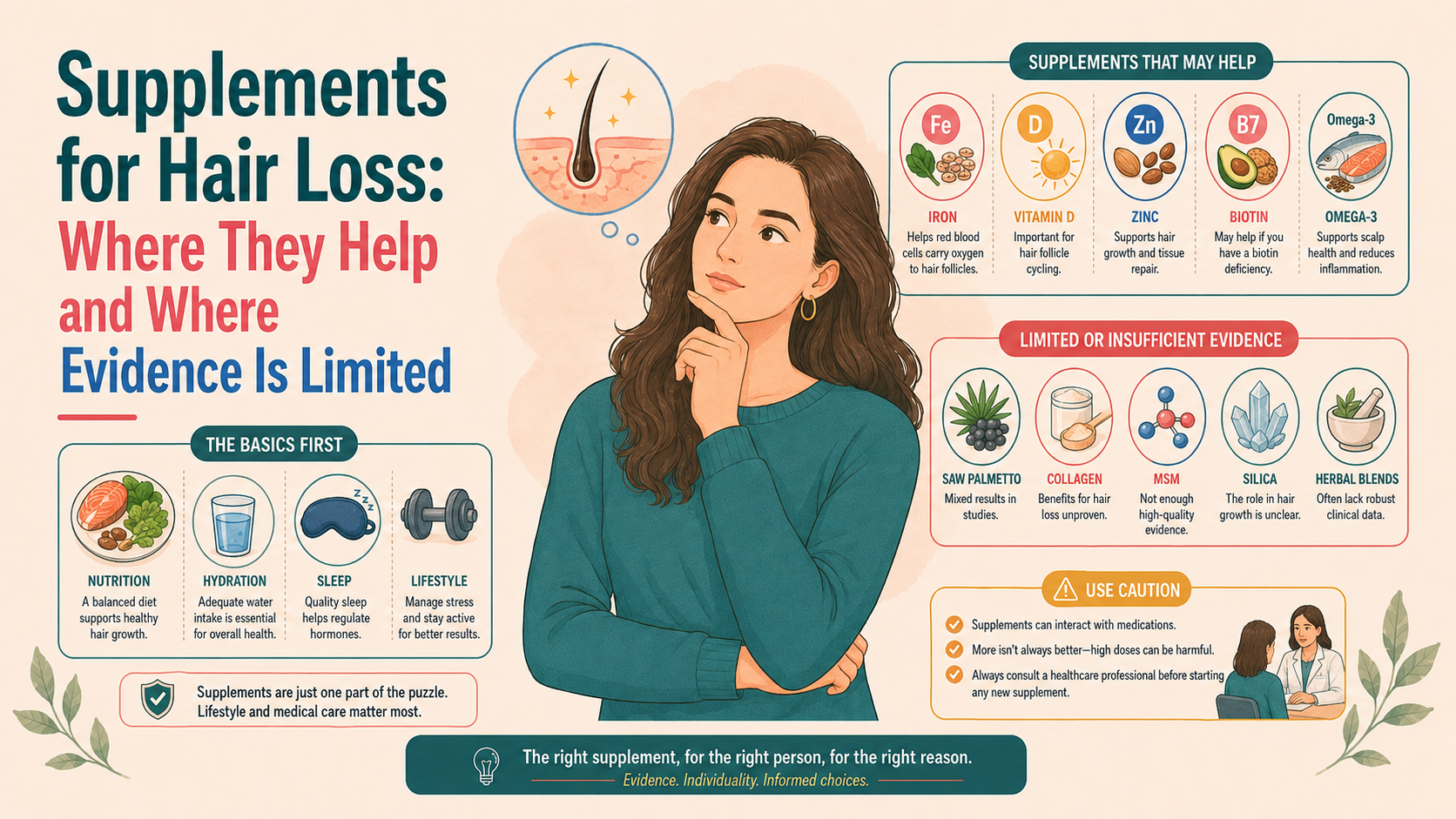
Treating dandruff or an inflamed scalp can improve comfort, but a shampoo should not be presented as equivalent to a well-studied treatment for follicle miniaturisation. Likewise, evidence that a supplement corrects a deficiency does not prove that it reverses male pattern hair loss in someone who is already well nourished.
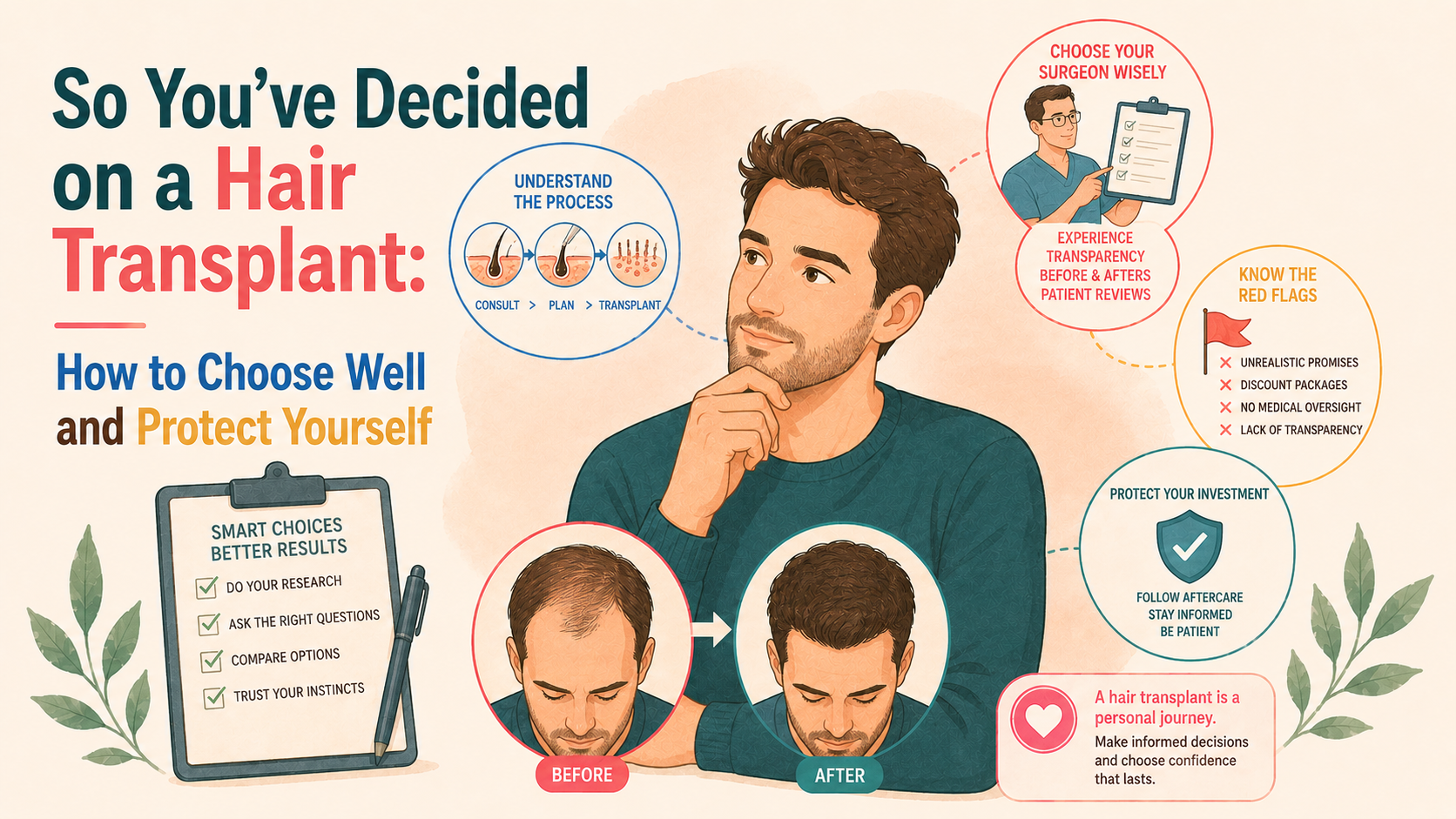
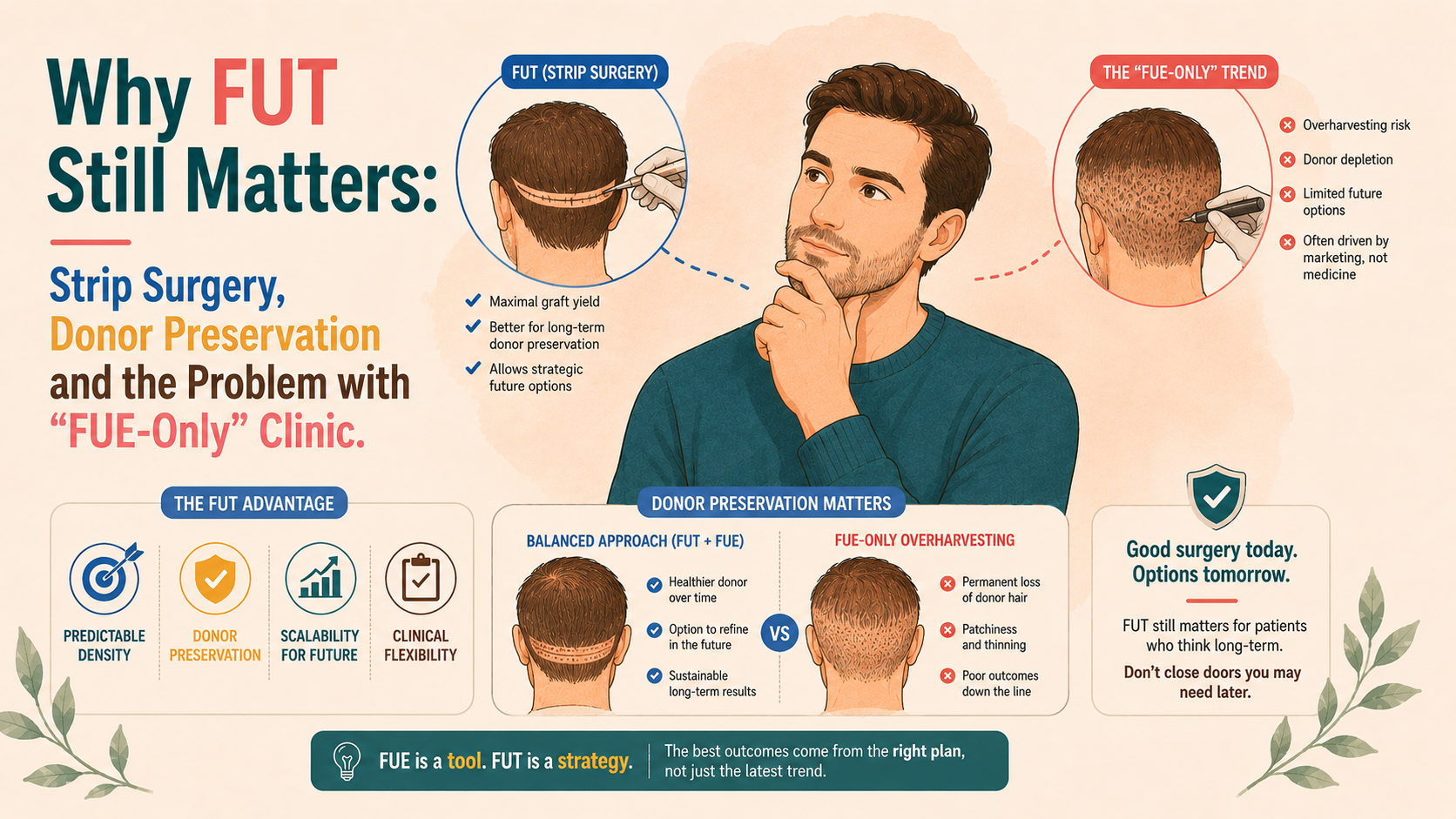
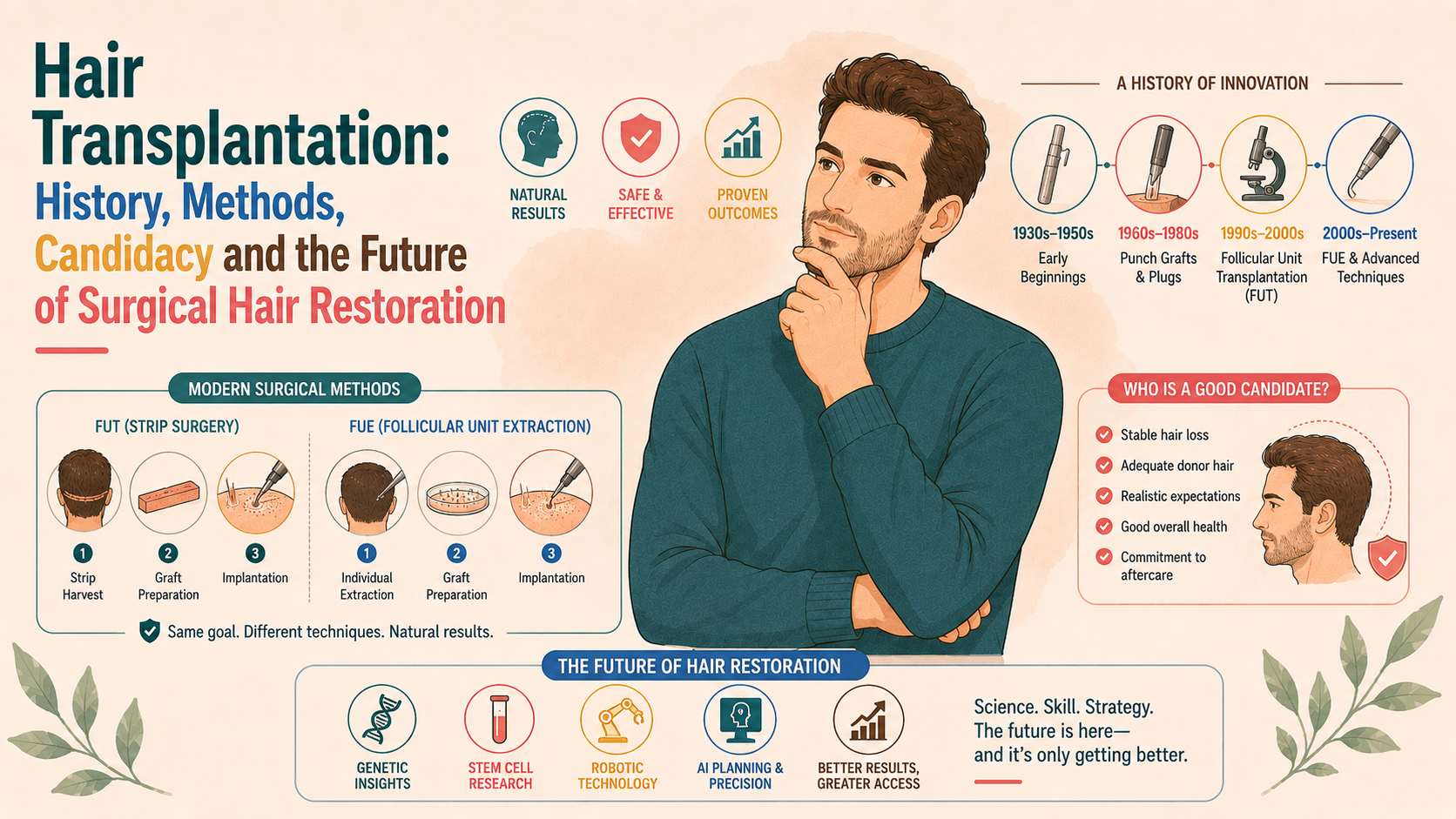
A transplant moves follicles from a suitable donor area into areas with less hair. It does not create an unlimited supply or switch off the underlying condition. Existing hair can continue thinning around the transplanted hair.
FUE removes grafts individually and leaves scattered small scars. FUT removes a strip and leaves a linear scar. Both can produce good results, and both can cause permanent problems if selection, planning or execution is poor.
The useful questions concern donor quality, future loss and the design you will be left with years later. A bigger graft number is not automatically a better plan. Medication may help protect existing hair, but whether you can or want to use it must be discussed before surgery.
A plan should specify when progress will be reviewed and what would justify changing it. Comparable photographs several months apart are more useful than inspecting the hairline repeatedly under different lighting.
Start from the likely benefit and burden of each treatment, rather than turning every promising study into something else to buy. Good nutrition and general health matter, but you do not need a perfect lifestyle to deserve a response.
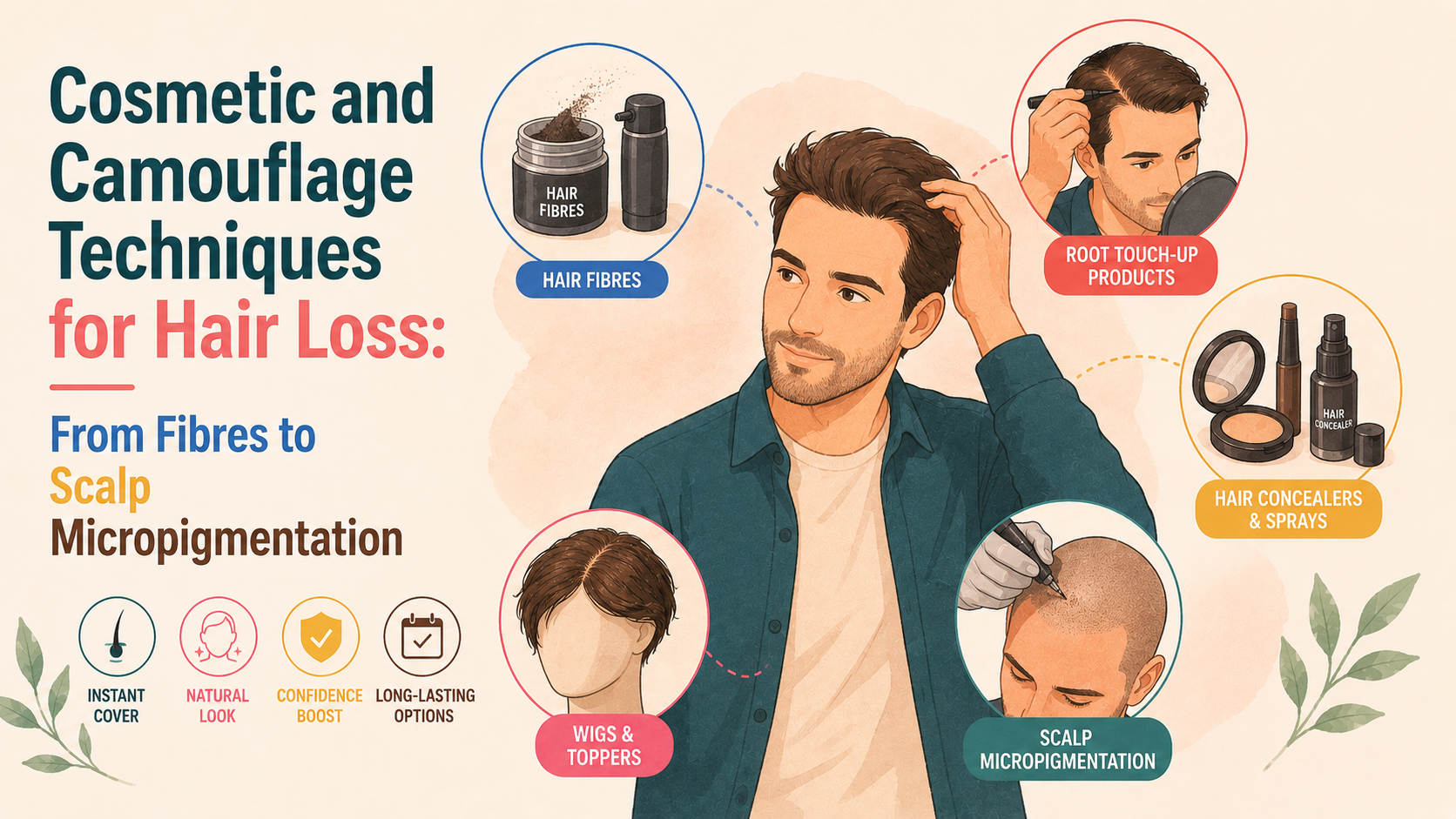
Camouflage, a shorter style or choosing not to pursue treatment are valid options. My aim is to make the decisions clearer so that hair care can sit in the background, leaving more room for the rest of your life.