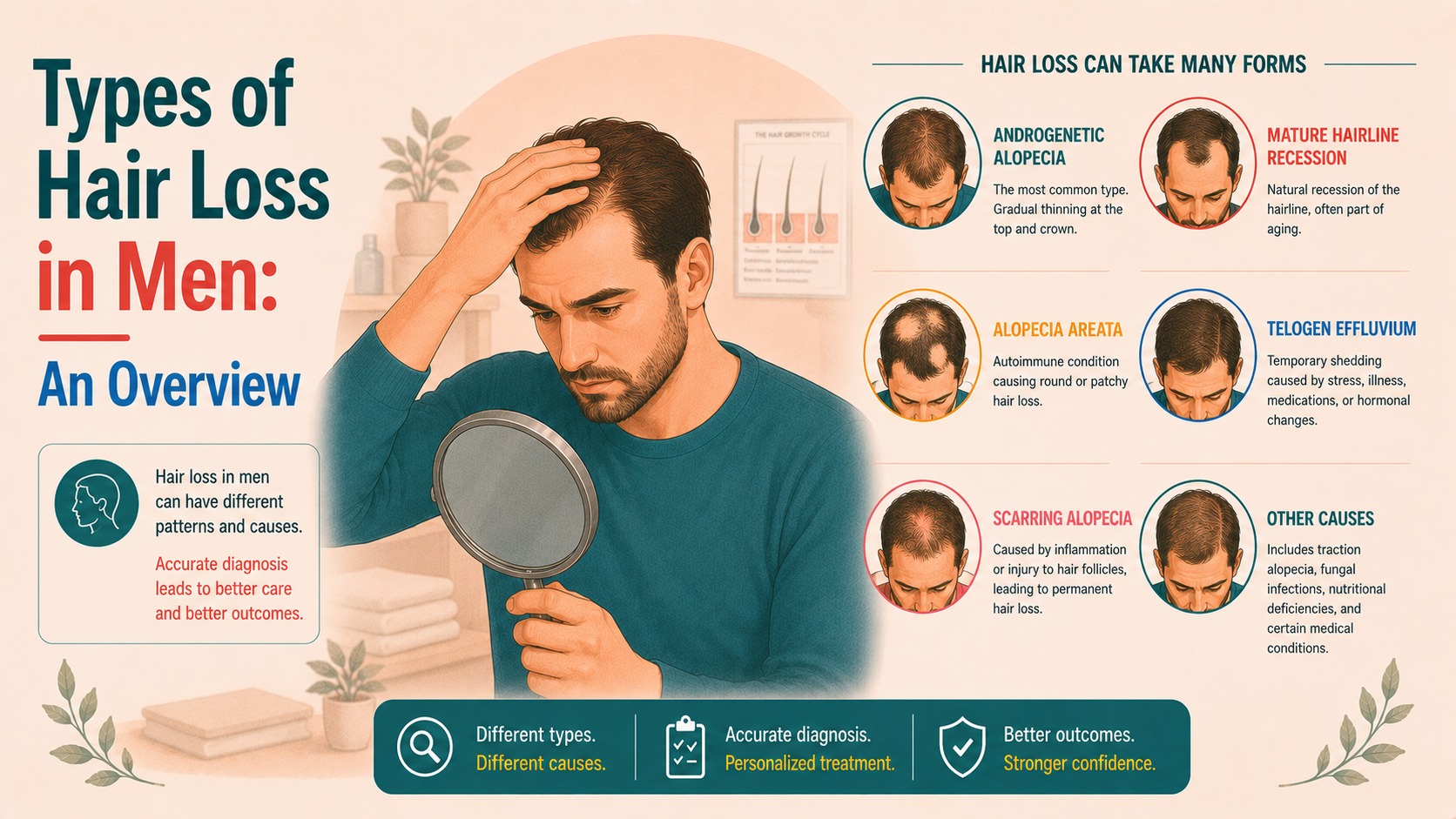
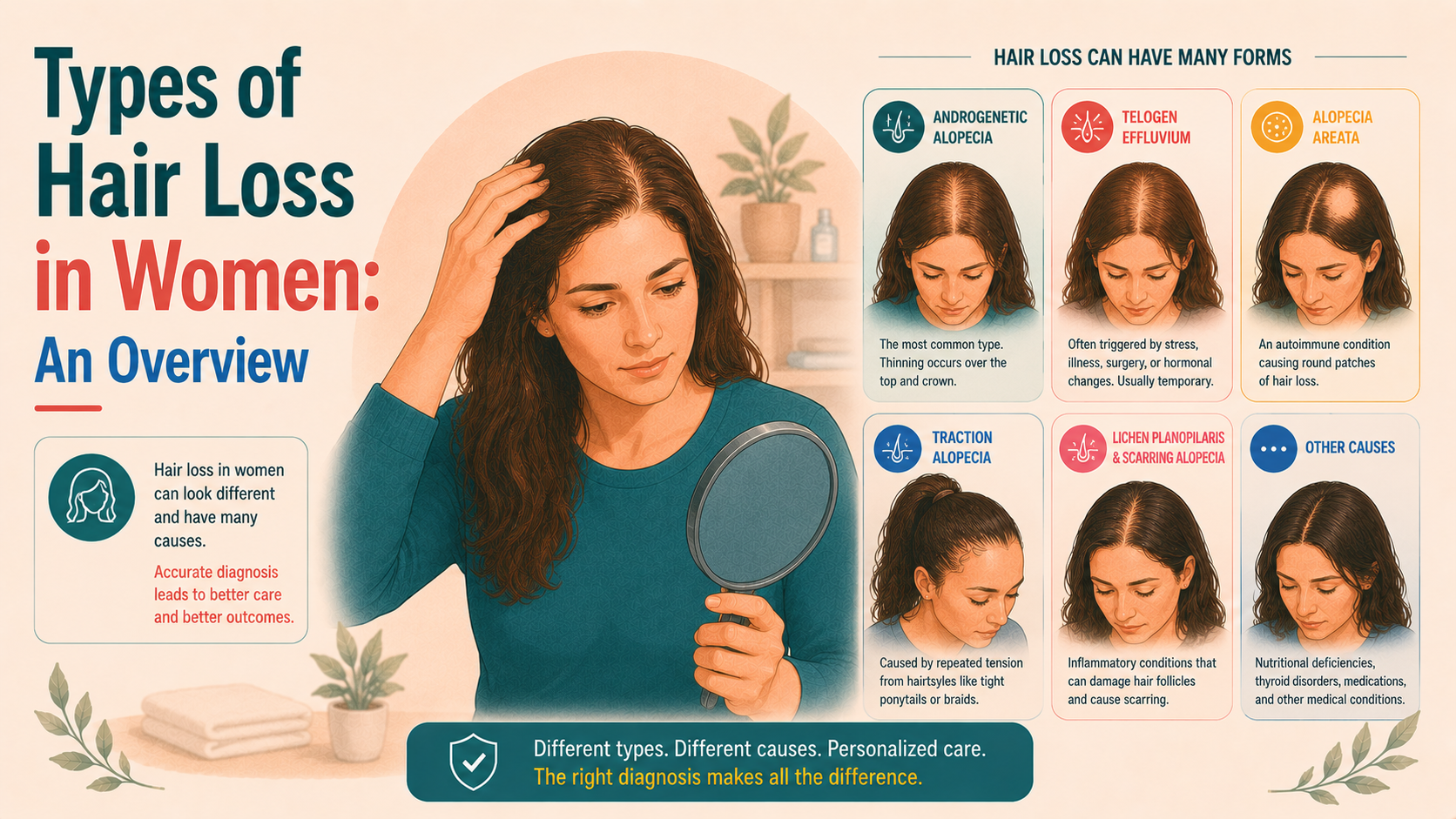
An autoimmune, non-scarring hair loss condition that often causes round or oval patches.
Alopecia areata occurs when the immune system targets hair follicles. It usually causes sudden, well-defined patches of hair loss on normal-looking skin, though it can be diffuse or extensive. Trichoscopy may show yellow dots, black dots, broken hairs and exclamation mark hairs. Some patients also have nail pitting or other autoimmune associations. The condition is non-scarring, so follicles are usually still present, but the course is unpredictable. Treatments include topical or injected corticosteroids, contact immunotherapy and, in severe cases, newer JAK inhibitor options under specialist care.
DermNet: Trichoscopy of generalised noncicatricial hair loss — https://dermnetnz.org/topics/trichoscopy-of-generalised-noncicatricial-hair-loss; NICE TA958: Ritlecitinib for severe alopecia areata — https://www.nice.org.uk/guidance/ta958/chapter/1-Recommendations; Anastassakis K. Androgenetic Alopecia From A to Z, Vol. 2, Springer, 2022 — https://doi.org/10.1007/978-3-031-08057-9