A common, progressive, non-scarring patterned hair loss driven by genetic susceptibility and androgen biology.
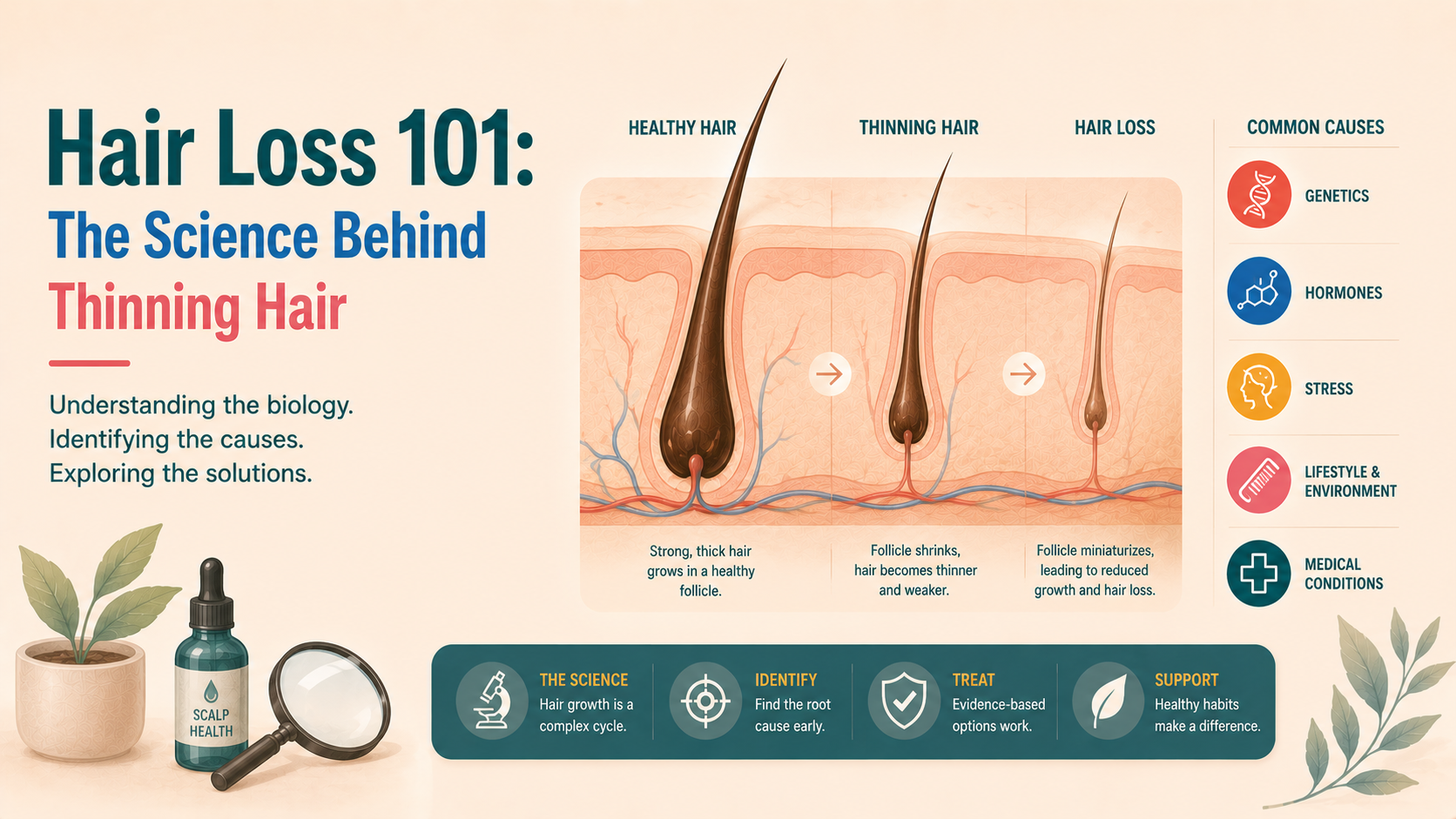
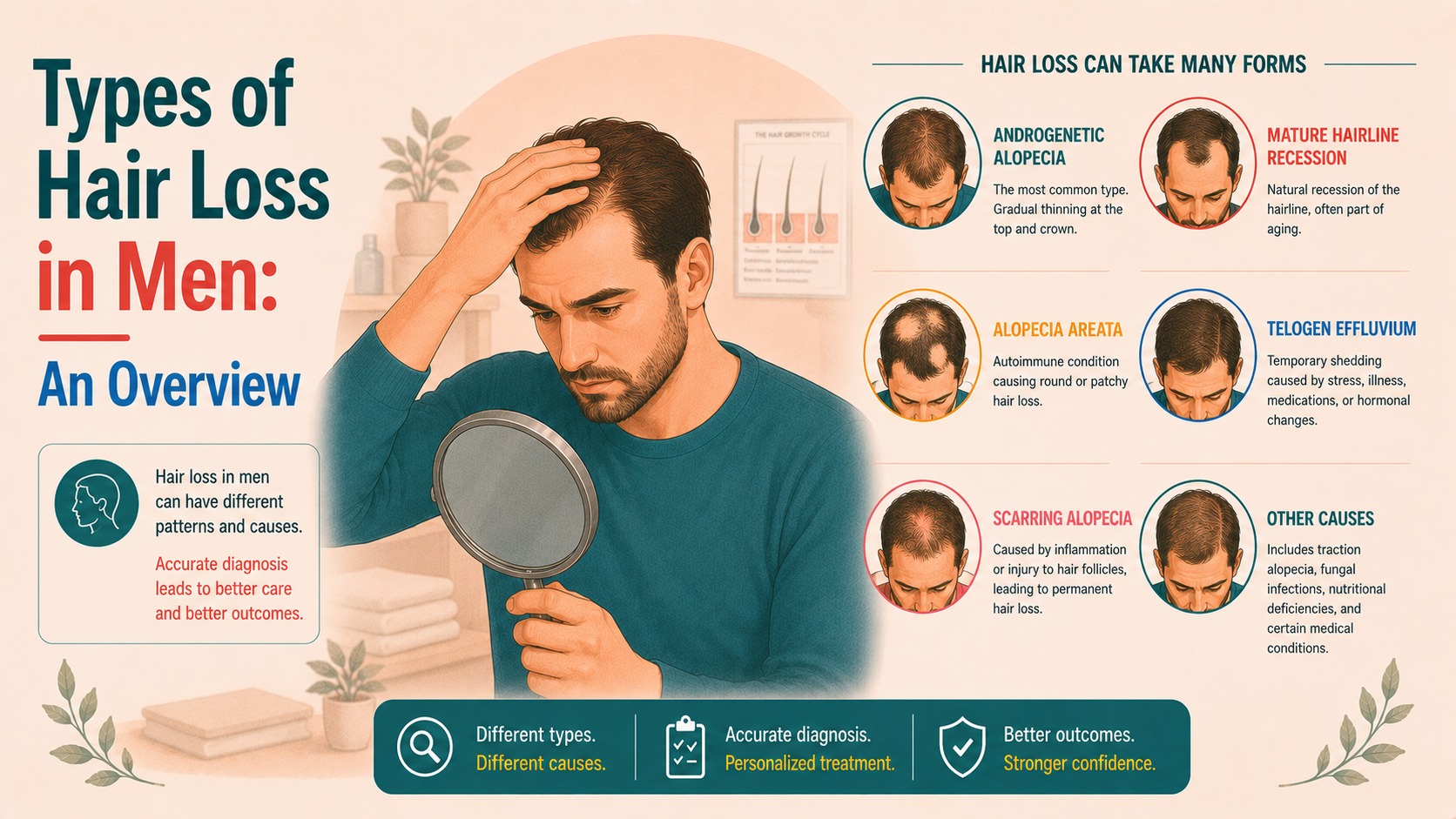
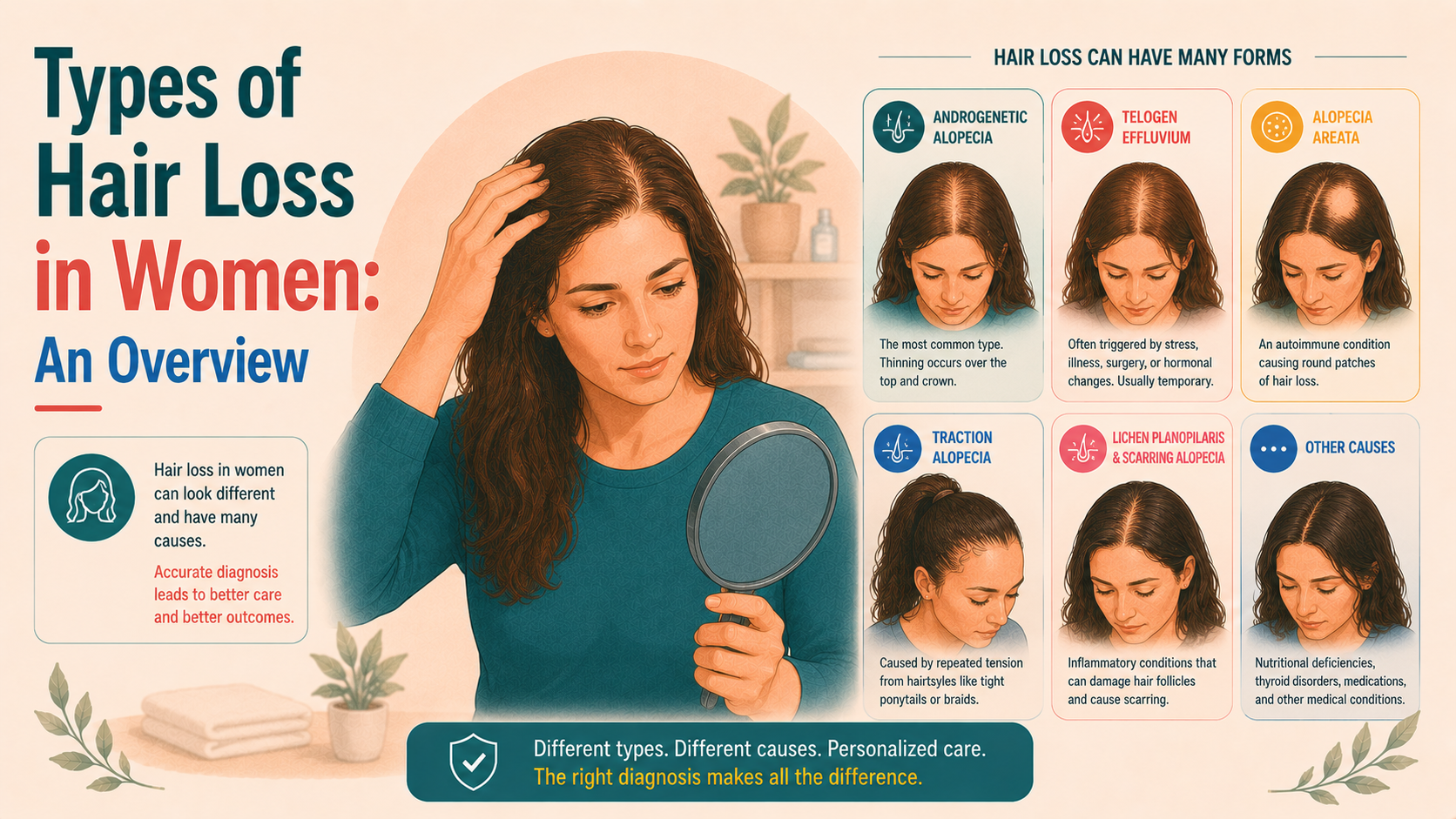
Androgenetic alopecia is the medical name for pattern hair loss. In men it usually causes temple recession, a thinning crown, or both. In women it more often causes diffuse thinning over the central scalp with relative preservation of the frontal hairline. The key process is follicular miniaturisation: affected follicles gradually produce hairs that are thinner, shorter and less pigmented. Androgens, especially dihydrotestosterone (DHT), are important in male pattern hair loss, but female pattern hair loss can be more complex and not always linked to raised androgen levels.
British Association of Dermatologists: Hair loss male pattern (androgenetic alopecia) — https://www.bad.org.uk/pils/hair-loss-male-pattern-androgenetic-alopecia; British Association of Dermatologists: Hair loss female pattern (androgenetic alopecia) — https://www.bad.org.uk/pils/hair-loss-female-pattern-androgenetic-alopecia; Anastassakis K. Androgenetic Alopecia From A to Z, Vol. 1, Springer, 2022 — https://doi.org/10.1007/978-3-030-76111-0