How to assess studies, before-and-after photos, treatment risks and clinic claims without letting hair-loss research take over your life.

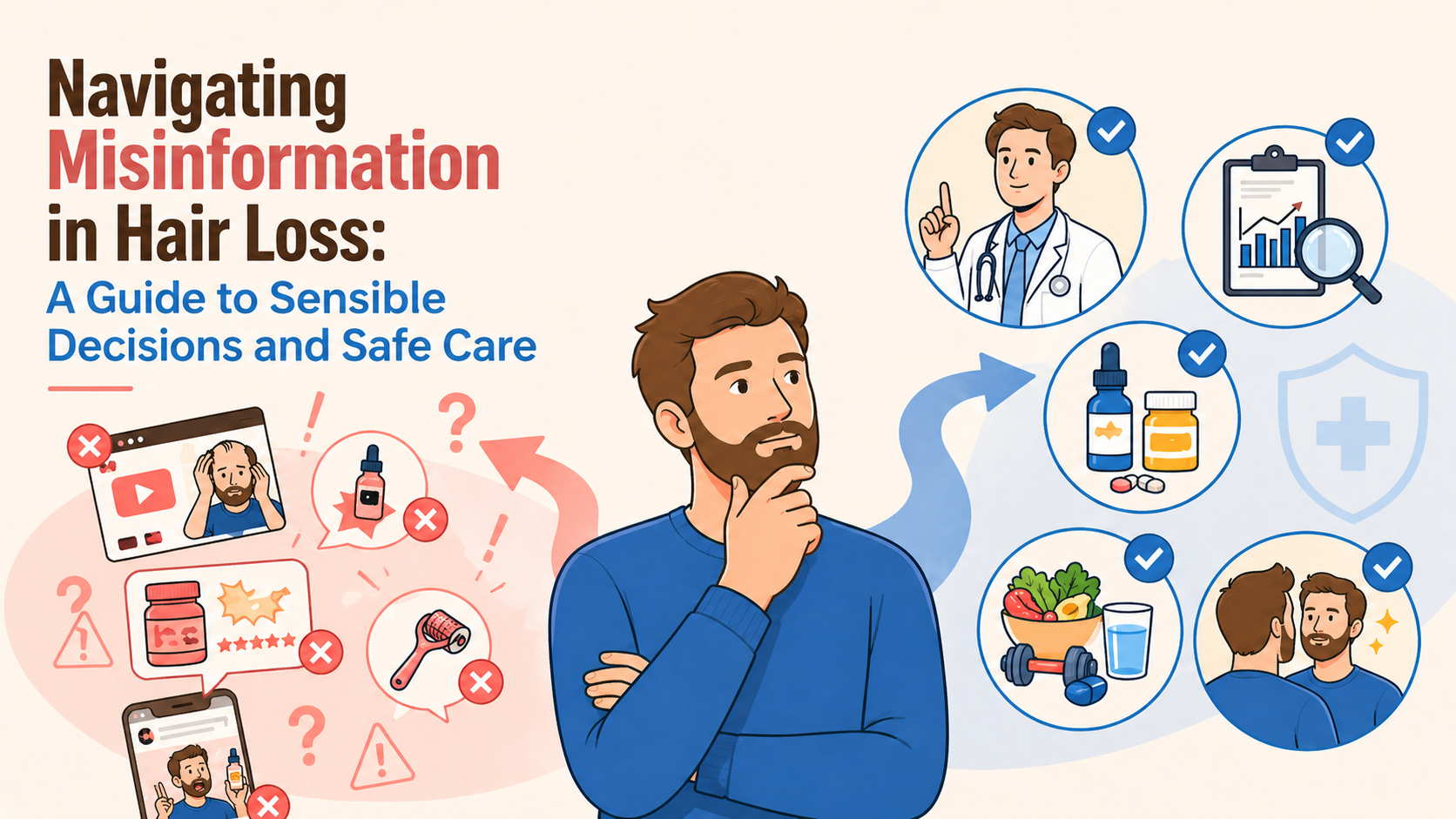
I spent time reading about treatments because I wanted certainty. The problem was that searching could make me feel less certain, especially when a dramatic success story sat next to an equally dramatic account of harm.
Hair changes slowly, while online information arrives constantly. That creates plenty of opportunities to mistake urgency for usefulness. A new post can feel as though it needs an immediate decision even when it adds little to what is already known.
You do not need to become a researcher to make sensible choices. It helps to know what kind of evidence you are being shown and what question it can actually answer.
A study about alopecia areata does not establish a treatment for androgenetic alopecia. Both involve hair loss, but they have different biology. The same caution applies to results from mice, cells in a laboratory or people recovering from temporary shedding.
Check what was used, how it was delivered and who received it. Oral, topical and injected versions can differ in absorption, benefit and risk. A trial of one standardised formulation does not validate every product sharing an ingredient.
Scientific explanations can be interesting without being decisive. Saying that a substance activates a growth pathway is the beginning of a hypothesis, not the end of a clinical argument.
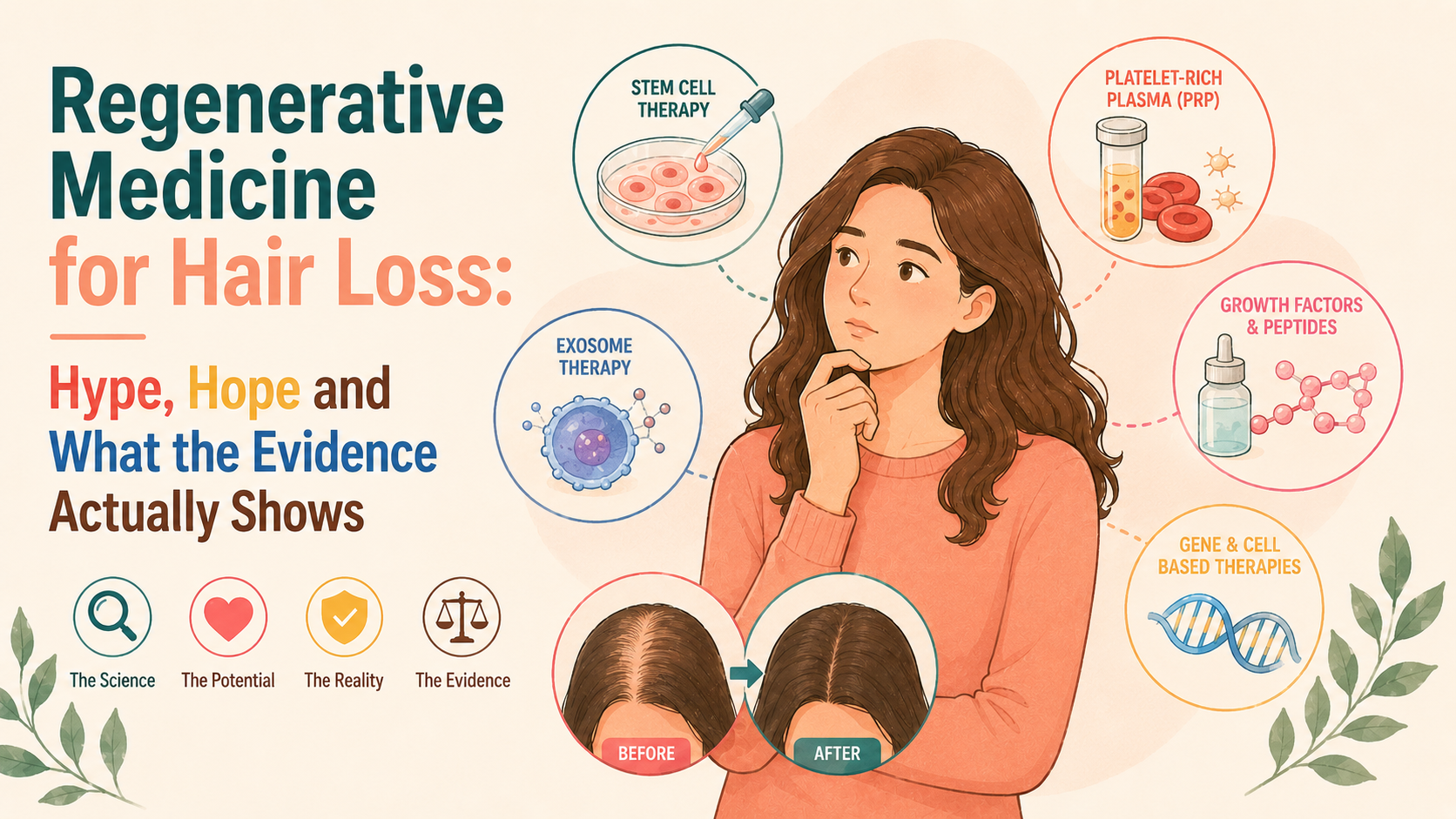
Lighting, hair length, styling, wetness and camouflage can substantially change how dense hair looks. A useful comparison keeps those factors consistent and explains how much time has passed.
Ask whether other treatments were started, whether the example is typical, and what happened to people who did not respond. A collection of the best results tells you what is possible, not what is probable.
Even a study needs context. A small statistically significant increase in a measured patch may not produce a meaningful cosmetic difference. A treatment that slows progression may also have value despite an unremarkable after-photo.
When a risk is described as doubled, ask what the original risk was. Relative changes can sound dramatic without showing the actual number of people affected. Equally, a low average risk does not make an adverse effect unimportant to the person who experiences it.
Trials can estimate some common effects better than rare or delayed ones. Regulatory warnings and reports after approval therefore matter too. Where frequency is unknown, it should be called unknown rather than casually labelled rare.
Someone reporting persistent symptoms deserves to be taken seriously. Their account alone cannot establish how often the problem occurs or prove that everyone faces the same outcome. Respecting an experience and being precise about what it shows are compatible.
Forums can help you feel less alone and offer practical insight into living with treatment or hair loss. They are much less reliable for calculating treatment success or side-effect rates because the people who post are not a representative sample.
Notice what the searching is doing to you. If each answer produces five new worries and another evening disappears into checking, more reading may no longer be helping the decision.
Keep a short list of questions for a clinician and use a small number of dependable sources. You can step away from a discussion without deciding that everyone in it is wrong.
At 20, I spoke to a transplant company while knowing very little about donor hair or long-term planning. I never had the operation, so I cannot say it would definitely have gone badly. What I can say is that I was not equipped to judge what I was being sold.
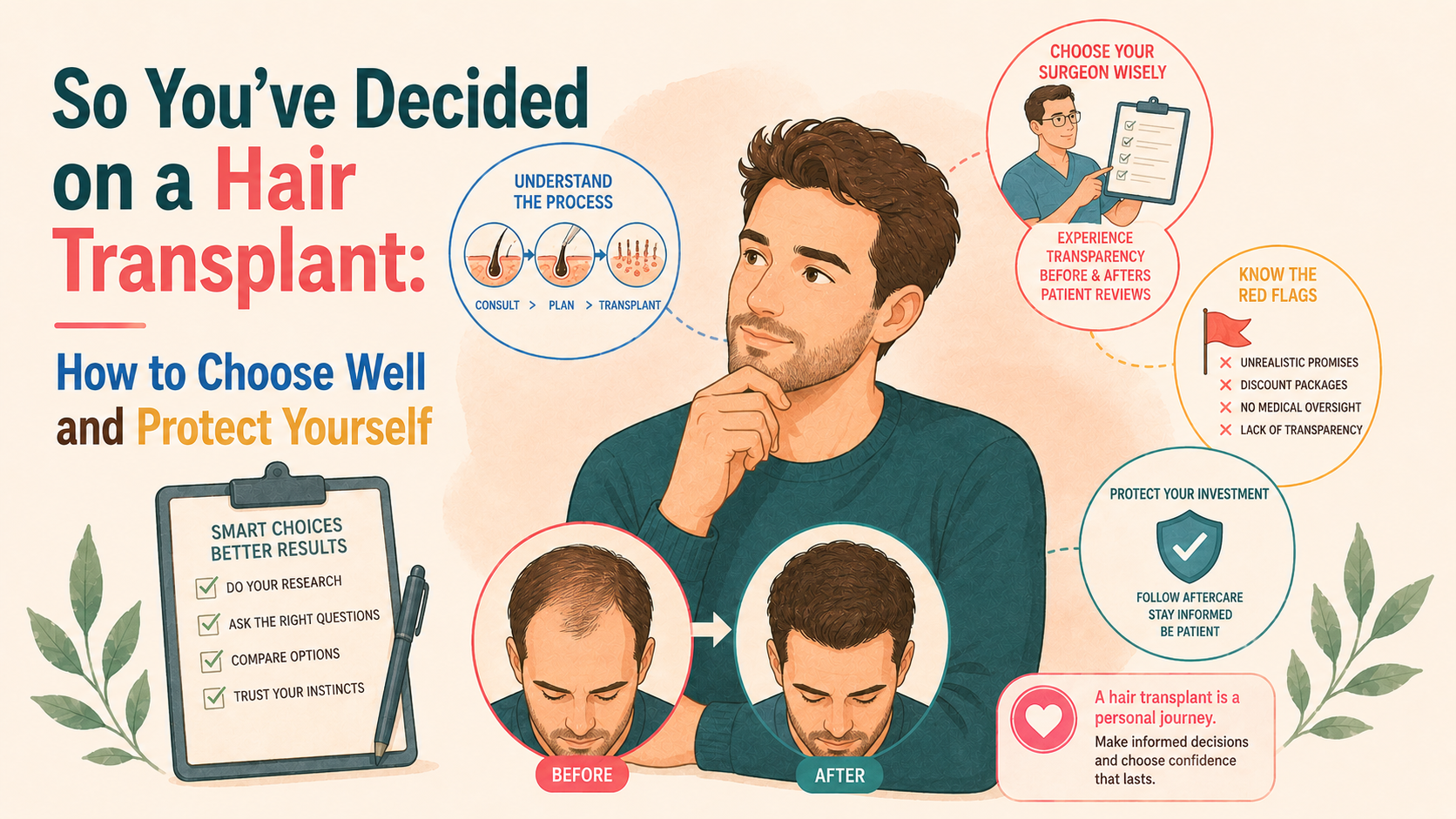
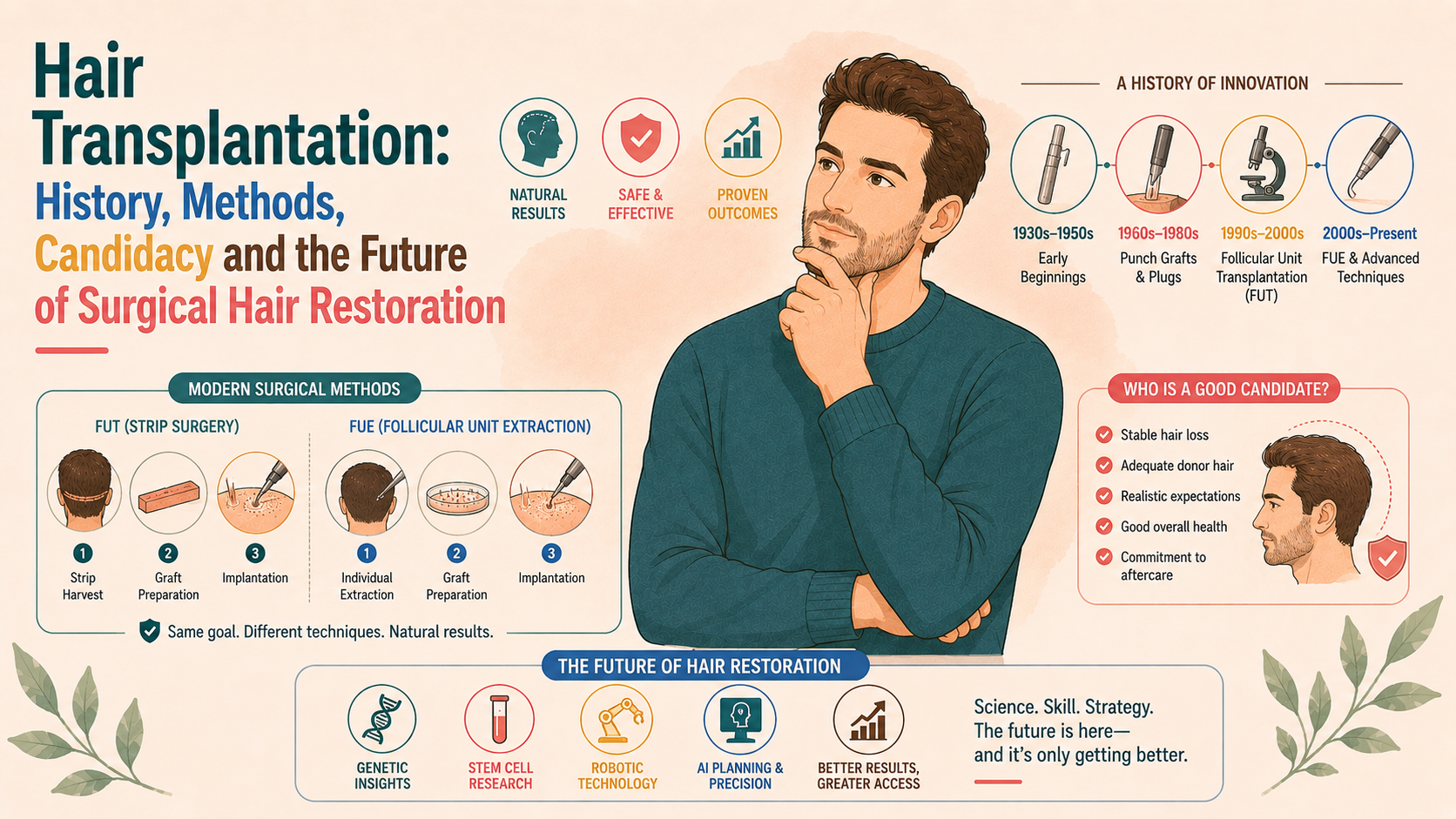
A medical consultation should establish suitability and explain alternatives. Find out who is responsible for the care and who performs the surgical steps. A photograph of a well-known doctor on the website does not answer those questions.
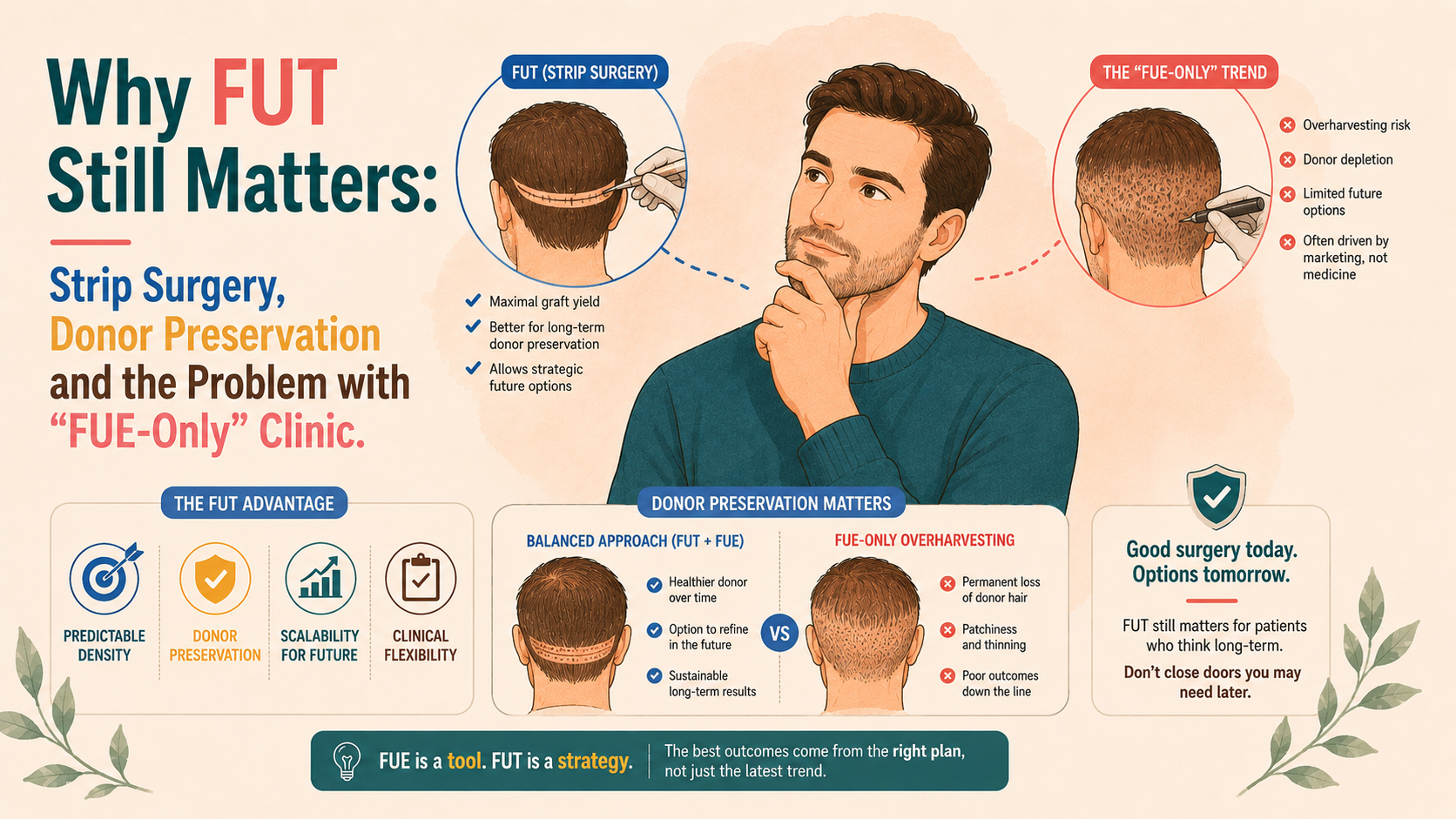
Promises of unlimited grafts, scarless surgery or guaranteed density need challenging. Donor follicles are finite. Ask what remains for the future and how complications or disappointing results would be managed.
Apply the same questions wherever the clinic is based. A high price does not guarantee quality, and a location alone does not tell you who will be doing the work.
The answers should make a decision more understandable. If every uncertainty becomes a reason to buy another product immediately, take a step back.
This standard applies to my work too. I want Hairline Helpline to explain the evidence clearly enough that you can see where confidence is justified and where it should remain provisional.