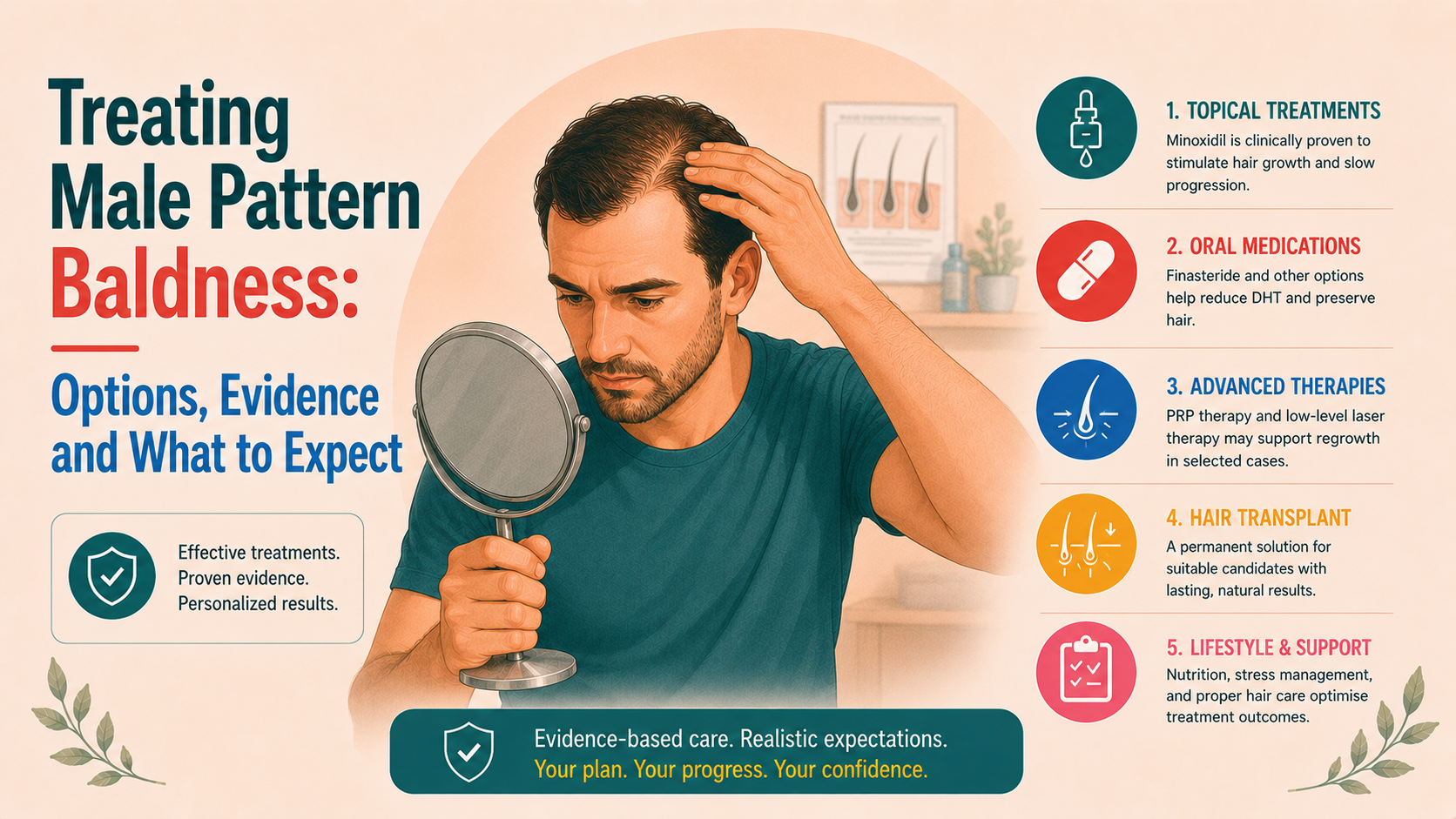
Controlled tiny needle injuries to the scalp, usually used as an adjunct to stimulate repair pathways.
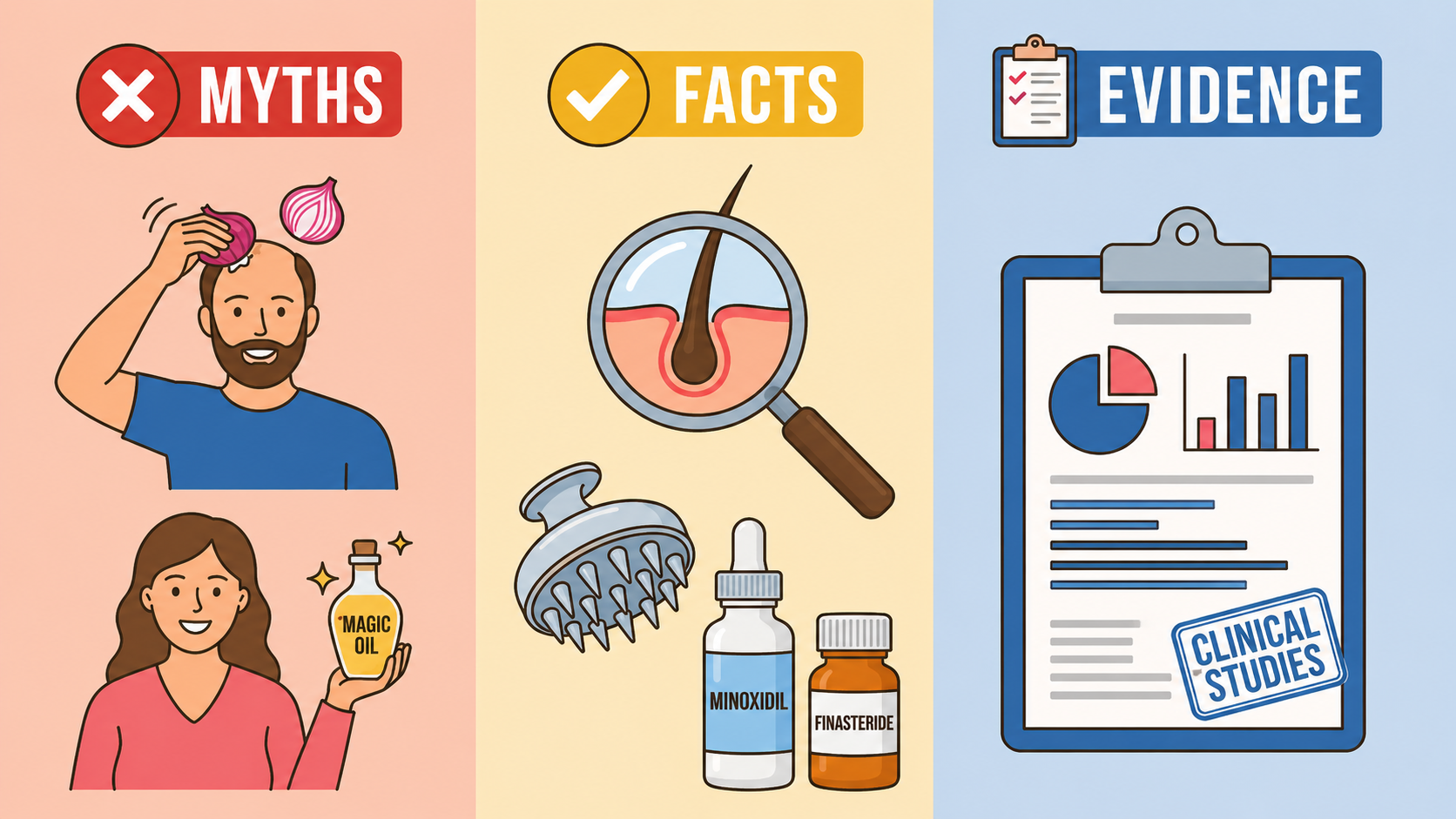
Microneedling creates controlled micro-injuries in the scalp. The aim is to trigger wound-healing signals and improve the activity or delivery of hair treatments such as minoxidil. Some studies suggest benefit as an adjunct in androgenetic alopecia, but technique matters: needle depth, frequency, sterility and post-procedure care all influence safety. At-home aggressive microneedling can cause irritation, infection, scarring or excessive absorption of topical medicines. A responsible glossary page should frame microneedling as a procedure requiring appropriate diagnosis, hygiene and realistic expectations rather than a casual DIY hack.
Kaiser M et al. Treatment of Androgenetic Alopecia: Current Guidance and Unmet Needs, 2023 — https://doi.org/10.2147/CCID.S385861; Starace M et al. Female Androgenetic Alopecia: Diagnosis and Management, Am J Clin Dermatol, 2020 — https://doi.org/10.1007/s40257-019-00479-x; Anastassakis K. Androgenetic Alopecia From A to Z, Vol. 3, Springer, 2023 — https://doi.org/10.1007/978-3-031-10613-2