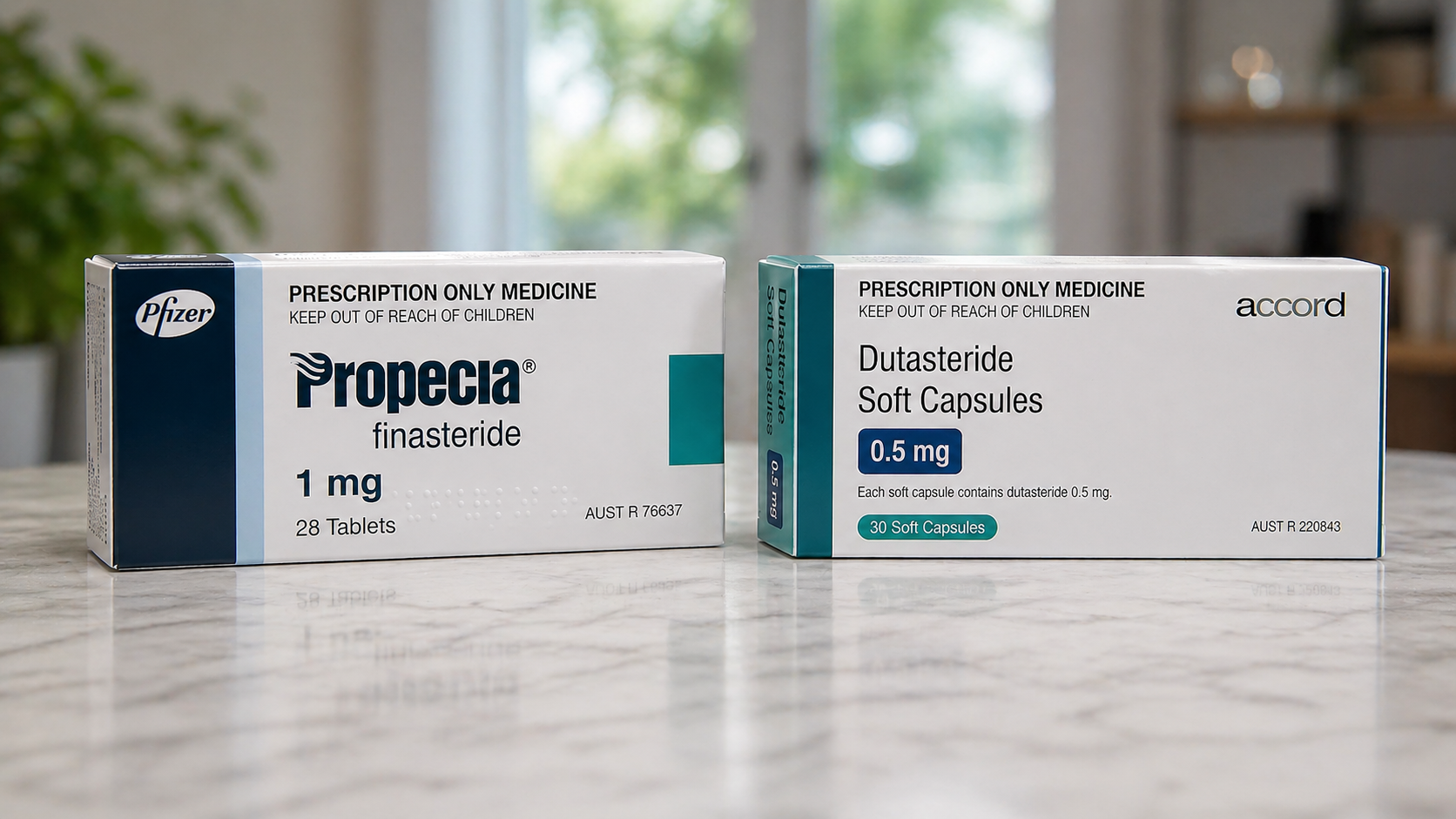
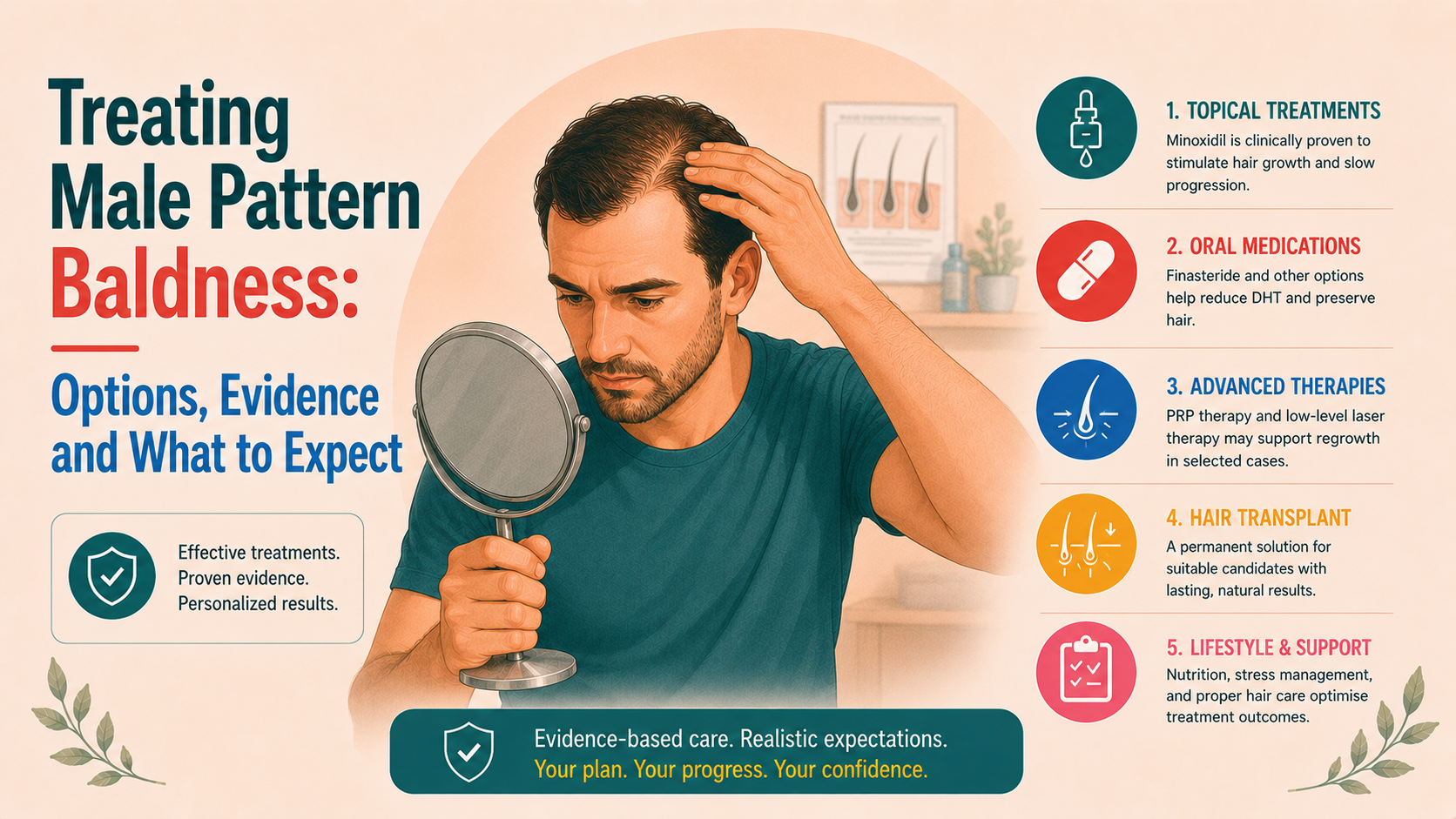
Finasteride applied to the scalp to reduce local DHT with lower systemic exposure than tablets.
Topical finasteride aims to inhibit DHT production in scalp follicles while reducing blood levels compared with oral finasteride. Clinical studies suggest it can improve hair counts and may have fewer systemic effects, although formulation, dose and frequency matter. It may be used alone or combined with topical minoxidil. Local side effects can include irritation, itching or contact dermatitis. It should still be treated as a medicine, not a risk-free cosmetic, because systemic absorption can occur and pregnancy precautions remain relevant. Long-term comparative data are still more limited than for oral finasteride.
Kaiser M et al. Treatment of Androgenetic Alopecia: Current Guidance and Unmet Needs, 2023 — https://doi.org/10.2147/CCID.S385861; Anastassakis K. Androgenetic Alopecia From A to Z, Vol. 2, Springer, 2022 — https://doi.org/10.1007/978-3-031-08057-9