Living with Hair Loss

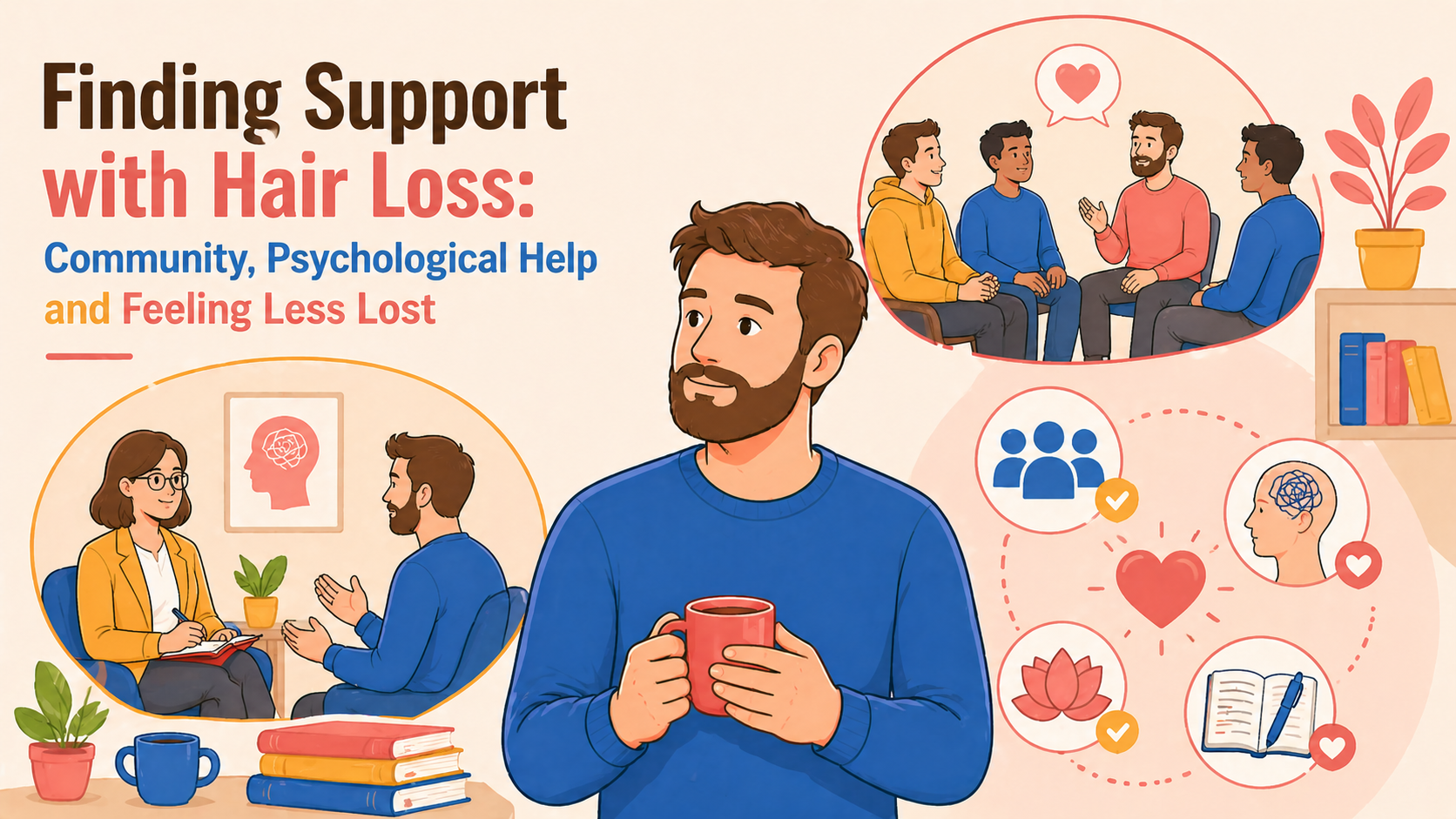
Finding Support with Hair Loss: Community, Psychological Help and Feeling Less Lost

Hair loss can be isolating, even though it is common. This article discusses where to find meaningful support, how to use communities and online spaces wisely, when it might be time to seek psychological help, and practical ways to feel less stuck and demotivated when you are living with ongoing hair changes.

[headshot]
Dr. Harry M Griffiths
Article Summary

1. The experience of feeling lost

Most people are not prepared for hair loss. It often starts quietly, then becomes unmistakable at the very moment life is already complex – building a career, raising children, managing health or finances.

Common reactions include:

  • feeling as if you are the only one going through it;
  • spending large amounts of time reading conflicting information;
  • starting and stopping treatments without a clear plan;
  • oscillating between urgency (“I must fix this now”) and avoidance (“I can’t face thinking about it”).

These responses are entirely understandable. Hair loss sits in a grey zone: not life-threatening, but affecting how you see yourself and how you believe others see you. The task, then, is not only to treat hair but to build a more supportive environment around the experience.

2. Community support: why other people’s stories matter

Hearing from others in a similar position can be powerful. Studies in alopecia areata and androgenetic alopecia show that:

  • people often feel less alone and less ashamed when they meet others navigating similar challenges;
  • sharing practical strategies – styling, camouflage, communication with partners and colleagues – reduces trial-and-error;
  • being a source of support for someone else can give a sense of agency that hair loss itself has eroded.

Sources of community support typically fall into three broad categories.

2.1 In-person support groups

Patient organisations for alopecia areata, scarring alopecias and pattern hair loss increasingly host:

  • local support meetings;
  • workshops or educational events;
  • family groups for parents and young people.

These settings allow for:

  • non-judgemental sharing of experiences;
  • seeing a range of ways people live well with hair loss;
  • opportunities to ask questions of clinicians invited by the groups.

For many, the simple act of walking into a room where wigs, shaved heads and SMP are normal rather than notable is transformative.

2.2 Moderated online communities

Online forums and closed social media groups run by patient associations or moderated communities can:

  • provide support for those without local groups;
  • offer anonymity when desired;
  • allow asynchronous engagement (reading when you have energy, posting when ready).

The quality of these spaces varies. In better moderated groups, medical myths are gently corrected, commercial posts are limited and respect is enforced. In unmoderated spaces, misinformation and pressure to pursue particular treatments (or to reject all treatment) can be high.

2.3 Peer stories and blogs

Personal blogs, vlogs and patient stories curated by reputable organisations can:

  • show the realities of different paths – treatment-heavy, minimal-intervention, wigs, shaving, etc.;
  • model how people talk to partners, employers and children;
  • give a sense of the timelines and plateaus others have experienced.

It is worth remembering that these are individual narratives, not prescriptions. They can, however, shift the internal story from “I am alone and failing” to “this is hard, but others have found ways through”.

3. Using online information without being overwhelmed

The internet is both a rich resource and a stressor. Studies on health information–seeking behaviour note that:

  • people with appearance-related concerns often spend substantial time searching online;
  • high volumes of conflicting information can increase anxiety and indecision;
  • extreme stories – miracle cures and worst-case scenarios – disproportionately capture attention.

Strategies that can help:

  • Identify a small number of trusted medical sources (national dermatology societies, patient charities, academic institutions) and treat them as anchors.
  • Be cautious of forums where anecdote is treated as equal to controlled data. Anecdotes are valuable for lived experience, less so for estimating likelihoods.
  • Try to avoid late-night doom-scrolling about hair loss; sleep and stress both influence how you cope, and hair does not change overnight.

Using information as a tool rather than a constant background noise takes practice, but it is part of regaining a sense of control.

4. When to consider psychological help

Not everyone with hair loss needs formal psychological support. Many cope primarily through information, medical care, styling and social support. However, there are specific signs that suggest professional psychological input could be helpful.

These include:

  • persistent low mood, hopelessness or loss of pleasure in activities that used to matter;
  • escalating anxiety, frequent panic, or dread about social situations because of hair;
  • significant avoidance – cancelling plans, avoiding bright lights, cameras, intimacy or work opportunities;
  • hair preoccupation that consumes hours each day (mirror-checking, comparing, ruminating);
  • difficulty making decisions about treatment because of fear of regret, to the point of paralysis;
  • thoughts that life is not worth living or that others would be better off without you (in which case urgent help is indicated).

Systematic reviews of psychological interventions in alopecia show that approaches such as cognitive behavioural therapy, acceptance and commitment therapy, and multidisciplinary programmes embedded in dermatology clinics:

  • reduce appearance-related shame and activity avoidance;
  • lessen symptoms of anxiety and depression;
  • help people separate their sense of worth from their hair, even while pursuing treatment.

Seeking psychological support does not mean hair loss is “in your head” or that you are expected to simply accept it. It means recognising that a visible, often stigmatised medical condition can affect your mental health, and that it is legitimate to address that explicitly.

5. What psychological support can look like

Psychological help is not a monolith. Options include:

5.1 Clinical psychologist or counsellor with an interest in appearance concerns

These clinicians can help you:

  • identify and challenge unhelpful beliefs (for example, “no one will ever find me attractive if my hair is thin”);
  • reduce safety behaviours that ironically keep anxiety going (excessive mirror-checking, constant hat-wearing, social avoidance);
  • practice exposure to feared situations (attending events without certain camouflage, taking photos, speaking up at work);
  • clarify your own values around appearance, health and ageing.

5.2 Group-based interventions

Group programmes for people with visible differences, including hair loss, can:

  • normalise your experience;
  • provide structured exercises for coping;
  • offer peer support embedded in a therapeutic framework.

Evidence suggests that group interventions focused on appearance anxiety and social avoidance can improve functioning and reduce distress.

5.3 Integrated care in dermatology settings

Some dermatology centres run combined clinics where:

  • a dermatologist and a psychologist or liaison psychiatrist see patients together;
  • medical and psychological plans are coordinated;
  • patients do not feel bounced between “skin” and “mind” services.

These models have been associated with improved satisfaction and, in some cases, better adherence to treatment.

If such integrated services are not available locally, a good starting point is to ask your dermatologist or GP for a referral to a psychologist or counsellor who is comfortable working with appearance and long-term conditions.

6. Practical ways to feel less demotivated

Even with good support, it is easy to feel demoralised by:

  • slow treatment timelines;
  • plateaus;
  • or the realisation that a “full cure” is not realistic.

A few practical strategies can help.

6.1 Define what “doing my best” looks like

Rather than aiming for perfection or exhaustive treatment, it can help to define:

  • a small number of evidence-based treatments or strategies you are willing to commit to for a defined period;
  • clear review points (for example, at 6 and 12 months);
  • criteria for continuing, adjusting or stopping.

This turns treatment into a series of structured experiments rather than an open-ended struggle.

6.2 Track progress in a grounded way

Because hair loss is gradual, subjective impressions can swing wildly. Tools that can ground you include:

  • standardised photographs under similar lighting at intervals;
  • brief notes on shedding, styling and confidence every few weeks rather than daily;
  • review of these records with a clinician at follow-up.

Sometimes “nothing is happening” actually means “things are stable”, which is success in progressive conditions.

6.3 Attend to other pillars of health and identity

Hair is important, but it is not the only determinant of how you feel. Committing intentional energy to:

  • physical health (sleep, nutrition, movement),
  • relationships,
  • competence and growth at work or in hobbies,
  • activities that bring you meaning irrespective of appearance,

can reduce the extent to which hair dominates your self-assessment on any given day.

This is not about distraction; it is about ensuring that other sources of self-worth do not shrink as hair becomes more salient.

At the end of the day, the reason we care about treating our hair loss is so that we can eventually return to living our lives in peace. When the hair loss is treated, there must be a life worth living to return to.

7. Community resources and how to navigate them

When looking for community support and resources, it can be useful to:

  • start with national or regional patient organisations for alopecia and hair loss;
  • explore whether they offer local groups, online forums, webinars or helplines;
  • assess whether the tone of a group is constructive (sharing strategies, respecting different choices) or polarised (shaming certain treatments or pushing single solutions).

You might also consider:

  • asking your dermatologist which resources they trust;
  • checking whether reputable dermatology societies or charities have curated patient stories or support materials;
  • being cautious about groups heavily dominated by commercial posts or unverified “before and afters”.

The right community can make you feel less alone and more informed. The wrong one can increase pressure and confusion. It is acceptable to try several and leave those that are not serving you.

8. Bringing it together

Hair loss can be technically simple and emotionally complex. Managing it well means:

  • getting a clear diagnosis and up-to-date information;
  • choosing treatments and camouflage strategies aligned with your values;
  • recognising when distress is disproportionate or escalating and inviting psychological support;
  • and connecting, where helpful, with others who are navigating similar terrain.

Feeling lost or demotivated at times is part of the process. It is not a sign that you are weak, over-reacting or alone. With the right combination of medical, psychological and community support, most people move from a place of shock and preoccupation to a steadier position, even if the hair itself remains imperfect.
Read More from the Knowledge Hub:

Diagnosis and Assessment

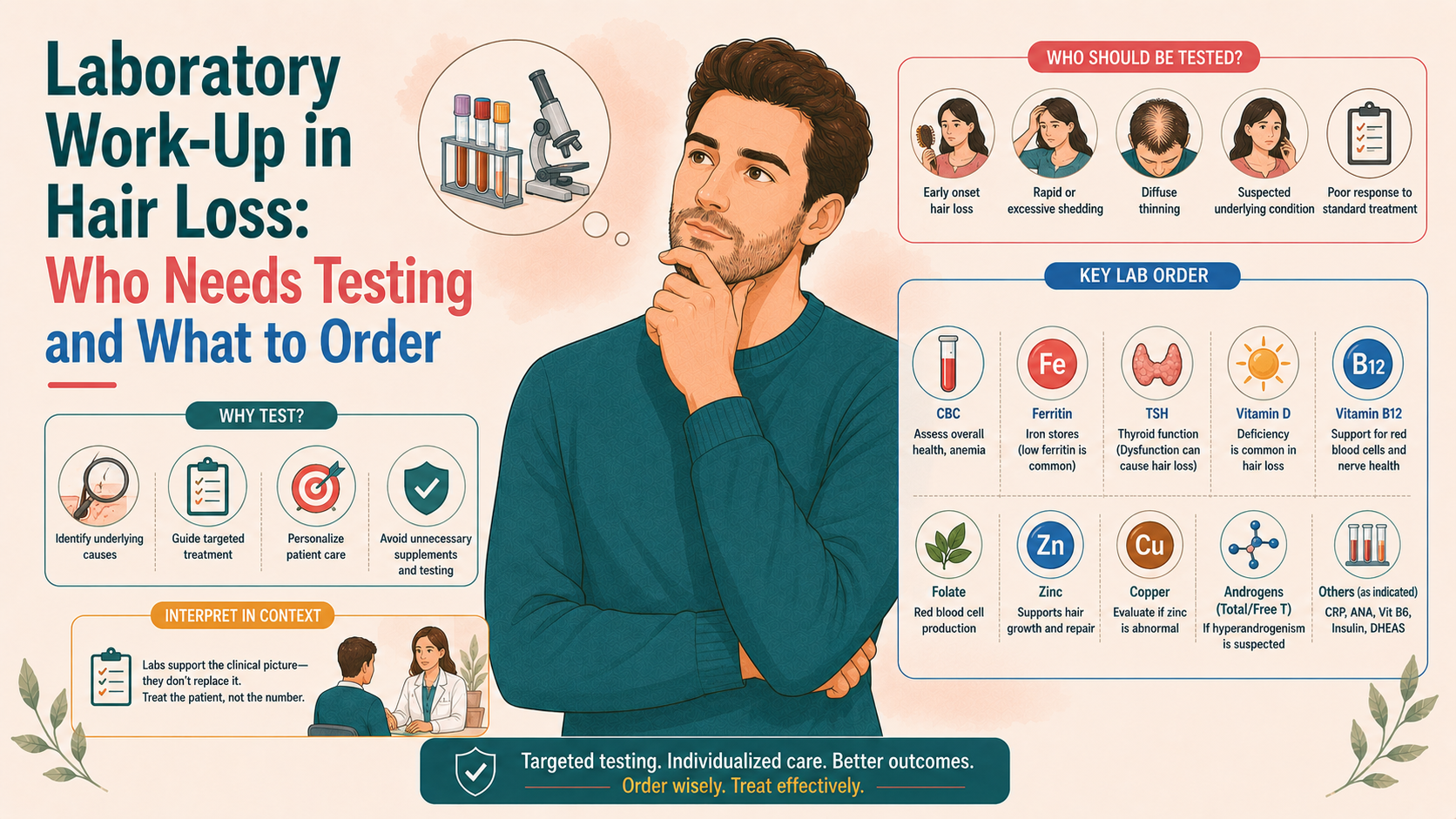
Laboratory Work-Up in Hair Loss: Who Needs Testing and What to Order

Blood tests can be helpful in some types of hair loss, but they are not mandatory for everyone. This article explains when laboratory investigations are likely to change management, which tests are commonly used in different clinical scenarios, when extensive testing adds little value, and some pitfalls to be aware of, including supplement-related interference.