Blood tests can identify contributors to hair loss, but they cannot replace examining the scalp. I explain when testing helps, what common results mean and why an abnormal number is not always the whole answer.

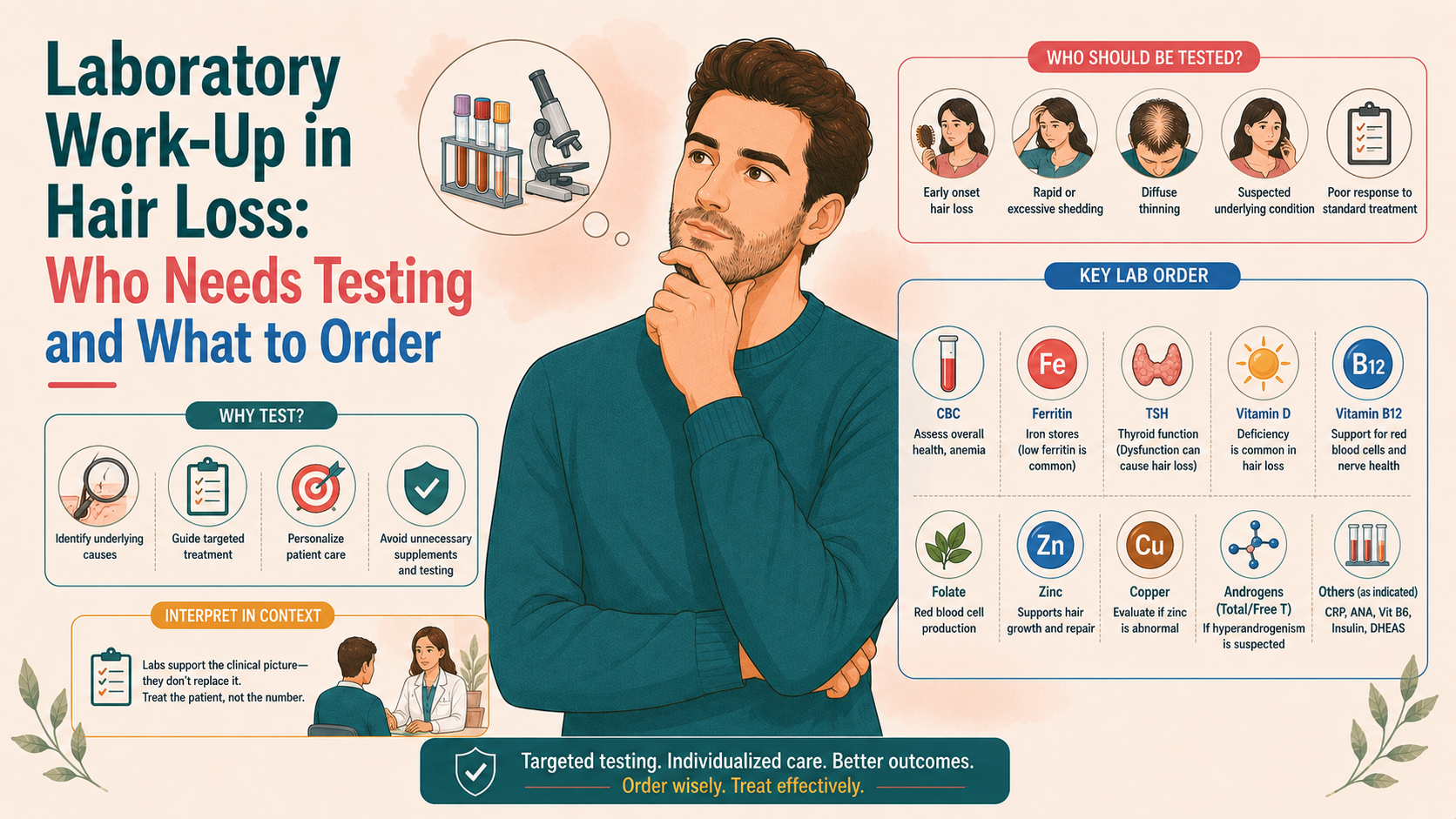
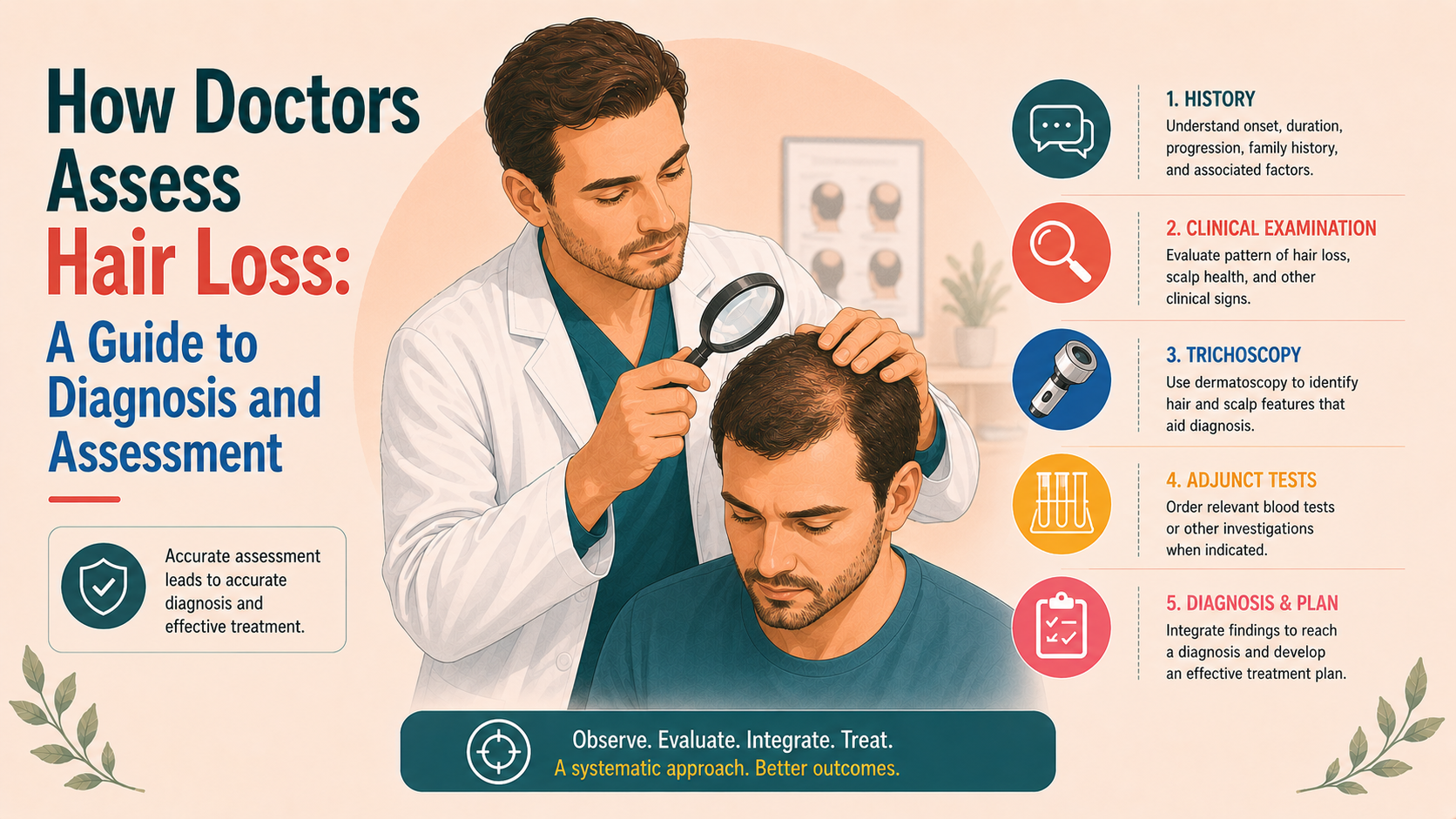
A long blood panel can feel thorough, but its value depends on whether the results will help with your care. The useful starting question is what the clinician suspects and how a result would change the plan.
Someone with a typical pattern of gradual thinning and no other concerns may not need extensive tests to establish the diagnosis. Someone with unexplained shedding, heavy periods or a restricted diet may have a good reason for targeted investigation.
Tests may also be needed before or during a particular treatment. That is a separate purpose from looking for the original cause of hair loss.
A full blood count can identify anaemia and other changes in blood cells. Ferritin helps assess iron stores, often alongside other iron measurements when the context requires them.
A clearly low ferritin supports iron deficiency, but interpretation is not always straightforward. Ferritin can rise with inflammation, so an apparently acceptable result may need to be considered with the rest of the clinical picture.
There is no universally established ferritin target that guarantees hair regrowth. Treating a genuine deficiency is appropriate, including investigating why it developed. Taking iron indefinitely to reach an arbitrary “hair optimisation” number can cause harm and may leave another diagnosis unaddressed.
Heavy menstrual bleeding, low intake and problems with absorption are examples of relevant context. Iron deficiency can also require investigation for blood loss elsewhere, depending on the person.
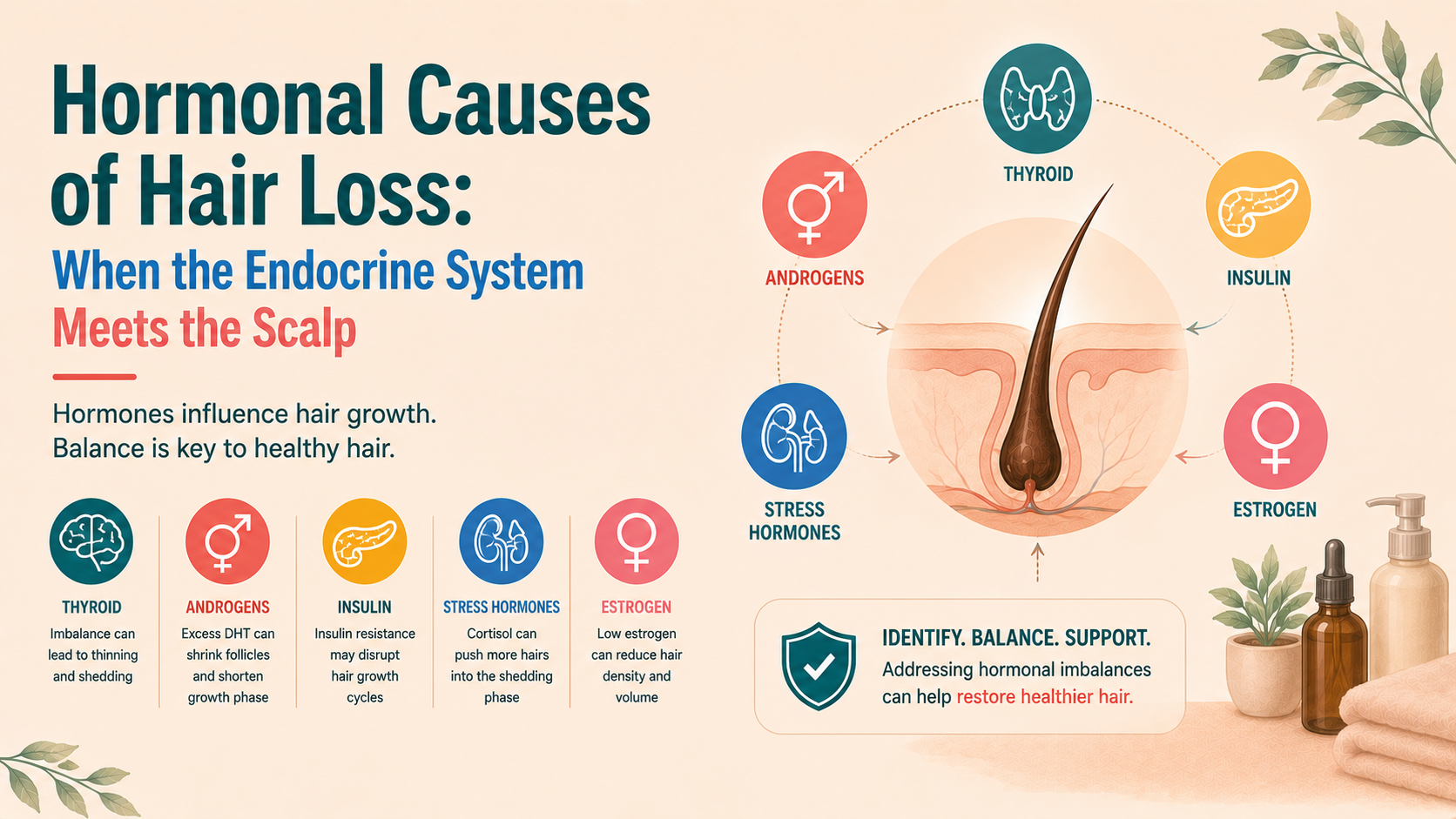
Both underactive and overactive thyroid disease can affect hair. A clinician may request thyroid function tests when the symptoms or pattern of shedding make this relevant. The result needs to be interpreted alongside your health and any thyroid treatment already being taken.
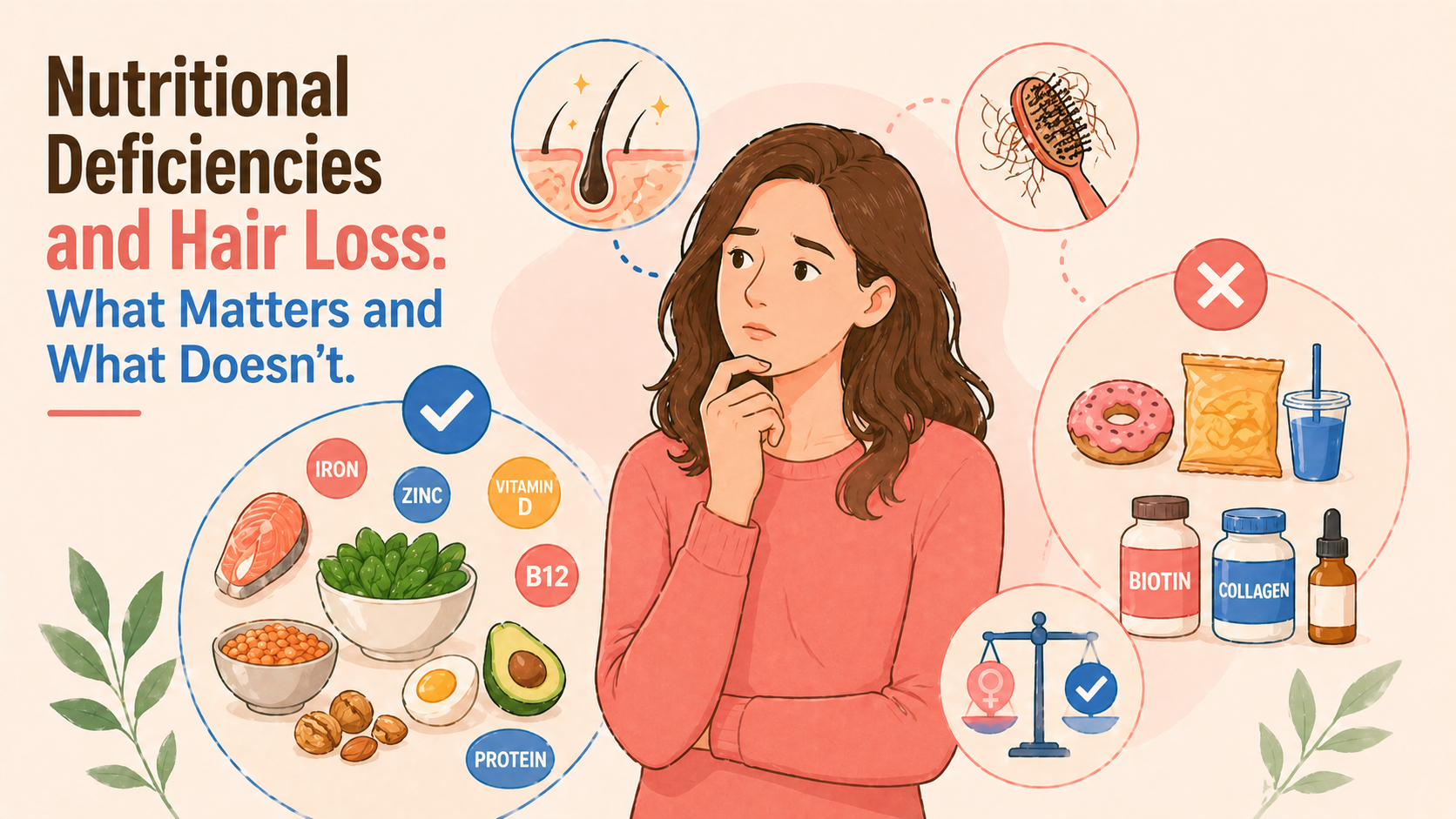
Testing for vitamin B12, folate, zinc or other nutrients is usually more useful when there is a reason to suspect a problem, such as dietary restriction, malabsorption or other clinical findings.
Low vitamin D has been associated with several hair disorders, but an association does not establish that it caused the loss or that supplementation will restore hair. A deficiency can still deserve treatment for wider health reasons.
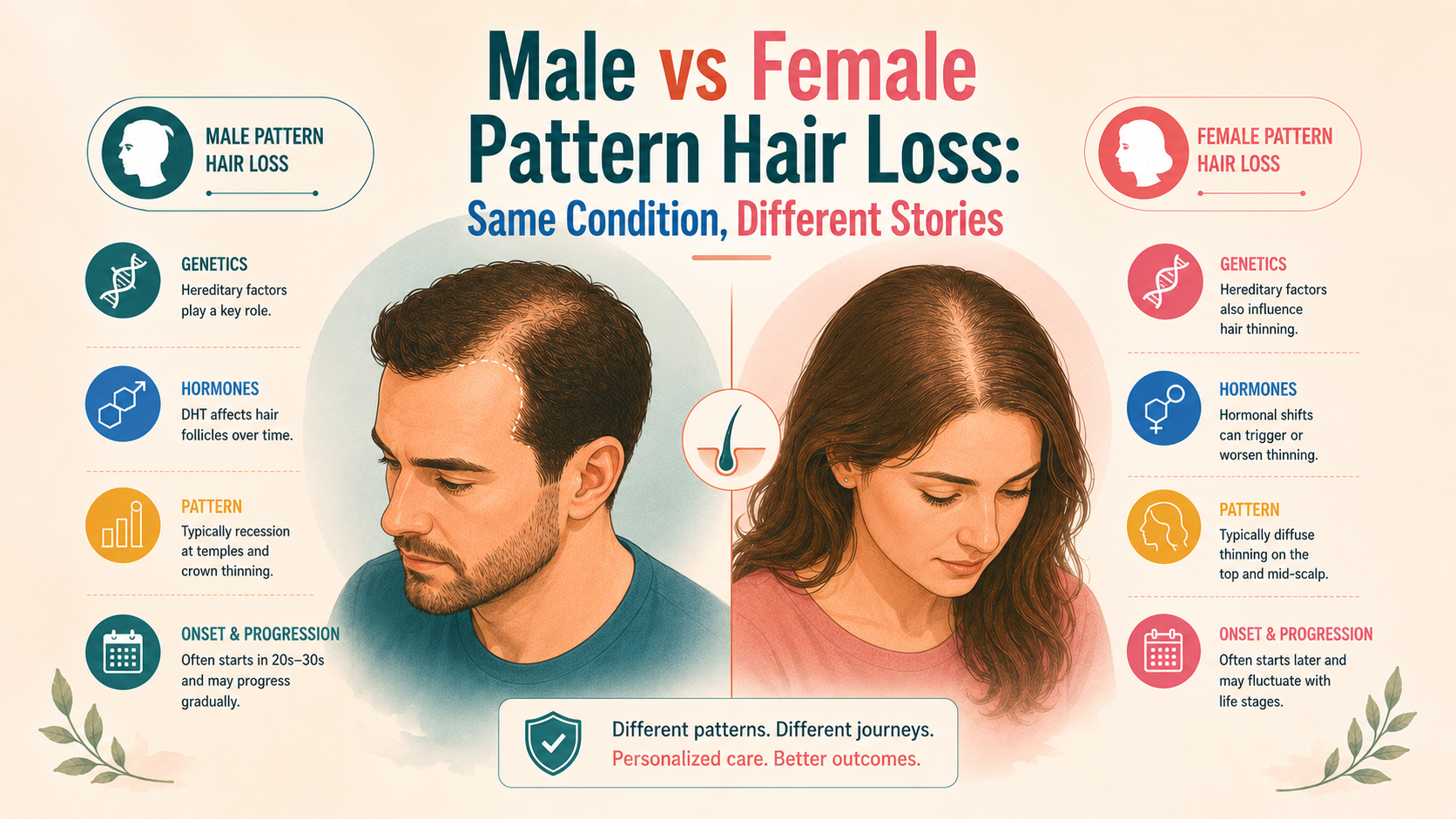
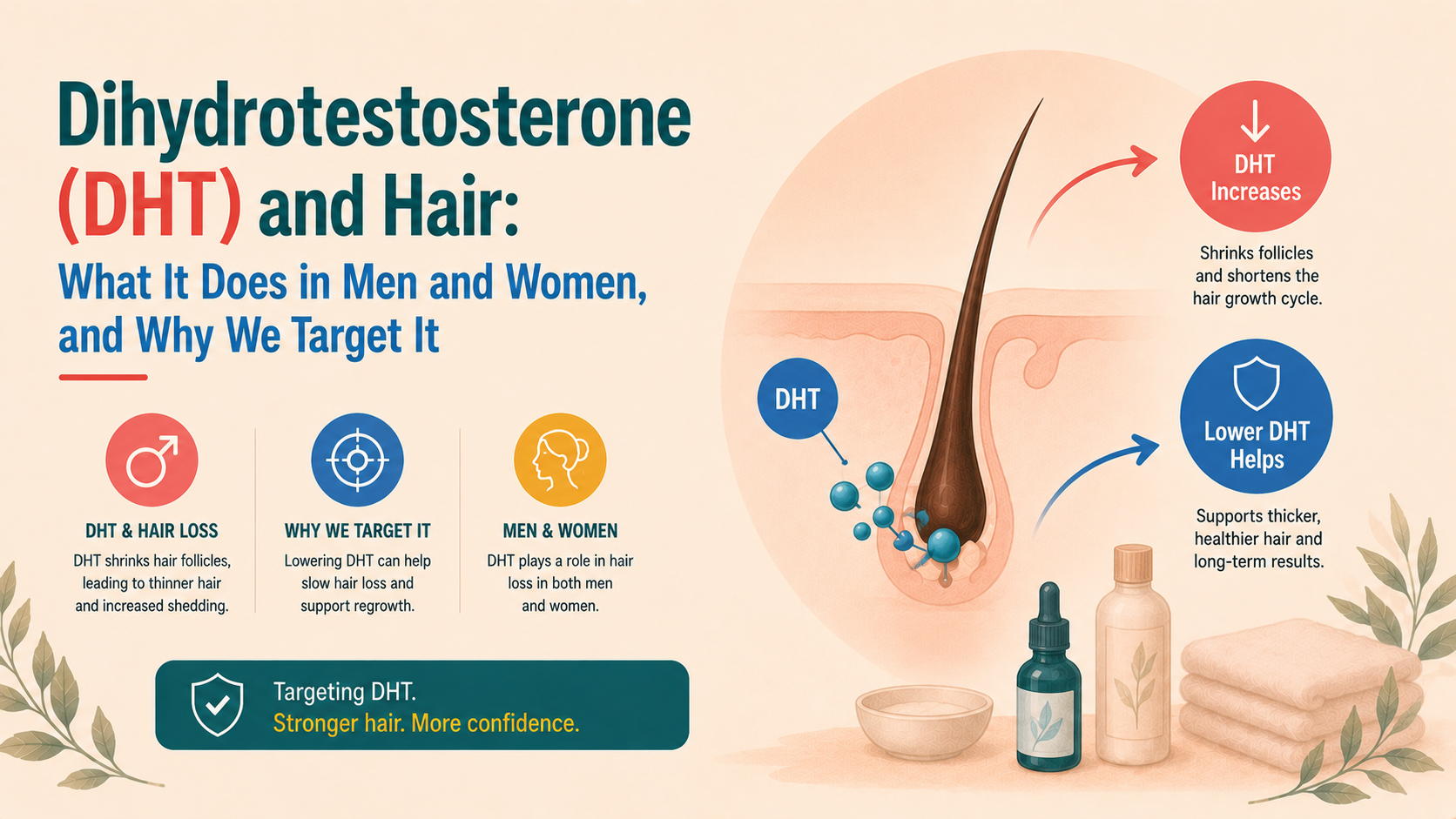
Female pattern hair loss often occurs with normal circulating androgens. A normal result therefore does not rule it out. Equally, measuring DHT is not a routine way to decide whether a person has ordinary male pattern hair loss.
In women with irregular periods, increased facial or body hair, significant acne or other signs of androgen excess, the clinician may investigate more broadly. The tests chosen and their timing depend on the symptoms, medicines and reproductive context.
One possible diagnosis is polyendocrine metabolic ovarian syndrome, or PMOS, the name introduced in 2026 for the condition previously called PCOS. Both terms remain in use during the transition. Hair thinning alone does not establish that diagnosis.
Rapid development of marked androgenic changes, such as a deepening voice, needs prompt medical assessment. It should not simply be assumed to be a routine variation in pattern hair loss.
Autoimmune blood tests may be appropriate when there are relevant skin or systemic findings. Ordering them without a clinical reason can produce incidental results that are difficult to interpret.
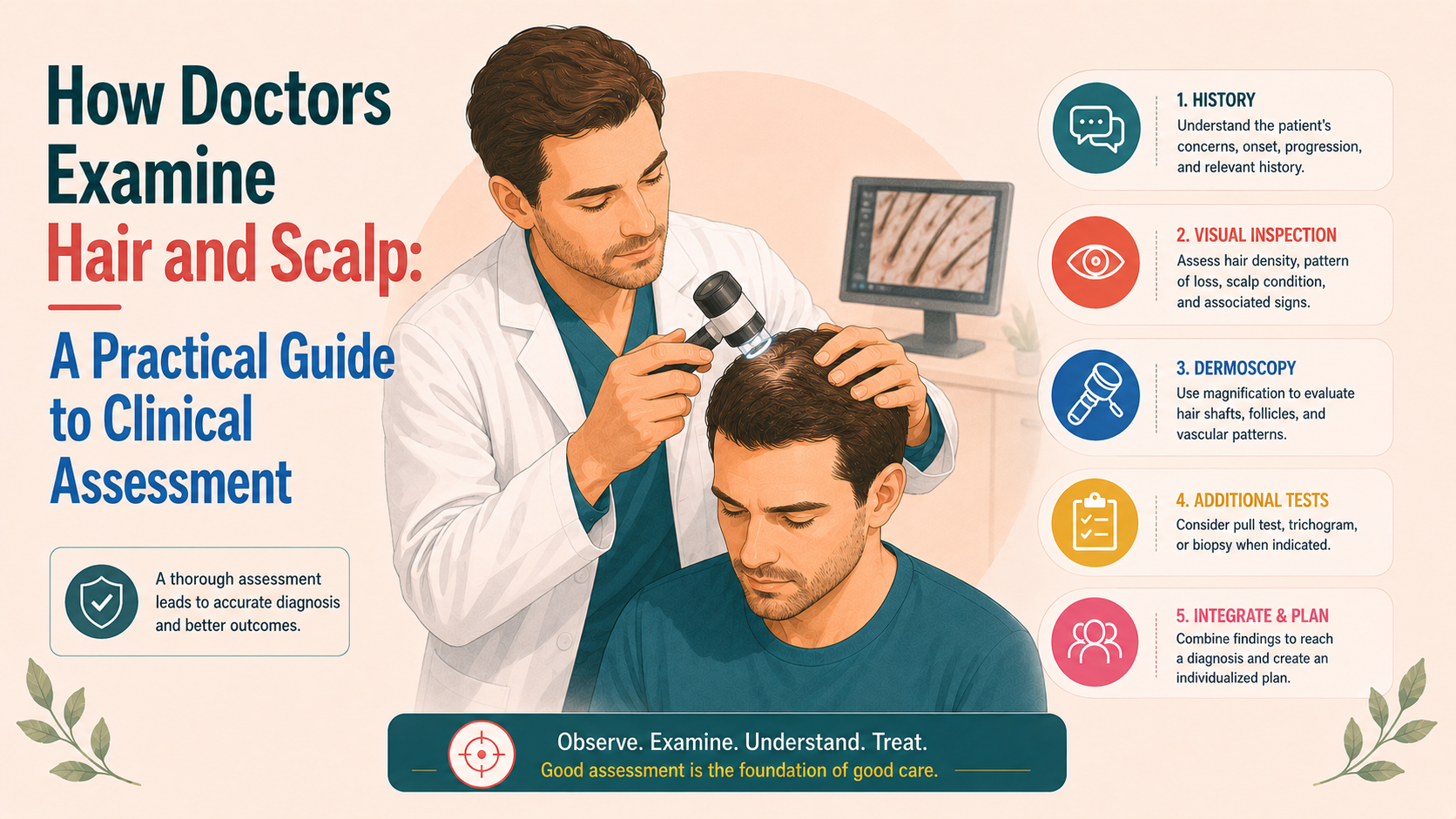
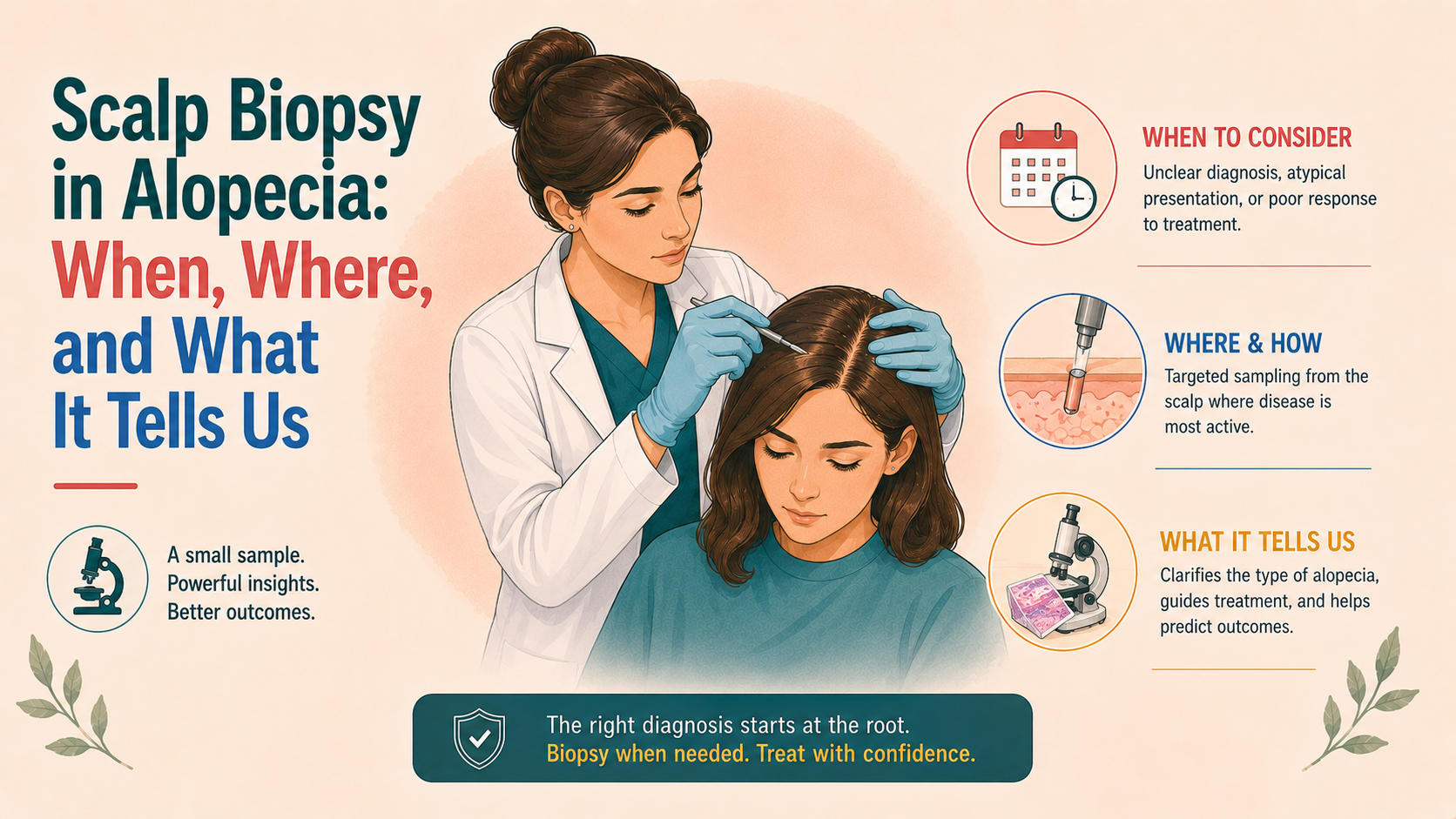
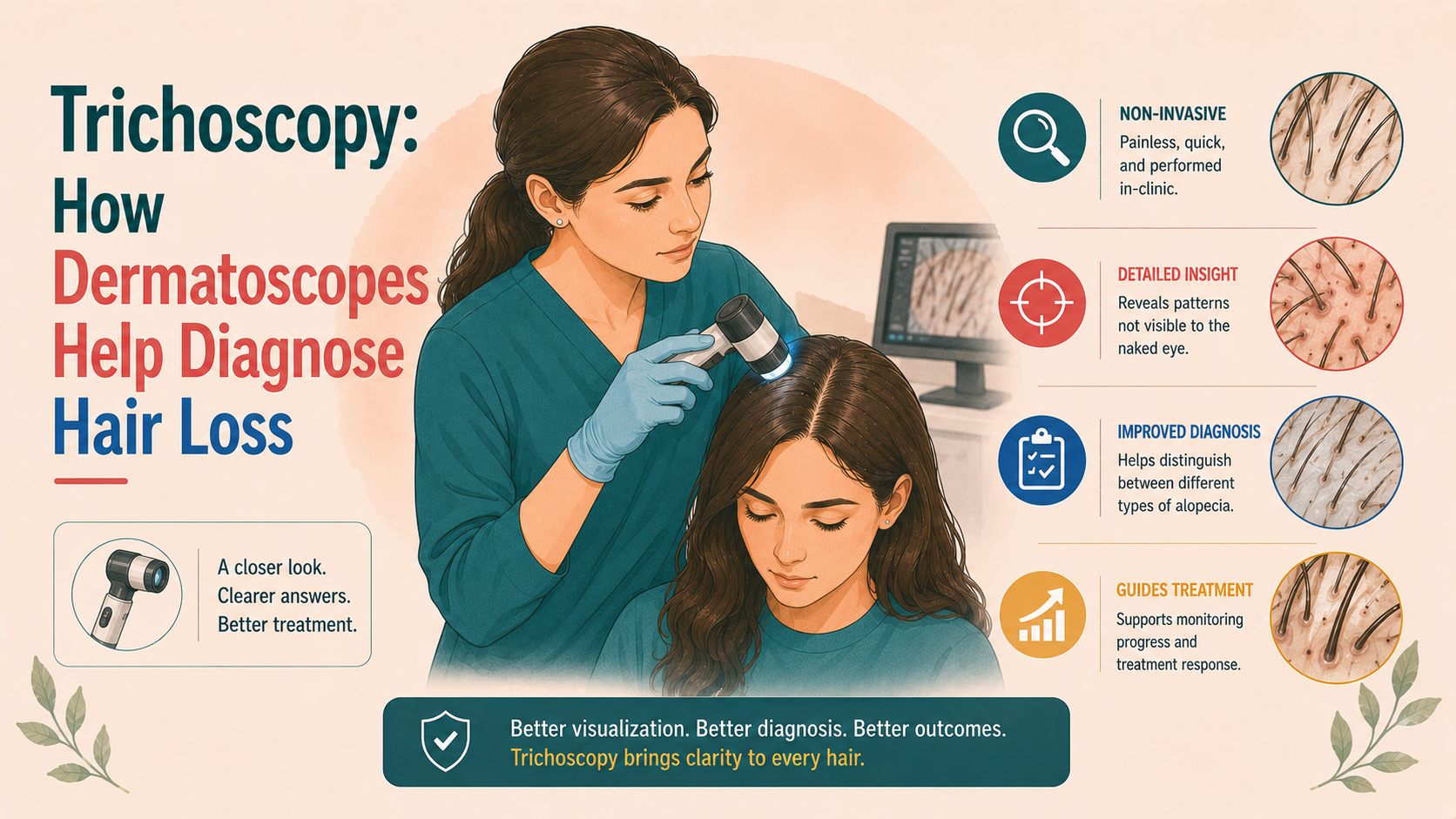
A fungal infection may require hair or scalp samples rather than a blood panel. Suspected scarring disease may need trichoscopy and biopsy. Normal blood results cannot show that the follicles are intact.
Symptoms such as substantial unexplained weight change, persistent fever or significant fatigue deserve their own medical assessment. They do not automatically mean hospital admission; the urgency and setting depend on the overall clinical picture.
Biotin appears in many hair and nail supplements, sometimes at high doses. It can interfere with certain laboratory methods, including some thyroid, hormone and troponin tests, producing misleading results.
Tell the clinician and laboratory what you take, including the dose if you know it. Follow their advice about whether and when to pause it. The appropriate interval depends on the product, dose, test and circumstances, so a single rule for everyone is not reliable.
This matters even when the blood test has nothing to do with your hair. A supplement can affect how a test behaves without improving the condition it is marketed for.
An abnormal result can be important without being the sole cause of hair loss. Correcting iron deficiency may help a contributing shed while pattern thinning still needs a separate discussion.
If the results are normal, the next question is what the examination showed and whether further assessment is needed. “Your bloods are fine” should not be the end of a conversation about persistent visible change.
I would ask what needs treatment, what will be monitored and what remains uncertain. That turns a page of numbers into information you can use.