Join the Newsletter
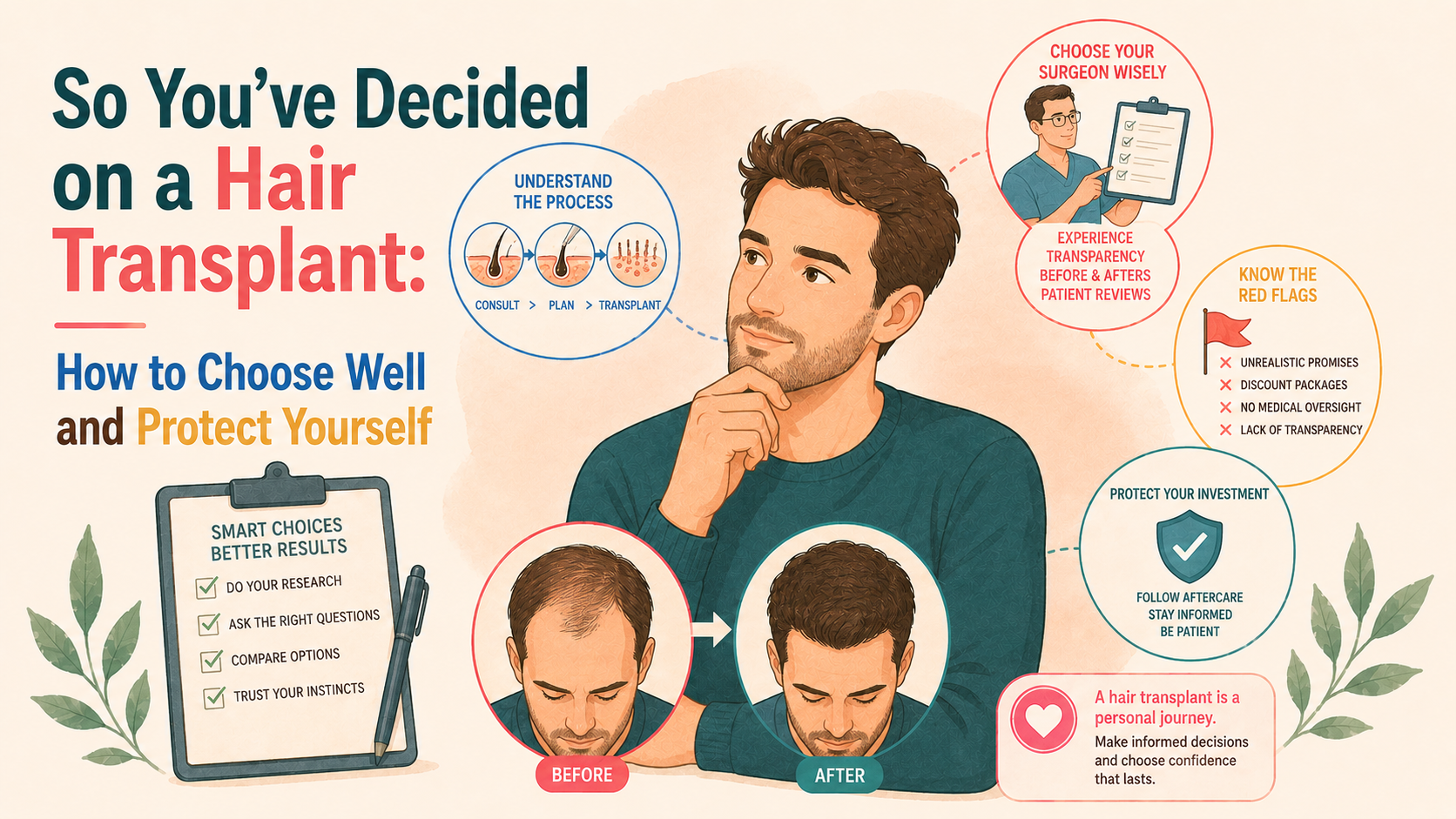
Deciding to have a hair transplant is a major step. The quality of the outcome depends on your biology, your expectations, the surgeon, the clinic and what you do before and after the procedure. This article offers a structured guide for people who have already decided to proceed with surgery: how to recognise a good clinic and surgeon, how to avoid exploitation, why having surgery close to home often matters, how to prepare, and why ongoing medical therapy remains part of best practice.
![[headshot]](https://cdn.prod.website-files.com/68207da82e5b8c350c67932f/68c6a7436a552c0fe87a4da7_Screenshot%202024-11-27%20at%2011.38.11.png)
By the time someone is ready to pursue a transplant, they have usually lived with hair loss long enough to see patterns, explored or at least considered medical treatments, and weighed the costs, scarring, and downtime before deciding that surgically redistributing their hair is worthwhile.
That preparation is significant. It deserves an equally careful choice of surgeon and clinic. Transplant surgery is generally safe and effective in experienced hands, but donor hair is finite, surgery is not easily reversible, and corrective work is always harder than getting it right the first time.
The priority now is to convert a broad decision to pursue a transplant into a well-planned, safe, and realistic course of action.
A hair transplant:
For most people, realistic goals typically include: restoring or strengthening the framing of the face (the frontal hairline and frontal third); improving coverage and reducing contrast at the crown or mid‑scalp; and achieving a natural, age‑appropriate look that remains believable over time.
It is usually not realistic to expect: adolescent‑level density in a man with advanced Norwood hair‑loss patterns; complete elimination of visible thinning in a woman with long‑standing diffuse hair loss; or a completely static result without ongoing medical treatment.
A good surgeon will take time to explain these boundaries. If expected outcomes sound too perfect or unqualified, it is wise to ask for more detail.
A good clinic reveals itself more by its approach than by its marketing.
You should meet the surgeon or senior doctor who will be responsible for your procedure. In a thorough consultation, they will:
Crucially, there should be enough time for you to ask questions and reflect. You should leave understanding both why surgery is an option and what you would be trying to achieve.
Because donor hair is limited, understanding your donor is central. A responsible surgeon will:
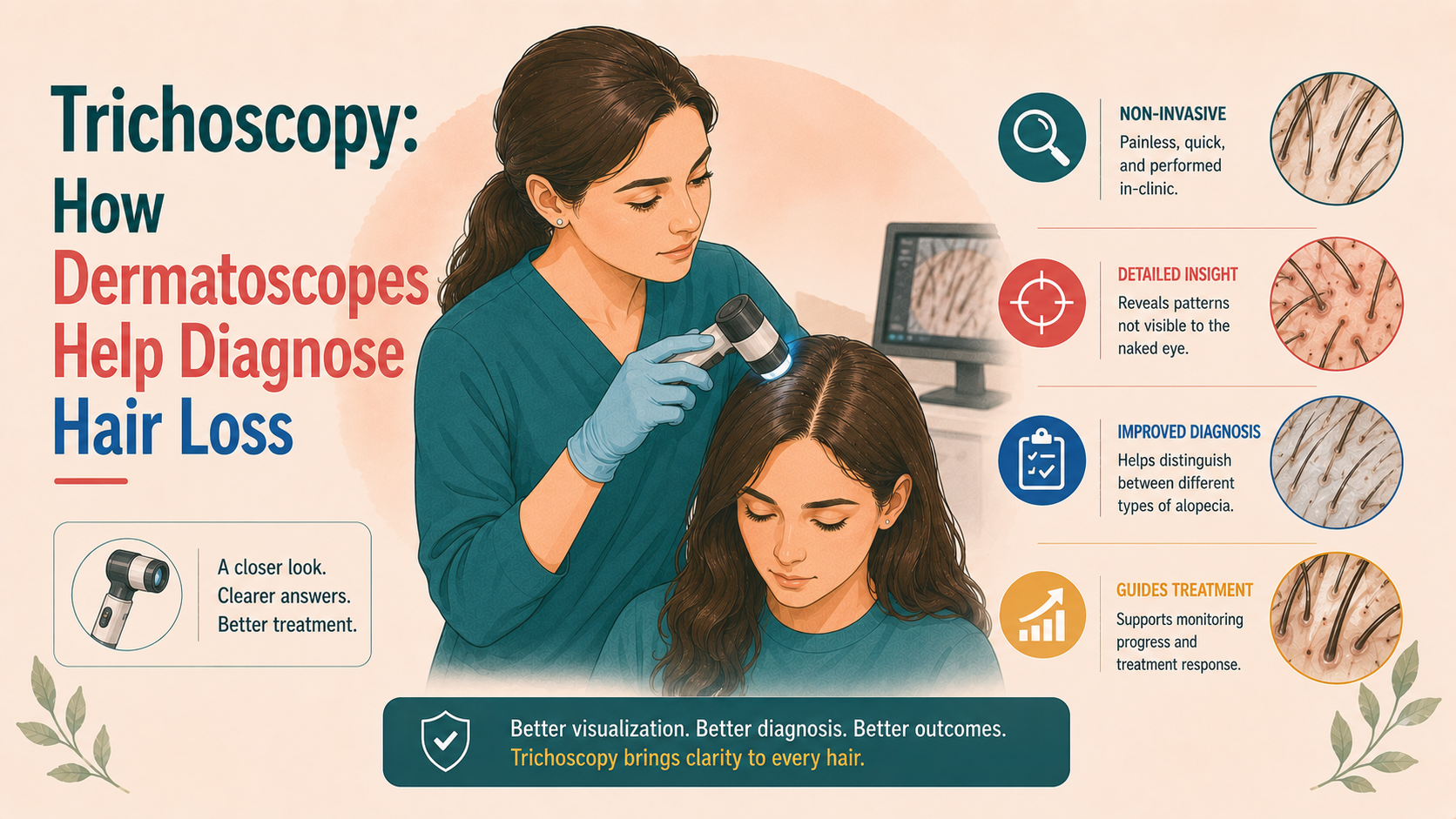
This may involve trichoscopy (to look at density and miniaturisation) and assessment of scalp laxity if FUT is considered. You should come away with a sense that the surgeon is protecting your future options.
Before and after photographs are most useful when they show patients whose hair loss patterns, hair calibre and skin tone resemble yours, use similar lighting, camera angles and hair length, and specify the time since surgery, for example, twelve months after one FUT plus medical therapy.
They are less helpful when they focus on only a few spectacular cases, when styling products or fibres obscure the result in the “after” images, or when very early images are presented as if they were final results.
Photographs should help to calibrate your expectations rather than serve purely as advertising.
It is appropriate for a surgical team to include experienced technicians, but their roles should be clear. Good practice typically involves the surgeon:
Technicians may assist with the microscopic dissection of FUT strips or help with graft placement under supervision.
You are entitled to ask and receive clear answers about who will perform which parts of your procedure. If the surgeon is largely absent and technicians perform most critical steps, you are effectively being operated on by staff whose training and regulation may be less transparent.
Transplant tourism is attractive because of cost, but there are tangible advantages to having surgery closer to home.
Hair transplants follow a long timeline. In the first days and weeks, the focus is on wound healing. Over the following months, shedding and early regrowth occur. The cosmetic result then continues to mature over the course of a year or longer.
Having your surgeon based in your own country makes several aspects of this process easier. You can attend in person for post-operative checks, have the donor and recipient areas examined promptly if any concerns arise, and adjust plans for further procedures depending on how your pattern of hair loss develops.
Complications such as infection, poor wound healing, shock loss or unexpected scarring are rare but possible. Prompt access to the original surgeon or clinic is important. It is harder to manage these issues at a distance, particularly if language or legal barriers exist.
Many patients benefit from staged procedures. For example, an initial procedure can prioritise the frontal third, followed by possible crown work several years later if appropriate.
A home-based clinic is better positioned to integrate your medical therapy and non-surgical care over time, reassess donor capacity and patterns at each stage, and adapt the plan rather than simply executing a predetermined “package.”
If something does not go as expected, regulatory bodies, medical councils, and legal systems in your home country are more accessible; it is generally easier to obtain records, clarify what was done, and communicate effectively.
This does not mean all overseas surgery is unsafe, nor that all domestic surgery is exemplary. It does mean that geography influences follow-up, accountability and ease of communication in meaningful ways.
Even with a firm intention to have surgery, it is sensible to be alert to certain patterns.
Clinics sometimes compete on graft counts:
“We routinely perform 4,000–5,000 grafts in a single FUE session.”
What matters is not the headline number, but whether that number is appropriate for your donor, whether it respects your safe lifetime capacity, and how those grafts are distributed.
Removing an excessive proportion of follicles from the donor, especially via FUE alone, can leave the back and sides visibly thin and restrict future options. A focus on donor preservation is a marker of long-term thinking.
All harvesting methods involve incisions and result in scarring: FUT produces a linear scar, while FUE produces small dot scars.
Language that implies FUE is “scarless” or “not really surgery” downplays the invasiveness and potential consequences. It may also indicate a priority on marketing over detailed consent.
Low-cost packages abroad that include flights, hotels, and very large FUE sessions may be legitimate, but they warrant careful scrutiny. Questions to ask include:
Professional societies have raised concerns about certain high-volume centres where pre-operative diagnoses are superficial, large numbers of grafts are harvested in a single day, and much of the procedure is performed by unlicensed staff.
The combination of low price and high volume always has to be paid for somehow.
Being pressured to book immediately to secure a discount, to skip discussion of non-surgical options, or to accept a plan without time to reflect is incompatible with the significance of this decision. A reputable clinic will allow and encourage you to take time to think, seek additional opinions, and involve family or trusted friends if you wish.
Modern guidelines and expert consensus are clear that, in androgenetic alopecia, transplantation is not a substitute for medical therapy; it is an additional tool.
Androgenetic alopecia is progressive. If you only undergo a transplant and do nothing to protect the non transplanted hair, you risk continued miniaturisation around the transplanted areas, the appearance of “islands” of transplanted hair surrounded by further thinning, and the need for more extensive corrective surgery later.
Evidence-based medical therapies, such as topical or oral minoxidil and 5α-reductase inhibitors in appropriate men, can slow progression in native follicles, enhance the appearance of transplanted hair (by improving coverage in surrounding areas), and help protect both your transplant and your remaining donor.
Clinics aligned with best practice generally:
A clinic that offers surgery without mentioning medical therapy, or dismisses it outright, is not providing a comprehensive, guideline-consistent approach. You may still choose to proceed, but it is better to know that other elements are being omitted rather than to discover them later.
Good pre-operative preparation includes:
You should receive written instructions and, ideally, a chance to ask questions before the day of surgery.
Practical steps might involve:
Thinking through these details beforehand tends to reduce anxiety.
It can help to:
Some people find it helpful to reduce mirror-checking in the immediate post-operative period and to focus on adhering to the aftercare plan, with scheduled progress checks at set intervals.
After the initial year:
You will also need to decide, with your doctor, whether to maintain medical therapy long term, and at what doses, balancing benefit, side effects and lifestyle.
If you have decided to pursue hair transplant surgery, the key points are:
A well-planned, well-executed hair transplant, integrated with ongoing medical care, can improve your appearance and quality of life for many years. Taking the time now to choose carefully is part of protecting that outcome.