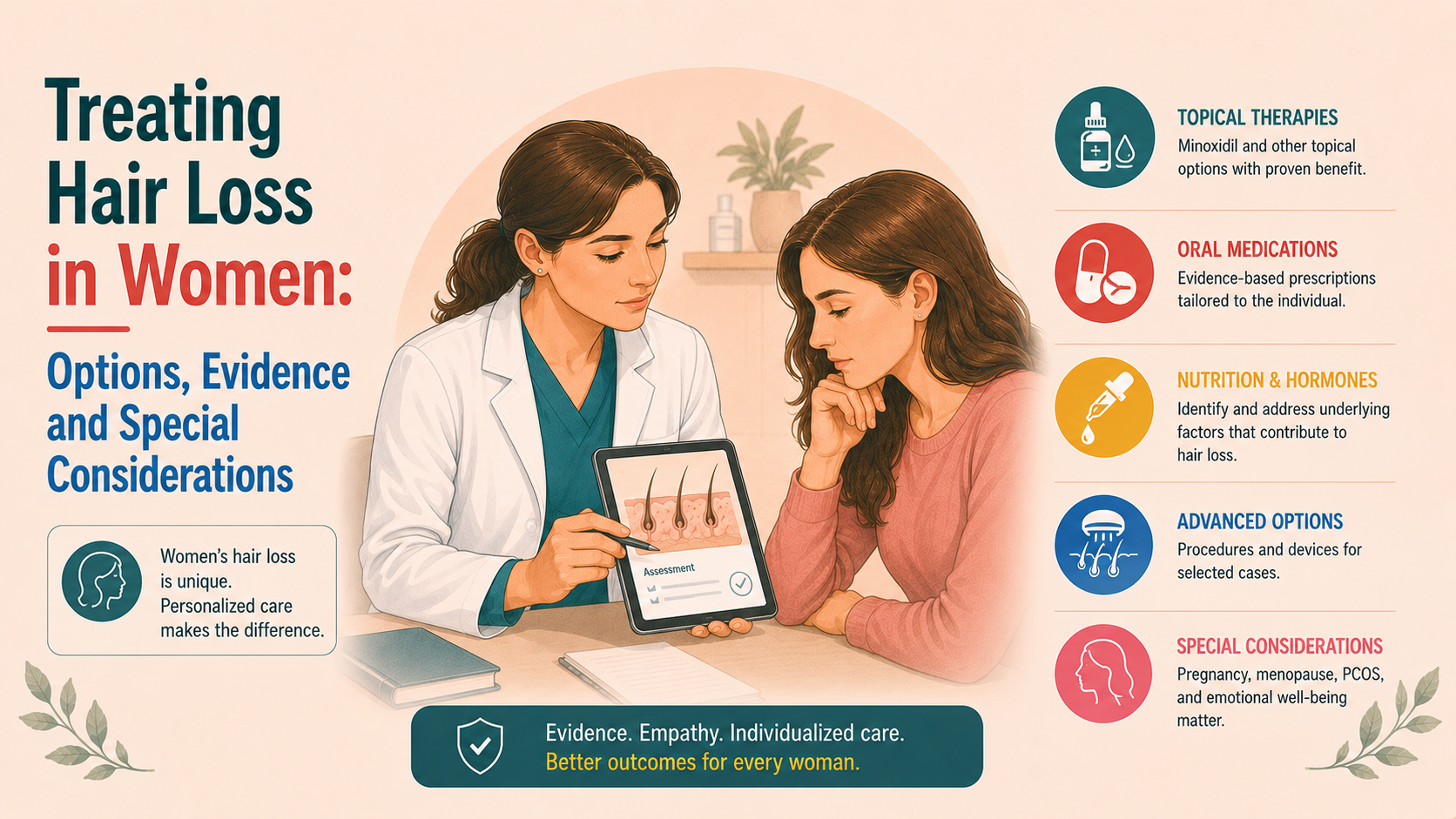
Spironolactone and other anti-androgens can help some women with pattern hair loss. The evidence, pregnancy precautions and monitoring differ considerably between medicines.

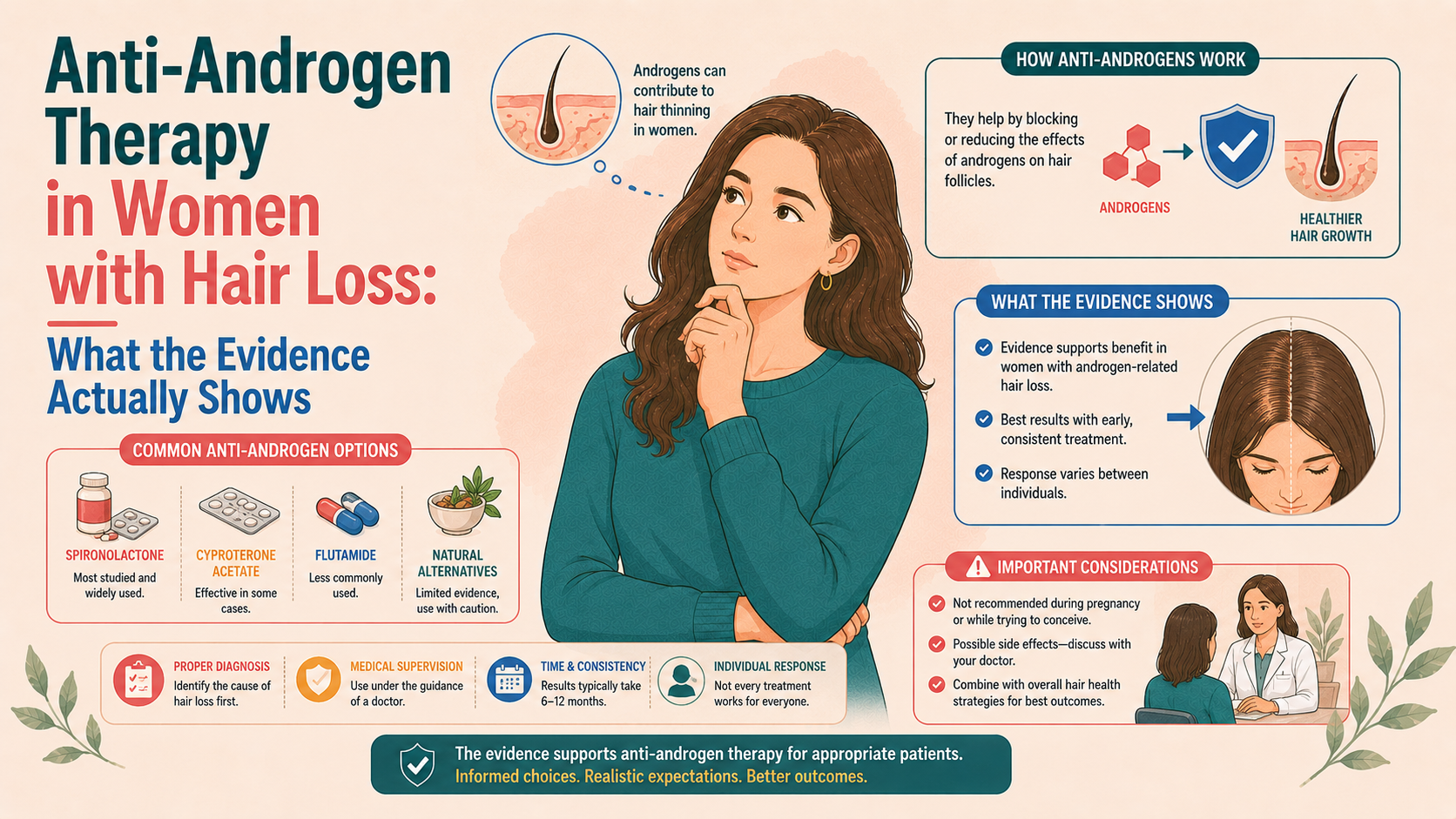
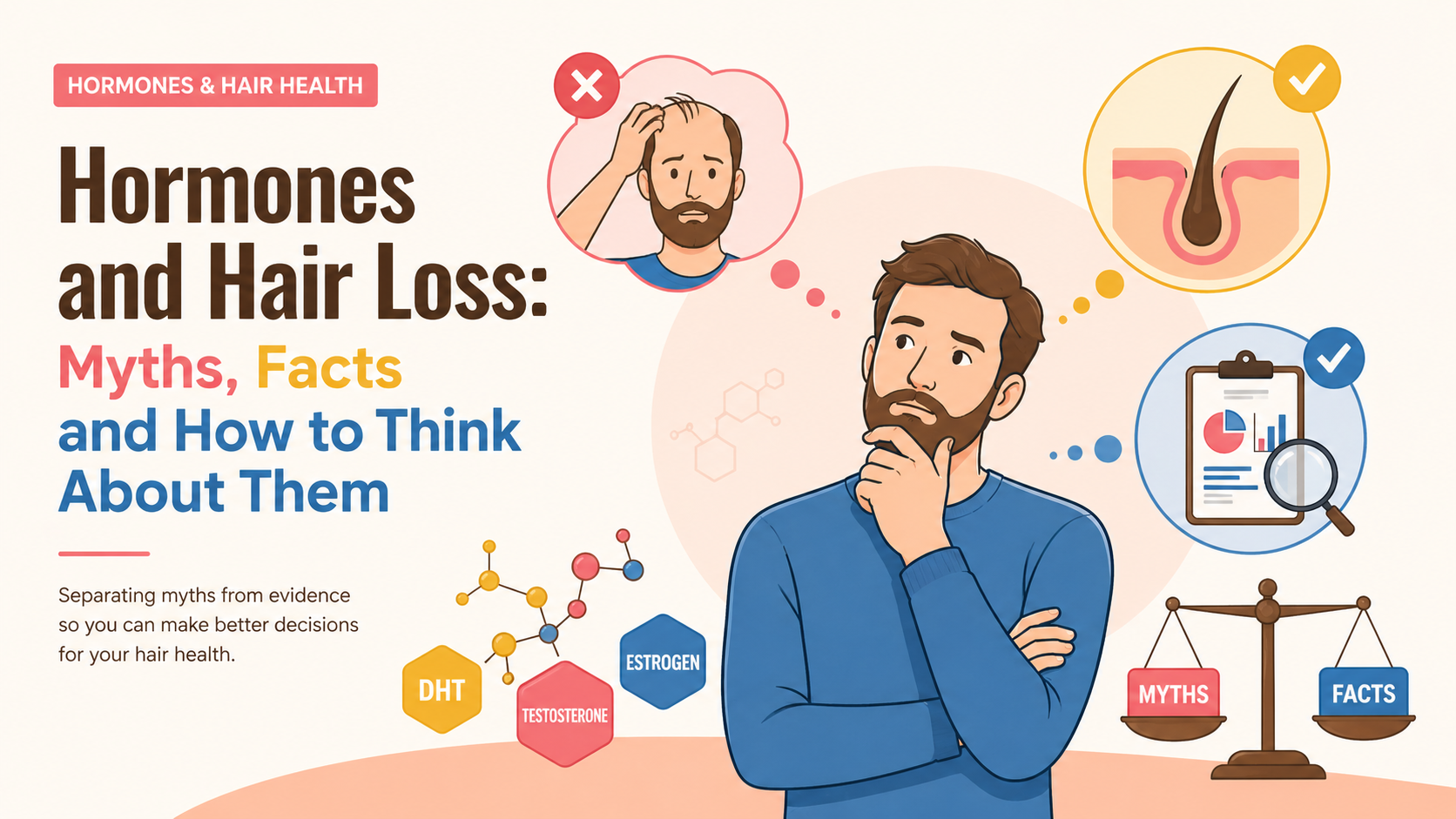
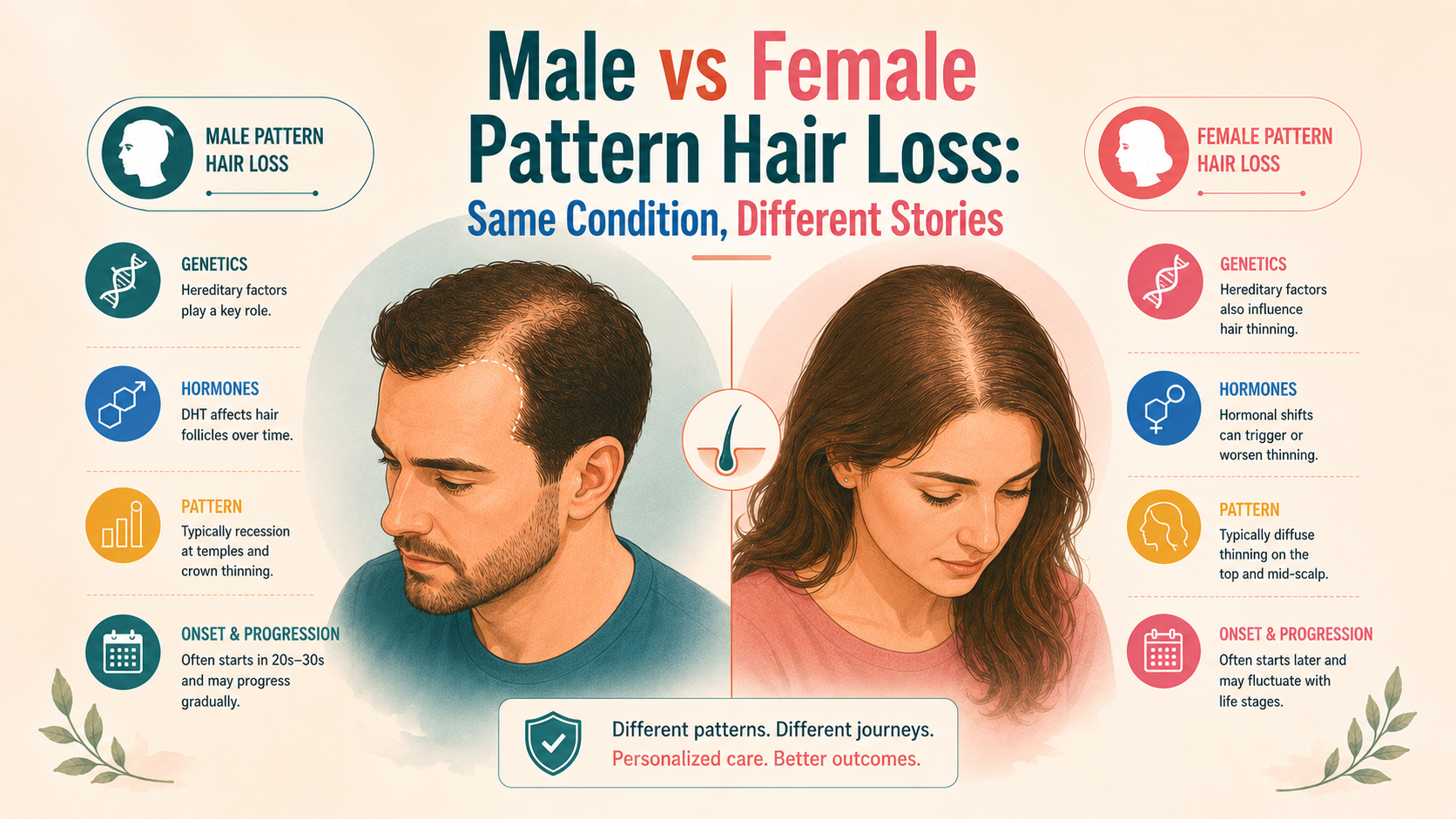
Women produce androgens too. These hormones are normal, and their presence is not itself a problem. In some women, androgen signalling contributes to scalp hair loss. In others, female pattern hair loss develops without measurable androgen excess, and the biology is less clearly hormone-dependent.
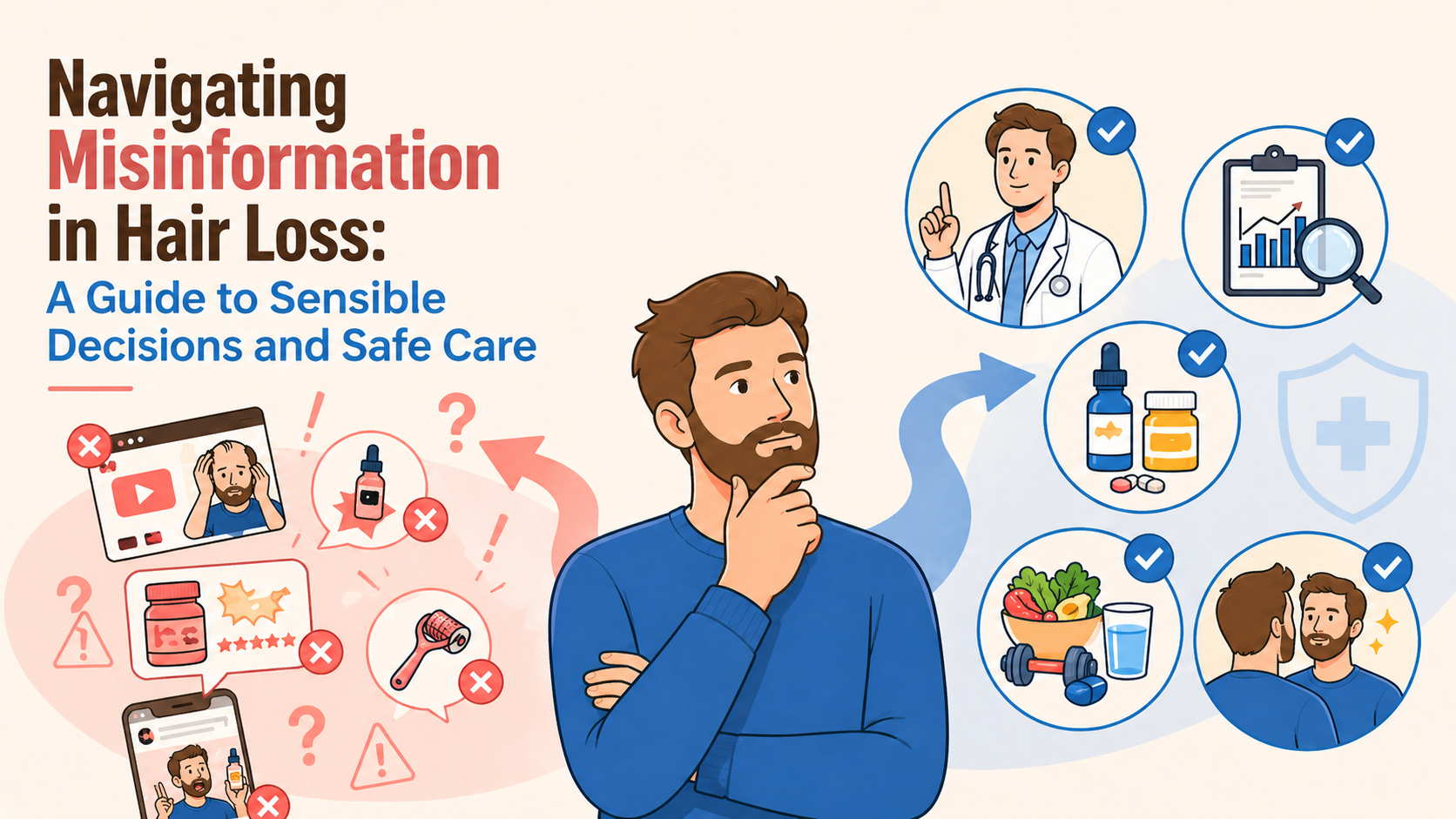
That is why I would avoid the promise of simply “balancing your hormones”. It sounds reassuring but says very little about the diagnosis or the treatment being proposed.
Acne, increased facial hair and irregular periods can justify assessment for androgen excess, including polyendocrine metabolic ovarian syndrome (PMOS), previously called PCOS. An anti-androgen may also be considered in women without these features, usually after discussing the diagnosis, previous treatment and the limits of the evidence.
Spironolactone is a prescription medicine with diuretic and androgen-receptor-blocking effects. It is often used off-label for female pattern hair loss, alone or alongside minoxidil. The aim is gradual stabilisation or improved coverage, rather than a rapid change.
Much of the older research was observational. Those reports are useful, but they cannot reliably separate the medicine’s effect from other treatments used at the same time.
A 2025 placebo-controlled pilot trial studied 48 premenopausal women, all using topical minoxidil. Photographic improvement favoured added spironolactone, but the difference in terminal hair counts did not meet the conventional threshold for statistical significance. Irregular periods were common. This strengthens the case for a possible additional benefit without proving that it will help every woman.
Possible side effects include menstrual changes, breast tenderness, increased urination, dizziness and lower blood pressure. Spironolactone can also raise potassium, particularly with kidney disease or interacting medicines.
Monitoring should reflect the person’s health, age and medication list. Potassium supplements, some blood-pressure medicines and other drugs can change the risk, so the prescriber needs the full list, including non-prescription products.
Spironolactone is unsuitable during pregnancy. Anyone who could become pregnant needs a clear discussion about effective contraception and what to do when planning pregnancy. It should not be started from an online dosing schedule.
Cyproterone acetate is used in some countries for androgen-related conditions, sometimes as part of a combined hormonal preparation. Evidence for scalp hair loss is limited, and benefit for acne or excess facial hair is not automatically evidence of improved scalp density.
Cyproterone carries a cumulative-dose-related risk of meningioma, a tumour arising from the membranes around the brain and spinal cord. It is contraindicated in people with a current or previous meningioma. This is a specific safety issue, not something covered adequately by saying that all medicines have side effects.
Combined contraceptive pills can be useful for contraception and some manifestations of androgen excess, but they have their own contraindications and clotting risks. Choosing one requires a wider health assessment than deciding which pill sounds most “hair-friendly”.
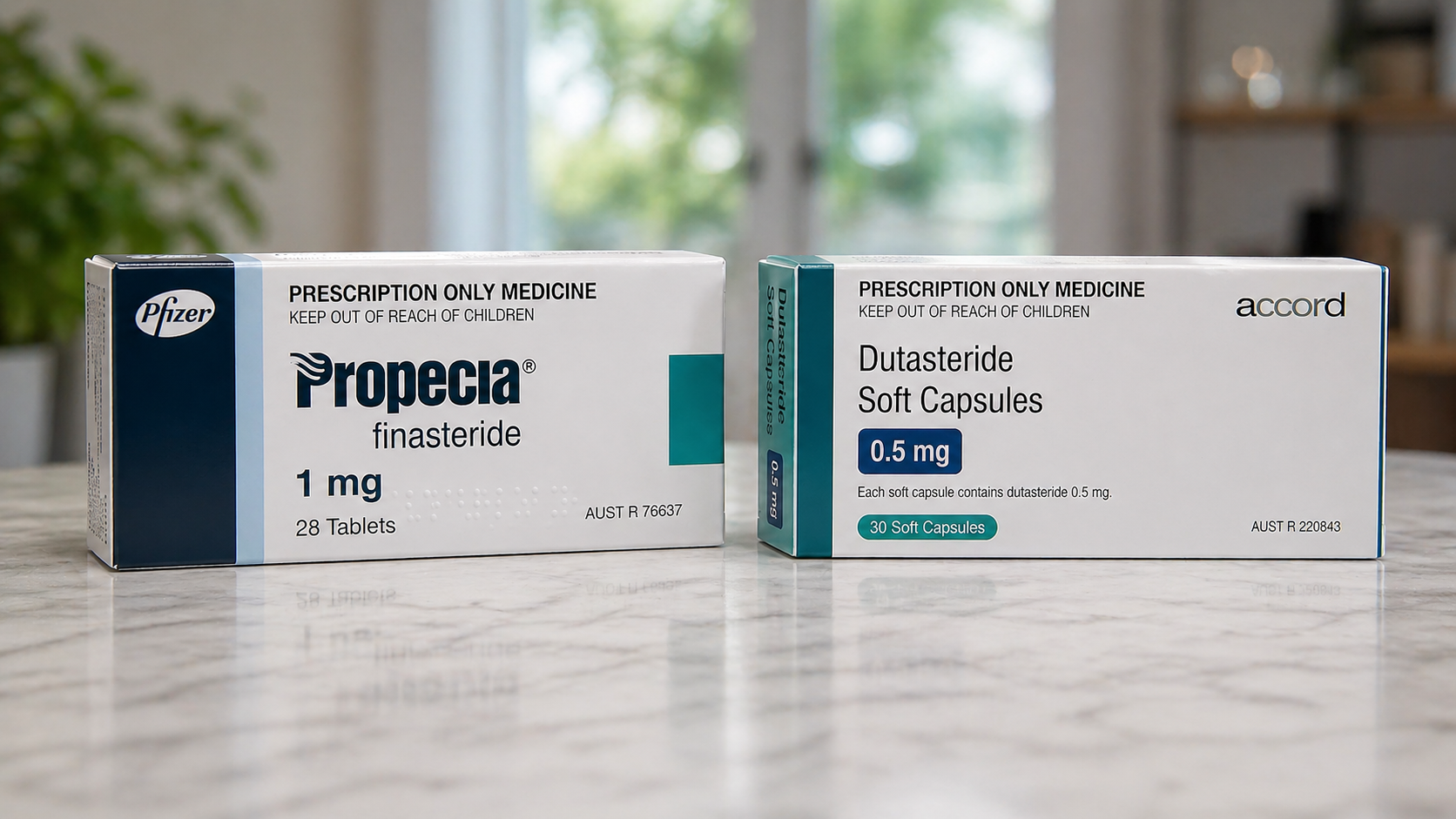
These medicines reduce conversion of testosterone to DHT rather than directly blocking the androgen receptor. Their evidence in women is less secure than in men.
A trial of 137 postmenopausal women found no benefit from finasteride 1 mg daily over placebo after a year. Reports using higher doses or dutasteride suggest possible benefit in selected women, but many lack strong comparison groups. A positive uncontrolled study is not enough to promise the same result in routine practice.
Both medicines pose a risk to a developing male fetus and must not be used during pregnancy. Specialist advice is needed about pregnancy prevention and stopping before conception, especially because dutasteride remains in the body for a long time. Topical finasteride can be absorbed and should not be assumed safe during pregnancy. Sexual and mood-related adverse effects also deserve discussion.
Bicalutamide is receiving more attention, but it is not an established low-risk replacement for other treatments. In a 2026 trial, 204 women were assigned to bicalutamide or spironolactone for 24 weeks. Some microscopic hair measurements favoured bicalutamide, while clinical outcomes did not differ significantly between groups. The short, single-centre trial cannot settle long-term safety or establish a clearly visible advantage.
Bicalutamide requires specialist assessment, including attention to liver function and pregnancy prevention. Flutamide has also shown activity against hair loss, but its potential for serious liver injury makes it a poor routine choice for this purpose.
Reducing a dose or delivering a drug by scalp injection does not automatically make it safer. Those approaches need their own evidence.
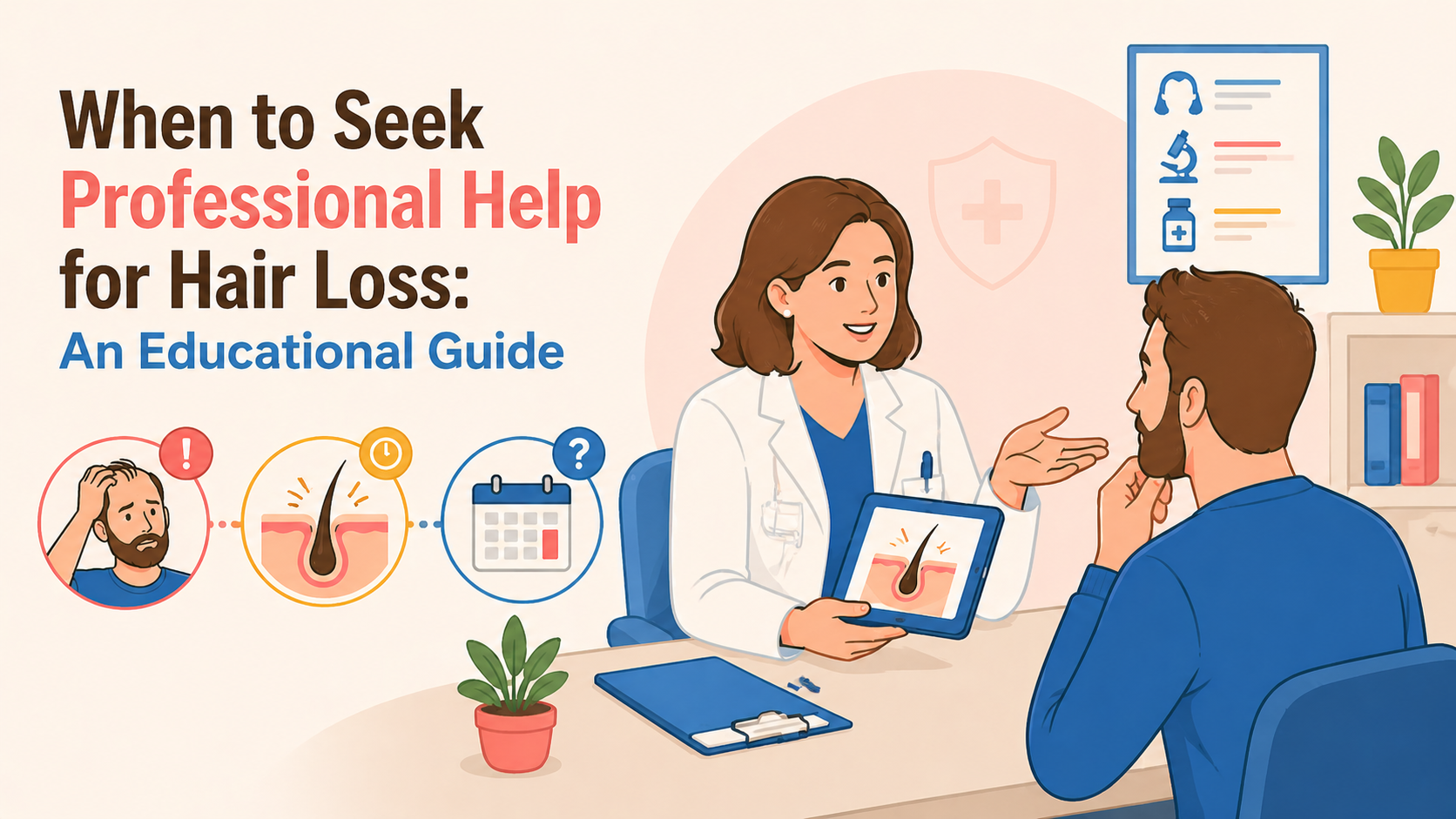
Ask why the proposed medicine fits your diagnosis, what benefit is realistic, and when progress will be reviewed. Discuss pregnancy plans before treatment, along with side effects that should prompt contact and any blood tests needed.
These medicines take months to assess. Starting several at once can make it hard to know which one helped or caused a problem. The best plan is one whose likely benefit, burden and uncertainty make sense to you, with room to change course if the results do not justify continuing.