Hair loss can become the thing you organise your life around. Drawing on my own experience, I explore how to care about your hair without making your confidence depend entirely on it.
![[headshot]](https://cdn.prod.website-files.com/68207da82e5b8c350c67932f/68c6a7436a552c0fe87a4da7_Screenshot%202024-11-27%20at%2011.38.11.png)
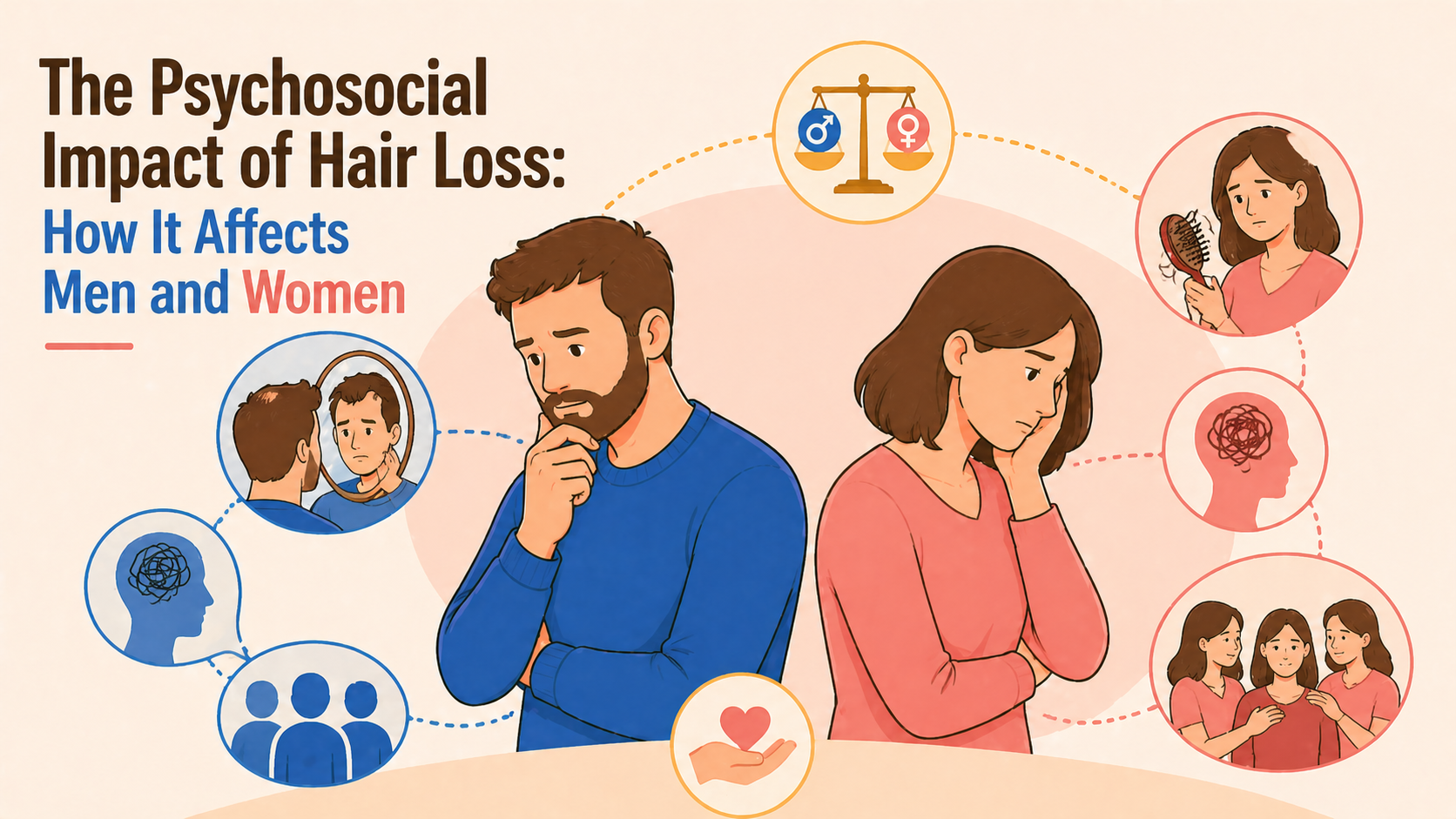
You do not have to be visibly bald for hair loss to affect your confidence. Sometimes the first substantial change is in your behaviour. You choose where to sit according to the lighting. You check the weather before deciding how to style your hair. A photograph becomes something to inspect rather than a memory of a good day.
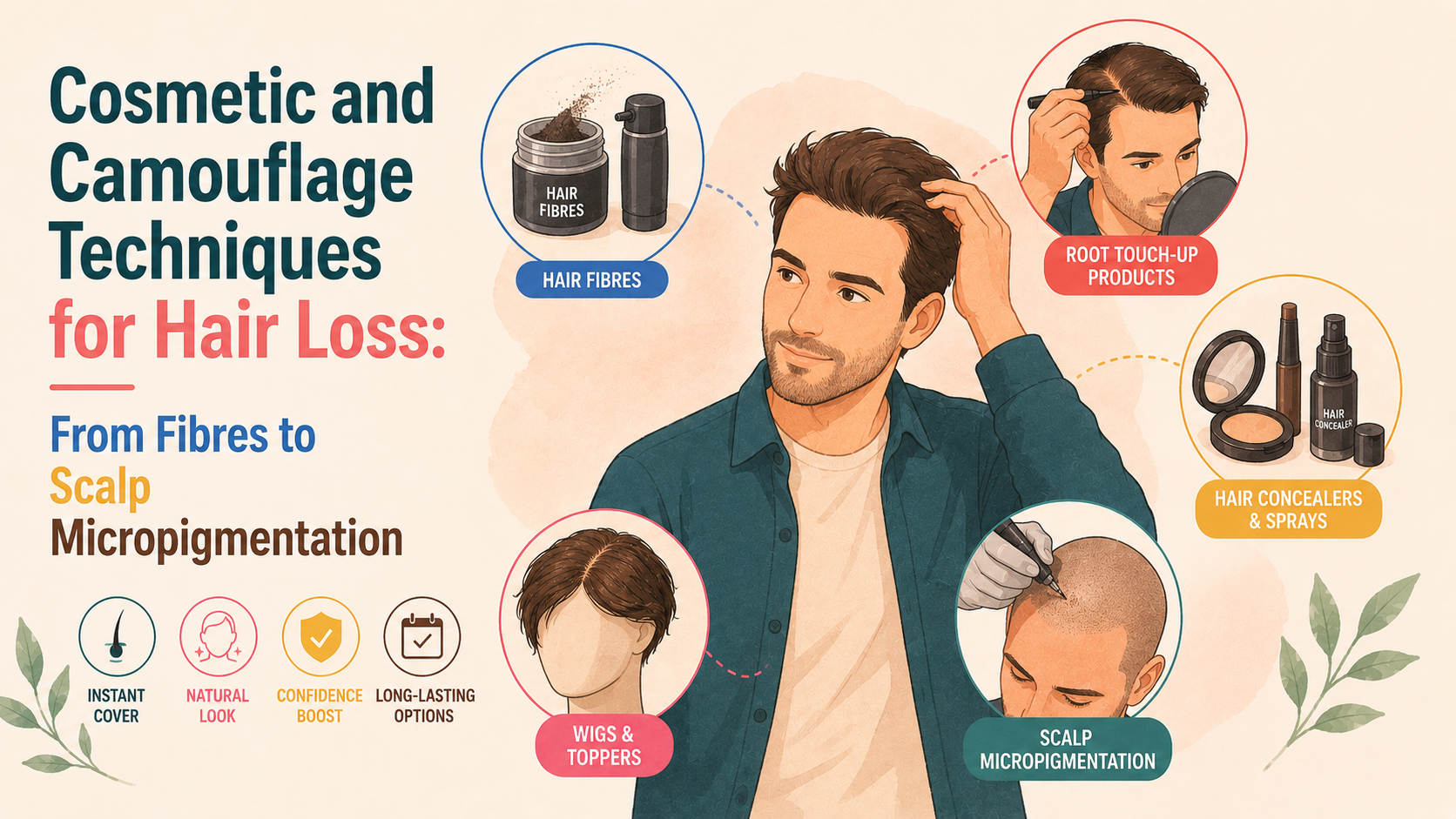
I used hair fibres while I was at medical school. They helped with the appearance of thinning, but I was still conscious of overhead hospital lights and rain. What looked like a small cosmetic concern from the outside could take up a remarkable amount of space in my head.
This is part of what I mean by an attention tax. You are present, but some of your attention is continually occupied by the possibility that your hair will be noticed.
If you have always thought of yourself as someone with good hair, losing it can unsettle more than your preferred hairstyle. It can make the face in the mirror feel less familiar, or bring thoughts about ageing much earlier than you expected.
That feeling does not establish that other people now see you in the same way. It does explain why a reassuring comment about looking fine may not immediately help. You are adjusting to a change in something that used to feel dependable.
I do not think the answer is to pretend appearance has no meaning. A more useful question is how much of your identity you have asked this one feature to carry.
There is a place for sensible monitoring. A clinician may use comparable photographs to assess change over time. That is different from repeatedly checking the same area throughout the day in the hope of finally feeling certain that it looks acceptable.
The relief from checking can be brief. Another angle, a brighter light or a different photograph creates a new question. You can end up spending more time looking for reassurance while feeling less reassured.
If that pattern sounds familiar, consider whether the next check will help you make a decision or simply repeat the last one. A therapist can help if the habit feels difficult to interrupt or is affecting your daily life.
Advice to balding men often turns into an instruction to become more muscular, more successful or more impressive in some other way. There is nothing wrong with pursuing those things because you want them. The difficulty is the suggestion that losing hair creates a debt you must repay.
You have not become less entitled to affection or respect. Building a life around interests, relationships and work that matter to you can make your sense of self less dependent on appearance. It does not have to become another performance designed to make up for a perceived defect.
The same applies to confidence. You are allowed to have an uncertain day without interpreting it as evidence that you are failing to cope.
Treatment, a wig, a hair system, scalp micropigmentation or shaving may each be right for different people. I found that changing the way I managed my appearance reduced some of the daily burden. Someone else may get that freedom from continuing a treatment routine they are happy with.
The choice itself tells you very little about how accepting a person is. Look instead at its effect. Does it help you take part in life, or does it keep adding situations you must avoid?
You can care about your hair and still decide that an increasingly demanding routine has stopped serving you. Equally, you can continue treating it without having to defend that choice as a medical necessity.
Waiting until you feel entirely comfortable can keep postponing the things you want to do. Consider a manageable step towards something you have been avoiding, with support if you need it. The point is not to throw yourself into the hardest situation or remove camouflage before you are ready.
It might be staying in a photograph without examining it immediately, seeing someone you have been putting off meeting, or spending less of an evening managing how your hair appears. Those are examples, not a treatment programme.
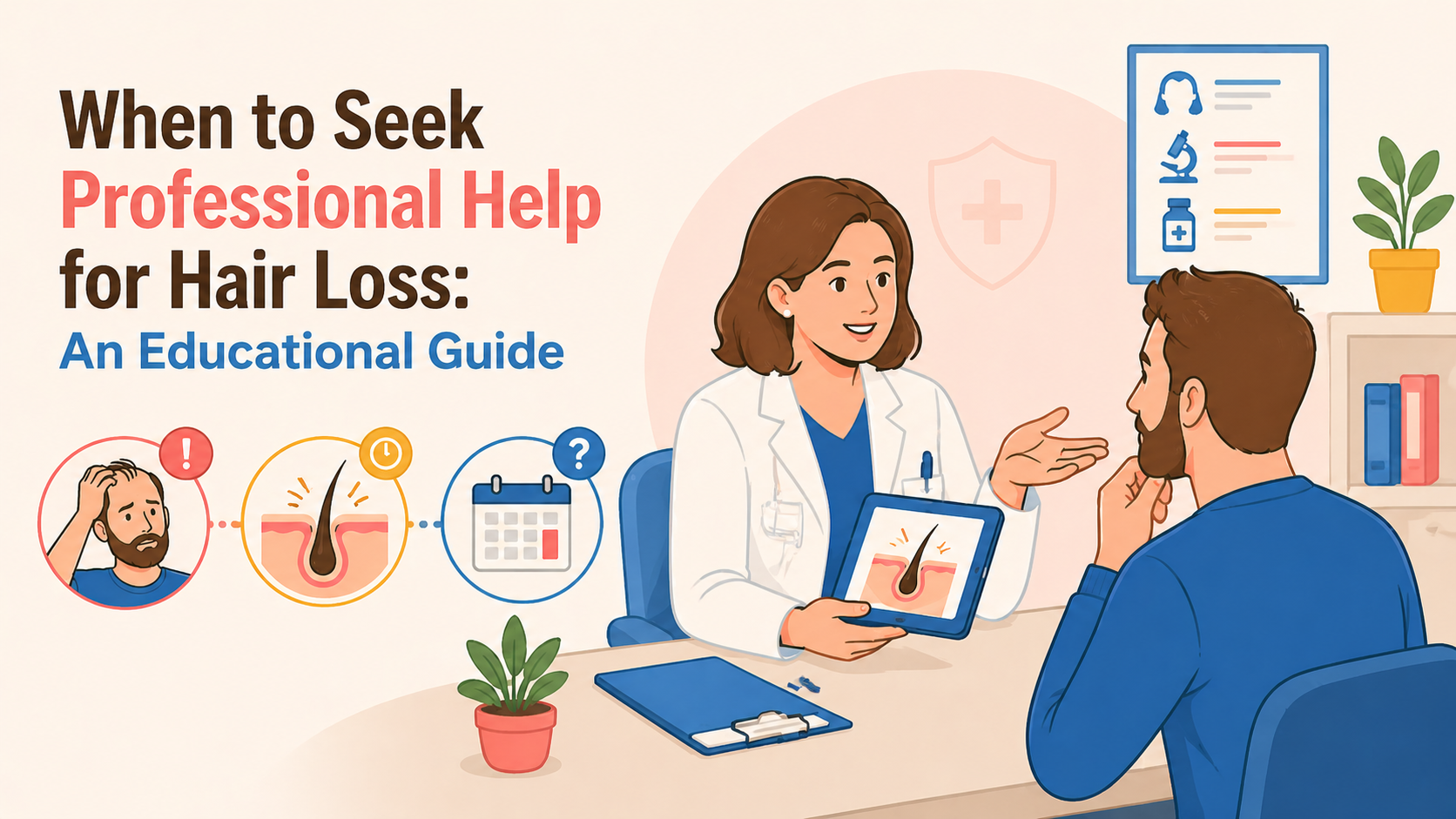
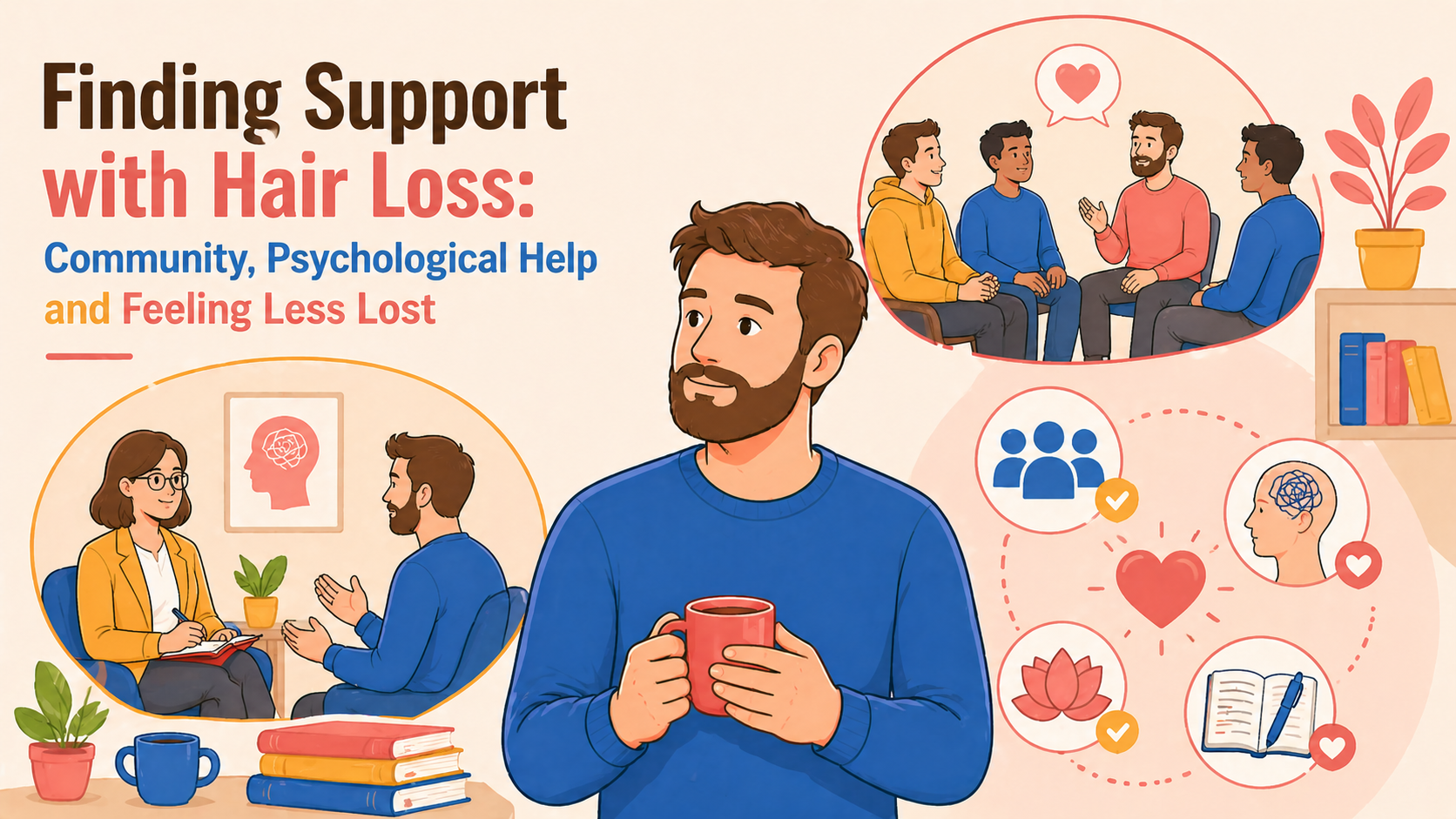
If worry has become overwhelming, professional support can help you decide where to start. You do not have to prove that your hair loss is objectively severe first.
The phrase I keep coming back to is this: treat your hair in the background and build your life in the foreground. It leaves room for evidence-based care without making every relationship, opportunity or enjoyable experience wait for the outcome.
Hair may remain important to you. The aim is to give it a proportionate place, so that there is more of your attention available for the life happening around it.