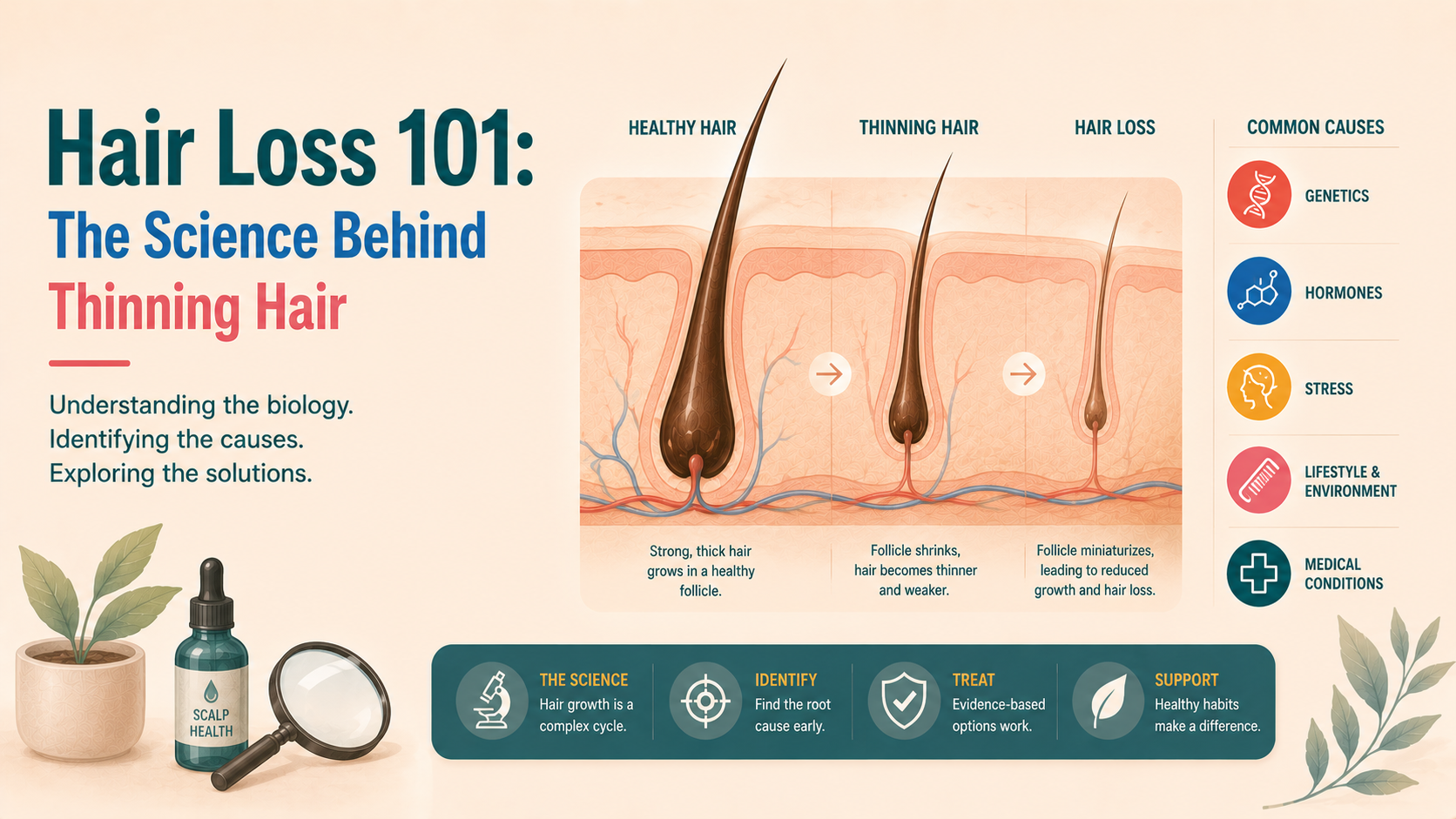
Why hair shedding often increases a few months after childbirth, how recovery usually unfolds, and when it is worth checking for another cause.

Finding a handful of hair in the shower can be frightening, especially when you are already adjusting to a new baby and a changing body. Being told that it is “just postpartum hair loss” may be reassuring medically without making the experience any easier.
The usual explanation is temporary shedding rather than permanent follicle loss. That distinction matters. So does recognising that you can be grateful for your baby and upset about your hair at the same time.
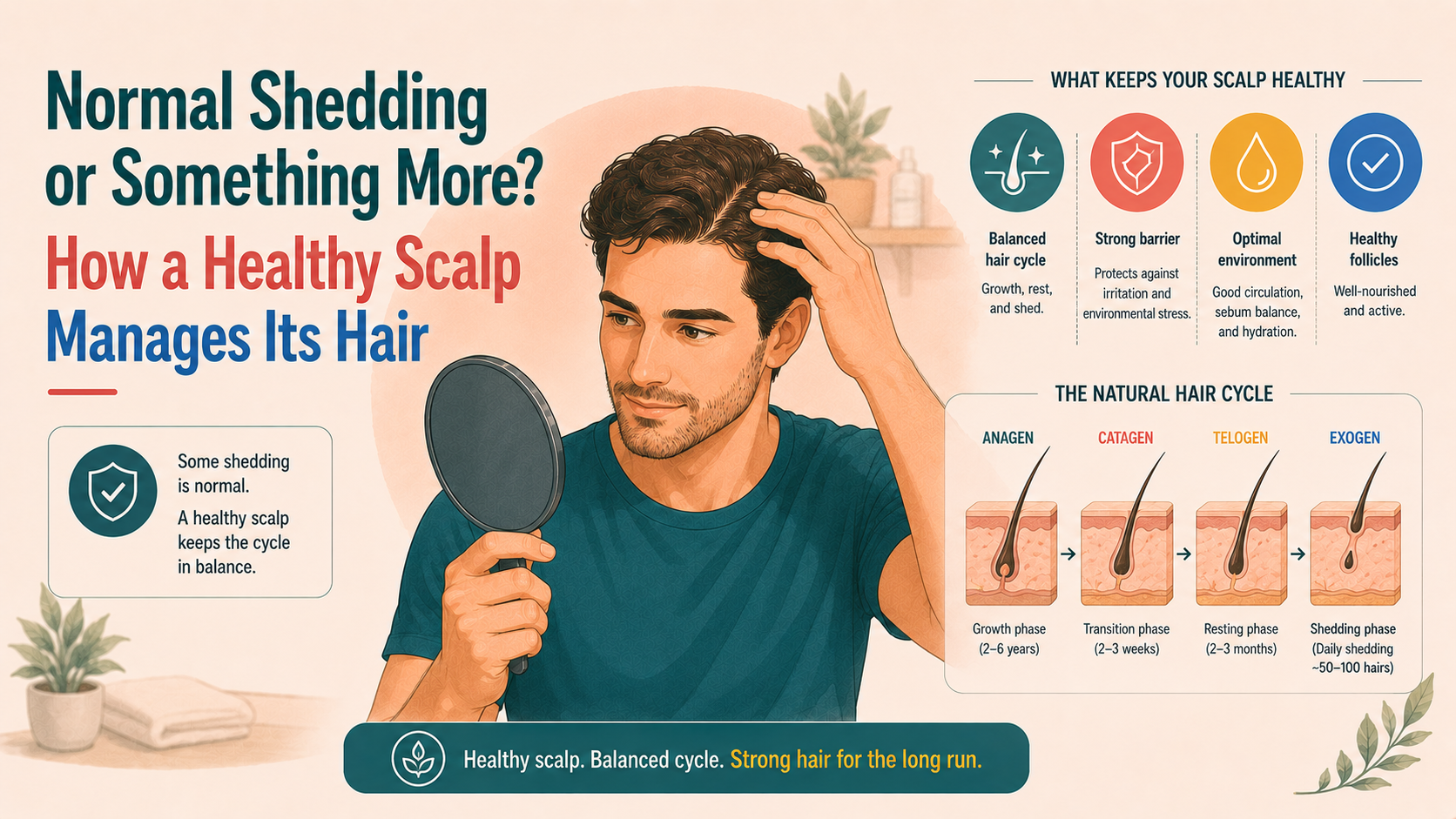
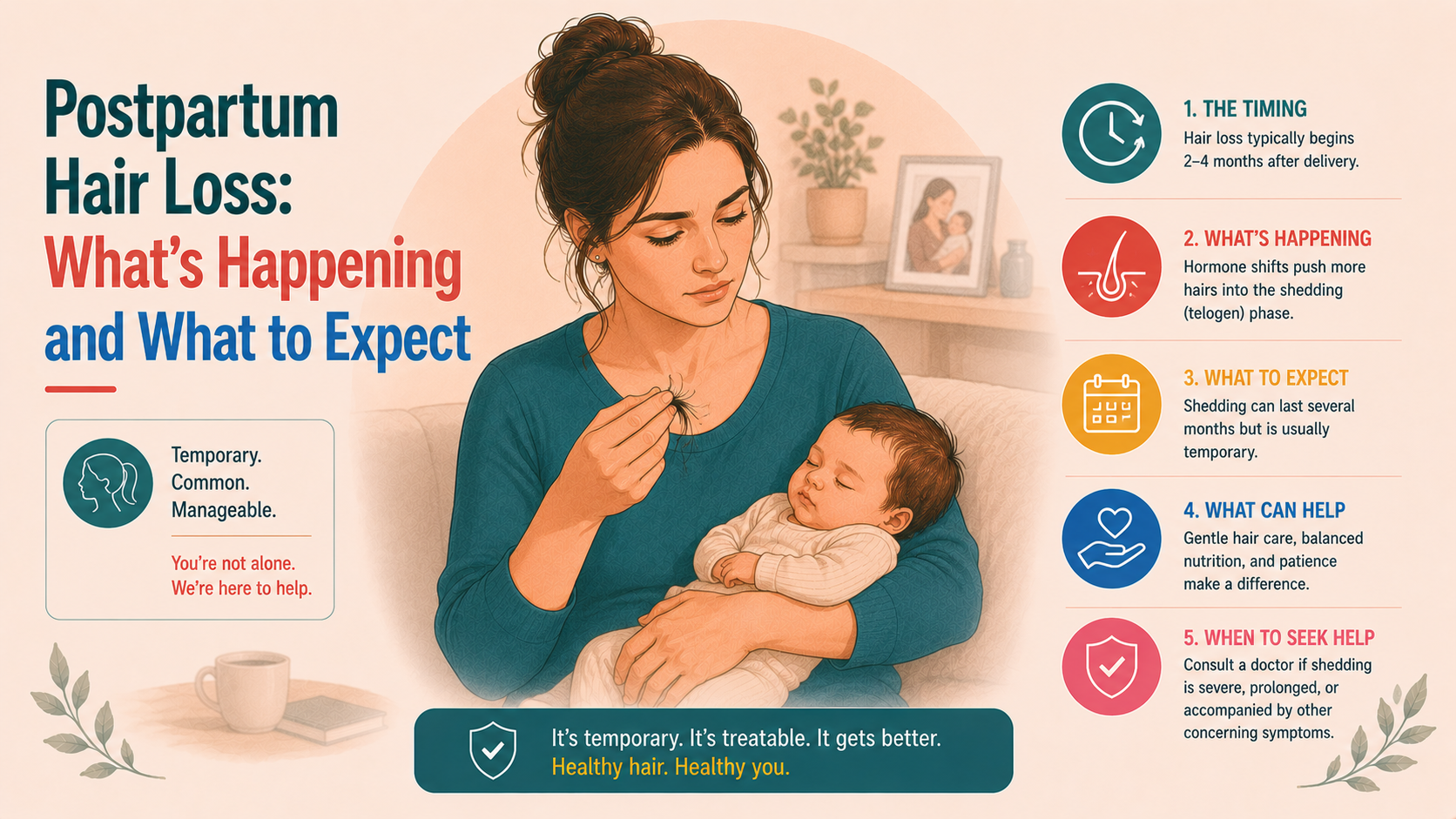
During pregnancy, hormonal changes keep more hairs in the growing phase and reduce normal shedding. After delivery, that effect changes. More follicles enter a resting phase around the same time, and those hairs are released a few months later.
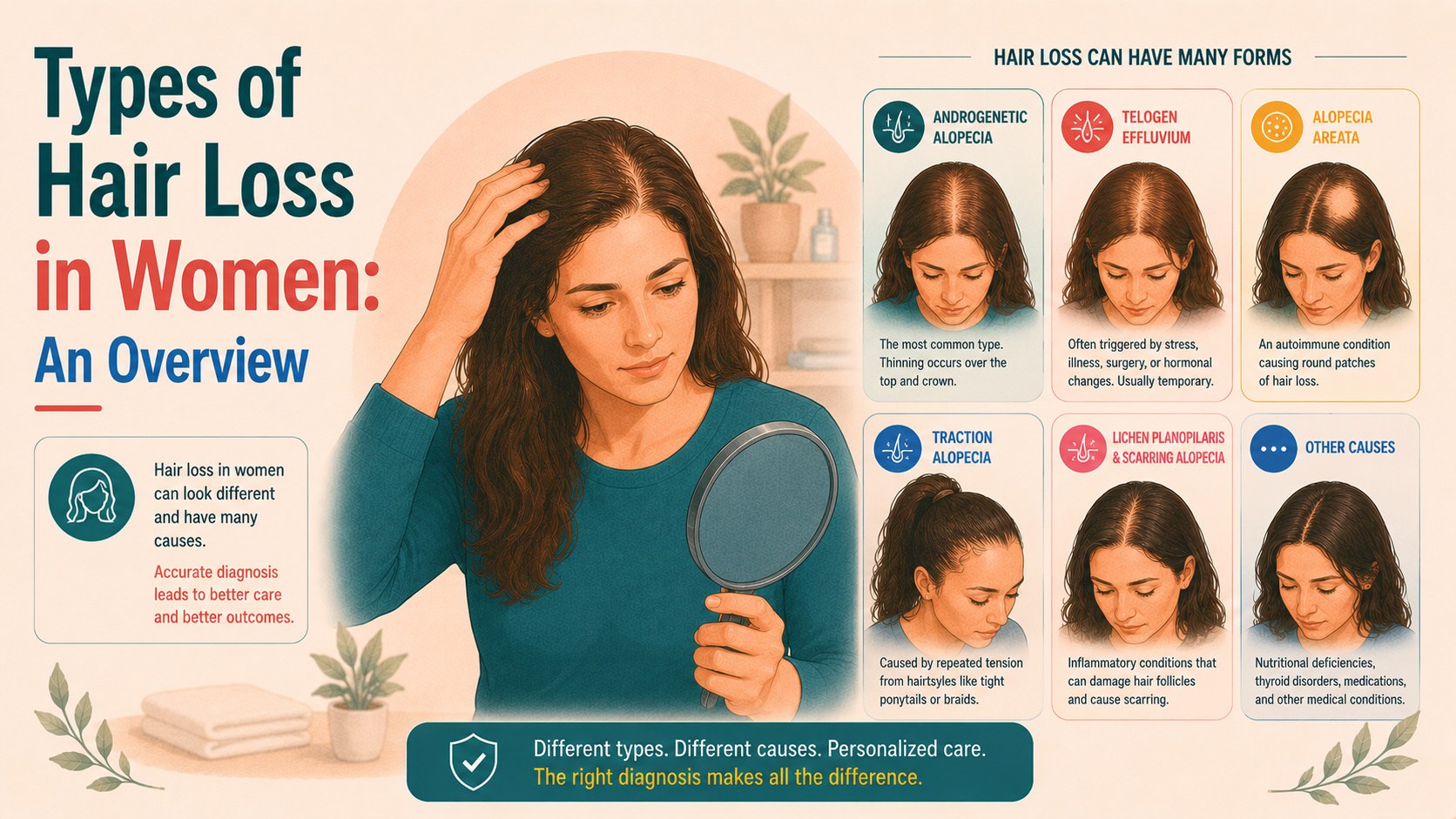
This is called telogen effluvium. The delay explains why your hair may look fine immediately after the birth, then start shedding when you thought the physical recovery was already under way. It does not mean that something you did that week suddenly damaged the follicles.
Shedding commonly becomes noticeable around two to four months after childbirth. The amount and timing vary, and not everyone experiences a dramatic change.
Postpartum shedding usually affects the scalp broadly, although the temples or front can look especially thin. New short hairs may appear while older hairs are still shedding, so recovery is not always a neat sequence in which the loss stops before anything grows back.
The shedding often settles over several months. Restoring visible volume takes longer because new hair has to grow in length as well as number. Most women regain their usual fullness by around their baby’s first birthday, but that is a guide rather than a deadline.
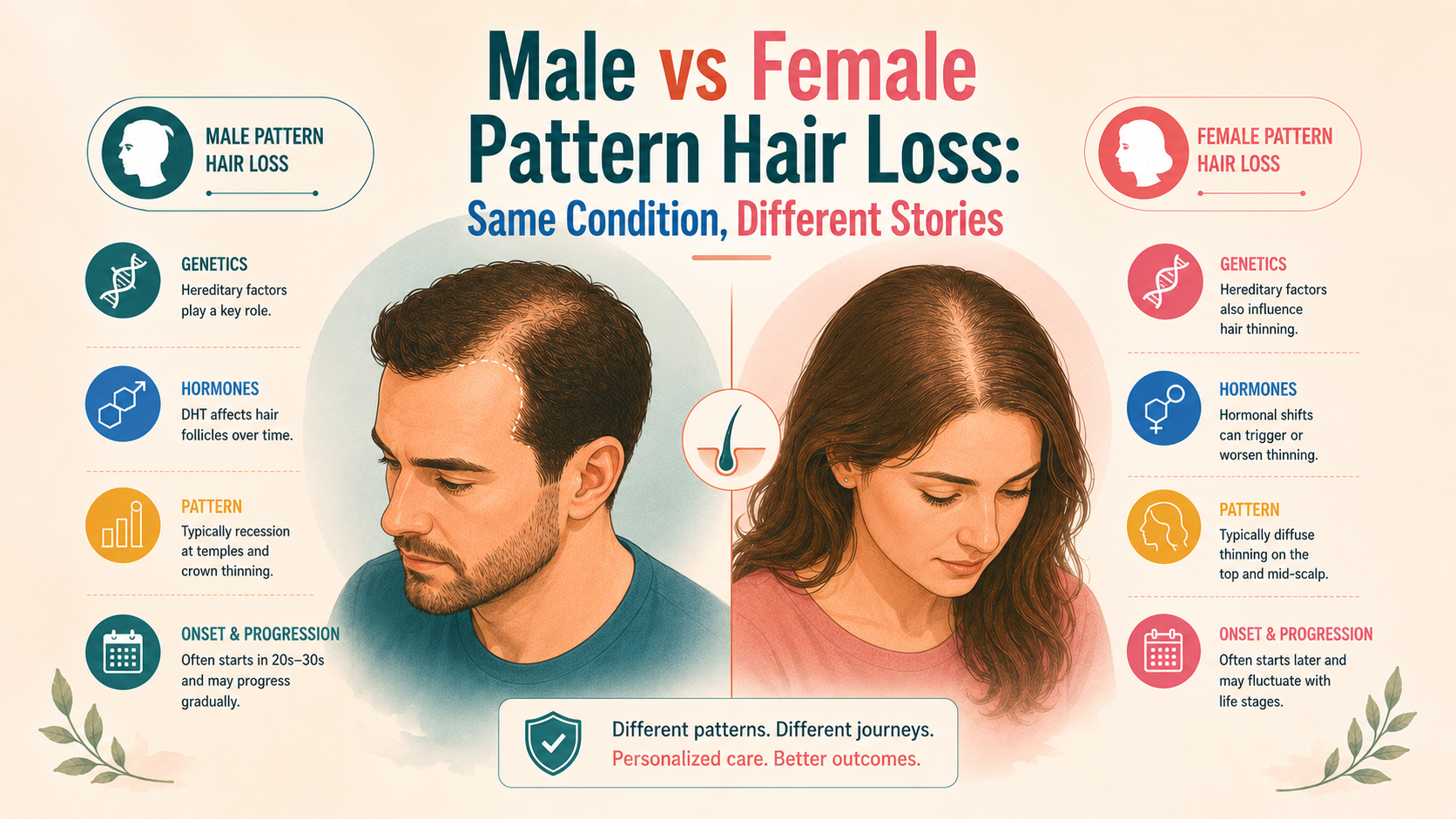
Postpartum shedding can also make pre-existing female pattern hair loss more visible. If the central parting keeps widening or density does not recover, it is worth checking whether more than one process is involved.
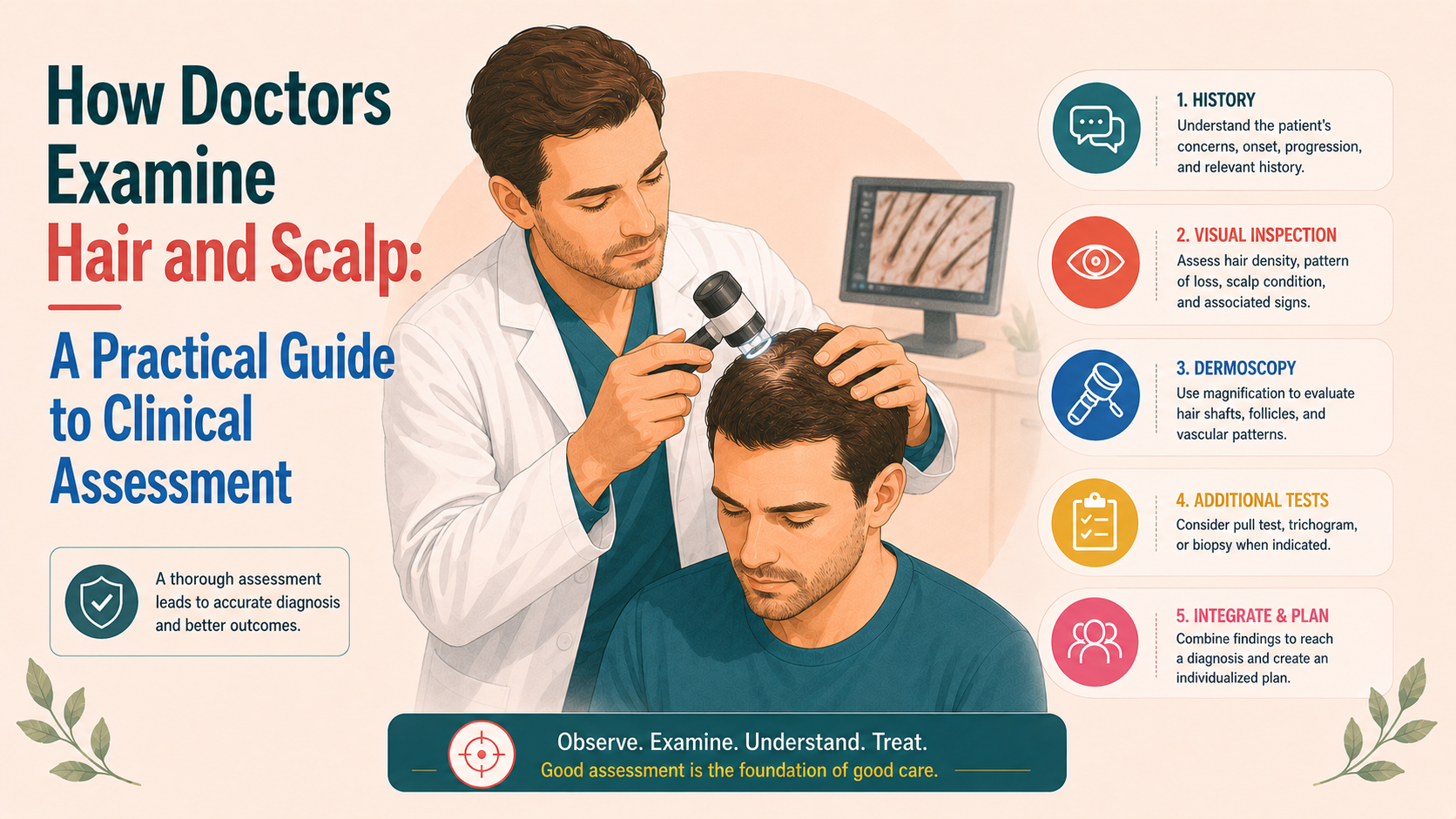
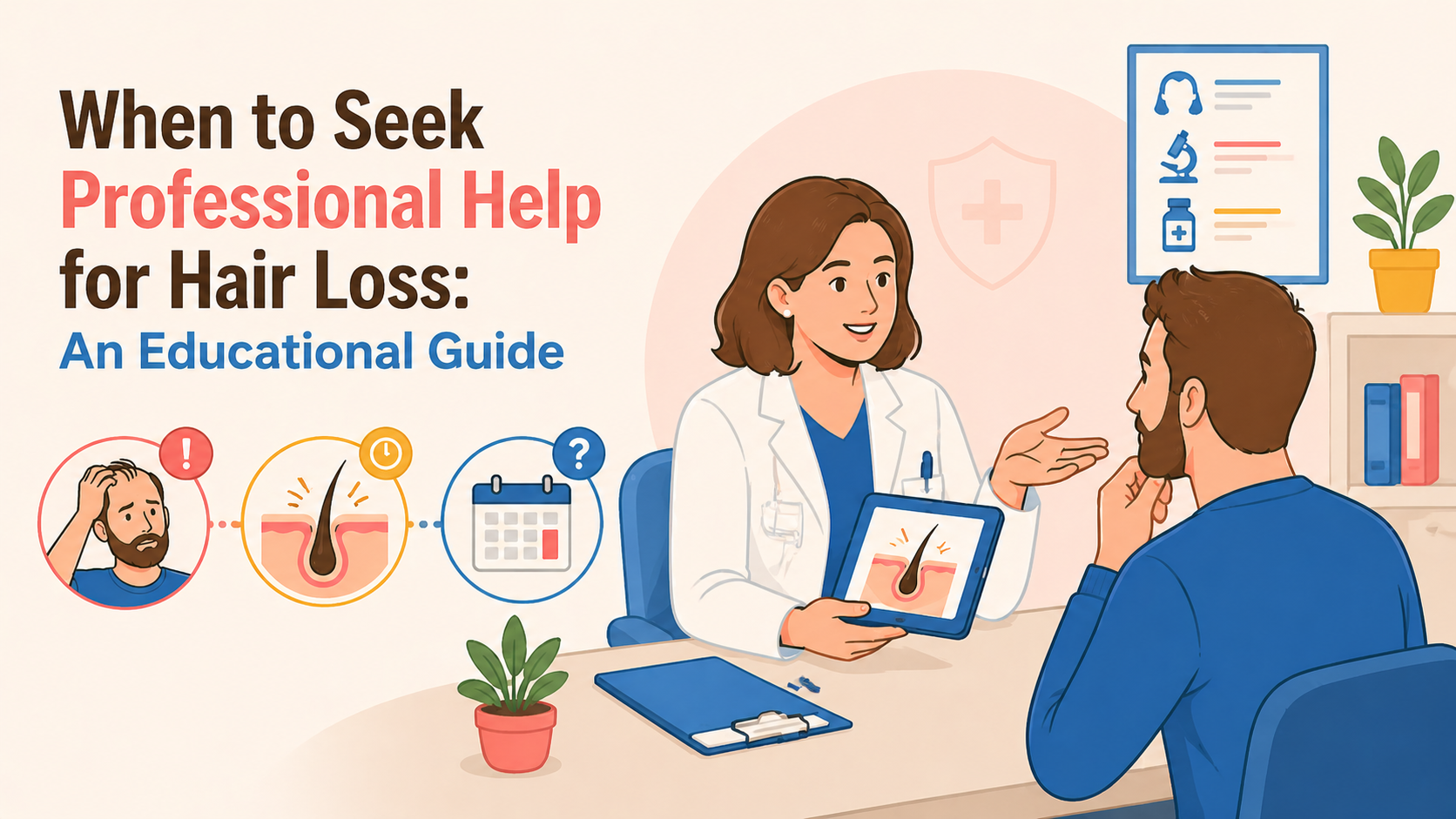
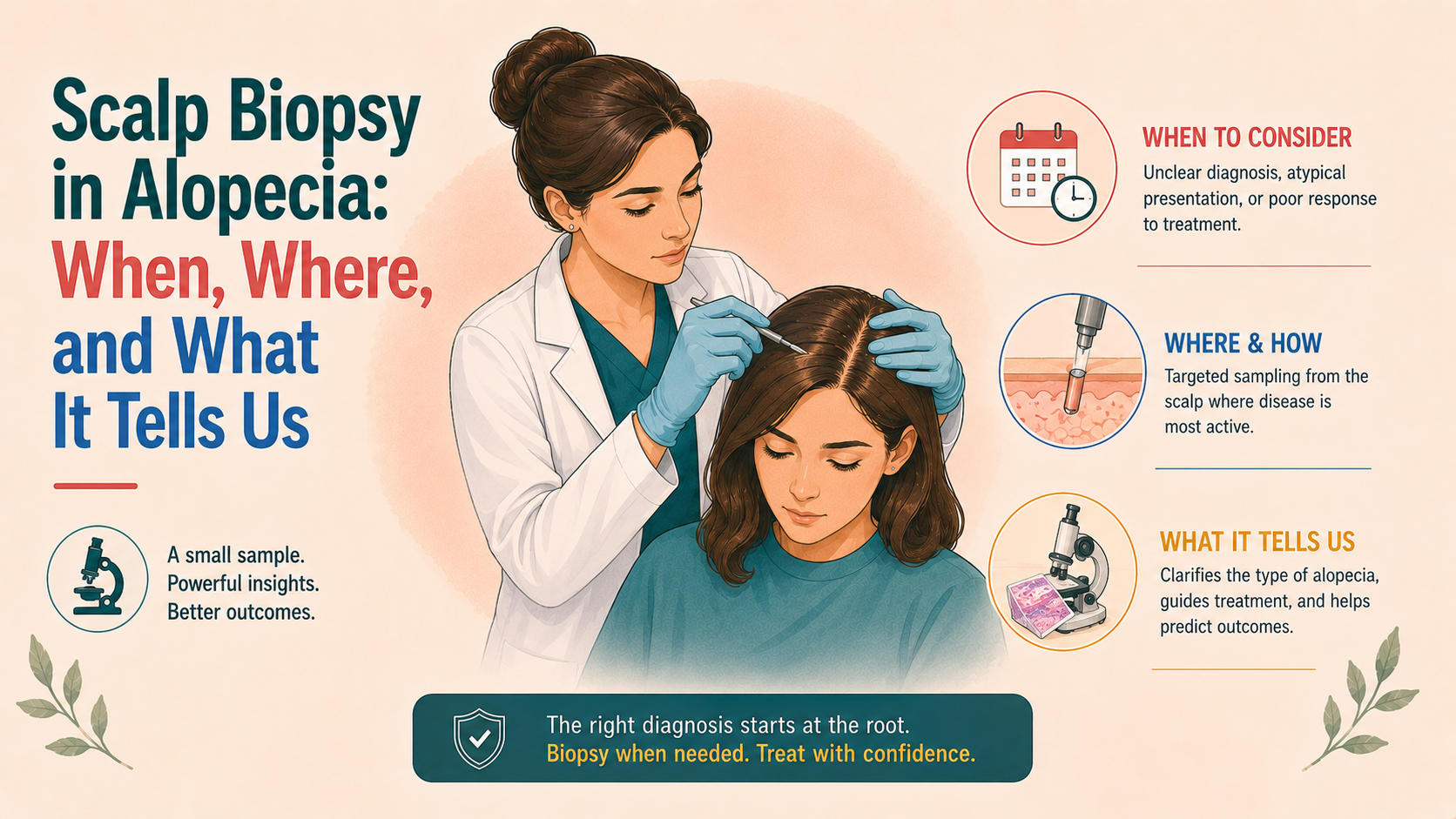
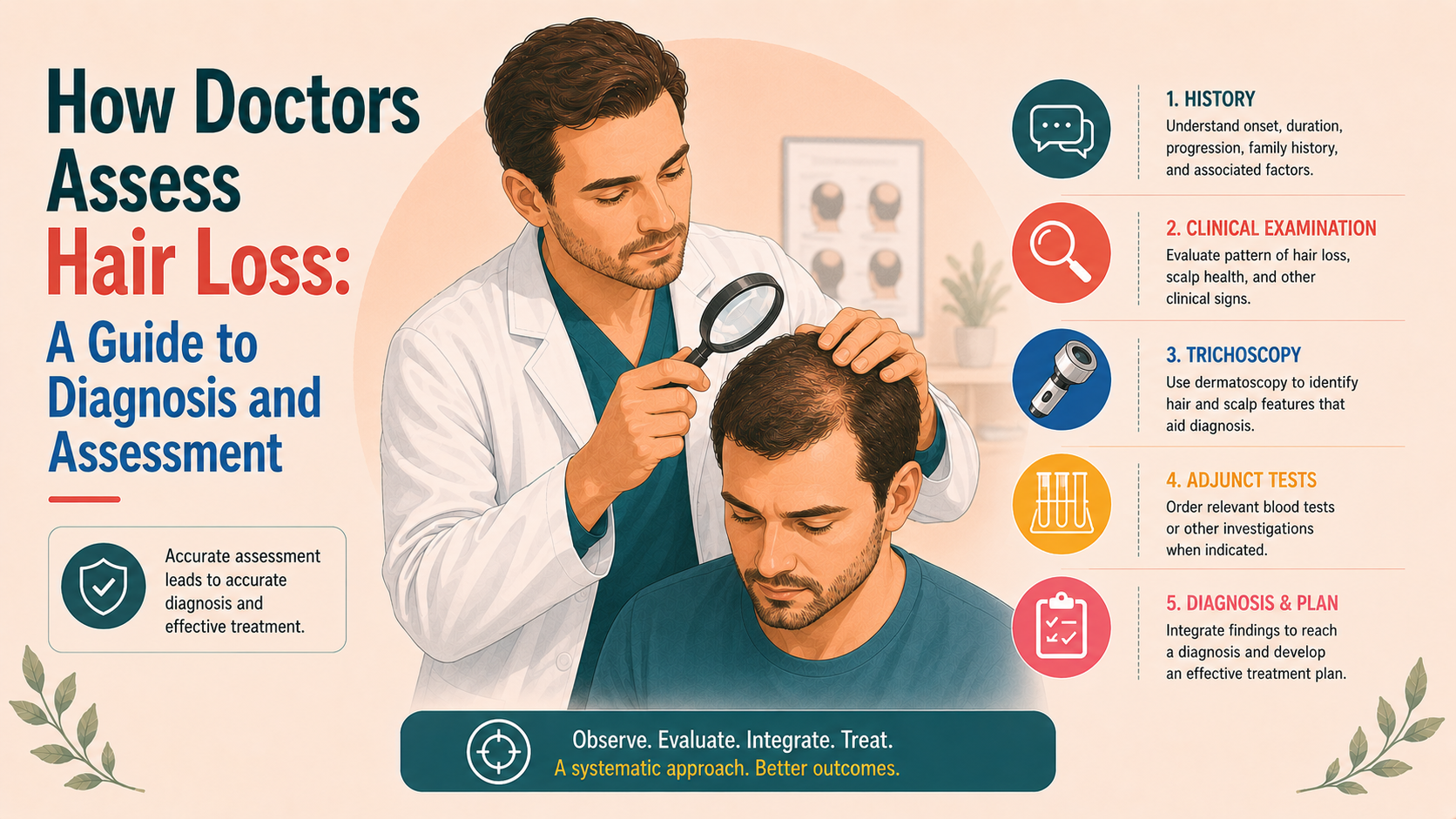
Ask for an assessment if there are distinct bald patches, eyebrow loss, persistent scalp pain, burning, marked scale or redness. These are not typical features of uncomplicated postpartum shedding.
Ongoing heavy shedding without improvement, or hair that remains noticeably thinner after a year, also warrants review. You can seek help sooner if the change is severe or causing distress.
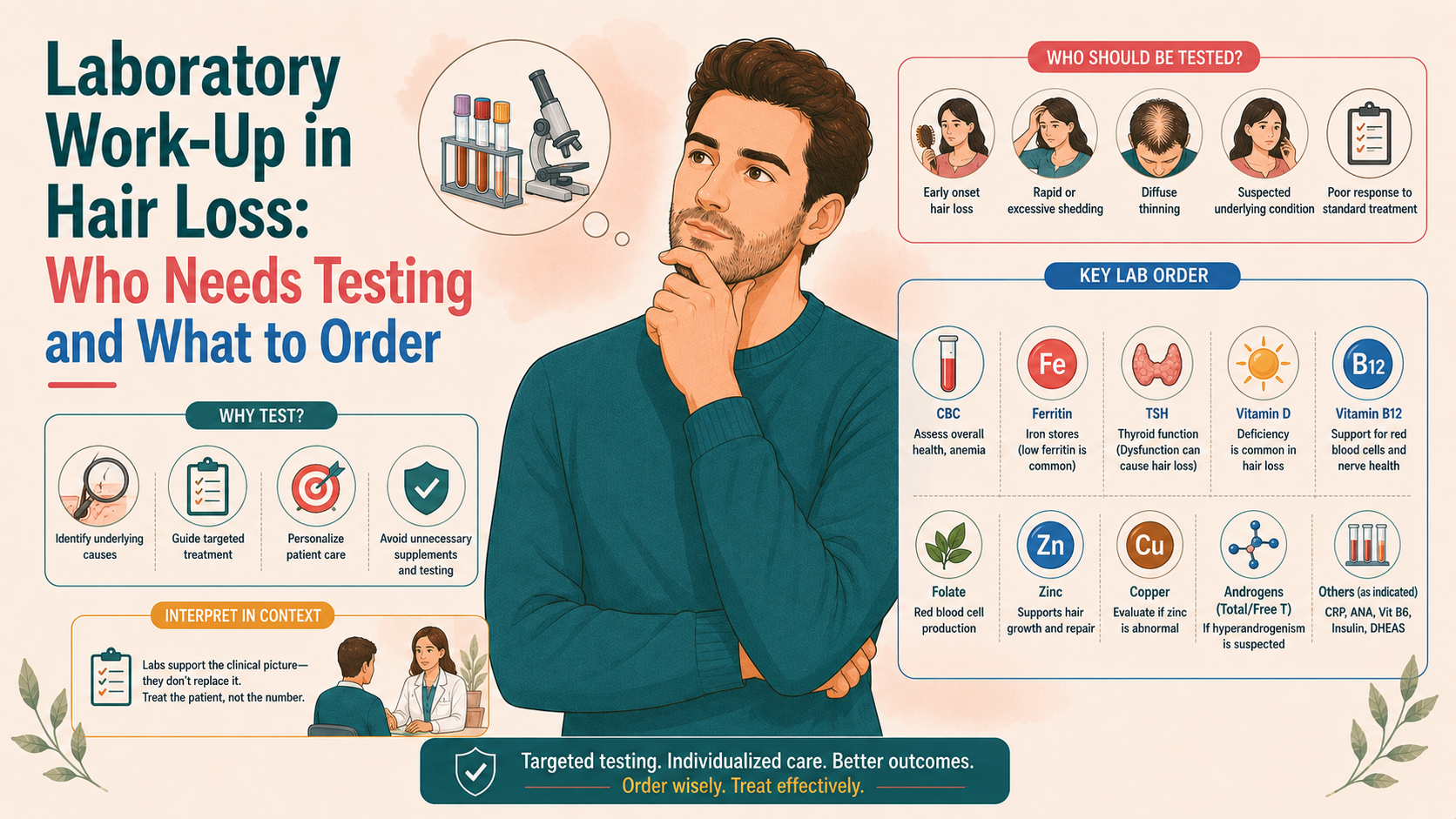
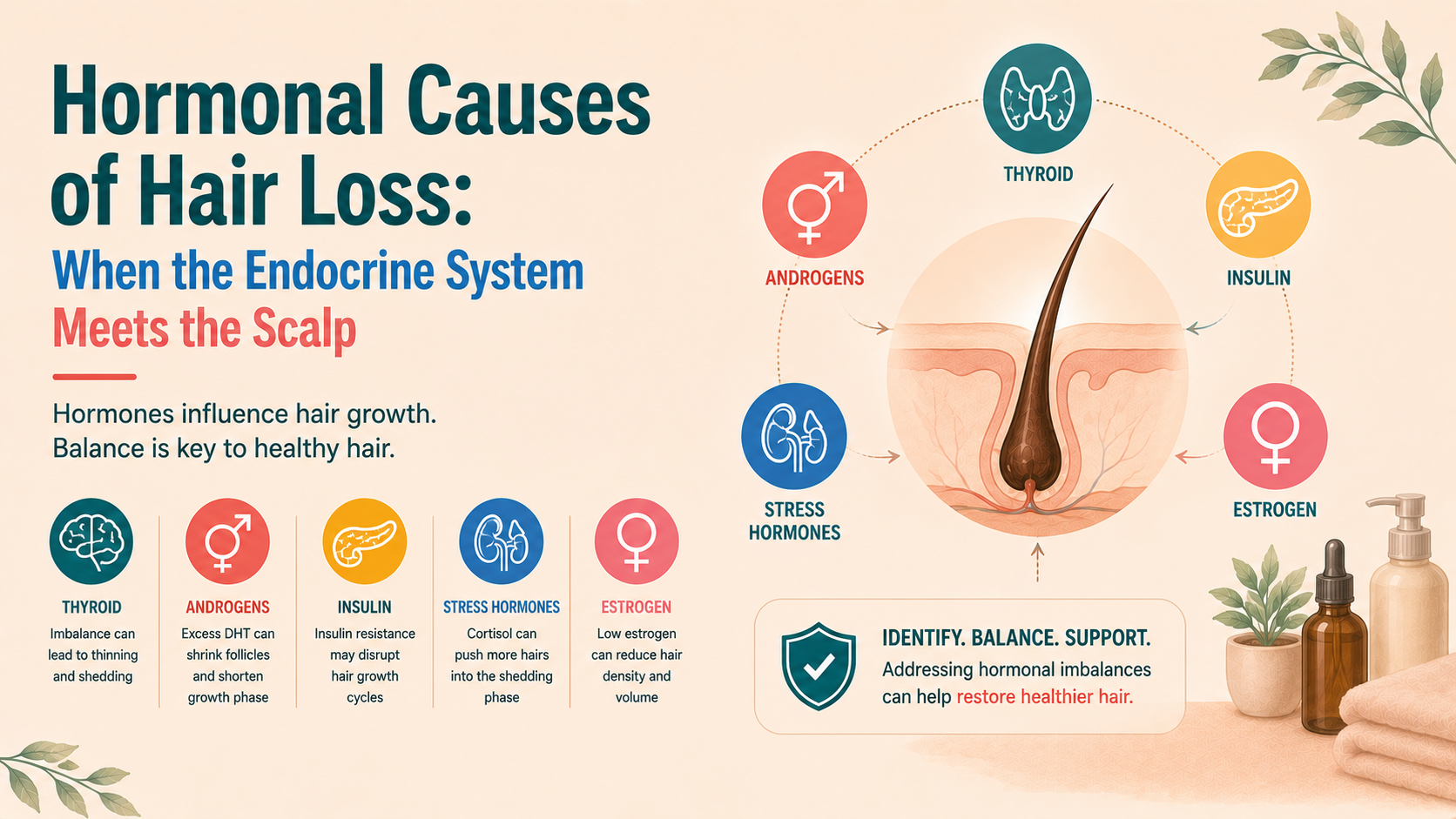
Tell the clinician about substantial blood loss, dietary restriction, unusual fatigue, palpitations, temperature intolerance or unexplained weight change. Iron deficiency and postpartum thyroiditis can occur alongside the normal postpartum hair-cycle changes. Thyroid symptoms can easily be mistaken for the demands of new parenthood. Blood tests should be guided by the history and examination rather than ordered as an automatic hair-loss panel.
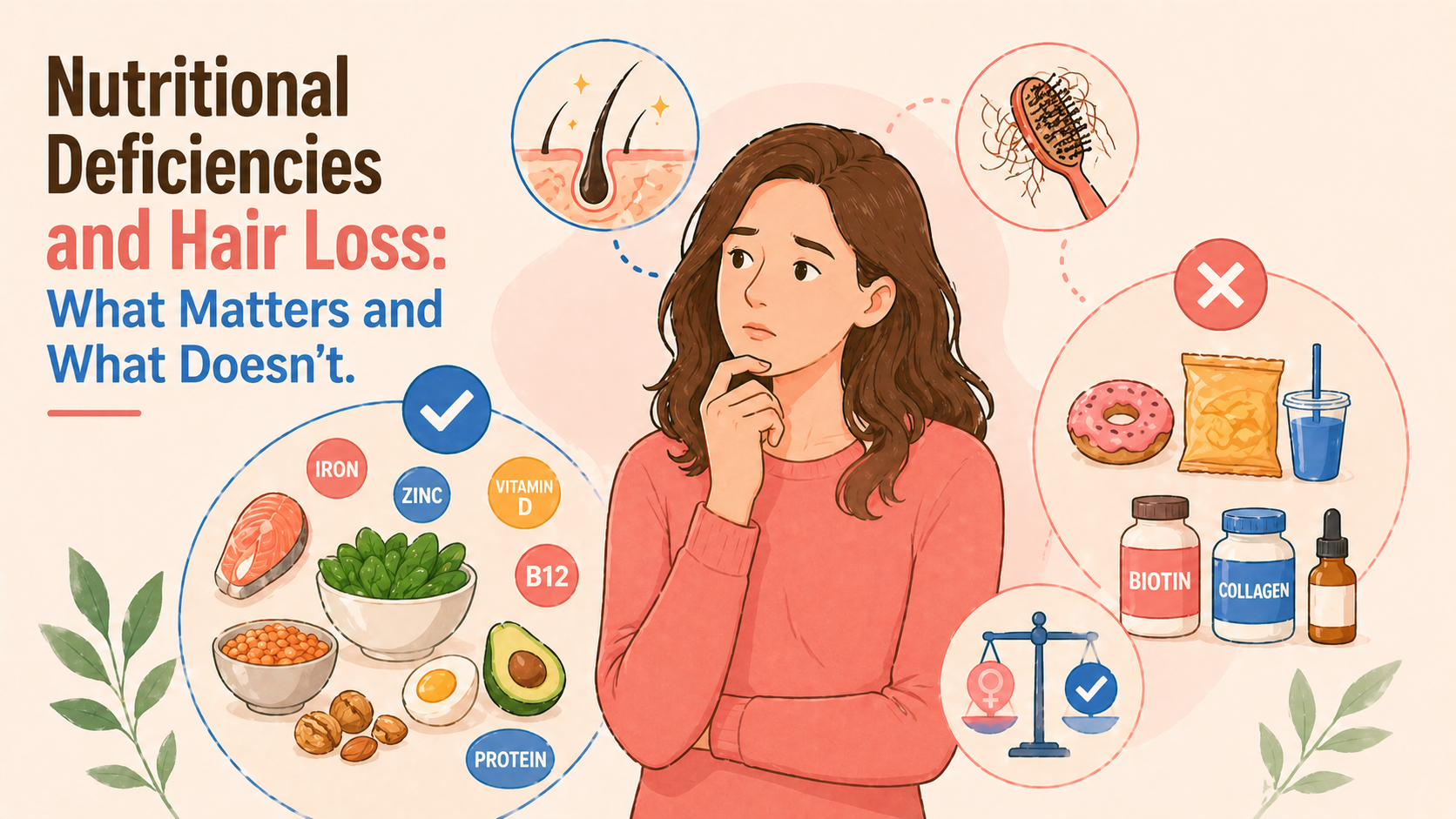
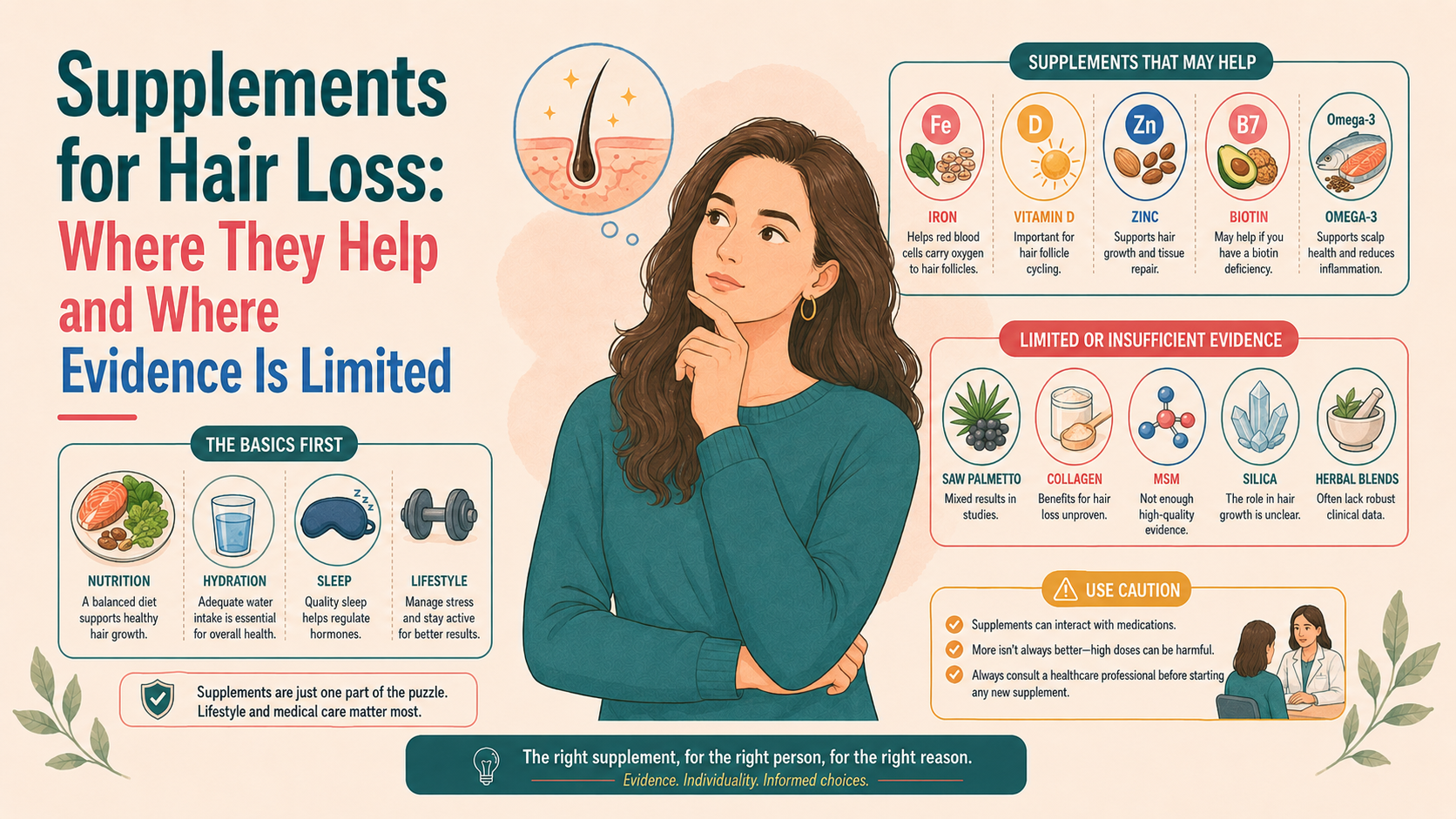
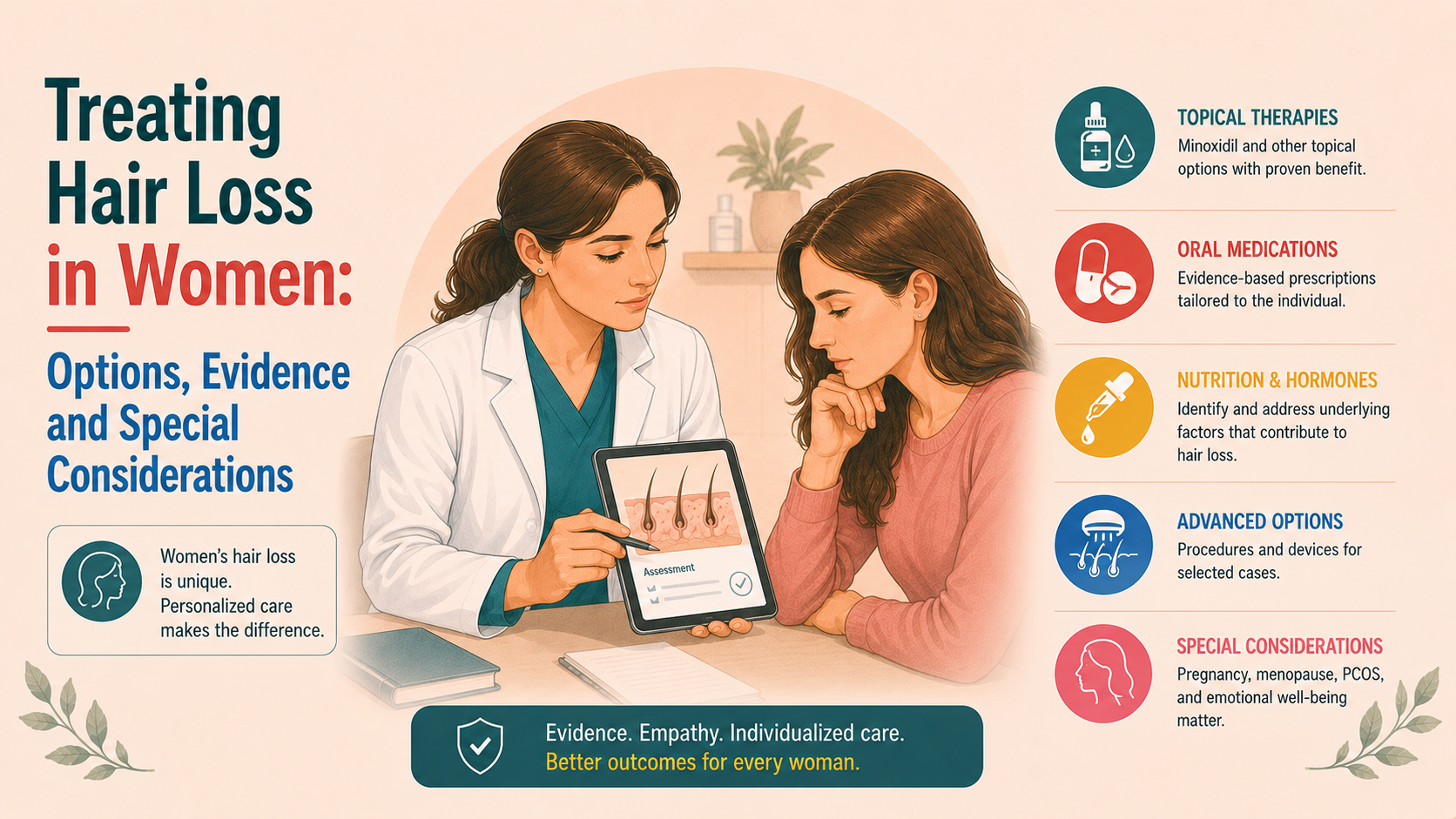
Uncomplicated postpartum shedding usually does not need a hair-growth medicine. Regular meals and adequate nutrition support recovery; a demonstrated deficiency should be treated. Expensive hair supplements do not reliably shorten the normal shedding phase.
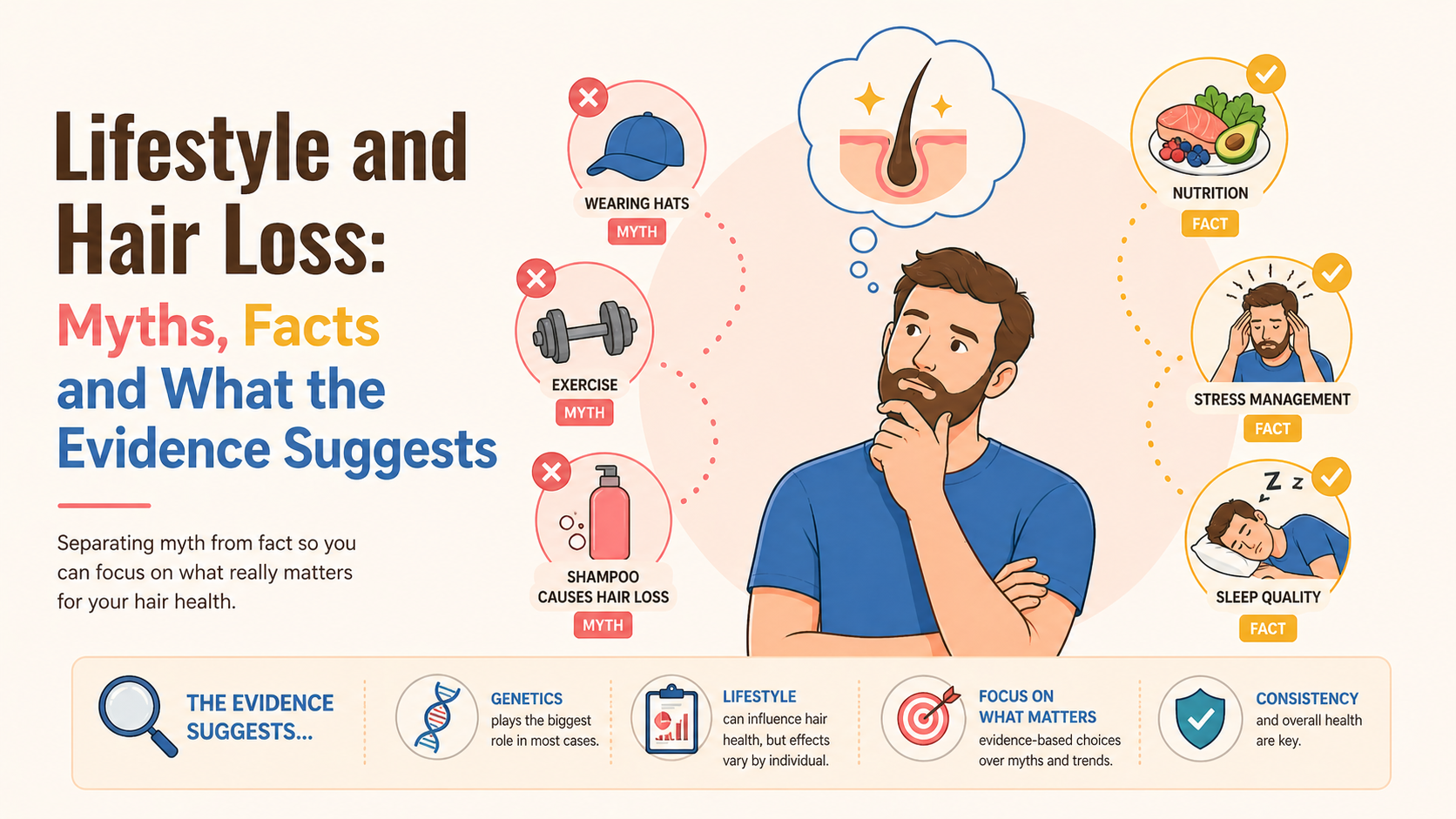
Gentle washing is fine. Avoiding shampoo does not stop hairs that are ready to shed from leaving the scalp, and can make the next wash look more alarming because more have accumulated. Reduce tight styles and harsh processing if they are adding traction or breakage.
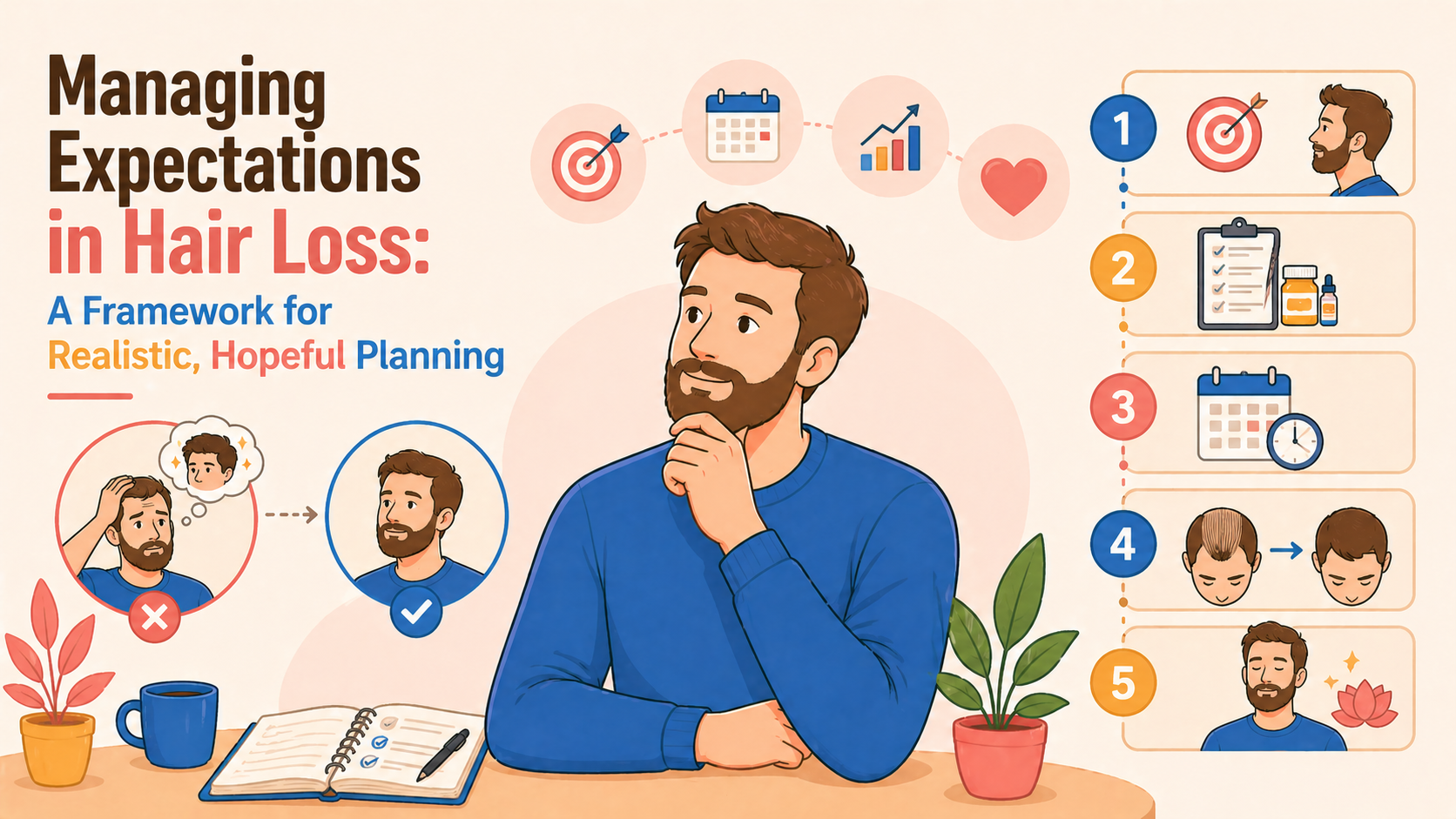
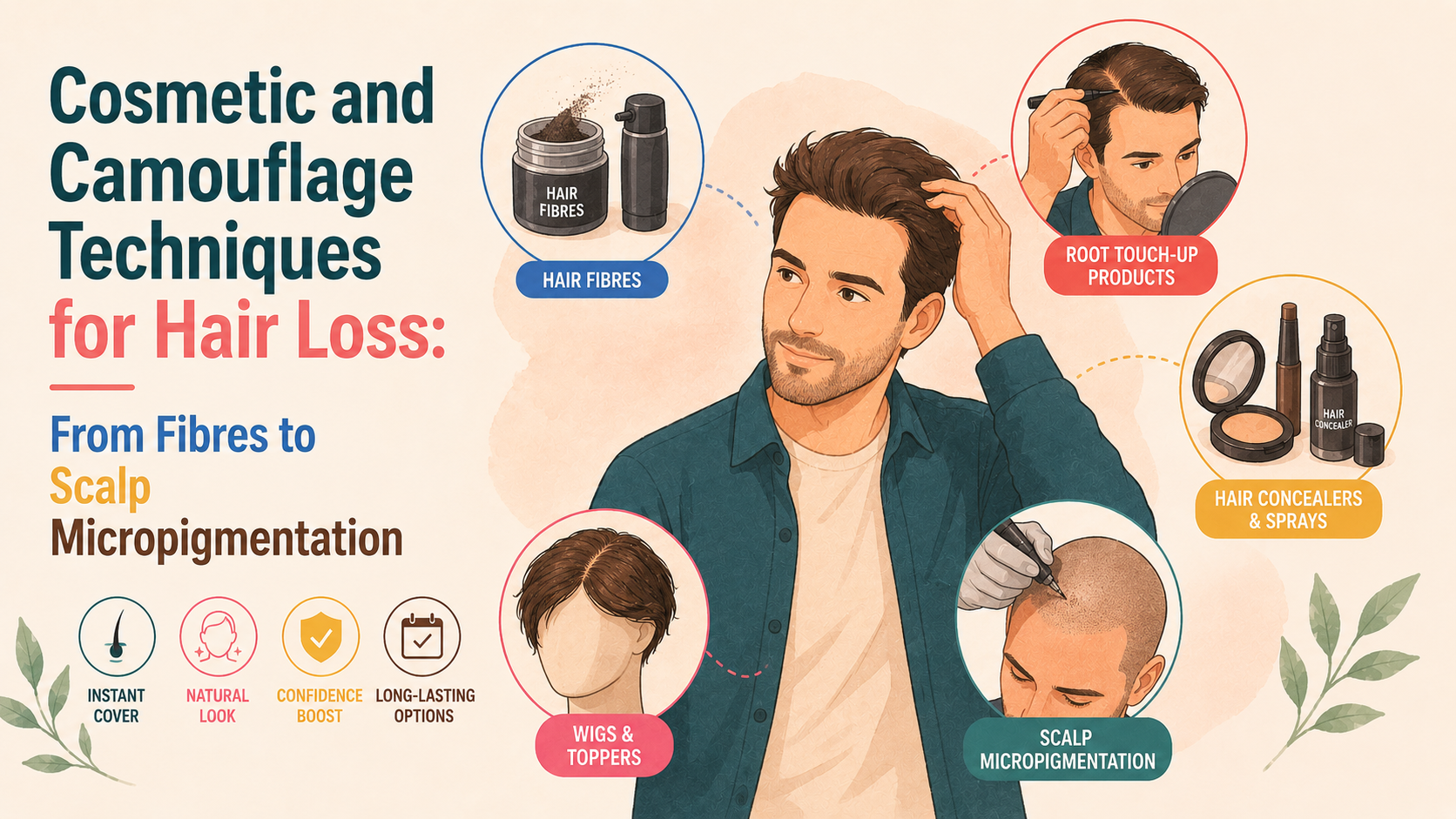
A different cut, a volumising product or camouflage may help you feel more comfortable while density returns. You do not need to take daily photographs or count every shed hair.
Sleep and support matter for your wellbeing, but “get more sleep” is not a realistic hair treatment plan for many new parents. This is not evidence that you have failed to manage stress well enough.
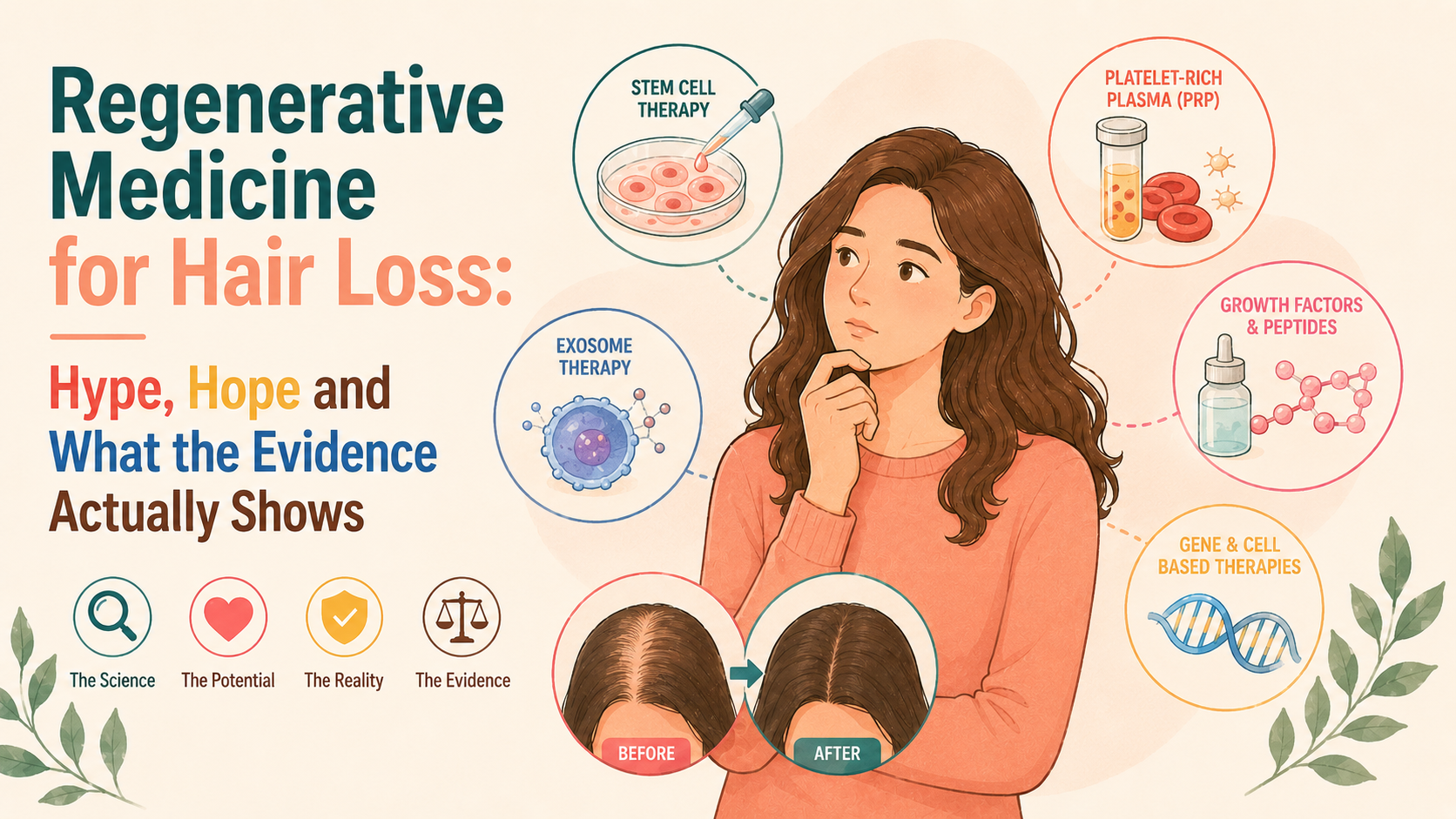
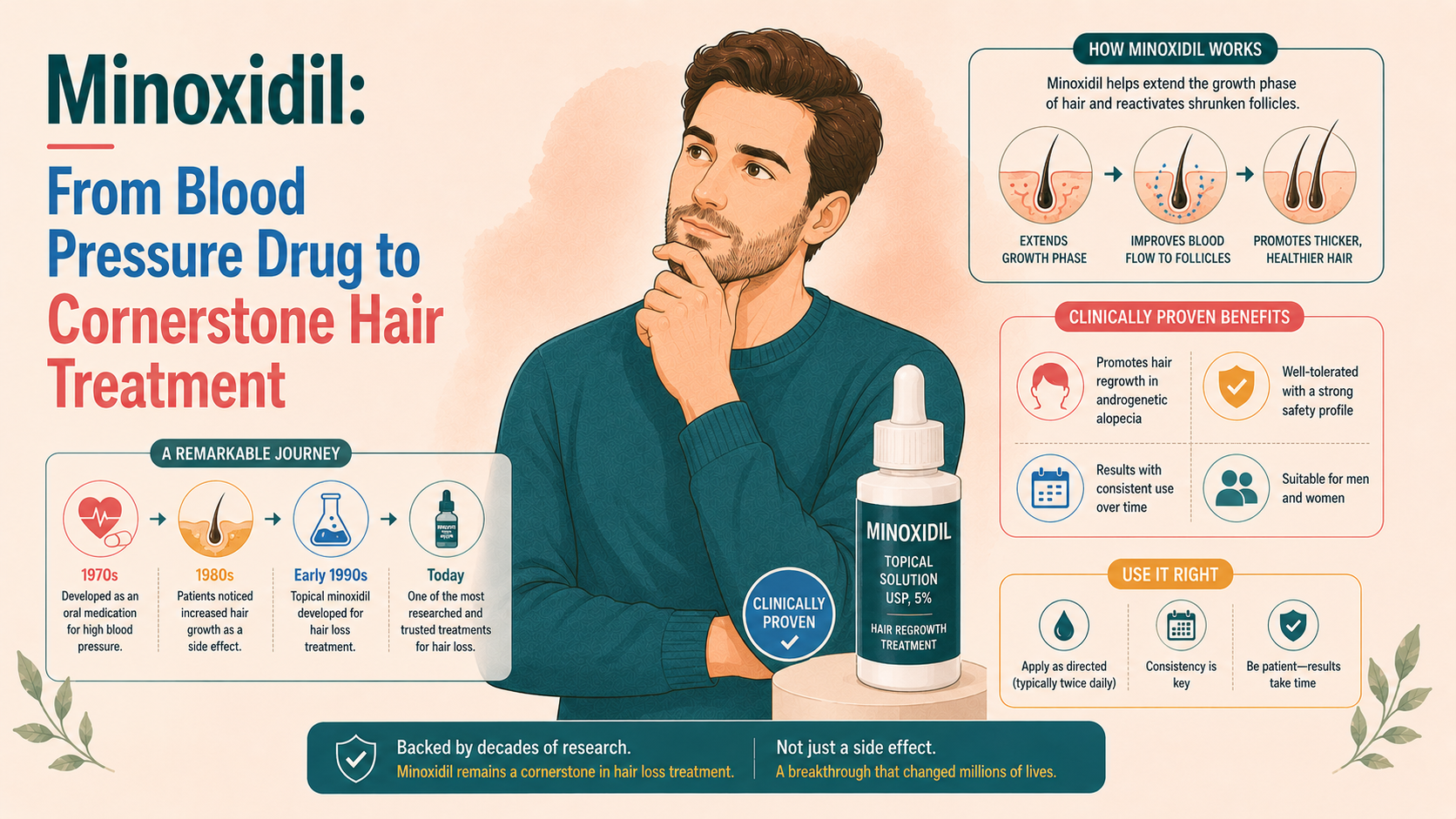
Do not assume a treatment is suitable because it is applied to the scalp or sold without a prescription. Minoxidil is not a routine treatment for simple postpartum shedding, and pregnancy or breastfeeding changes the safety discussion. If another hair condition needs treatment, discuss appropriate options with your clinician.
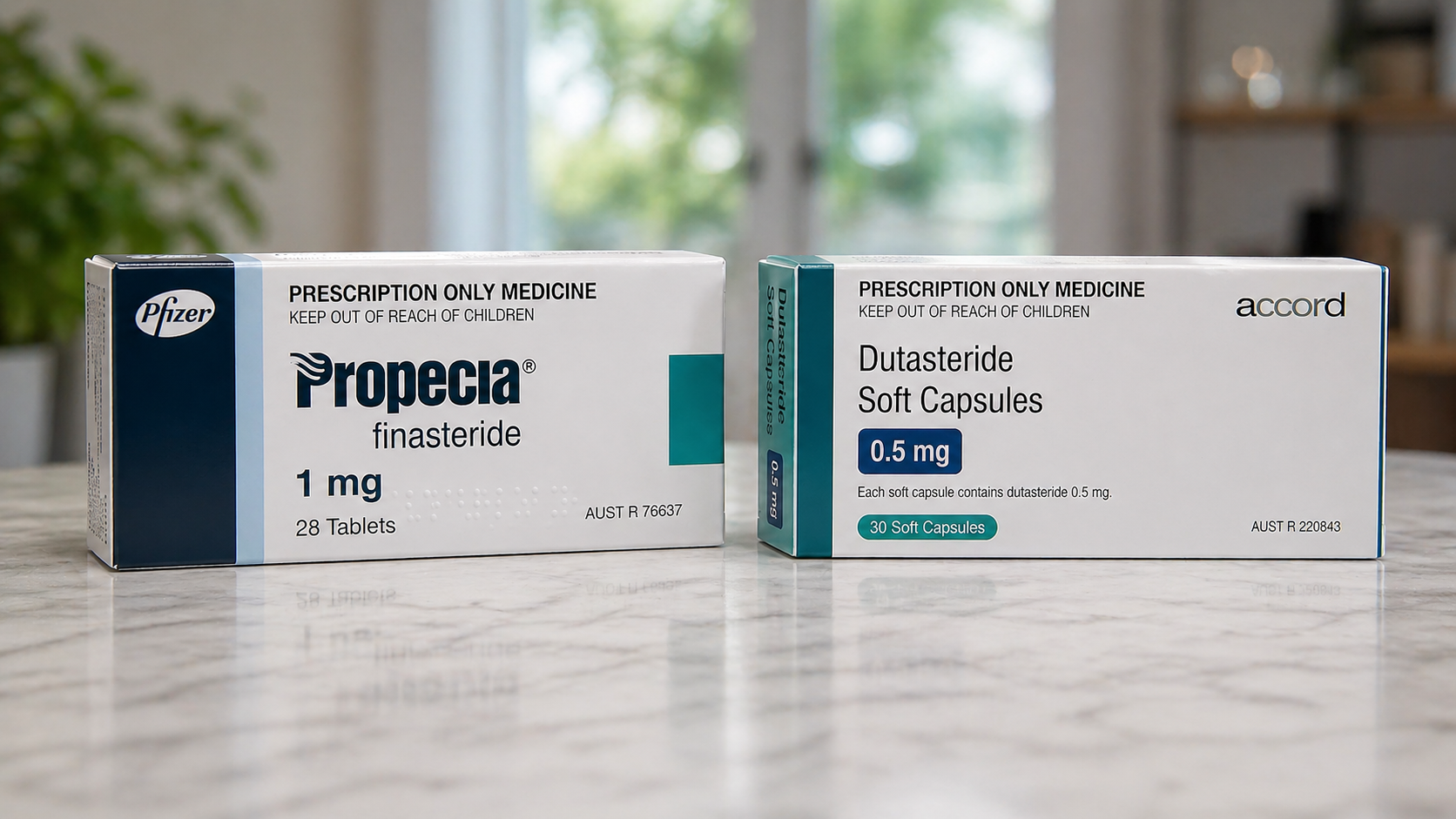
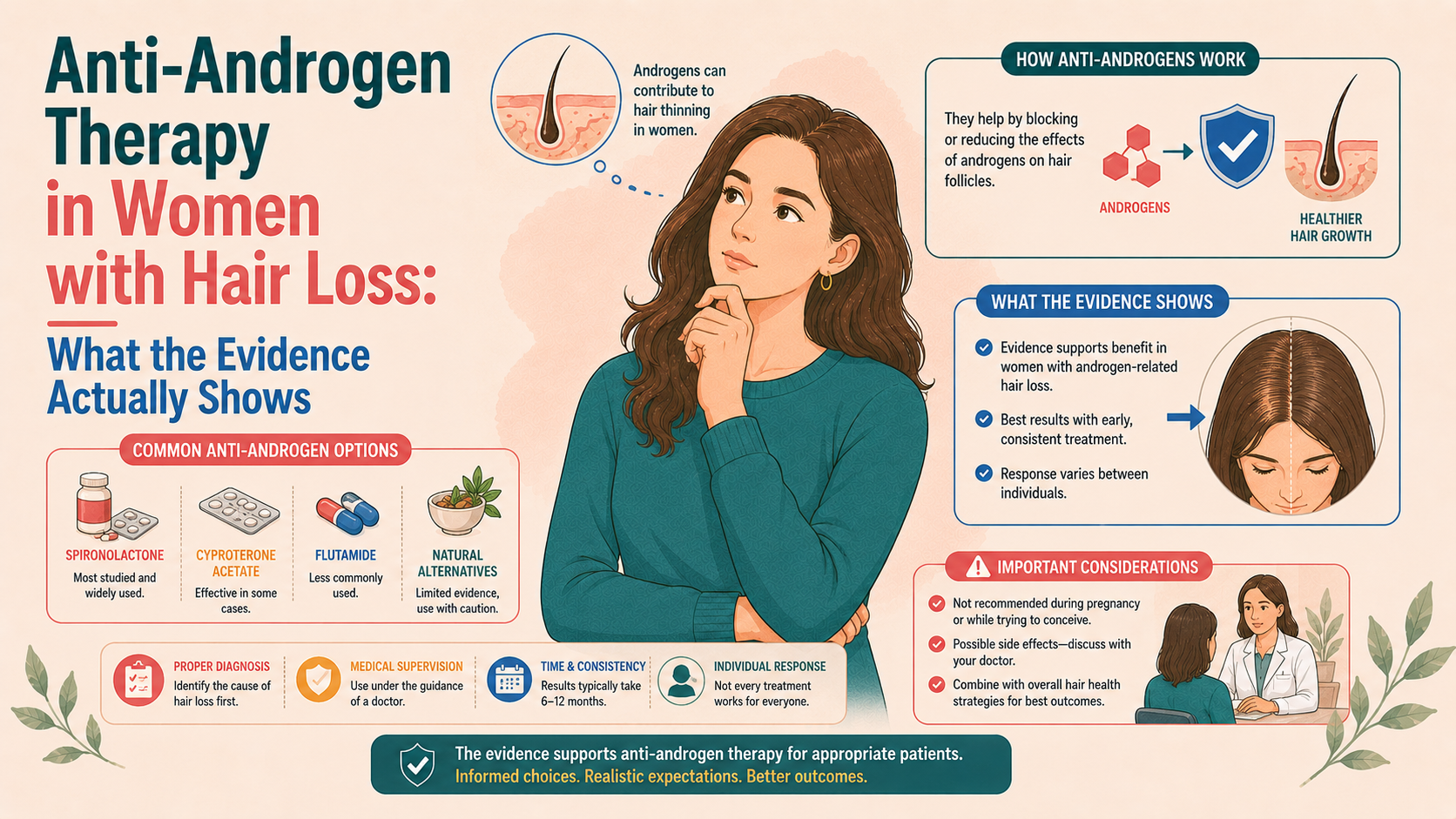
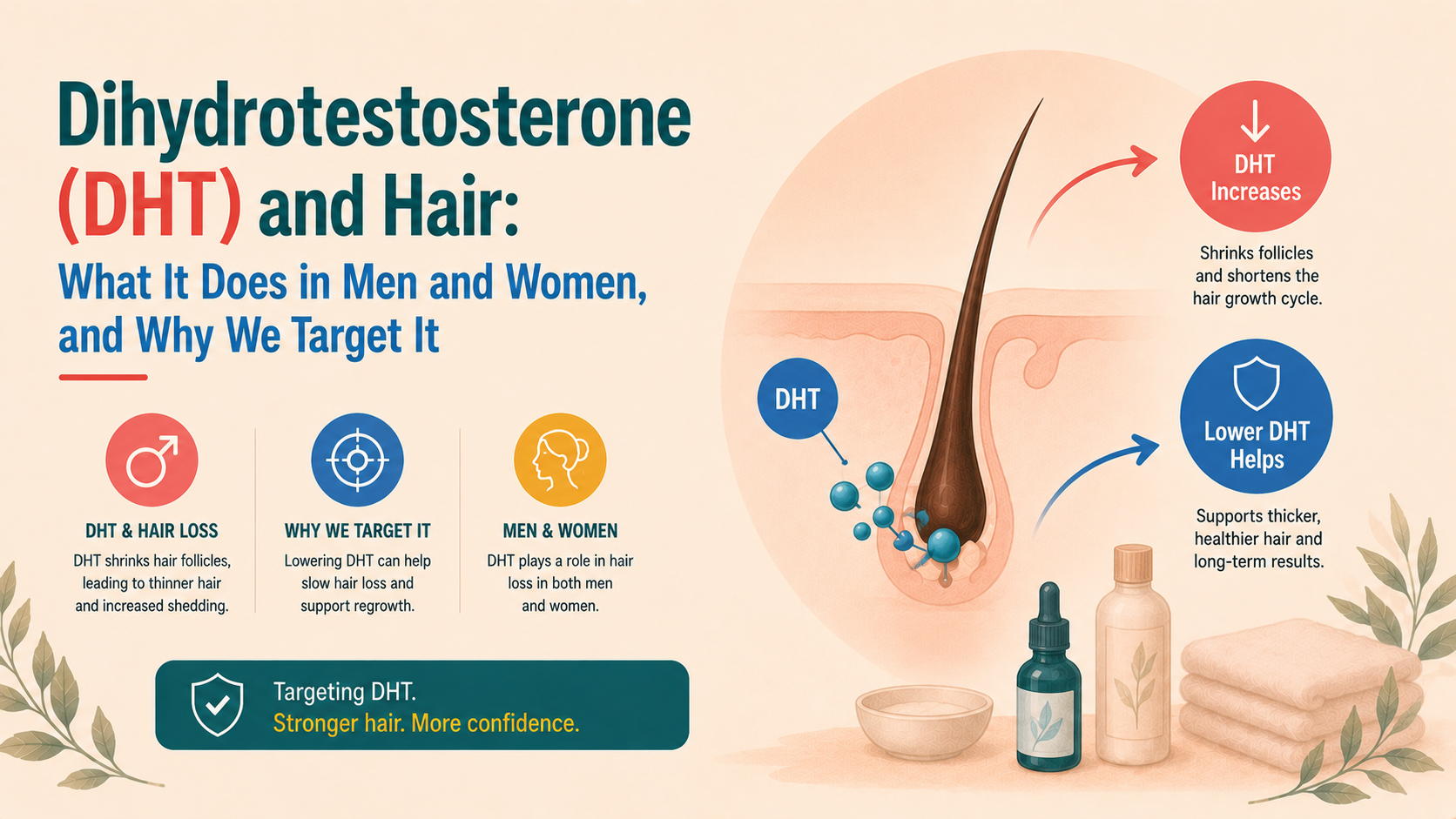
Anti-androgens and DHT-blocking medicines are not treatments for the normal postpartum shed. Avoid borrowing someone else’s regimen or stopping breastfeeding solely because you have been told that it is causing the hair loss.
The most helpful outcome is a clear explanation, a realistic recovery plan and a point at which to reassess if things are not improving.