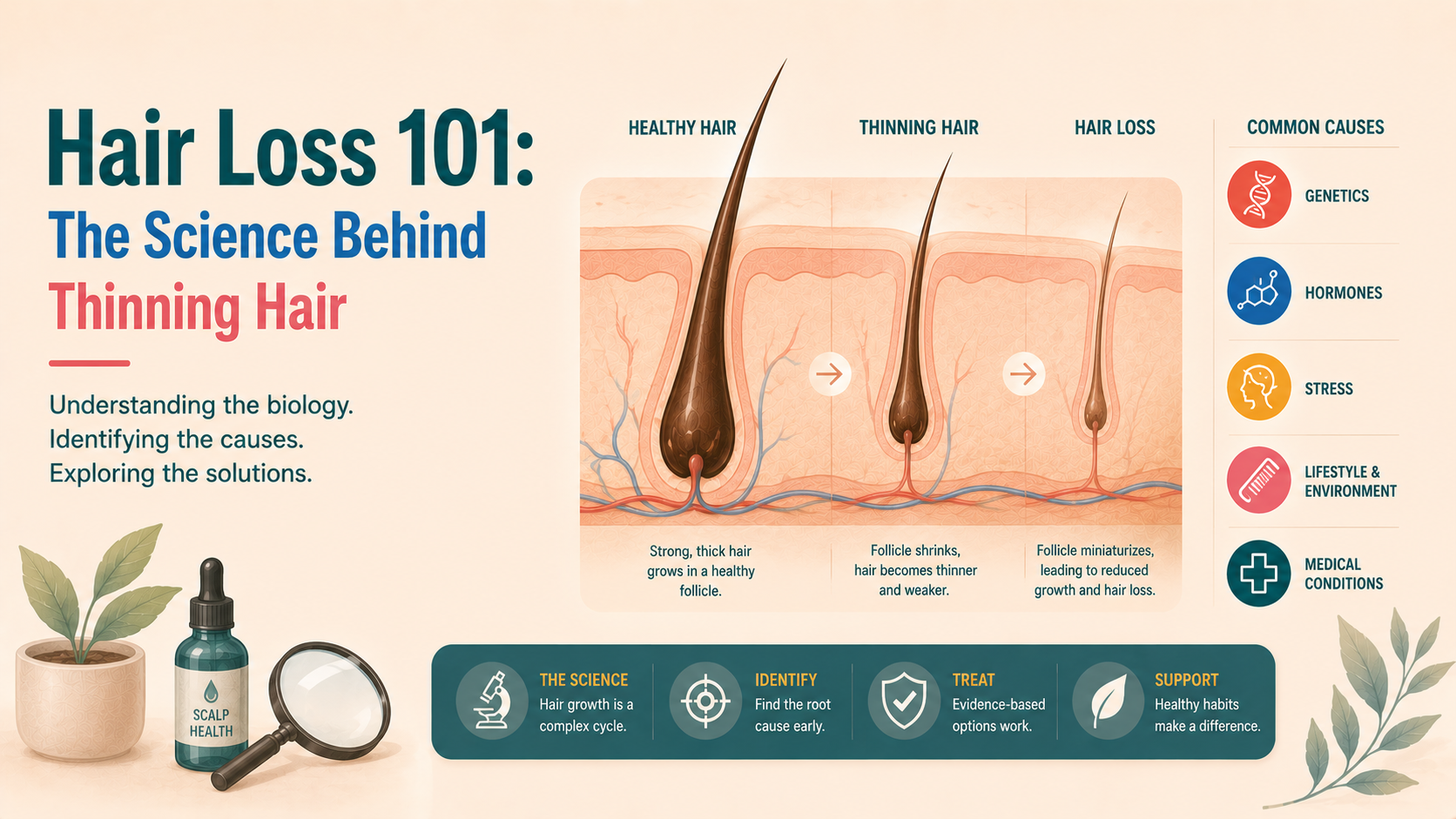
A roller, stamp or pen can look like a simple addition to a hair-loss routine. My video review explains why the evidence is more complicated, what microneedling may add to minoxidil, and why the amount of injury matters.
![[headshot]](https://cdn.prod.website-files.com/68207da82e5b8c350c67932f/68c6a7436a552c0fe87a4da7_Screenshot%202024-11-27%20at%2011.38.11.png)
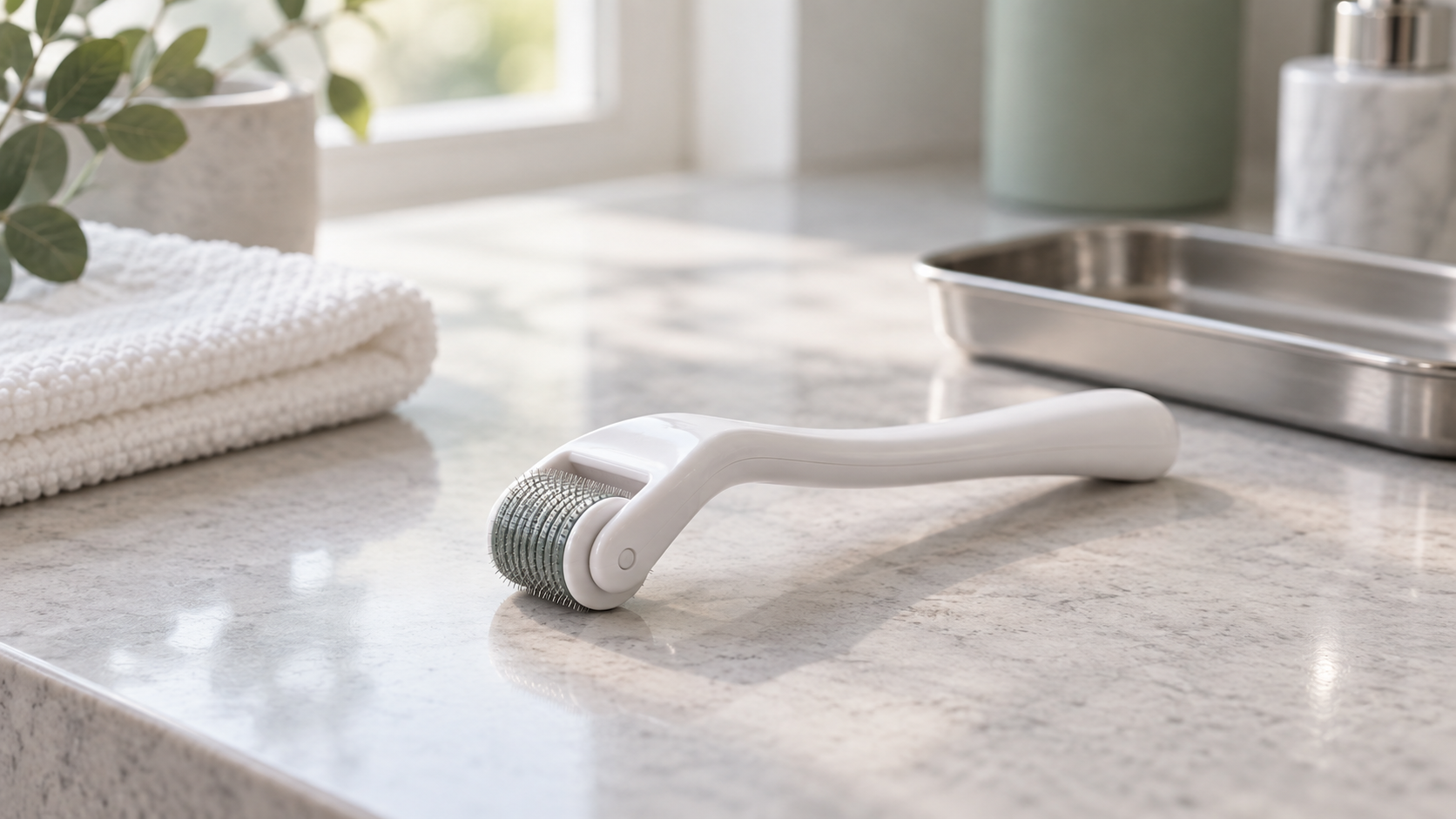
When somebody says microneedling worked for them, I want to know what they actually did. A light pass with a short roller and repeated deep passes with a powered pen are both called microneedling. They are not the same exposure.
The procedure creates small punctures in the skin. It may influence wound-healing signals around existing follicles and increase the penetration of a topical medicine. Neither explanation means it creates a new supply of hair follicles or removes the genetic sensitivity behind pattern hair loss.
This distinction helps make sense of the evidence. A plausible mechanism gives a reason to investigate a treatment. It does not tell us the safest way to use it or how much visible hair it will produce.
The trial that made microneedling widely discussed was a 2013 pilot study in 100 men. Over twelve weeks, the group receiving microneedling alongside topical minoxidil improved more than the minoxidil-only group. It was an encouraging result, but a short pilot study is a starting point rather than a universal treatment recipe.
A 2025 systematic review identified twelve randomised trials involving 631 participants. The combined treatment generally performed better on hair counts, but results varied substantially between studies. Devices, needle depths and treatment intervals differed, which makes a single headline estimate difficult to apply to an individual.
Then a 2026 randomised study of 245 women tested shallow microneedling every two or four weeks alongside 2% minoxidil. Neither schedule added a significant clinical benefit after 24 weeks. This does not prove that every microneedling protocol is ineffective in women. It does show why positive results in one group should not be treated as a promise for everybody.
I find it more useful to think about the total amount of injury than the number printed on the device. Actual penetration also depends on pressure, the number of passes, the device, the scalp and how much recovery time there is between sessions.
There is no well-established best depth or frequency for hair loss. A deeper treatment is not automatically more effective, and shallow treatment is not automatically useful. Trials comparing different depths have not established a simple more-is-better relationship.
Bleeding is particularly unhelpful as a measure of success. The aim is a controlled procedure, not to prove that you have worked hard enough. A dramatic photograph of a bleeding scalp tells you very little about the eventual hair result.
Short hair-loss trials have generally reported temporary effects such as discomfort and redness rather than frequent serious complications. That is reassuring within the conditions studied. It does not establish that repeated aggressive needling at home is harmless over many years.
Microneedling can cause infection, persistent pigment change and scarring. Device quality, hygiene and the way it is used matter. A lack of scarring reports in a small trial is not the same as proof that scarring is impossible.
If you are considering a future transplant, discuss scalp procedures with the surgeon. There is insufficient direct evidence to quantify whether ordinary mechanical microneedling changes later graft survival. It would be misleading to promise that it can never affect surgery, or to claim that any past use has ruined your chances.
Creating channels in the skin may increase the amount of a topical product that gets through. That can be part of the intended effect, but it can also change irritation and systemic exposure. A product designed for intact skin is not automatically suitable for freshly needled skin.
The original pilot trial paused minoxidil around each procedure and resumed it afterwards according to a defined protocol. That study schedule should not be turned into a universal home instruction, especially when other devices or products are involved.
Avoid improvising combinations with minoxidil, tretinoin, cosmetic serums or other medicines. Ask the clinician performing the procedure how your existing treatment should be handled. The FDA has not cleared microneedling devices for hair loss or for delivering these products through the skin.
Each device creates the punctures differently. Rollers enter and leave the skin at changing angles; stamps and powered pens use a more vertical motion. That mechanical difference is worth understanding, but it does not establish a clear clinical winner for regrowth.
Needle sharpness, cartridge quality and appropriate cleaning are more useful considerations than a claim that one device is universally best. Do not share devices or reuse single-use cartridges. The TGA warns that infection and scarring risks are greater with unsupervised use and inadequate hygiene controls.
Radiofrequency microneedling adds heat and is a different procedure. Reports of burns, fat loss and nerve injury with some RF uses should not be casually mixed with evidence about an ordinary mechanical roller, but they also should not be ignored when a clinic is offering an RF treatment.
An itchy, painful, inflamed or infected scalp needs a diagnosis before it is injured further. Suspected scarring alopecia, poor wound healing, a tendency to abnormal scarring, bleeding problems and medicines that affect bleeding or immunity all need individual assessment.
Persistent redness, increasing pain, discharge or a change in the skin after treatment deserves medical attention. These are not signs that you should increase the depth or repeat the procedure sooner.
I would be especially cautious about adding needling to an already complicated routine without knowing what problem it is meant to solve. Evidence for adding it to an oral-only regimen is much less developed than evidence for combining it with topical minoxidil.
Microneedling has enough evidence to deserve a serious discussion, particularly as an adjunct to topical minoxidil. It also has enough unanswered questions that I would resist presenting it as a compulsory part of hair treatment.
In my own case, I only used it for a small number of sessions. Once I moved away from topical treatment, I did not feel compelled to keep adding it. That is my experience, not a trial result or a recommendation for your scalp.
The useful question is whether a supervised, clearly defined procedure is likely to add enough benefit to justify its burden and risks for you. Your routine should earn its place through that discussion, not through pressure to do everything available.