FUT remains a useful transplant option. The important question is how each harvesting method affects your donor area, scars and choices if you need surgery again.

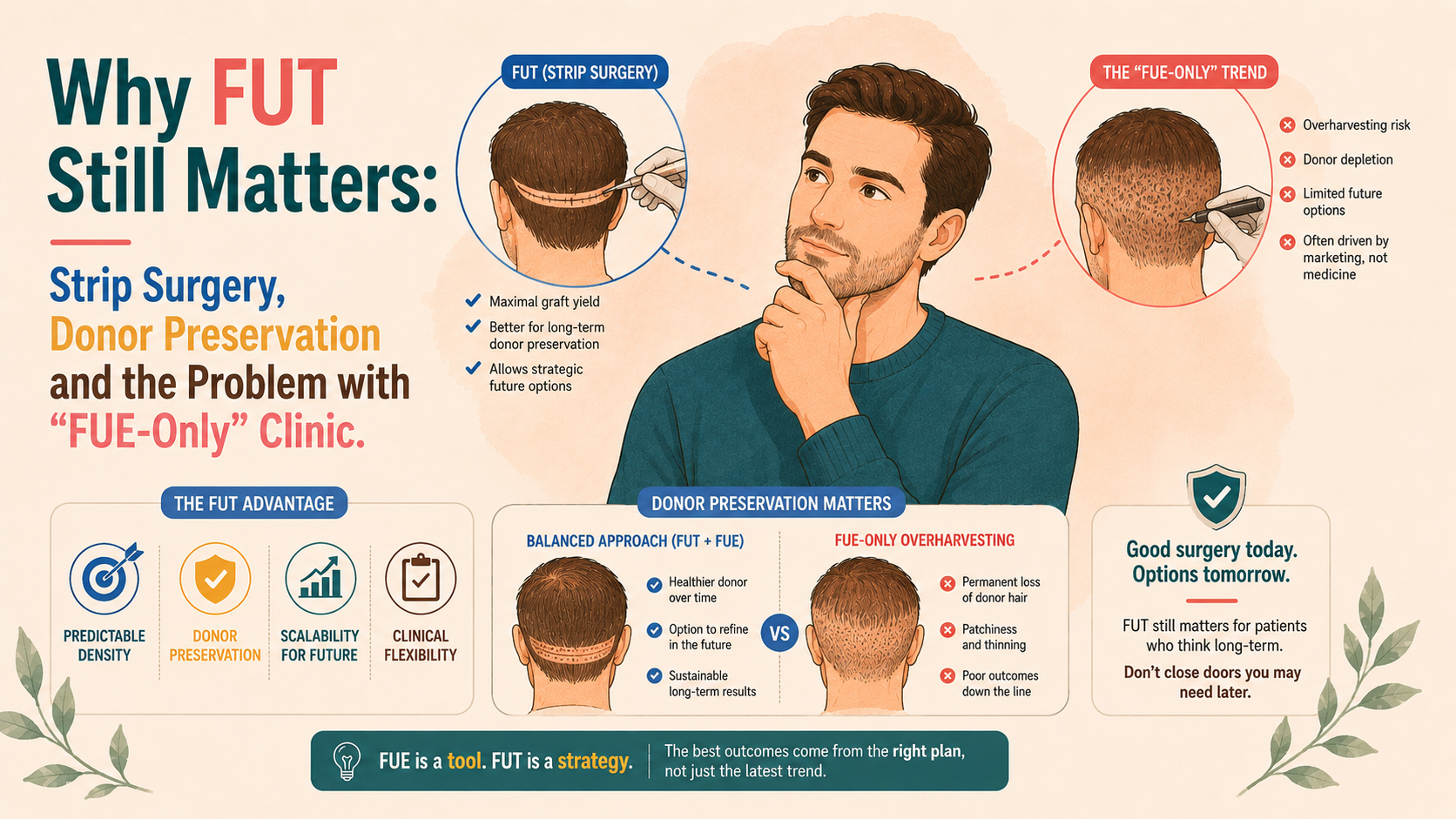
FUE is prominent in transplant advertising, while FUT is sometimes presented as an outdated procedure. That is too simple. Both methods are used in modern hair restoration, and both can produce natural results.
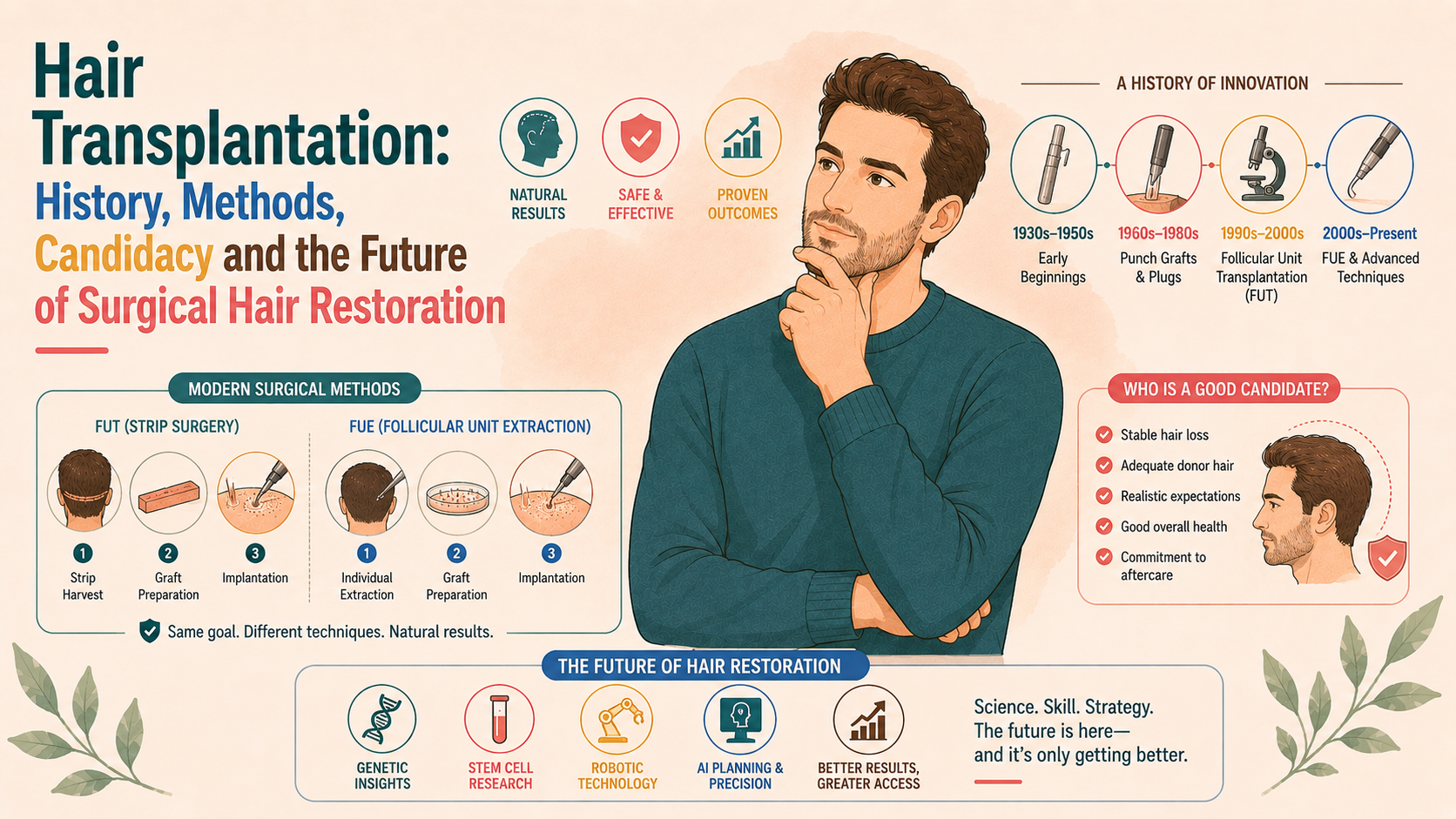
The distinction concerns harvesting. FUT removes a strip of hair-bearing scalp and divides it into grafts. FUE removes individual follicular units with small punches. The transplanted units then still need to be placed with appropriate design, direction and density.
I would want the choice explained in terms of my donor area and future needs, rather than which technique has the more appealing name.
Strip harvesting can obtain grafts efficiently from a selected donor region while leaving the density of surrounding scalp hair relatively intact. This can be valuable when someone is likely to need substantial coverage over several procedures.
Professional guidance continues to recognise FUT as a way of making efficient use of donor hair. Combining it with selected FUE later may increase the total usable supply in suitable patients.
This is a planning advantage, not a guarantee of a particular graft number. The available tissue, scalp laxity, previous surgery and likely future hair loss all matter. Donor hair remains finite whichever method is used.
FUT creates a wound that needs closure and leaves a linear scar. A fine scar may be concealed by surrounding hair, but its final width and visibility cannot be guaranteed. It can be more apparent with short hairstyles, reduced donor density or future thinning.
There can also be discomfort, tightness, altered sensation and wound-healing problems. Scalp laxity limits what can be removed safely. Repeated strip procedures need careful assessment rather than an assumption that each will be straightforward.
A claim that the scar will definitely be invisible at a particular clipper length is too confident. Ask to see healed donor areas and discuss what changing your hairstyle later would mean.
FUE avoids a linear scar and often offers quicker donor recovery. It can suit people who prefer shorter hair, need selected grafts or have circumstances that make strip harvesting less attractive. It can also be used to obtain suitable beard or other body hair in selected cases.
It is still surgery. Small punch sites leave scars, and removed follicles no longer contribute to donor density. The risk becomes particularly visible when extraction is excessive or uneven.
Good FUE planning considers what can be removed while leaving the donor area looking acceptable. Neither the size of the session nor the sophistication of the device proves that this has been done well.
A transplant may look good initially while future loss creates new areas needing coverage. If too much donor hair has already been used, the options for another operation become limited.
Large FUE sessions can reduce the graft yield available from a later strip. FUT can leave a scar that affects future hairstyle choices. Both histories need to be considered when planning another procedure.
For some people, FUT followed by FUE is sensible. For others, conservative FUE alone is the better fit. There is no universal sequence, and being young is not itself a reason to proceed with either method. The question is whether surgery is appropriate now and what it leaves possible later.
A surgeon can specialise in FUE and still explain FUT fairly, recognise when another opinion would help, and provide excellent care. Offering only one operation does not automatically make a clinic unethical.
The concern arises when the recommendation seems determined by what the clinic sells rather than by the person being assessed. Dismissing an established alternative without explaining the trade-offs makes informed choice harder.
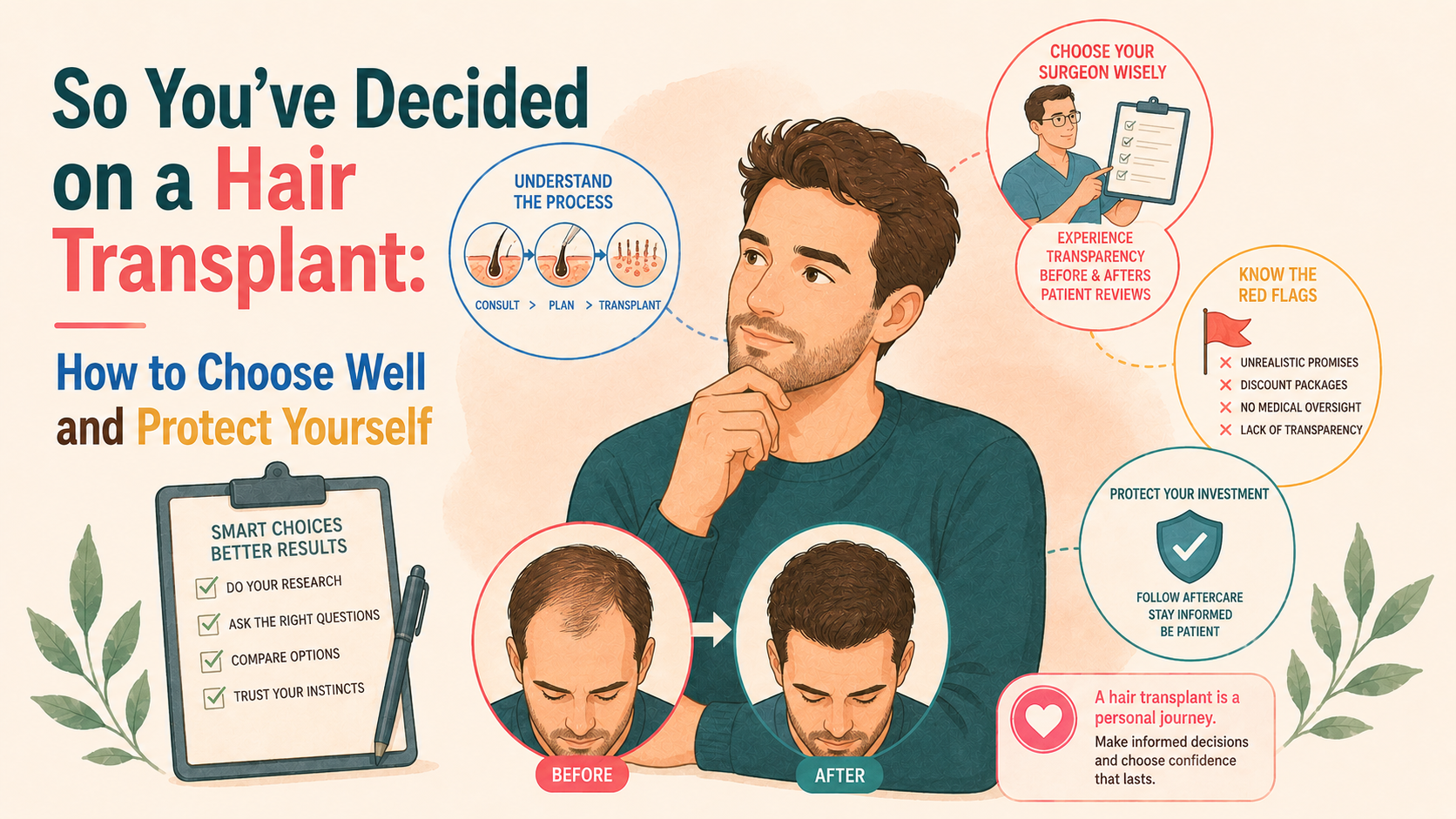
Be cautious if you hear “scarless”, “unlimited grafts” or a promise of maximum density without a donor assessment. A responsible consultation should also cover the possibility of waiting, using medical treatment or deciding against surgery.
The purpose is to understand the recommendation, not to insist on FUT. A clear explanation should connect the operation being proposed to the result you can reasonably expect now and the choices you may need later.